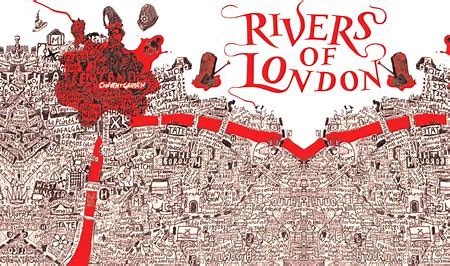
The follow up to Rivers of London, a murder mystery set within the mythic and modern city of London.
Who’s the writer?
Ben Aaronovitch is a London author whose early career in screen writing saw him write for Doctor Who and Casualty.
What’s it about?
PC Peter Grant is now a year into his wizard training. Whilst London seems to have put the explosive climax of Rivers of London behind it, the scars remain very real for Peter and his closest colleagues, but there is no letting up.
A number of seemingly natural deaths amongst jazz musicians kicks off an investigation that brings Peter’s personal and professional lives awkwardly close.
Is it any good?
Loved it.
This is a great second instalment that moves the story on beautifully. Aaronovitch delivers yet more fantasy, thrills and humour with a side serving of jazz and careful observation. London continues to be a powerful influence on the story, and as you might expect the majority of the action takes place in Soho.
The relationship between Grant and his Master, and commanding officer, also moves forward. This is an interesting dynamic that allows Aarnovitch to explore a number of important themes such as race and policing, important to both the main characters and the city of London. All in all this is a great second instalment.
I now have a bit of quandary – book number three or try something different?
It’s slightly unnerving that even without the joy of regular gaming the first few months of 2021 have already disappeared. However, the upside to this, certainly for those in the UK, is that there is the scent of gaming in the air as we move towards a bit of a relaxation of lockdown (first game organised, list chosen and army painted).
Despite the scarcity of games the mini producers, games designers and content creators have delivered some fantastic stuff for our continued delight. So I thought I would pull together a few of those things that have brought a smile to my face over the last couple of months, or will keep me smiling in the coming months.
Halflings have arrived in Oathmark – March saw the release of the unofficial army list written by Joseph McCullough. It’s limited by the standards of what’s available to other races so no linebreakers or cavalry, but they have their own characters and spell list. There are also a range of metal miniatures that have been added to the Oathmark section of the Northstar website to support it.
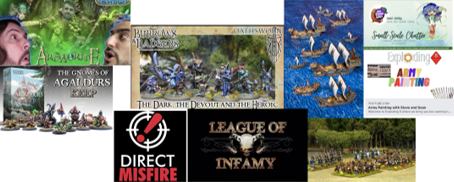
Burrows and Badgers Kickstarter – After, it’s fair to say, quite a bit of teasing The Dark, The Devout and The Heroic has landed. This is BnB’s latest Kickstarter which brings with it, not only another influx of anthropomorphic awesomeness, but also two new factions with the undead pawing their way out of the ground and the Witch Hunters intent on crushing their bones. Although it’s now closed, it’s scheduled to land in June so it shouldn’t be long before the these awesome models reach the Oathsworn webstore and the table. New rules are also on their way to support the factions, so I’m sure I’ll be having a look at these a bit more in due course.
Northumbrian Tin Soldier Kickstarter due in – The Gnomes are growing, in presence rather than size, with The Gnomes of Agaldur’s Keep. This typically fun faction went up on Kickstarter at the end of last year. I’m looking forward to it arriving in April as I’m have a number of the models earmarked for my Saga: Age of Magic force.
The League has finally arrived – Back in 2019 Mantic’s dungeon crawler with a twist went up on Kickstarter. Unfortunately, there was a bit of a delay in the delivery of this one due to Covid, so a little over schedule it has now arrived. Hats off to Mantic for the way they managed this one. I can imagine there were more than a few premature grey hairs grown in Mantic Towers, but they did a great job of keeping in contact and explaining what was going on. Well managed guys. And by the way, if you aren’t aware of this game, the twist is that the playable characters in the game are all villains. So whilst this is a co-op, messing with you’re fellow adventurers is not just encouraged, its written into the rules. I’ve managed a couple of games so far and am really enjoying it.
Mantic rats and tiny undead ships – If you’ve looked at this blog over the past three months you’ll be aware Mantic are now doing their own Ratkin range for Vanguard and Kings of War. Mantic have worked up a pretty solid formula for army releases with a plastic set to cover off the core troops and resin sculpts to cover off the special units and characters. I loved their Abyssal Dwarf range that was released last year, and the rats build comfortably on that success with some beautiful resin miniatures. The first wave is now out, with a second wave out towards the end of April. Mantic have mentioned in podcasts that everything in the army lists will be represented, and it almost is. I’m hoping there will be a final wave after the next to cover off the handful of mounted characters not yet supported, especially given how great the mounted Goblin characters are (surely it’s not right to be envious of a Goblin?).
In addition, the Empire of Dust has taken to the water with their very own range of ships for Armada. Whilst I’m not a big fan of ship games Armada has been really well received, and visually this is my favourite faction so far.
Something to listen to
I’ve been flitting between various podcasts and Youtube channels (as you do) and thought I would share some of my highlights:
The Andy and Rem Show – Traditionally an Age of Sigmar show, the boys have been exploring other fantasy games and inviting some interesting guests on. Recently they had the founder of Warploque miniatures on to talk about his journey in the industry and show case some of his fab Arcworlde minis.
Exploding 8’s Steve and Sean – In their most recent episode the guys have been talking about painting armies. As someone who loves rank and flank games, but is not a fan of the painting required to get these armies on the table, this is a great overview of some ideas and approaches to getting large to-paint-piles battle ready. Both are seasoned gamers and painters, Steve has around 17 completed Kings of War armies (I say around because the number just keeps going up), so bring some valuable insights to the topic.
Small Scale Chatter – A new podcast on the scene with Anjuli Smith, aka GeekGirlBookWorm off of Twitter, talking to various guests from within the miniatures community. The first episode kicked off with Annie from Bad Squiddo in the hot seat talking about her community miniature development project which I found fascinating. Great energy and I look forward to more.
Direct Misfire – After a bit of a hiatus the guys are back with some general Kings of War hobby chat, a review of an event in Australia (yes they are still allowed them over there) and their awesome theme tune to warm up your ears.
So that’s a brief round up of what’s been keeping me sane. If you’ve got this far why not follow the blog, click the like button thing, or you can follow me on Twitter Eddie Bar@EddieBe77 for the same sort of stuff, just much smaller and bit more regular.
Over the last few weeks I’ve been moving house, which has translated to minimal hobby and a somewhat erratic painting output. Normality is slowly returning, so the time is right to break out the typing machine.
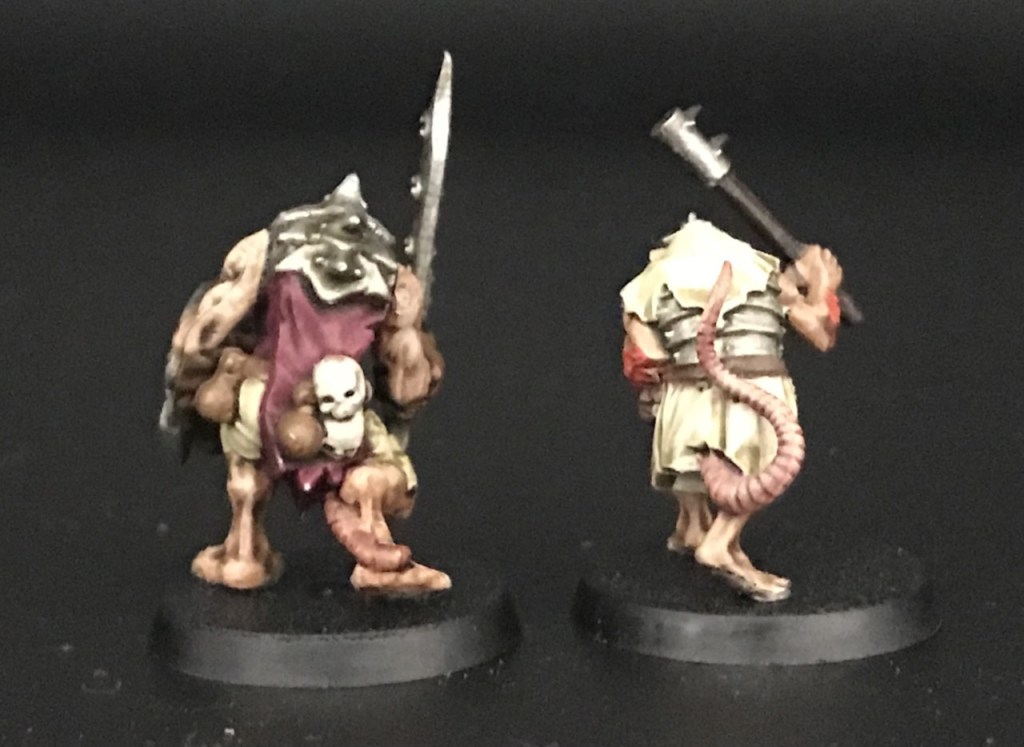
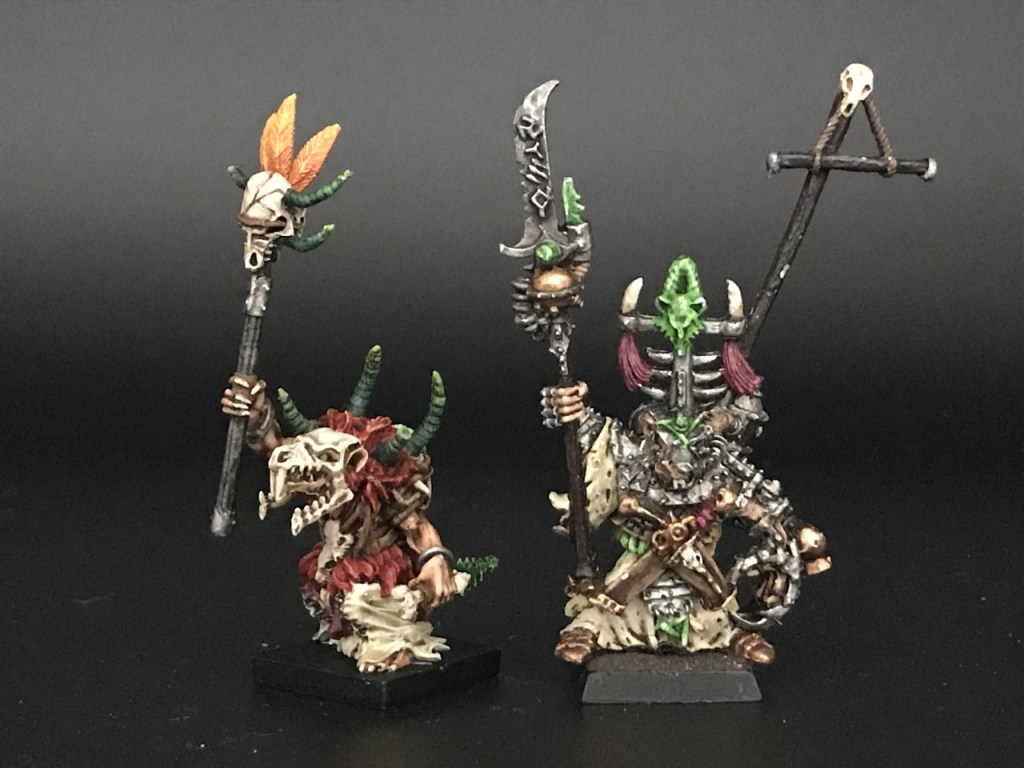
The last time I properly sat down with the automated writing wotsit the rodent reveals and pre-orders were flowing fast from Mantic, and I was getting a bit concerned about how high the inevitable backlog pile would grow (it’s still growing). I’ve made no secret about how much I like the new releases. They are definitely a confirmation that Ratkin have now gnawed their way into their rightful (albeit dark, run down and icky) place in Pannithor. Getting a proper look at the range, both in images and up close and personal got me thinking about all the Games Workshop rats I’m gradually retiring (from Kings of War at least).
I think it’s fair to say that Skaven have cast a long shadow over Pannithor. GW was the only company (to the best of my knowledge) to offer a full range of warrior ratmen. I know I’m not alone in having started out as a Ratkin player in Kings of War because I had a bunch of square based rats lying around gathering dust. However, times have changed, progress has progressed and now Ratkin have more lore, a revised army list and their own swanky new miniature range. But the big question is – have Mantic banished the minions of The Horned Rat from Pannithor?
Another big question is a far more practical one.
Lore
Watching Ratkin lore fill out in Halpi’s Rift has been interesting. Not least because, for me, the prospect of games returning heralds a return to battle reports. I now have a better understanding of how Ratkin integrate into the world around them. So, I need to work out what it will mean for those loveable rogues Old Mother Cinderpaw, Strayrat and Chief Warlock Sparkthrower. The Skaven character definitely influenced my portrayal of the leading lights of the clan. A rethink is required and I’m looking forward to working through what those changes will be.
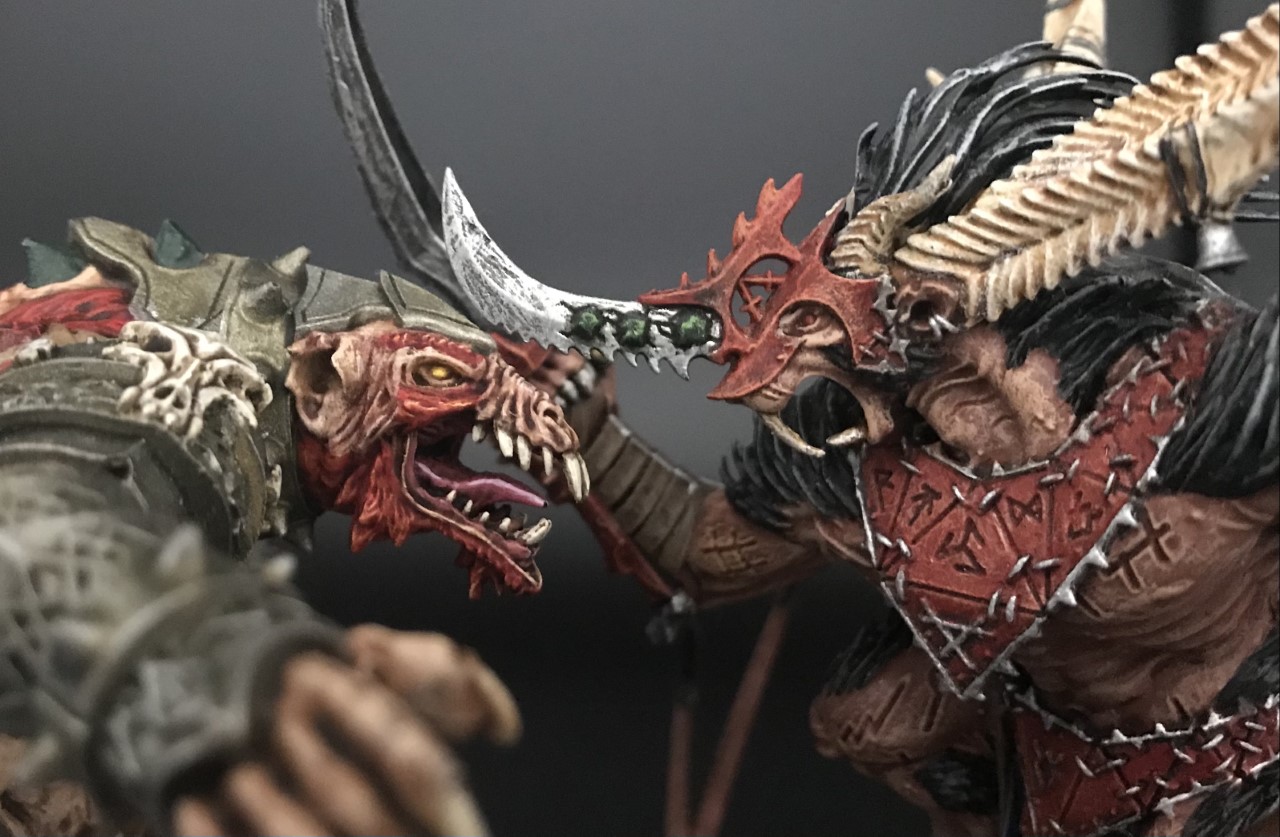
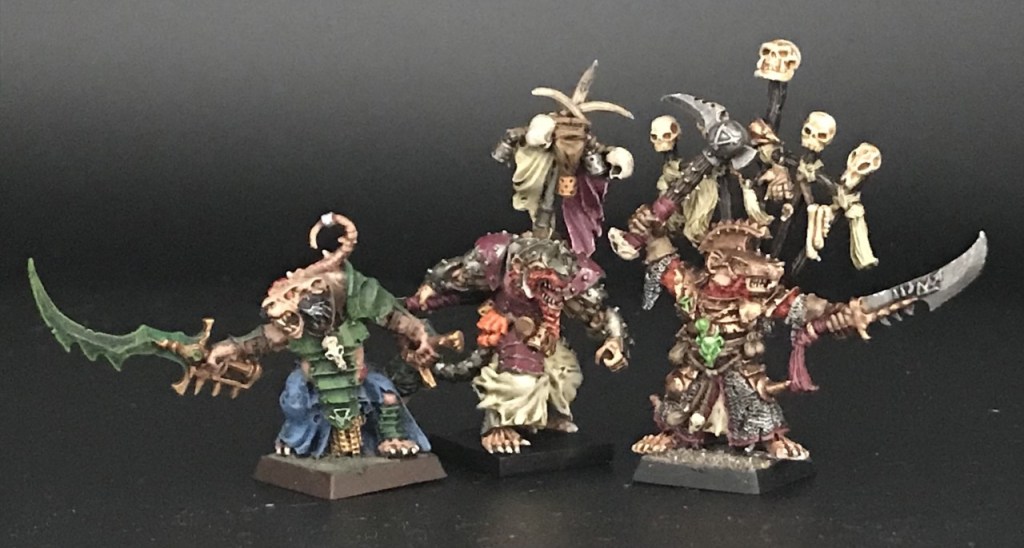
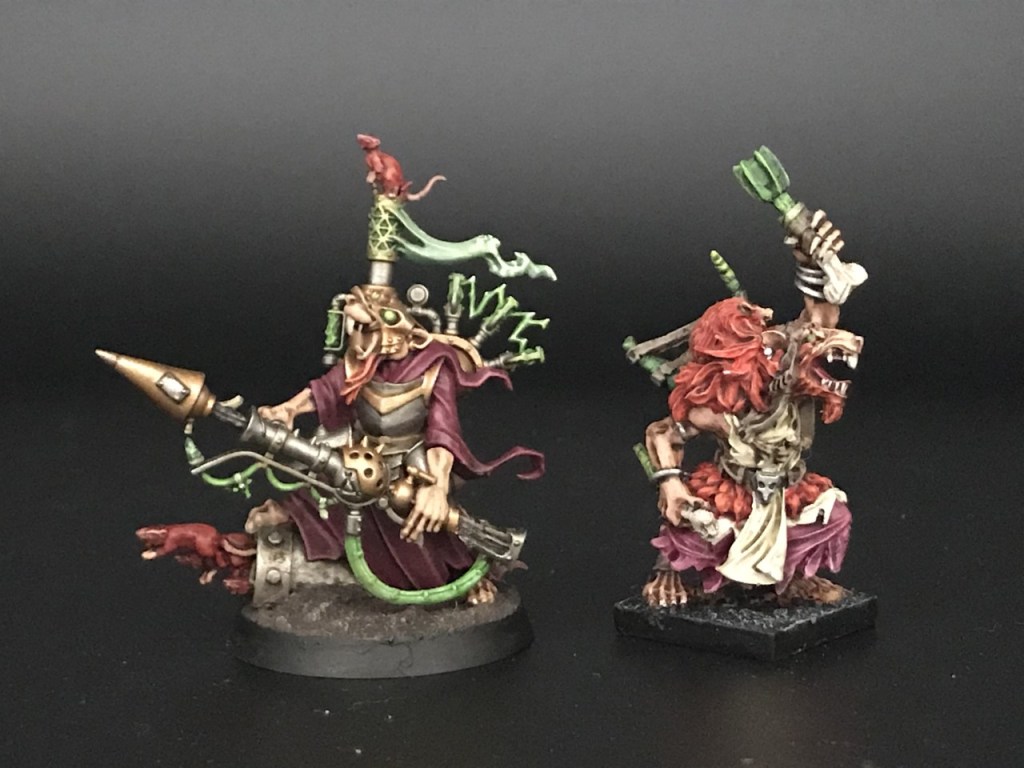
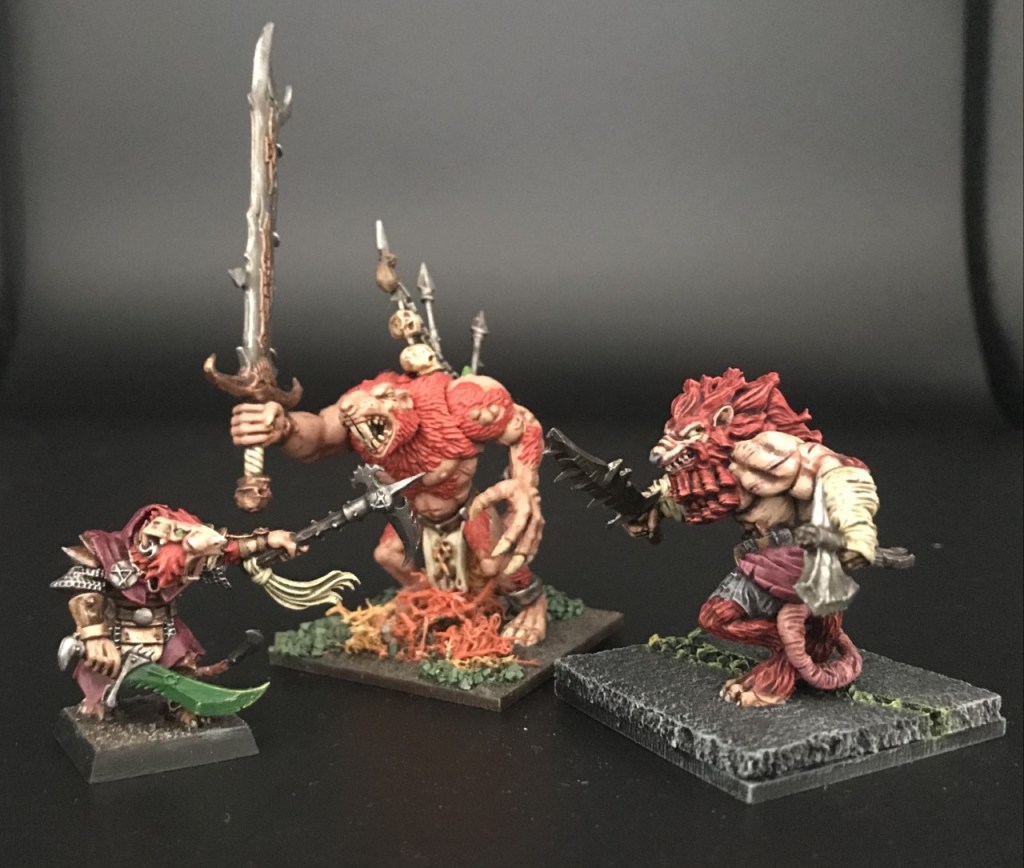
A selection of Mantic characters with their GW counterparts.
The differences in lore between the races could not be more stark. Whilst from the off we knew Ratkin were slave beasts created by the Abyssal Dwarfs (as opposed to the children of a Chaos God, with their own creation myth that neatly smashes the Tower of Babel, and the Norse myth about Loki tricking a giant into building a wall around Asgard together) there wasn’t much wider context.
Theories did abound. I remember listening to a podcast where Ratkin were compared to Spartacus. It was a neat idea, and for me it kind of stuck. I liked the idea of an almost noble race planning the rescue of their kin from the nasty, angry short dudes. This was a concept that ended up shaping the Fyrefur Clan narrative and was a key motivation for my Mother Cyza proxy Old Mother Cinderpaw. However, Halpi’s Rift blew that idea away. Ratkin look down on their enslaved kin and their society embraces (maybe even magnifies) the brutality of the Abyssal Dwarfs. They are a classic case of the bullied turned bully.
There are many other differences between Ratkin and Skaven, and I’ve thought long and hard (2 beers and a generous whisky) about how best to sum it up. For me, the key difference is that Skaven are the crazy, insane super villain of the Warhammer World, terrifyingly ingenious (they built a machine that moved a moon!!), morally vacuous, paranoid, verging on insane and utterly selfish. Of course, Ratkin are no saints by comparison and many of the charges laid at the feet (claws?) of the Skaven, the Ratkin are equally guilty of. Morally vacuous, check, ingenious, check. But I don’t get the feeling they take these things to the Olympic levels (with a Doomwheel load of performance enhancing warpstone for good measure) that Skaven do.
Does this make Ratkin a bit, you know, well, boring? Maybe a bit more of a run of the mill evil race? Absolutely not. Halpi’s Rift introduces some really interesting questions about their relationship with the Abyss. Their slave rebellion was allegedly inspired by a Wicked One. The structure of their layers and the Warlocks’ experimentation all beg any number of questions about the full extent of their understanding, involvement with, and relationship to the Abyss. It’s early days lore wise for Ratkin, but some solid foundations have been laid.
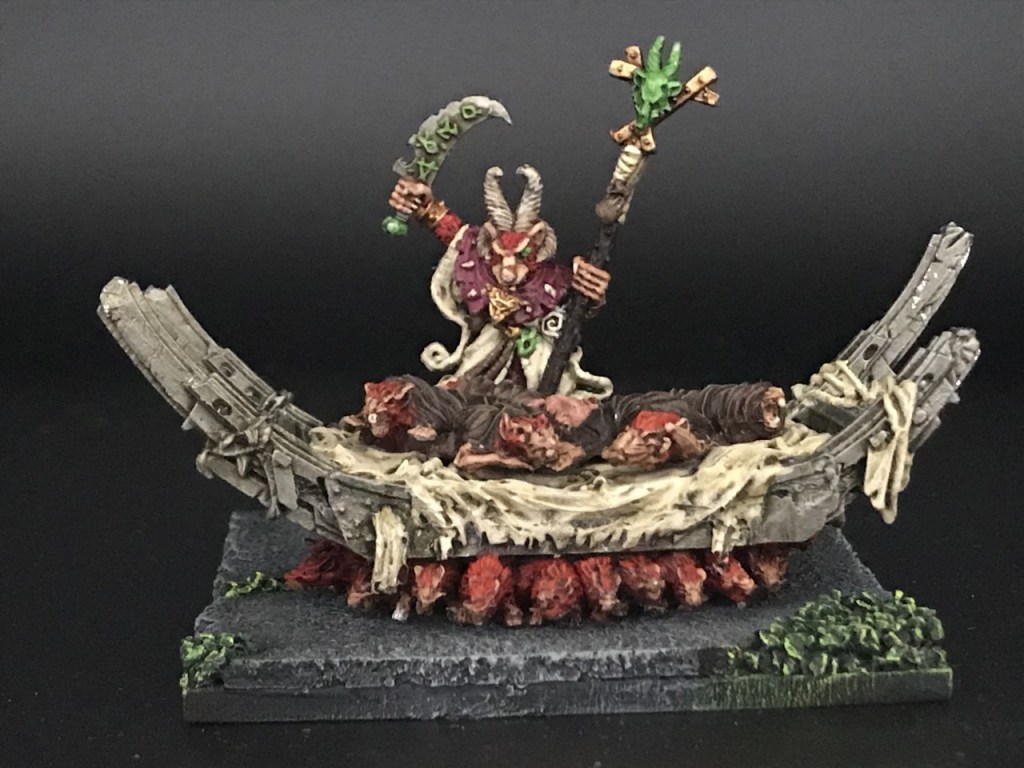
As we have seen the miniature range roll out there have been some interesting commentary around their pragmatic approach to developing technology based on what they have seen in the halls of the Abyssal Dwarfs. The Death Engine is a great example of this, with its tank like exterior, powered by a dismembered night terror (because it’s easier than inventing an engine). This suggests a race that is trying to keep up in technological terms, however, I don’t think it’s as straight forward as this. Compare the results of their fleshcraft to that of the Abyssal Dwarfs, and a different picture emerges. Abyssal Dwarfs have the brutal, but fragile Grotesques (that essentially get a promotion if they haven’t fallen apart at the end of their first battle). Ratkin have managed to bodge together Mutant Rat Fiends and the Demonspawn with the incredibly awkward name, two of arguably the best titans in their respective classes. They might be C- students when it comes to engineering, but are definitely taking home easy A’s when it comes to Biology and Integrated Demonology.
Rules and Minis
I’m not going to get too much into this for now (or probably ever). Partly because I only have so much time to write, but also because I think the lore for the respective races really gets to the heart of the differences we see on the tabletop.
For both armies the basic warriors are not fantastic, and benefit from rules that use weight of numbers to sure up morale. The similarities largely end there. Skaven play to the evil genius trope bringing unstable weapons with special rules that either randomise damage and outcomes, or allow potential damage output to be ramped up, but the player runs the risk it will be applied to their own force. Ratkin have a more measured set of rules, that draw out the benefit Ratkin gain from being in large numbers through synergies and support pieces, favouring fleshcraft over machines.
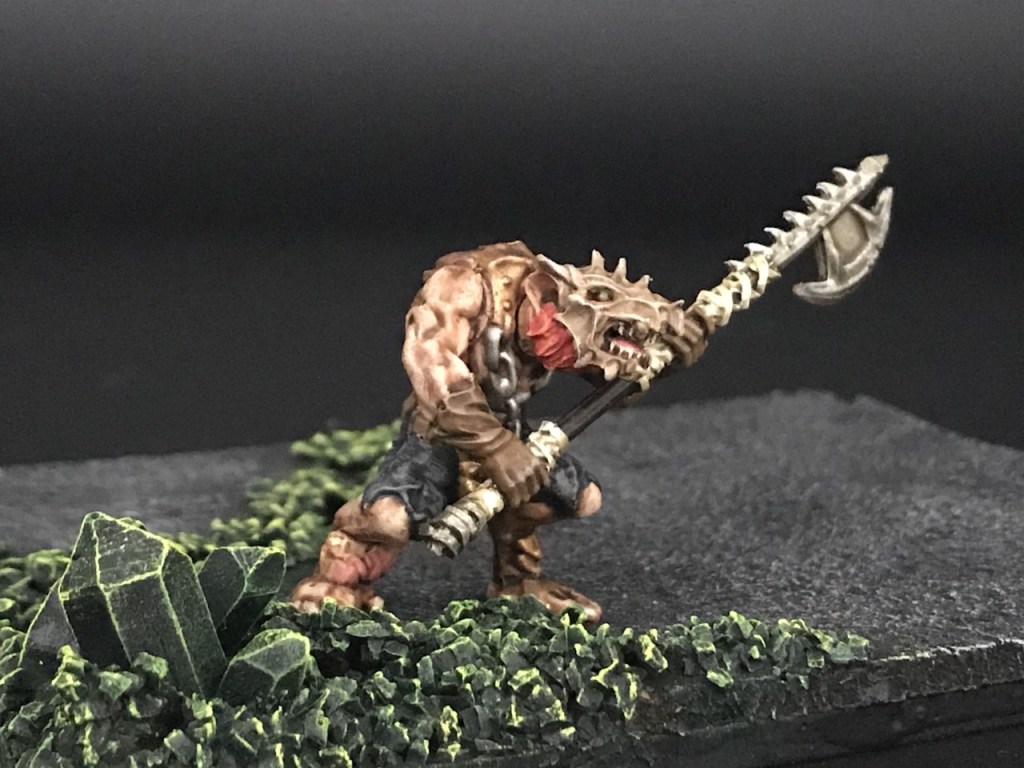
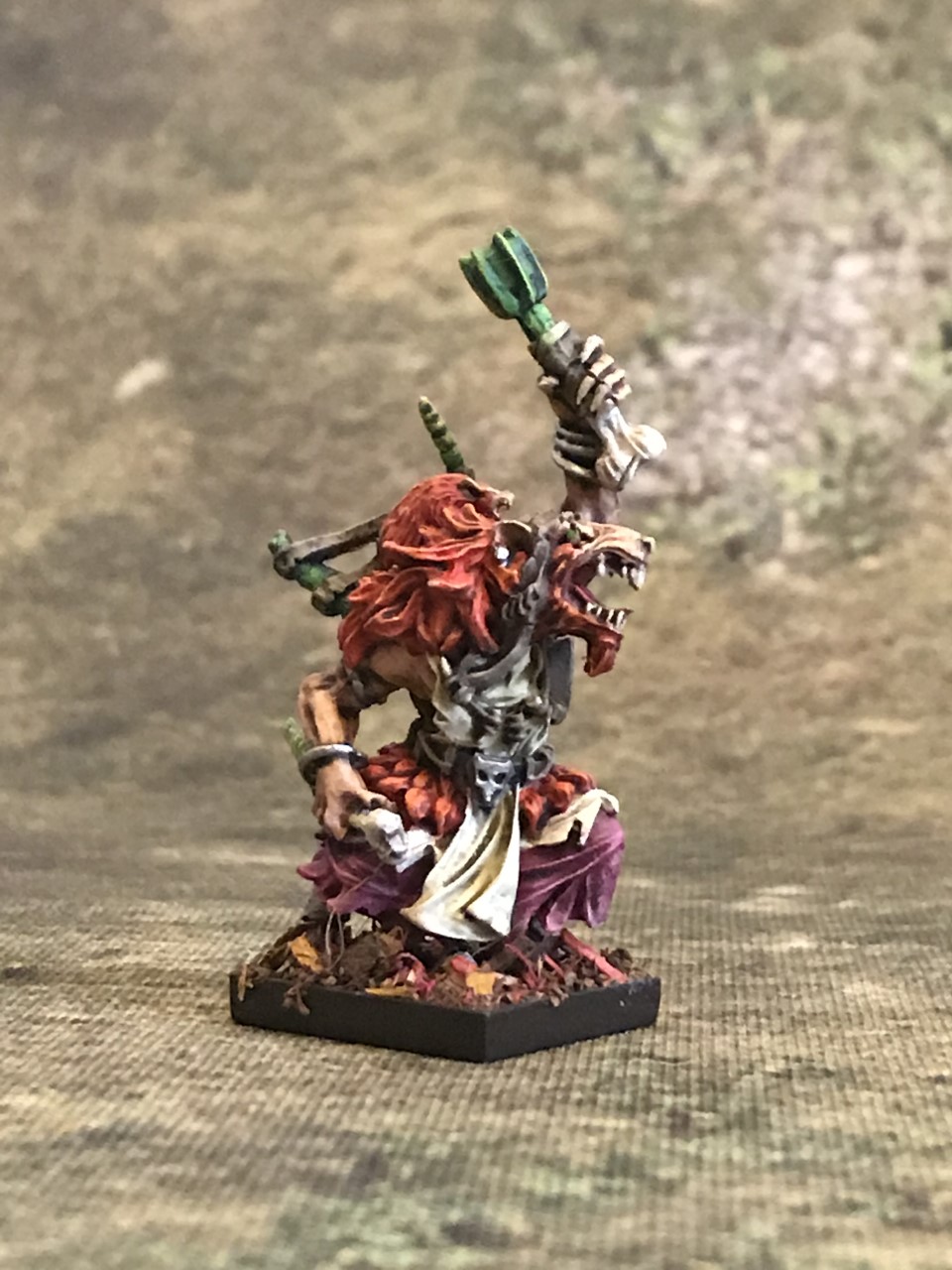
In terms of miniatures, I think Mantic have done a great job bringing Ratkin to life. The World War 1 theme is undoubtedly an interesting choice. It’s not a go to for fantasy I would have gone to, but only the briefest reflection is required to see how they got there. On an aesthetic level it provides context for units like nightmares, tunnel runners and night terrors ported over from the Deadzone universe. But more importantly, for me, it underlines the brutality that the Ratkin were born from, and which permeates their continuing existence.
Resin Shock Troop add ons give the plastic warriors a very different feel.
So, have they pulled it off?
In lore terms I think Mantic have done a great job in establishing Ratkin as a distinct faction in Pannithor. The changes in the army list from its original version to the present day give players a wide range of options and lots of flavour. I think its fair to say not everyone has enjoyed that particular journey, but I believe we’re now at a place where we know what Mantic rats are all about, and I’m a fan.
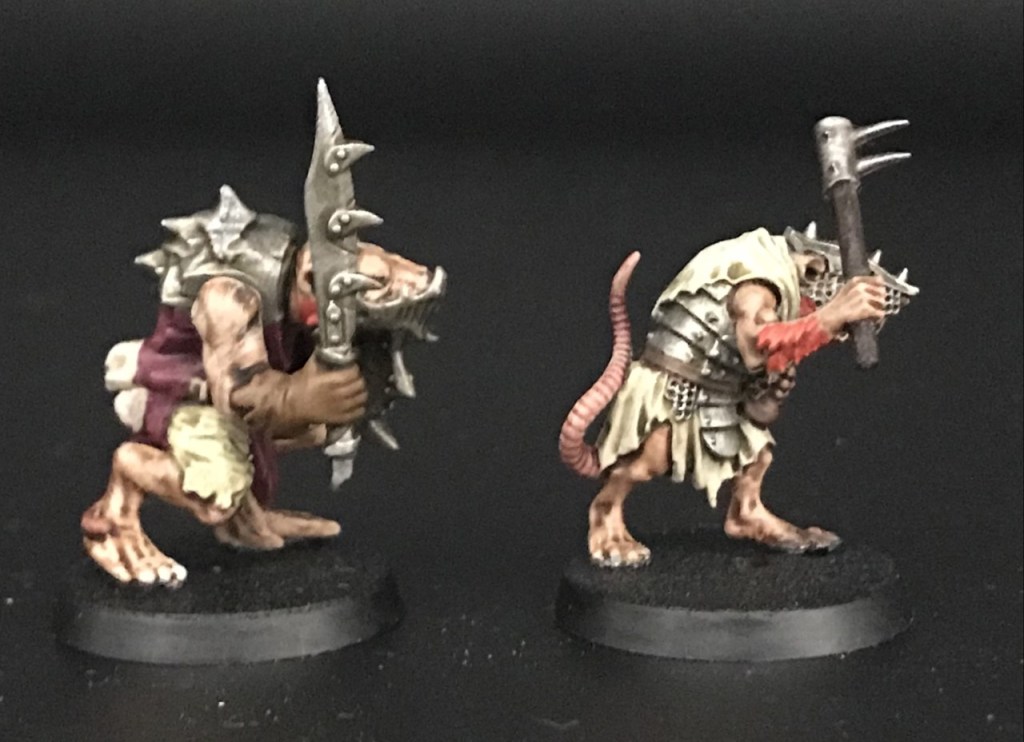
Enforcers through the ages – 2nd Ed GW, 3rd Ed GW, 3rd Ed Mantic.
The miniature question is a slightly more nuanced one. Kings of War is a miniature agnostic game. Its part of the appeal for many people. That means we’re going to continue to see Skaven on the tables. Personally, I’m really happy about that because there are some fantastic miniatures that bring back a lot of great memories for me. However, for me, what Mantic have done on the miniature front provides a great alternative and I think new players looking to get into Ratkin who don’t have legacy armies will make Mantic their first port of call. The general view I have from my corner of the internet is the range has been very well received. Its reflective of the massive steps Mantic have taken with both their resin and plastic, and I can’t wait to get my first game in with them.
Click here for The Fyrefur Clan goes Mantic part 1 and part 2.
A murder mystery set in both the real and spirit worlds of modern London.
Who’s the writer?
Ben Aaronovitch is a London author whose early career in screen writing saw him write for Doctor Who and Casualty.
What’s it about?
Peter Grant is a police constable in the Metropolitan Police when a seemingly random, but particularly messy murder happens on his patch. He is guarding the crime scene when he receives a tip from a less than substantial source.
He ends up assigned to a small, and equally mysterious department of the Met to track down the killer and learn magic. All this whilst trying to make the department’s luxurious, yet decidedly dated, headquarters compatible with the 21st century, or at least the tail end of the 20th.
Is it any good?
This is one of those books I got engrossed in pretty much from the first couple of pages. It is a fabulous blend of crime, comedy and the supernatural. Aaronovitch’s London is beautifully observed, and brought to life through honest, but loving, eyes and described in a warm voice with a wry smile. The characters are well rounded and supernatural London draws you in gently, but before you know it, you’re in amongst the ages and worlds of this ancient city. There is one other great thing about this book – it’s part of a series, so now I just need to remember where I left my copy of Moon Over Soho.
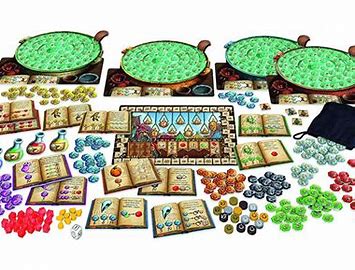
Quick game reviews aren’t just quick reviews of board, or card, games. They’re also intended to give an overview of games that are quick, both to get to grips with and play, for those who love a good game but are short on time. Over the last month or so we’ve been playing The Quacks of Quedlinburg, designed by Wolfgang Warsch. We’ve been playing the English version released by North Star Games.
Because these reviews are intended to look at games for people with limited time, and equally limited desire or capacity to spend pouring over rulesets they need to be:
Quick to learn – understand the game mechanics within a couple of attempts.
Quick to set up – out the box and ready to play by the time you’ve made a cup of tea.
Quick to play – possible to go from deciding to play to back in the box on the shelf in around an hour.
There is also one more vital ingredient – depth. The game needs to have something that will get the brain working and make you want to revisit it again and again.
What it’s all about
The concept of the game is really simple: players purchase ingredients to make potions to sell, but you have to be careful your potion doesn’t explode as you prepare it.
I love a good back story and fun artwork. The Quacks of Quedlinburg have both of these in spades, and that definitely drew me in. Add to that the playing time is given as 45 minutes, it sounded like the perfect combination.
When I opened the box, I started to have some reservations. There are a lot of counters, rubies, cards and bags. Then I read the rules which didn’t seem to be as clear as other rulesets I’ve read, maybe I was already getting preoccupied with set up and packing away times? I had a quick cup of tea and reached for the internet. Fortunately, how to play videos are pretty easy to come by, so after a couple of viewings and some time spent popping out counters (which in itself is pretty calming) I gathered the team for a first play through.
This is undoubtedly one of the most involved games I’ve reviewed for this site, and whilst the play time is under the hour mark the number of bits add some extra minutes to the “from shelf to set up, play and back to shelf” time. The number of different bits also adds an element of complexity, so if your gaming group like things to be really straight forward they may need a bit of gentle encouragement, but it’s worth it. The actual rules are fairly straight forward. The complexity comes from the different effects of the ingredients, which offer loads of different ways to make potions and allows players a variety of strategies to explore. This, in turn, makes it really replayable, and so worth the extra time spent getting to grips with the game.
The verdict
Quick to learn – How to play video first, followed by a couple of play throughs – not the end of the world.
Quick to set up – The tea will probably be made before you’re set up, unless you like a strong brew, but it will still be hot.
Quick to play – No more than an hour.
Depth – The ingredient mechanic creates loads of different ways to build potions and there are two game variants in the box, so plenty of reasons to get it off the shelf again and again.
Joseph Thomas Sheridan Le Fanu, born in Dublin 1814, was a leading horror and mystery writer of his time.
What’s it about?
A carriage accident results in a mysterious stranger being offered hospitality at an Austrian castle. The stranger, a young woman, strikes up an intimate friendship with the daughter of the castle’s owner, Laura. Outside the castle walls a sickness ravages the countryside, but it is not long until the same sickness strikes at Laura.
Said to be the vampire story that inspired Dracula some 20 years later, Carmilla is a beautifully twisted gothic tale. Its easy to see the elements of the story that Bram Stoker drew on to develop his own vampire masterpiece, however this is a very different tale. Much shorter in word count, but every bit as engaging, bloody and beautiful.
Is it any good?
If you love vampire stories, especially Dracula, this book should absolutely be on your reading list.
It was great to see the Ratkin Vanguard orders go live last week. The stand-outs for me were the Vermintide and Hackpaw rider. Both feature regularly in my lists, so seeing Mantic representation so early is fantastic.
Whilst I’m waiting for the pre-order to become an order, before making its way down south from Nottingham I’ve made a start on rebasing some of the Mantic elements of my current collection. I was going to share them with you today in the pretty picture, unit overview type format. But, I got a bit stumped on Nightmares because they are generally described as “not as good as Ogre Boomers” and I think there is a bit more to them. The Boomer comparison has its merits, but having been tabled by a Ratkin list that featured two hordes and went on to come second in the tournament, and seeing them dish out the damage in my Abyssal Dwarf slave army I think there is more to explore.
This led me to mull over the comparison with Boomers, which kicked off a very unproductive evening of pondering just how important synergy is to Ratkin in third edition. The upshot of all this is a bit of a thought experiment on whether it’s possible to make Nightmares into actual nightmares, as opposed to slightly awkward dreams involving public nudity.
I will apply the usual content warning: these are not the words of a seasoned tournament ace, just the musings of a rat fan (in the voice of Roland Rat).
Rats are probably more dependent on synergy than any other force in Kings of War because of Rally. Being able to up your nerve points by 2 is pretty impactful. Add to that the various different auras and support rules, such as Eat the Weak, you have a set of army mechanics that really breathes life into a race that is brave with the weight of numbers on its side, but quickly loses interest if the fight doesn’t immediately go their way.
Let’s kick off with that comparison
Nightmare and Boomer hordes both have speed 6, melee 4, range 4, attacks 18, Crushing Strength 1, Steady Aim and range 12”. Where Nightmares dip out is on nerve (14/16 vs 15/17), Piercing 1 (a massive advantage on a shooting unit) and to a lesser extent Brutal (Nightmares’ Vicious (melee) goes some way to making up for it).
Nightmares do have a higher defence, but if we are talking about a straight up, side by side comparison Boomers take the win every time because of the Piercing (and Boomer hordes are also 5 points cheaper). However, it’s been a while since I last played a 235 point game, and this is where the thought experiment takes over and we pick through some of the synergies in the rat list, starting with Rally.
Rally
Generally, when I see Boomers on the table there are two hordes stood next to each other, not surprising really (one does not simply walk into 36 piercing 1 shots). Having Nightmares stood next to each other brings Rally into play. This brings the Nightmare and Boomer nerve into line so when it comes to a 570 point game the two units are hitting and wounding (each other at least) on the same score. Beyond 570 points, adding another source of Rally takes the Nightmare’s nerve to a very respectable 16/18 which lifts the Nightmare survivability above that of the Boomers. It’s also just the beginning.
The Tangle
This really is one of the stand-out units in the Ratkin list. It brings so much synergy-based goodness to the table. The Tangle not only brings that additional source of Rally, but also a dollop of inspiring and an Aura of Fury, meaning the Nightmares are now that much more reliable in combat. The Tangle’s enviable list of spells, Weakness, Banechant and Fireball, can all be used to wring those extra dribbles of performance from one of the hordes in any given turn.
Brood Mothers
With Radiance of Life and Drain Life Brood Mothers are all about the healing. The value of healing is very much dependent on how survivable the recipient is. A unit can’t be healed unless it survives damage. With defence 5 and nerve 16/18 our Nightmares are pretty damn survivable. The radiance guarantees a wound will be restored each turn, with Eat the Weak allowing up to 10 wounds to be recovered each turn. In addition, the Brood Mother’s staff can lend some extra weight to shooting when patching up is not required.
Greater than the sum
All those lovely synergies suddenly makes our Nightmares far more, well, nightmarish. Of course, at this point the horde of Nightmares that started this thought process has become two hordes, a Tangle and Brood Mother (stone soup anyone?). Full disclosure – to really make the most of this you’ll need some additional units like Vermintide to bolster Eat the Weak, up the spell casting power of the Tangle and carry out general chaff duties, but what else would you be spending points on in a Ratkin list?
Full full disclosure
Synergies are a real double-edged sword. Whilst they can increase the effectiveness of units the need for presence and proximity of supporting units means the enhanced units you can create can be weakened without the enemy having to attack them directly. In addition, you have to be really careful that units stay within the ranges of auras and effects which can lead to some difficult priority calls as games progress. So, whilst I ponder over the merits of synergy and stone soup I will leave you with an ancient Ratkin proverb:
The Nightmare horde 7” away from the rest of the army is just a slightly over-priced, under performing Boomer horde.
The rebasing continues as I wait for new Mantic rats to scurry down from Nottingham
The front cover sums it up best – An anthology of works inspired by Alice’s Adventures in Wonderland.
Who’s the writer?
It’s edited by Marie O’Regan and Paul Kane. Contributing authors include M.R. Carey, Lilith Saintcrow, Juliet Marillier, Jane Yolen.
What’s it about?
Its fair to say Alice’s Adventure in Wonderland inspires a mix of reactions. From the sheer joy of the nonsense and word play, to more reserved reactions to the violence and uncertainty of Wonderland.
It is a book that has inspired all manner of retellings and spin offs. From a Disney cartoon, to the twisted, murderous Old City of Christina Henry’s Alice universe and even Batman villains.
This anthology brings together a wide variety of short stories that demonstrate just how much Alice has been welcomed into the creative psyche of so many authors. With so many fascinating and engaging stories its hard to pick any favourites, so I’m not going to.
Is it any good?
If you embrace all things Alice; the nonsense, the wonderment and the dark this is a great read. With sci-fi, horror and fantasy rooted takes on Lewis Carroll’s leading lady there is something that is bound to intrigue those who look for any opportunity to jump back down the rabbit hole.
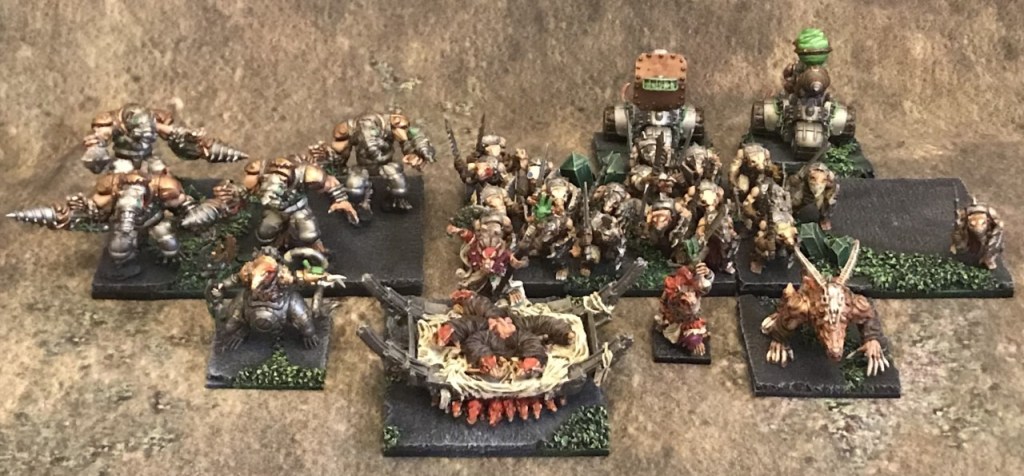
Rats. They’re great. Rats were the first army I really wanted to collect when I got into fantasy wargaming 30 odd years ago. Since then, I’ve collected a couple of armies, the most recent being my Fyrefur Clan, which I started when I got into Kings of War in 2019.
Over the last couple of years things have really changed for Ratkin with more lore, a revised list for third edition and now their very own Mantic range.
Whilst I’m a big fan of Kings of War as a game, and the community, my relationship with Mantic’s models is an evolving one. I’m a gamer first, enjoyer of fluff second and in a very distance last place comes painting, basing and prepping models.
Mantic’s older plastics (gargoyles, Basilean mounted paladins, etc.) made me think twice about building a full Mantic force, but the new plastic kits and resin have won me over. As the new Ratkin range will largely consist of these its game on.
The plan is simple, although somewhat dependent on Covid. I’ve come up with a list I quite like the idea of. Over the next 12 months I’m going to get it built and blog about it. So, if you’re planning on starting a Ratkin army it might give some insights into how the rats work (I’ll leave you to decide how interesting and/or helpful they are) and if you already have a Ratkin army it might make you shake your head and mutter, “No, that’s just wrong”.
I should probably add that I don’t have any crazy aims, like winning best painted trophies, tournaments or even games. This is just about having fun with Ratkin.
The (starting) List
As I’m hoping there will be some tournaments in 2021 I’m going for 1,995 points. I have no doubt this list will change over the course of the year, after all theory and the reality don’t always make for perfect partners. The list should also keep me focused so I don’t suddenly find myself working on that Salamander army I definitely have no interest in.
Warrior Horde with Plague Pot
Shock Troop Horde with Plague Pot and Brew of Sharpness
Vermintide Regiment
3 Hackpaw Regiments, 1 with Boots of Striding
2 Mutant Rat Fiends
War Chief on Fleabag
Scudku-z’luk
Twitch Keenear
It’s fair to say this is quite an elite list. Traditionally, rats are a grindy swarm army, but I’m not one for tradition. I am, however, one for big beasties and hard-hitting stuff hard, which the rat list has some great options for. I’ll talk more about units and list choices in future instalments.
Get Building
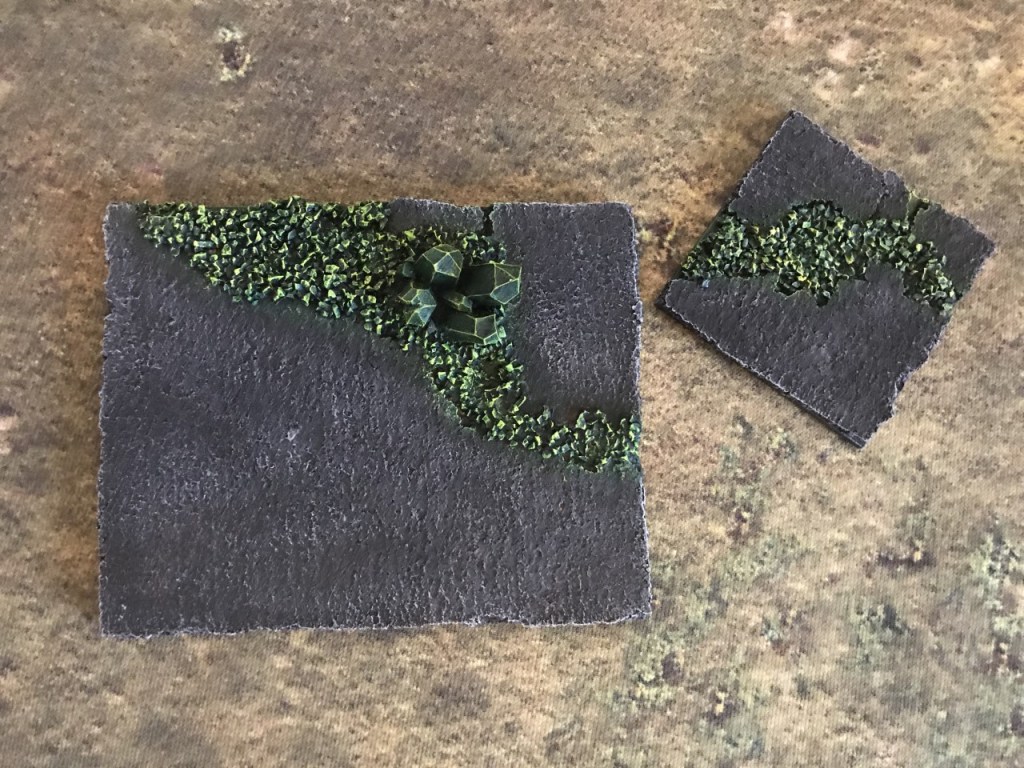
The first couple of weeks have been pretty productive, with a basing design decided on and the first models making their way to said bases. Fair to say, I’m pretty happy with the results.
Bases
I love scenic bases, but I’m new to building them and there’s so much to explore in terms of materials, concepts and my own limitations of both capability and patience. After more than a few failed experiments I’ve created something I’m happy with.
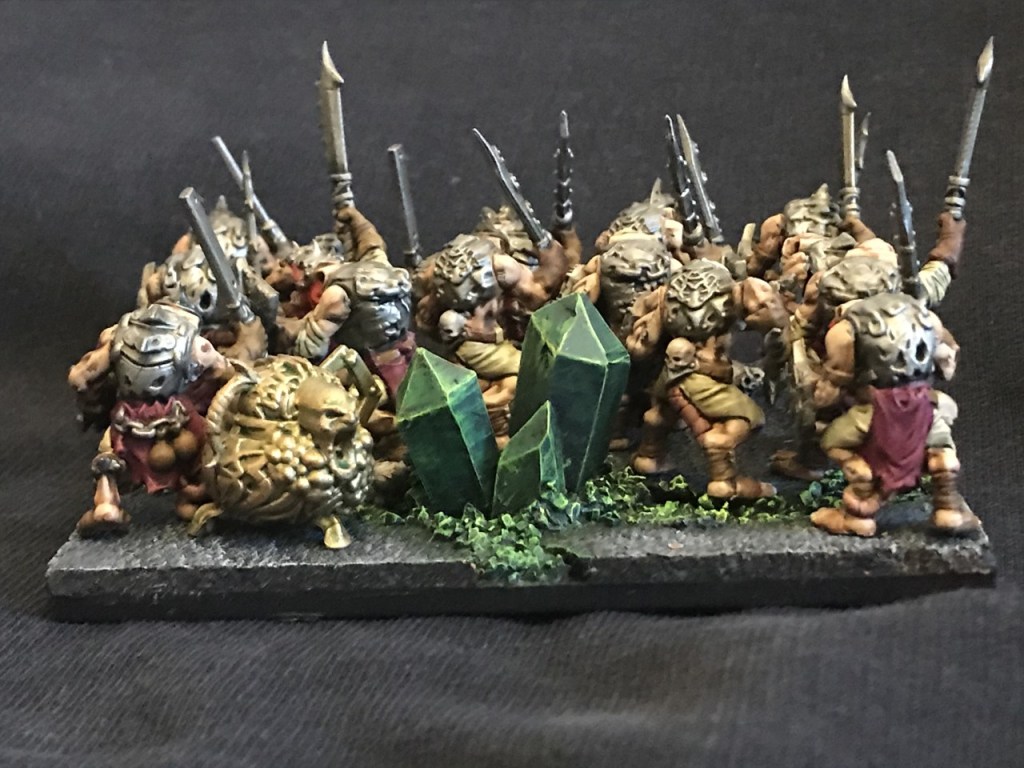
Warriors
My first regiment/half a horde is one rat away from completion. Preferred model count is definitely the order of the day, leaving space for a cheeky Plague Pot. Warriors are one of my favourite blocking units in the army. Whilst they don’t dish out a lot of damage, I quite often think people underestimate just how hard they are to shift, especially with a well-timed plague pot and a bit of rally to up the nerve score. They are also the cheapest unlock. Yes, the unit strength isn’t as good as the spear warriors, but I’m not expecting them to make it to the end of the battle, so it doesn’t really matter. Finally, having rally themselves means they provide really useful support for more fragile units in the early turns.
Twitch Keenear
Twitch would have been a perfect fit for my second edition army, so it will be interesting to see how he performs when we finally return to the tables. Whilst Hex isn’t the most exciting spell, I think Banechant and Eye of the Abyss special rule (allowing a Banechanted unit to re-roll their to hit and to wound dice) is a great fit for this list. For me elite builds are all about certainty of outcome, so whilst Banechant (3) means its highly likely extra strength will be available Eye of the Abyss gives you that second chance when you really need to take an enemy unit off the table, ground a flyer or knock thunderous off some knights. Yes, it’s not going to get used every turn, or even every game, but think it will impact the way I use Banechant.
That’s it for the first instalment. Back with more in a couple of weeks.
Garth Nix is an Australian fantasy writer specialising in novels for children and young adults.
What’s it about?
Susan Arkshaw’s search to find her father leads her to the home of crime boss Frank Thringley. A late-night attack on Frank’s home results in Susan fleeing mythical monsters with a mysterious young man called Merlin.
Merlin is one of the Left-Handed Book Sellers of London. The book sellers are an ancient family of investigators and enforcers dedicated to protecting the mundane from the mythical. Susan very quickly finds herself embroiled in a mystery far greater and much older than she could have ever imagined.
Is it any good?
More of an adventure than a thriller, it is a beautifully written book. Nix is clearly a skilled story-teller, who has created a beautiful and intriguing other-world where the creatures of myth and legend live in parallel with, and occasionally in, our own. It’s a feel-good fantasy that goes perfectly with a mug of tea and a chocolate biscuit.