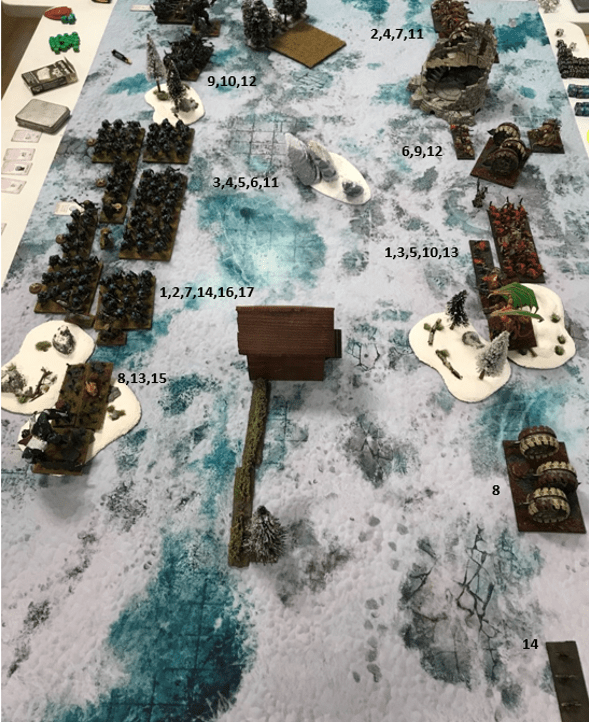
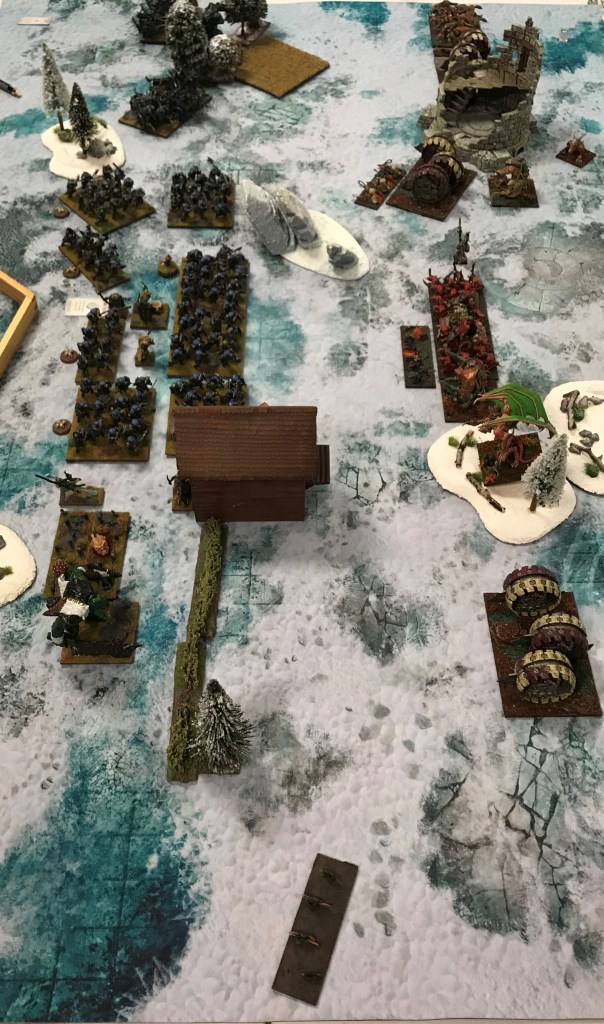
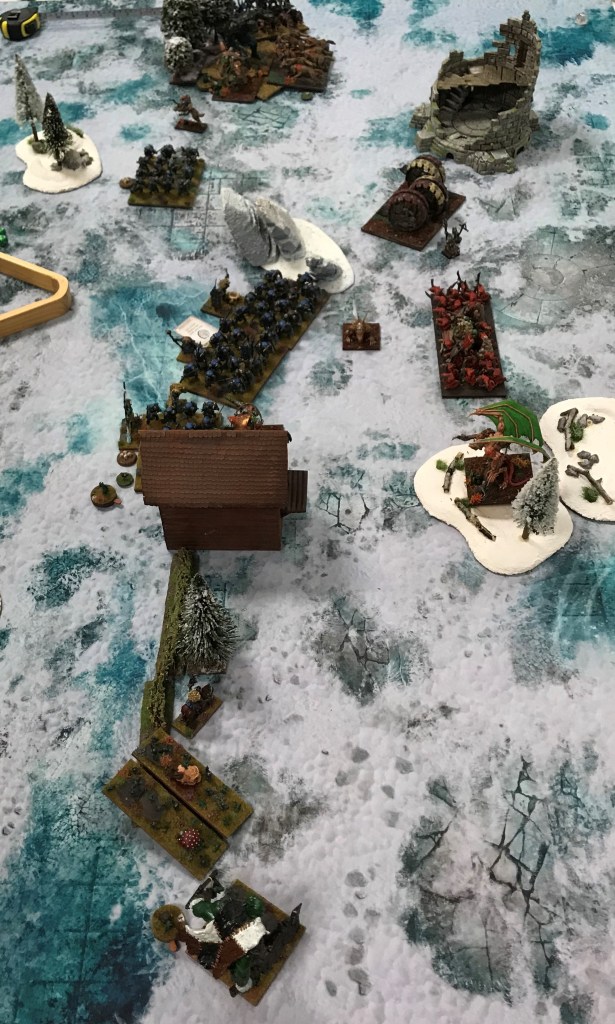
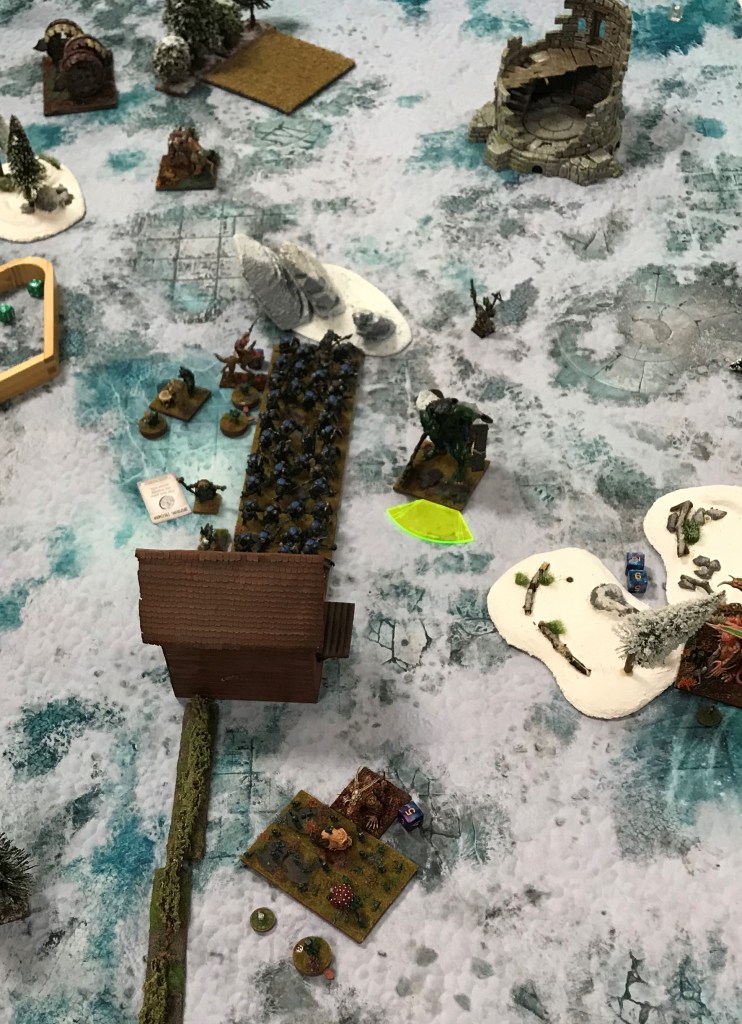
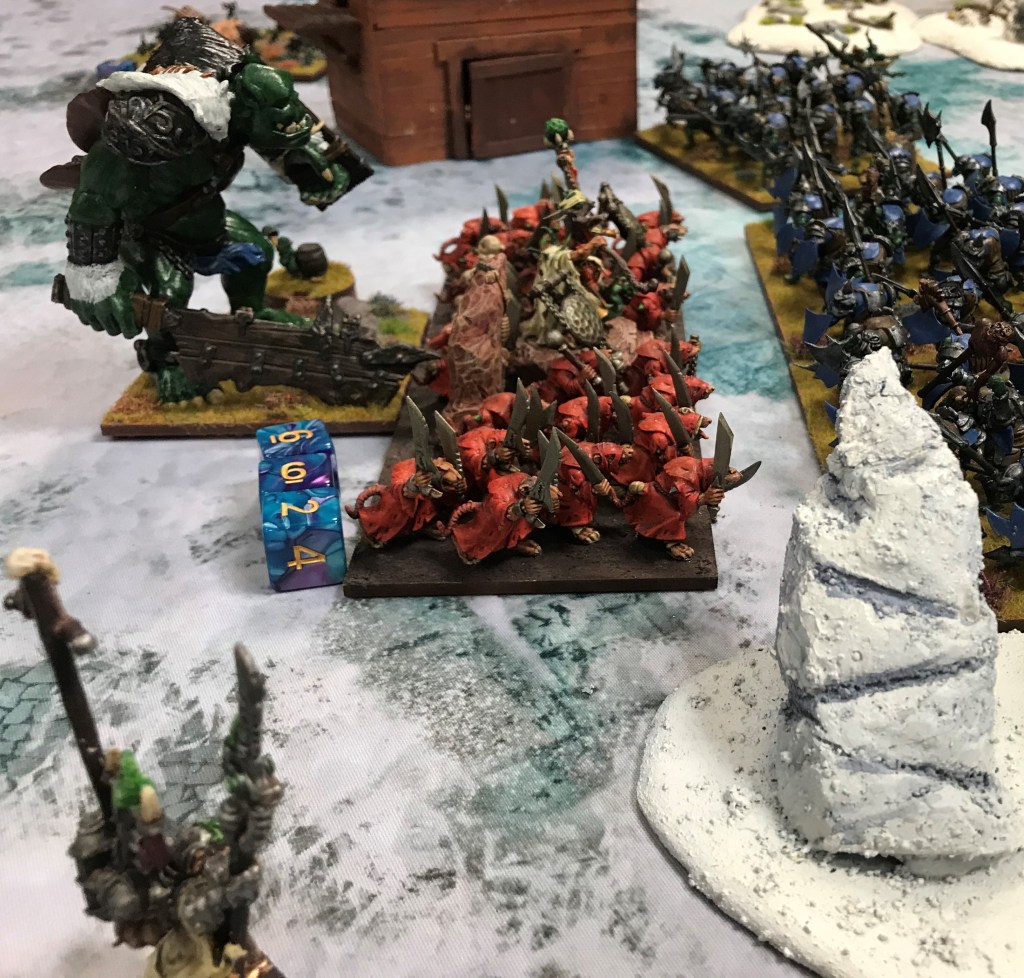
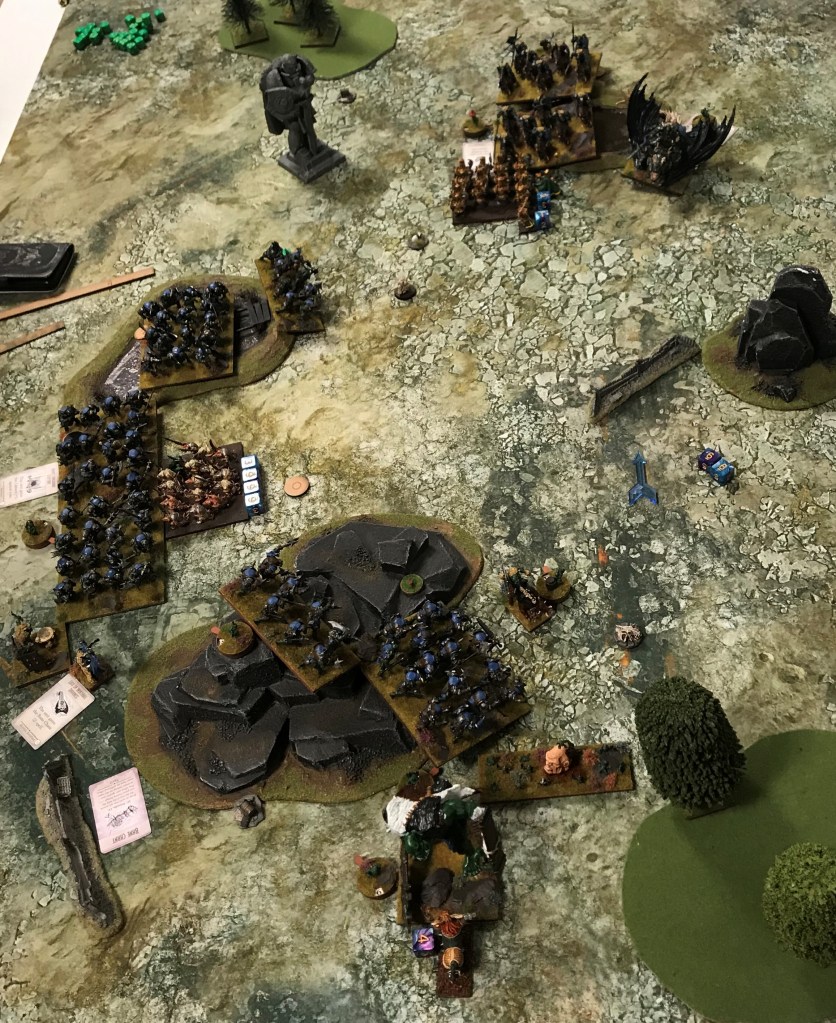
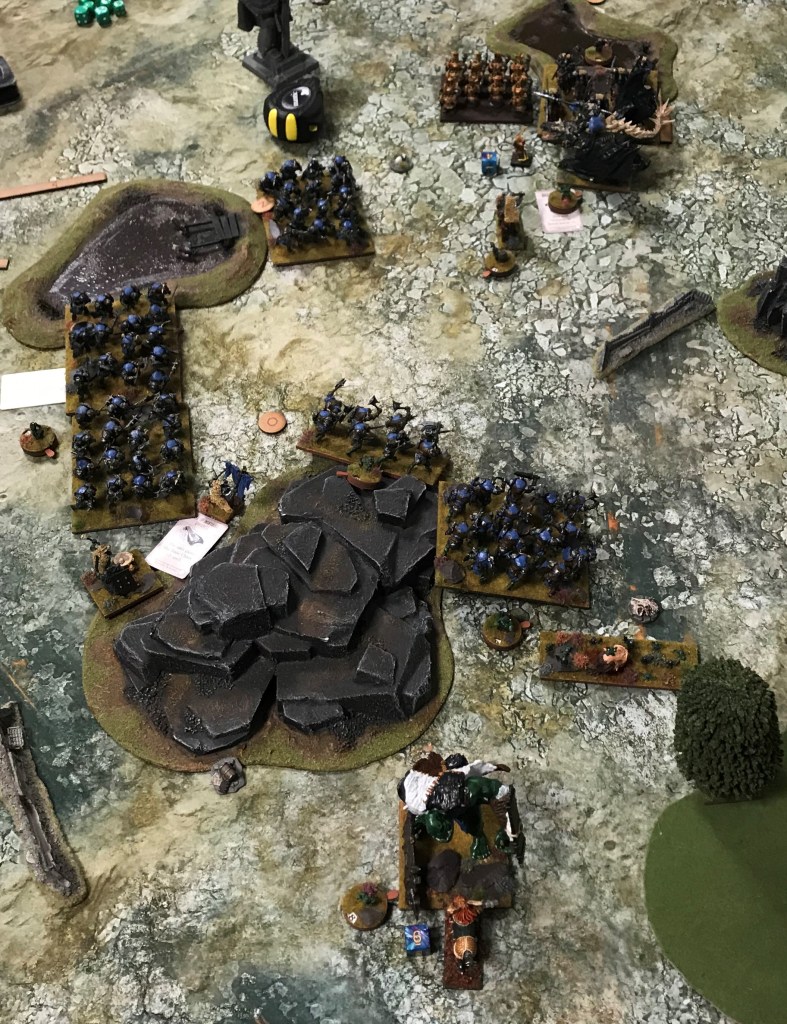
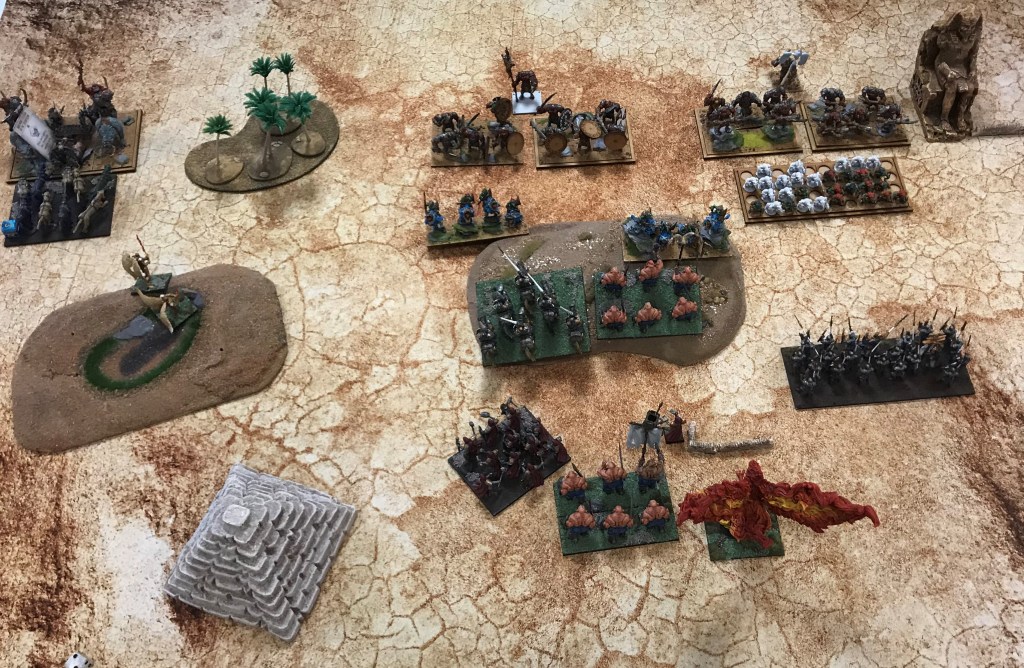
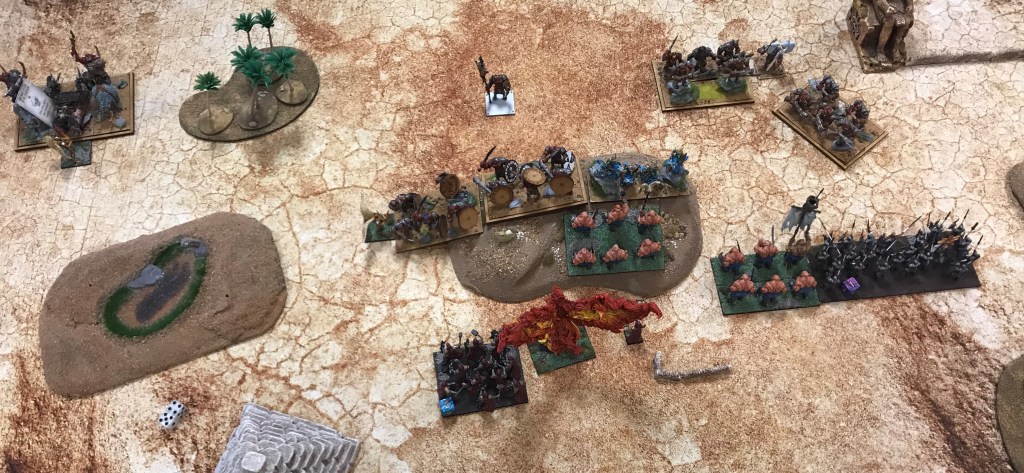
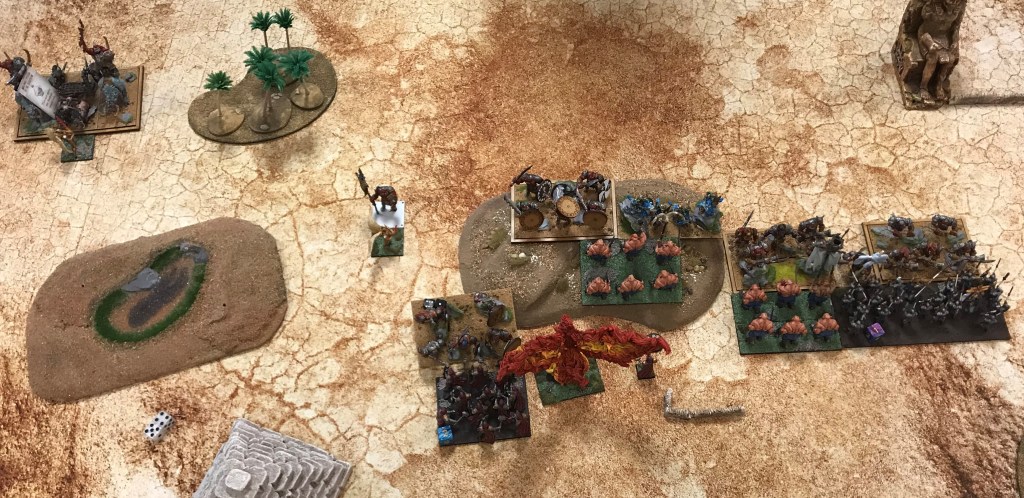
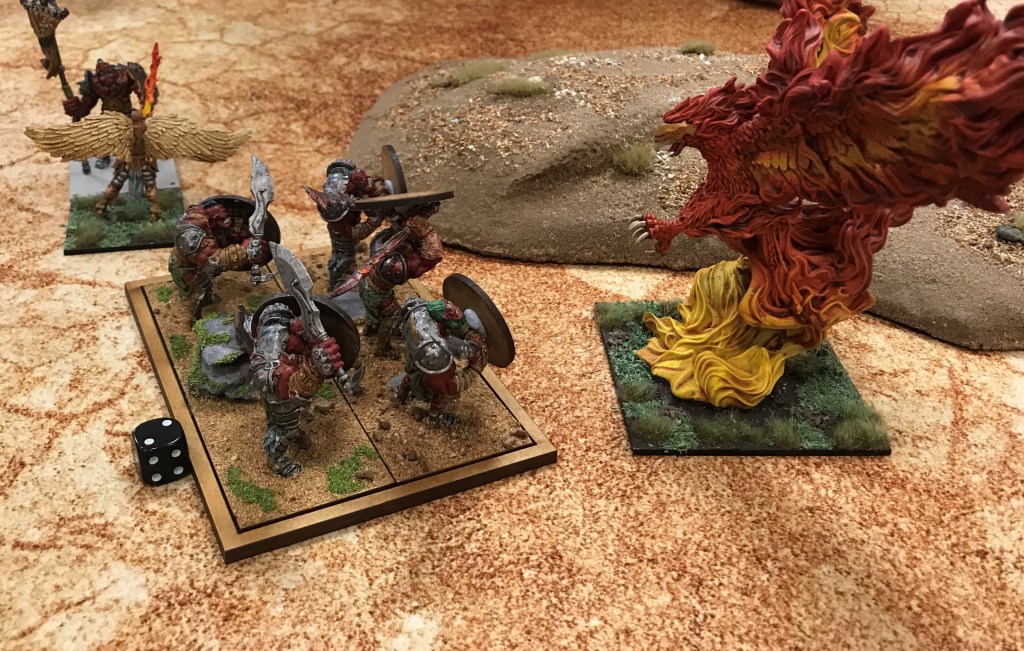
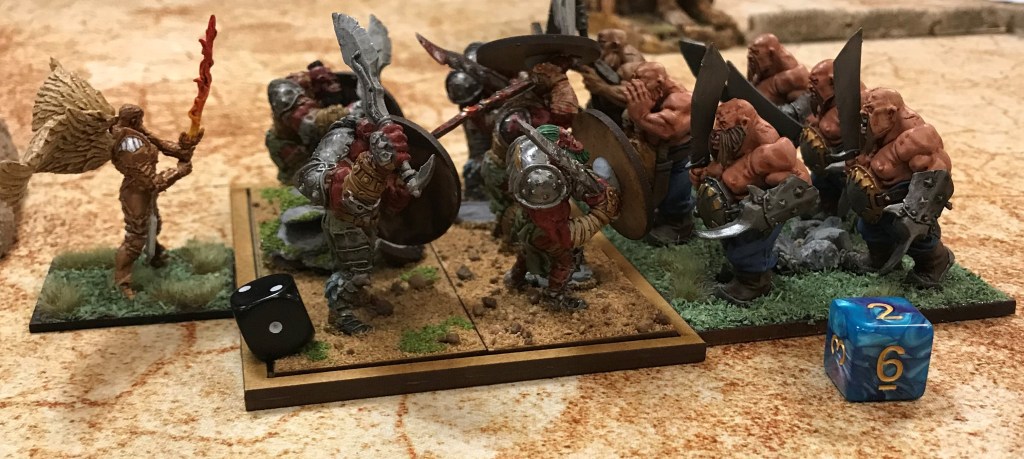
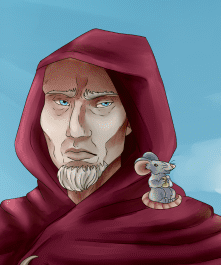
The last few games have been great fun, and an instant reminder of why I enjoy playing Kings of War. In another tentative step towards real(ish) life a friend and I have signed up for a tournament in October. The tournament is a 1,995 point event with a twist. There is a choice of three characters to add to the army. After perusing the tournament pack we decided at least one practice game was in order. Reviewing the character options we both opted for The Maiden, a healing character with Heal (5) and Radiance of Life. The scenario is Plunder.
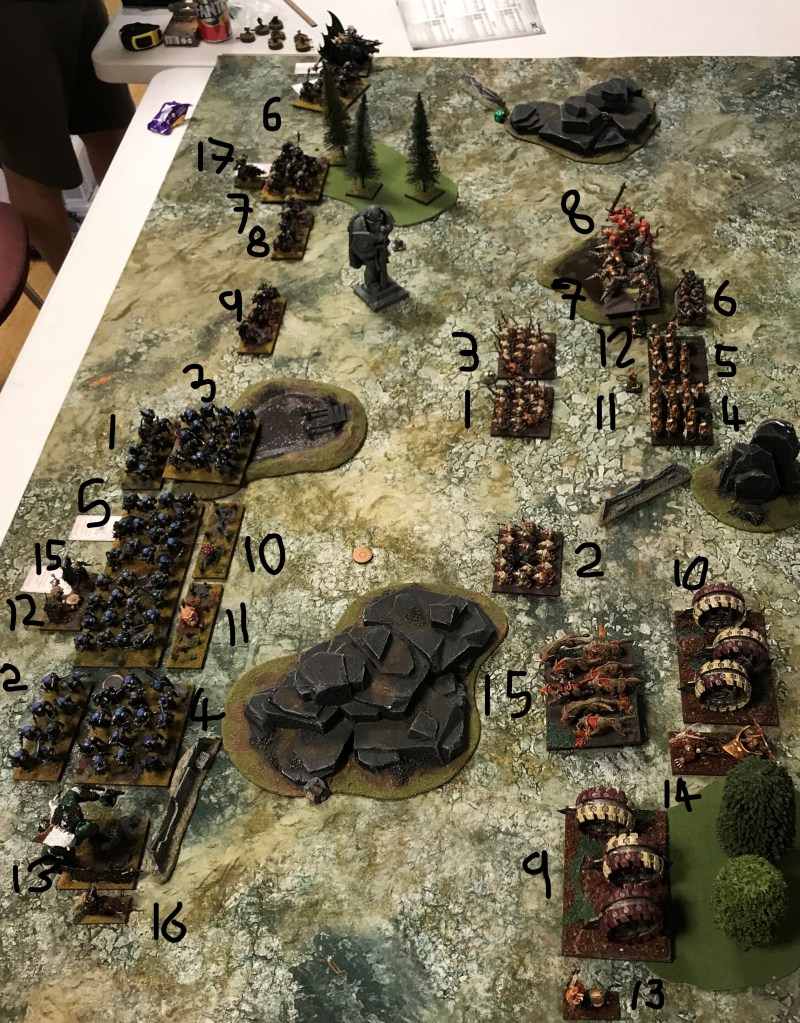
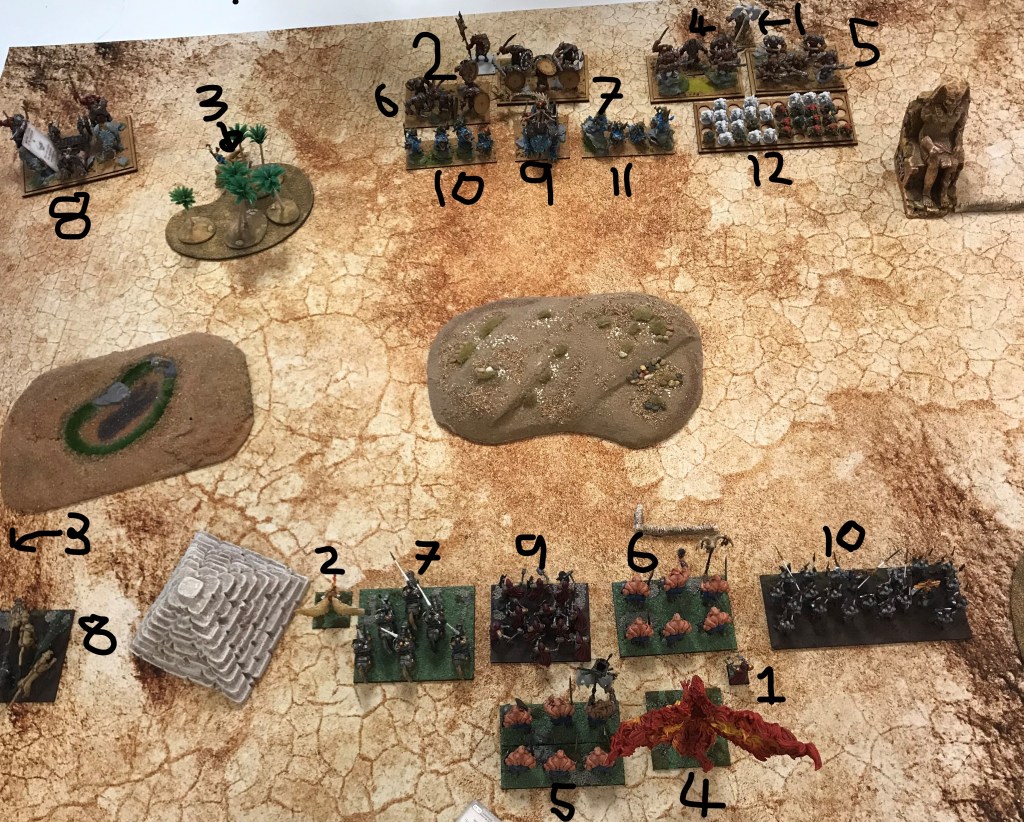
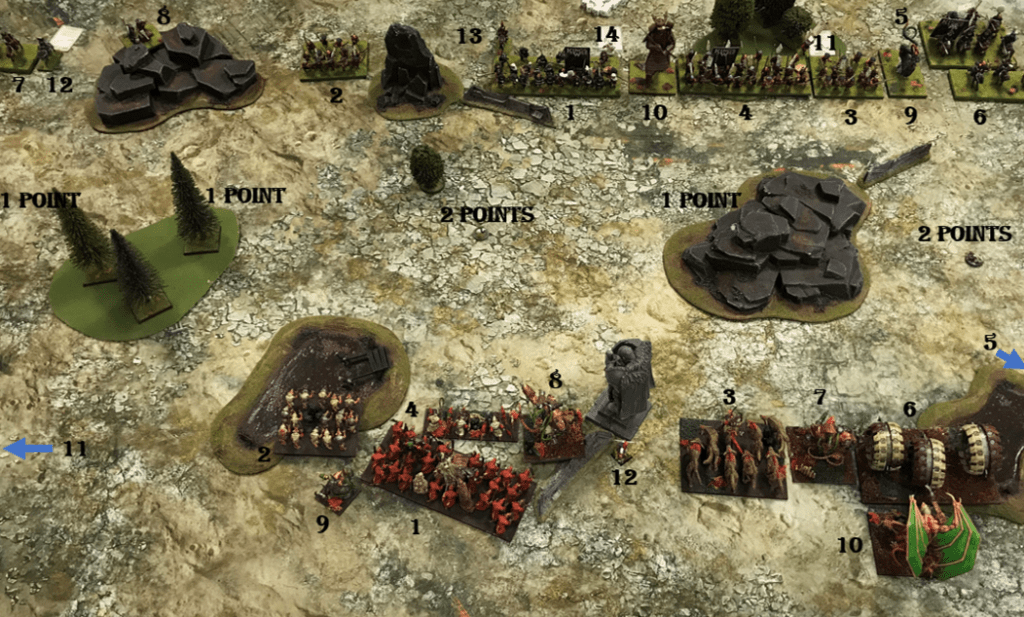
Armies
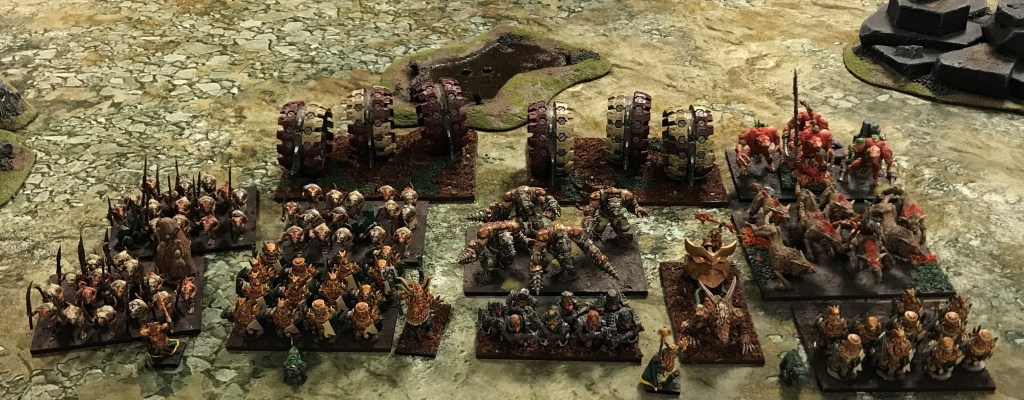
Ratkin
1 – Shock Troop horde with Plague Pot and Brew of Sharpness
2 – Warrior regiment
3 – Hackpaw regiment
4 & 5 – Vermintide regiment
6 – Tunnel Runner regiment with Caterpillar Potion
7 & 8 – Mutant Rat Fiends
9 – Mother Cryza
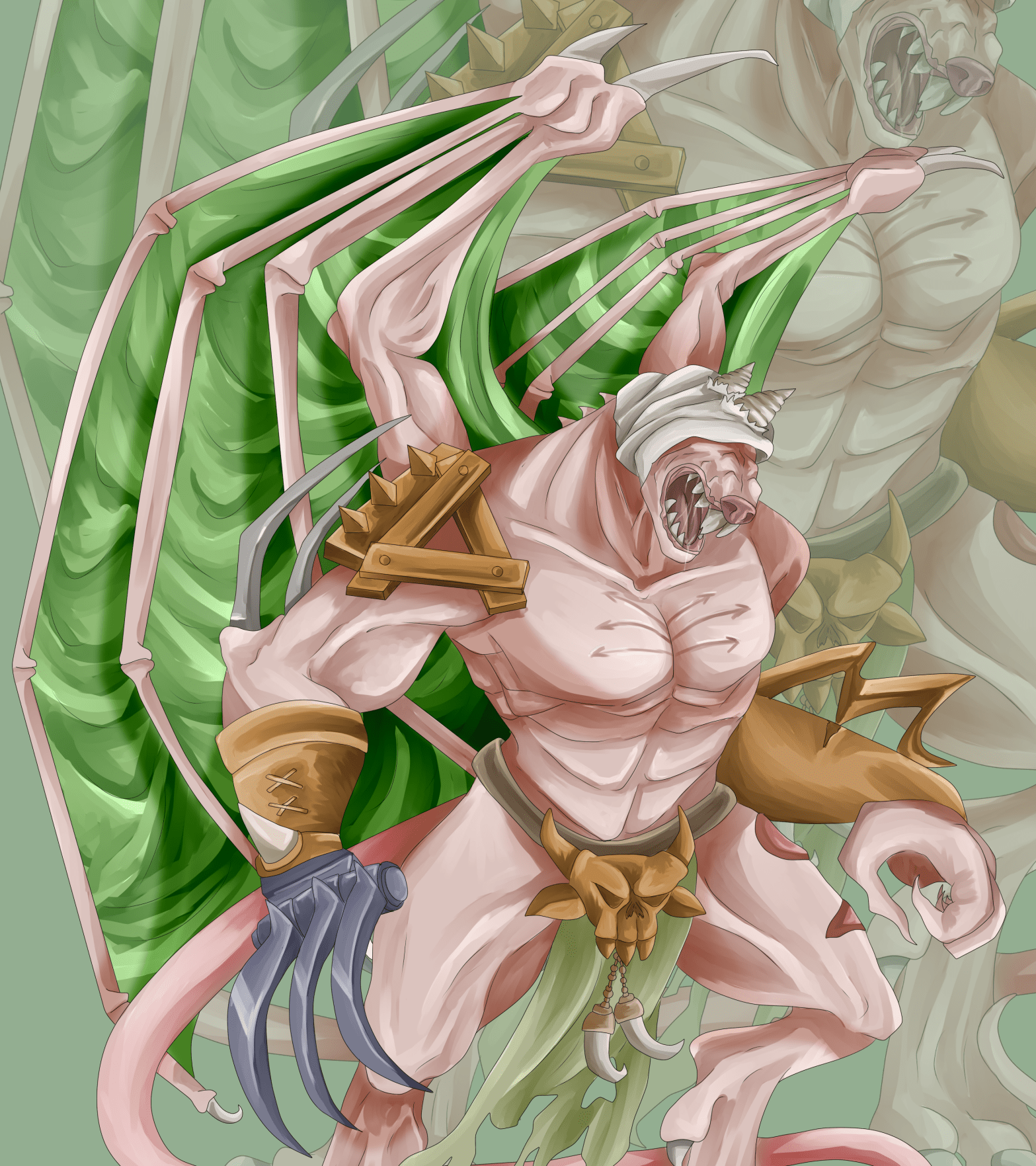
10 – Scudku-z’luk, Demonspawn of Diew
11 – War Chief on Fleabag with Mournful Blade
14 – Cassandra – Maiden with Heal (5) and Radiance of Life

Kingdoms of Men
1 – Foot Guard horde with Brew of Strength and Indomitable Will
2 & 3 – Pole-Arms Block regiment
4 – Spear Phalanx horde with Hann’s Sanguinary Scripture, Indomitable Will, Pikes
5 – Knights regiment with Caterpillar Potion
6 & 7 – Mounted Scouts troop
8 – Cannon
9 – Mammoth
10 – Giant
11 – Army Standard Bearer with Lute of Insatiable Darkness
12 – Hero on Horse with Blade of Slashing
13 – The Captain on Horse
14 – Maiden with Heal (5) and Radiance of Life
Turn 1
Cassandra had been born within the confines of the Oracle and had spent her entire life growing up there. Not once in the first fifty years of her life had she set foot outside of the building. Not once had she met or spoken with anyone who had not dedicated their life to the Oracle. She had lived in permanent exclusion with no thought of the benignities of everyday life. The Oracle was not a place for idle chatter, garish images or bad smells. Those selected to be there spent their lives in and out of visions and dreams, never quite sure where reality began and ended, or where the past separated from the future and the present. It was an existence like no other, to see everything, but understand nothing.
One day she returned to her room to find a white staff and purple surcoat waiting for her, laid out in the middle of the floor. She had heard these were the trappings of a questing augur; but had never seen or met one in all her time in the Oracle. She was not familiar with jokes, let alone practical ones, but quietly she wished the whole situation was intended to mislead her, briefly, before everything quickly returned to normal. Had she understood the concept of humour she also would have wanted this to be included.
With hesitation turning to trepidation she donned the surcoat and took up the staff. Her journey began.
Not once over the next six months, as she followed her visions, did she question what she had been sent to do. Faith in the greater good was the cornerstone of the Oracle and a way of life for its augurs. It was said the Oracle worked in mysterious ways and the last twenty four hours had made Cassandra really question just how mysterious those ways were. Especially now, as she stood by a crumbling wall surrounded by the stench and sound of ratkin readying for battle.
On the other side of the battlefield an army of men started its advance, a giant striding ahead of the lines. Cassandra couldn’t help but wonder if she was on the wrong side, but the visions had led her to Mother Cryza, given her the words of the broken rat tongue to offer aid, and protected her from the old broodmother’s accusations of spying and sabotage. Eventually there was acceptance and Cassandra joined the rat warriors on the field where the Lockstones lay.
She assumed the Lockstones were the reason she had been sent. It was clear from Cryza’s rants to her war leaders their recovery was important, but for what reason she didn’t know. The roar of a cannon brought her back to the present. The shot had landed somewhere to her left, instinctively she moved towards it, hating her instincts as she realised where her legs were taking her. Behind her fleabags snarled and leapt from the battle line towards the giant. Smashing into it in the hope of blocking it from causing chaos in the rat lines. The Vermintide regiments also moved forward, attempting to block the enemy from grabbing Lockstones.
The remainder of the army moved forward with the Mutant Rat Fiend on the left flank crossing in front of the Shock Troop horde towards the Pole-Arm Block.
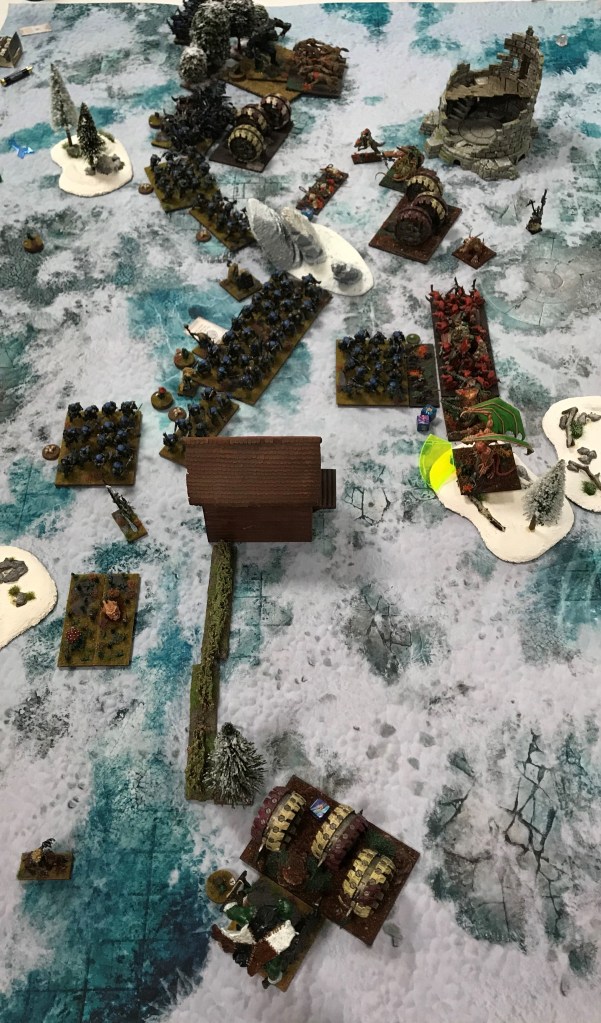
Turn 2
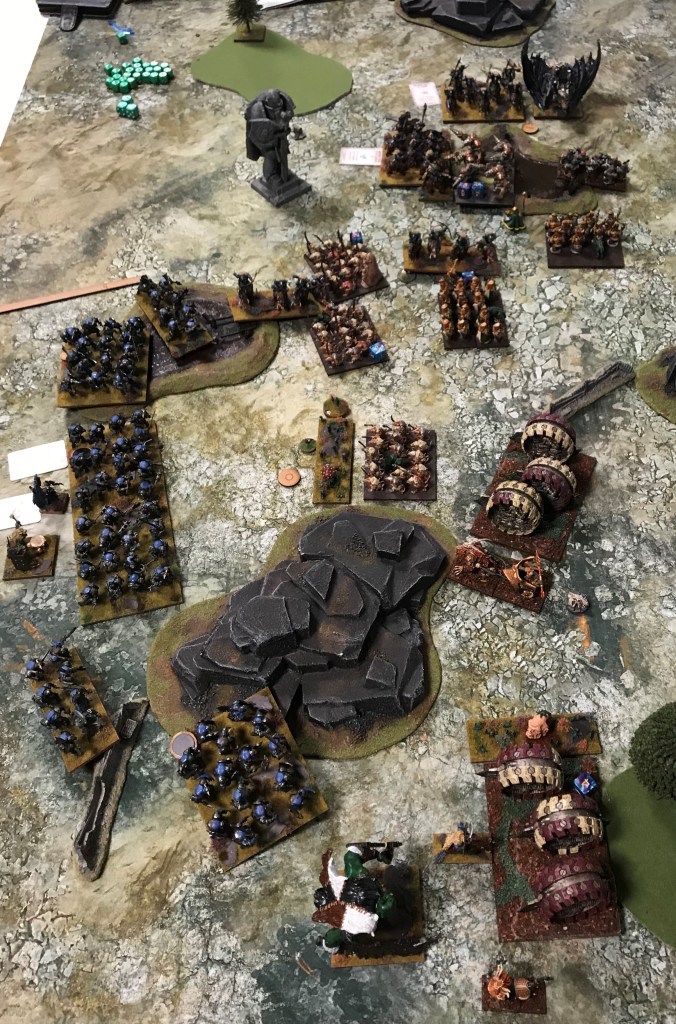
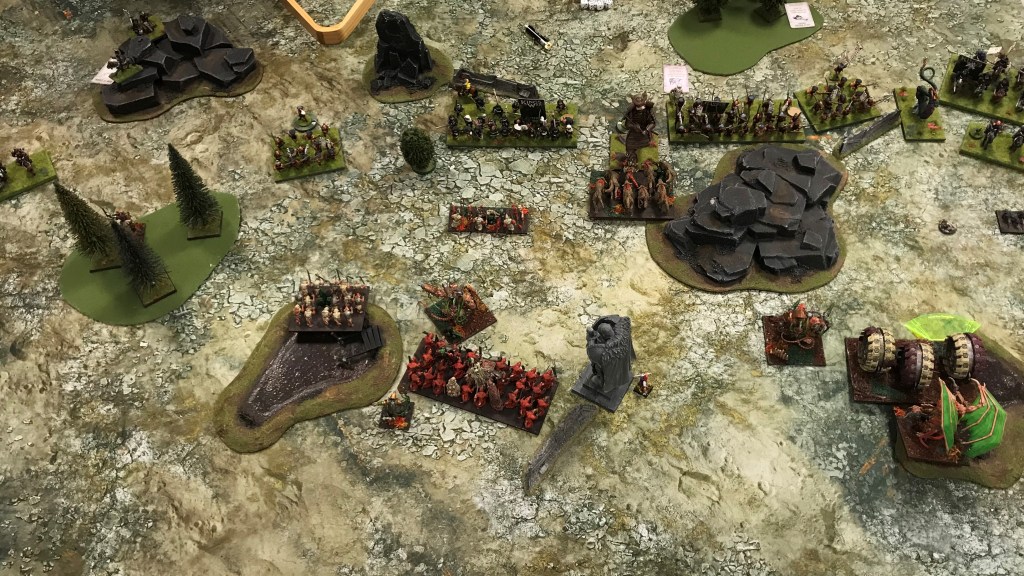
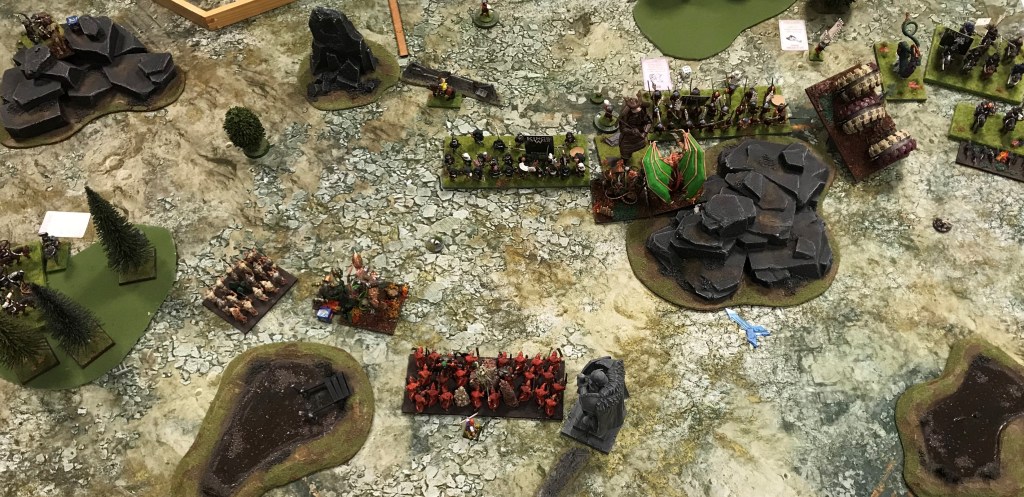
The giant swung its massive katana, slicing through riders and fleabags with ease, before trampling on those that remained. Beside the Giant the Foot Guard horde charged into the Vermintide sending the tiny rats scurrying back towards their larger cousins.
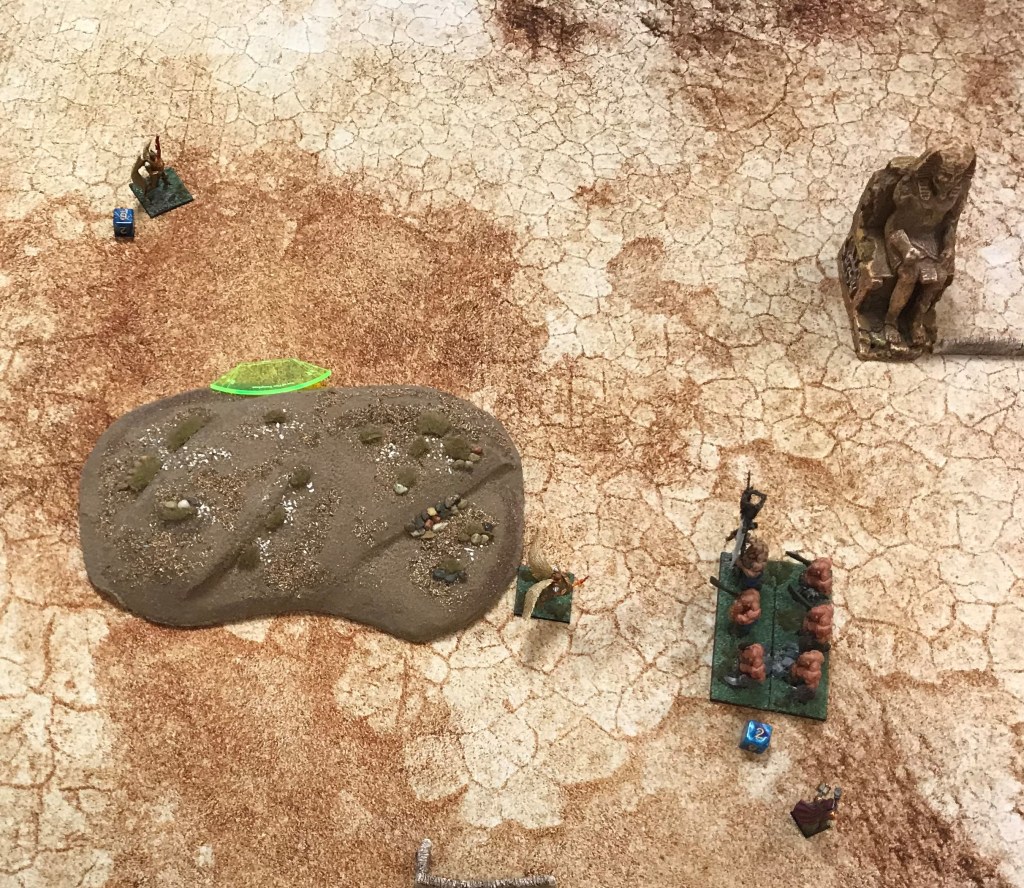
On the far left of the field the ratkin War Chief on his fleabag had made his way to the small wood hoping to attack the cannon. The Mounted Scouts and Hero spotted him and charged into the woods. The sly old War Chief smiled. He steered his mount into a thicker part of the wood and dodged between branches, using them to shield him from the blows of the cavalry.
On the hill the cannon fired again. The shot clipped Mother Cryza, the old brood mother barely winced, but she reached out to the War Chief ordering him to ignore the horsemen and remove the threat on the hill.
On the right the Mounted Scouts loosed a volley into the remaining Vermintide regiment, but failed to waiver them, instead the rats charged the horsemen in response.
The rapid demise of the Hackpaw regiment left the human army in a strong position with a solid centre and fast-moving regiments on the flank, ready to exploit any opportunities that presented themselves. Suddenly the pressure was on the Mutant Rat Fiend and the Demonspawn to make a move. Weighing their options the creatures seemed to act in graceless unison, lumbering towards the Giant, hoping to bring it down; or at the very least buy time for the Shock Troops to deal with the Foot Guard without the Giant flanking them. Seeing the titans make a move the Tunnel Runners also decided it was time to join the fray. The right flank was starting to dissolve. Whilst the Vermintide were locked in a tit for tat exchange with the Mounted Scouts and the titans had moved to the centre, the Tunnel Runner regiment was suddenly left alone facing a horde of Pikemen, a Pole-Arm Block, a Mammoth and a Knight regiment. The chariots made for the Pole-Arm Block hoping to hold up the Mammoth and Knights for a turn. It was a risky move as the Pole-Arm regiment was hunkered down behind a wall that hindered the chariot’s charge. Unfortunately for the men the wall was not as sturdy as they had hoped. The chariots shattered the wall in front of them turning stones into missiles that flew through the neat ranks. Blades and metal rollers followed quickly, taking their toll, leaving the few survivors running for their lives from the dusty confusion. In the aftermath of the charge the charioteers turned to face the Mammoth, happy their chances of survival had now greatly improved.
Cassandra made her way to the rear of the Shock Troop horde. The hairs on the back of her neck stood on end as she listened to angry chittering. Some helpful, fleeting spirit gave her understanding, as the leader of the Shock Troops berated the lumbering Mutant Rat Fiend that had crossed their front preventing them moving forward far enough to charge the Foot Guard. It was an error that the veteran warrior knew could cost the Ratkin dearly, even if the titans could take down the Giant.
Mother Cryza and the other Mutant Rat Fiend charged the remaining Pole-Arm Block regiment. The injured Brood Mother wasn’t keen to join the melee, but mistakes in how the army had deployed were starting to show and the initiative had to be regained if the Lockstones were to be claimed. Whilst ancient in years the broodmother’s wrath was fresh and keen, alongside the mighty mutant, she swung her staff, lashing deftly at soldiers, utterly destroying the little threat to her they had ever represented.
In the woods the War Chief continued to dodge blows and duck between branches. The cannon was still his target, but one does simply not ride away from a bunch of angry horsemen determined to cut you in half. Steadying himself he saw an opportunity, a poor blow from the Hero meant the man’s sword became tangled in some vines and the rider became a barrier to the Mounted Scouts. Seizing the moment, the rat spurred his fleabag out of the woods and up the hill towards the cannon. Unfortunately, the energy required to leave the combat and charge the cannon was too great, and whilst his blows wavered the gun crew he was unable to stop them completely.
In the centre the struggle between the titans continued. The giant’s size belied its nimbleness and discipline as it smoothly blocked and dodged the great blows of the giant rat beasts. The beasts’ gamble had not paid off and the Demonspawn knew they would pay dearly.
Turn 3
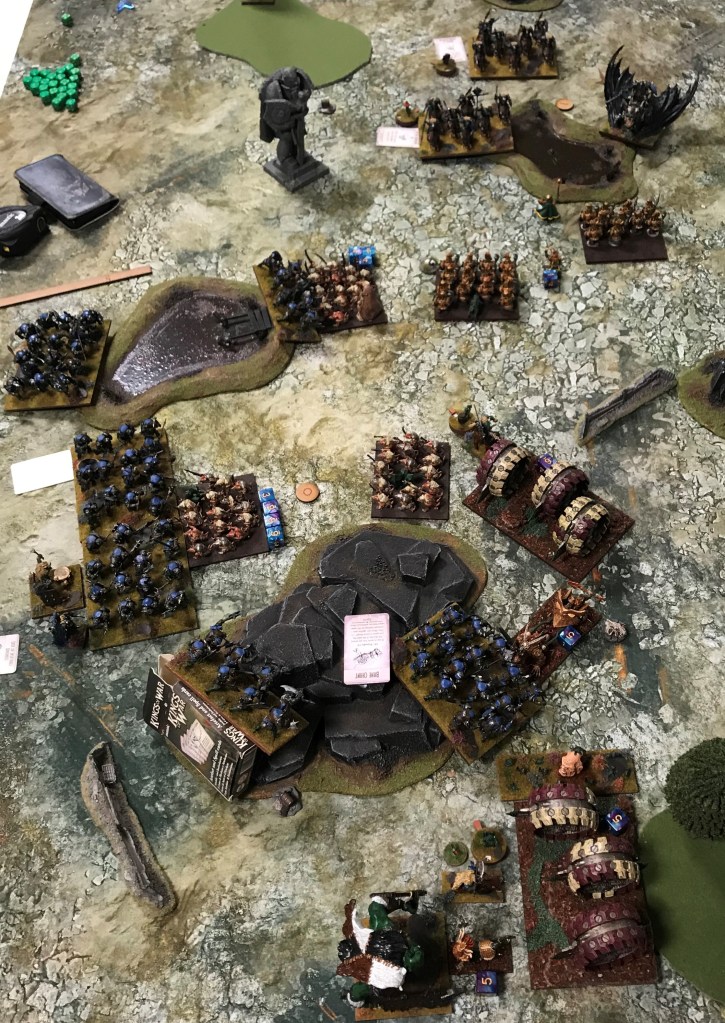
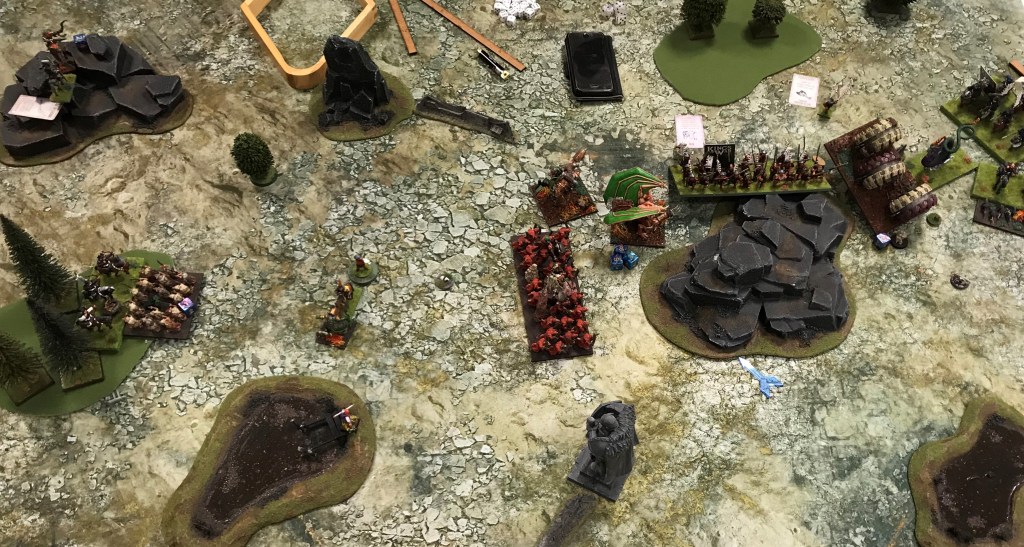
The Mounted Scouts on the right flank remained locked in combat with the rats. In the ranks of the charioteers there were was a moment of relief as they realised that their success had not only allowed them to turn to receive a charge, but had effectively locked up the Knights, meaning only the Mammoth could get at them. The ground shock as the mammoth started its inevitable charge, but the short distance stopped the beast from gathering too much momentum and resulted in the chariots being wavered rather than wiped out in a brutal blur of tusks and stomping feet.
In the centre the horns of the Foot Guard sounded a charge. The troops wheeled neatly before raising their swords and smashing into the flank of the Mutant Rat Fiend. The Giant took the opportunity to step back from the monstrosity and focus all its energy on the Demonspawn. Caught in the flank by so many determined attackers, the Mutant Rat Fiend slowly succumbed to their repeated blows. Despite taking massive damage at the hands of the Giant, against all odds, the Demonspawn managed to survive, and steady itself, ready to deliver its own blows.
On the right flank the mounted Hero turned his horse to face the hill. He saw the War Chief slashing at the cannon and took the opportunity to charge the distracted rat. The hero’s lance hit home, but barely scratched the ugly rat warrior that looked up from its destruction of the cannon and sneered, before returning to finish the job.
The Mounted Scouts sneaked further into the woods. Without the rats noticing they had already managed to recover two of the smaller Lockstones. Happy with their work they sent a volley of arrows into the nearby warrior regiment, but failed to do anything significant other than alert them to their presence.
The Captain watched the battle unfold, happy with progress until he noticed Mother Cryza, surrounded by the dead bodies of his Pole-Arm Block turning her twisted attention on the Mounted Scouts in the woods. Without a second thought he flicked his visor shut on his helmet, drew his sword and spurred his horse. He crashed into the old broodmother who twisted out the way of his attack before swinging back with her staff. The old rat witch did little damage, but he felt a poisonous chill run down his spine simply from being in her presence. He felt his energy ebb, but refused to give into whatever it was making him feel that way and raised his sword for another attack.
Cassandra had put some distance between herself and the fighting. The noise, the blood and the violence had shocked her, driving her back in revulsion and forcing her to question why she had been chosen to support the vile Ratkin. At that moment a warm tingle spread over her. It calmed her racing mind and centred her warring thoughts. Her eyes were drawn toward the injured Mother Cryza battling the Captain. For a moment she no longer saw the vicious, twisted sorcerer, but instead she saw her as a matriarch, a mother, a protector of her children. Cassandra reached out towards her and felt the wounds heal. She closed her eyes.
On the hill the War Chief once again dodged away from the Hero and rained another volley of blows on the cannon and its cowering crew. Watching the mighty rat seem to ignore their Hero convinced the crewmen they had only two ways to escape the beast, by running or dying, they chose the former.
In the woods the rat Warriors charged the mounted scouts but failed to hit them as they fought around trees and thrust swords between branches. In the centre the ratkin were starting to fight back. The death of the Mutant Rat Fiend made the Demonspawn redouble its efforts against the giant. A last desperate attempt for survival saw the Demonspawn grab the Giant’s sword, snap the blade off and ram it into the titan’s neck. As the giant sank to the ground the Shock Troop horde took heart, and with the remaining Mutant Rat Fiend, smashed into the Foot Guard routing them after only a brief exchange of blows.
Turn 4
Despite its victory against the Giant, the Demonspawn was clearly suffering. The leader of the Pikemen horde took his opportunity and ordered the drummer to sound the charge. The Pikemen marched forward spearing the injured titan, forcing it to the ground.
On the right flank the Mounted Scouts killed the last of the Vermintide whilst the Mammoth overturned the remaining rat wheels and stomped on them for good measure. Finally, the Knights were able to bring their lances to the support of their comrades, but was it too late? On the left the Mounted Scouts drew back from the rat Warriors and fired off another volley that chipped away at their ranks whilst the heroes on the hill continued to exchange blows.
Cassandra’s eyes remained closed, the warmth blanketed her and in her mind she saw the battlefield. She knew what she saw was not the real field of nightmares and destruction, but a cleansed and sanitised illusion, that projected the rats as noble crusaders saving the world from demons disguised as men. She reached towards the warriors, arrows melted out of existence and flesh knitted together. The Warriors charged the Scouts once again. Once again they were hindered by the trees that prevented a decisive end to the skirmish.
The Shock Troops and Mutant Rat Fiend continued their destructive trail across the field dodging between pikes to deliver killing blows. As the last of the pikemen fell to the dirt the Shock Troop’s momentum carried them up the hill and onto a Lockstone that the troopers dragged from the ground and presented to their leader. Happy the giant rock would bring him favour with Mother Cryza he turned his attentions to the Mammoth heading in their direction, hungry for his next trophy.

Turn 5
The Mammoth started to run, lowering its tusks, before snapping its head back and driving them towards the Mutant Rat Fiend. The mutant twisted away from the sharp spears of ivory, dodging one but finding itself skewered on the other. As the monsters struggled the Mounted Scouts cantered to the site of another Lockstone.
On the left flank the broken combat continued between the Scouts and the rat Warriors. Worried that the rats would eventually gain the upper hand the Captain broke from his combat with Morther Cryza and charged into the rear of the warriors, hoping to break the deadlock, but to no avail.
In her altered state Cassandra reached out again, healing the warriors before their next round of combat. Free of the Captain’s attentions Mother Cryza made her way to the centre of the field and pulled the last of the Lockstones free and placed it in a shoulder bag, before raising her staff and casting Bane Chant on the Shock Troops rushing to the Mutant Rat Fiend’s aid.
The Shock Troops charged into the flank of the Mammoth as it tussled with the mighty mutant. There was no grace in the Shock Troop’s fighting, but its effectiveness was without question and soon they turned to face the remaining cavalry. It was then that the Shock Troop’s leader noticed the Lockstone the Scouts had recovered. He chittered nervously as he realised it was significantly bigger and shinier than his. He cursed, realising he had recovered the wrong one.

Turn 6
With the Captain unable to distract the rat Warriors in their pursuit of the Mounted Scouts he pulled away from the combat and moved to a position where he could ensure the horsemen held under his stern view.
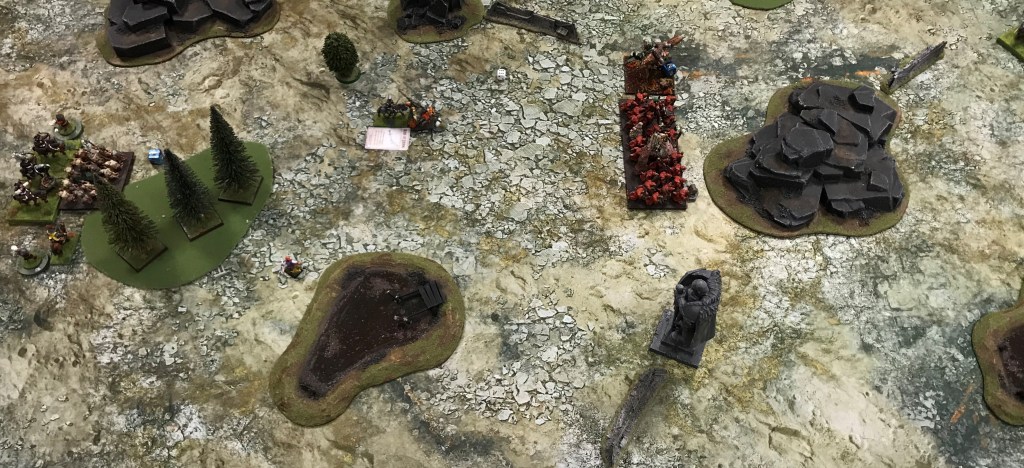
The Hero on the hill finally cut down the War Chief, emboldened by his triumph he charged into Mother Cryza, but failed to force her to drop her Lockstone. On the right flank the Shock Troops drew back, the Mounted Scouts were preparing to leave, and the knights would easily block them if they tried to chase them. Better to hold on to what they had.
In the woods there was a muffled thud as Cassandra fell to the ground exhausted. The battle was over.
After the dust settles
Victory went to Kingdoms of Men scoring 4 points against 3 for the Ratkin. This was a great game that highlighted the importance of remembering which token you put where. It was also a game where the woods on the rat’s left flank played a massive part, so let’s get into a couple of post-game observations:
Use terrain to your advantage – both the rats and the men used the woods to protect units. The War Chief sheltered in them on his way to the cannon so if he was charged, which he was, attacks would be at -1 to hit. The Mounted Scouts later took advantage of the woods by backing away from the warriors and shooting. As the scouts backed out of the woods the rat warriors had to make new charges meaning they were repeatedly hitting on sixes. This minimised the damage the warriors could do, especially important as the Lockstones the scouts carried reduced their speed and removed their nimble limiting their options to flee.
Remember which tokens have which points – whilst I remembered to play the scenario, I forgot where I placed the second 2 point objective (yes I did place it). Consequently, when my Shock Troops picked up their objective I was convinced it was worth 2 points, it wasn’t until the end of turn 5 I realised it wasn’t and then, even with a 7th turn it was too late to do anything. At that point my only hope was to kill the Mounted Scouts fighting my rat Warriors, but my opponent’s skillful use of the woods made this all but impossible.
Capitalise on the chaff – I stand by my decision to move the Mutant Rat Fiend across the front of the Shock Troops, the redeployment had to happen as, in retrospect, my deployment of these units was wrong. However, by doing this the Shock troops were unable to capitalise on the sacrifice of the Vermintide which would have fundamentally altered the flow of combat in the centre.
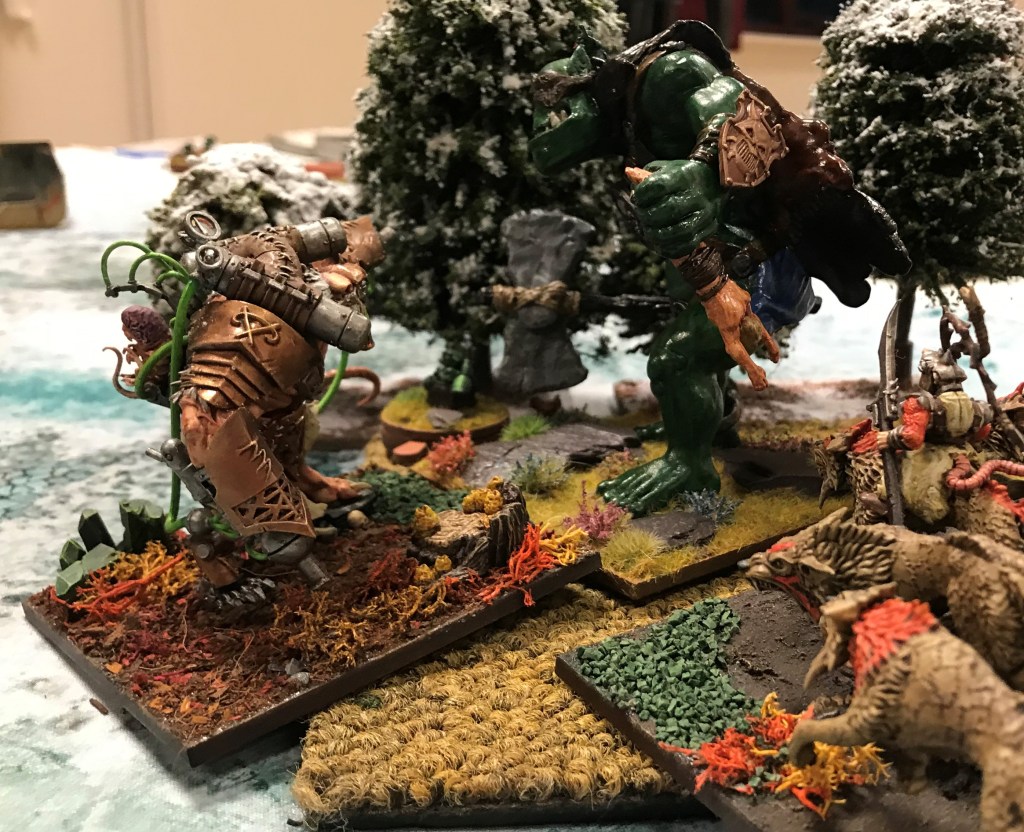
Cassandra – The Maiden offered an interesting additional dimension to the army by providing healing support. This turned out to be invaluable for keeping the rat Warriors in the fight in the wood and Mother Cryza refreshed, not something I’m used to. I’m not sure this will convince me to explore Broodmothers for this army build, although I do want to try more of a grinding rat build in the near future. But I think I have a good idea of how she fits into my force ahead of the tournament.
Rat of the Match
The Tunnel Runners – this is a new troop type for me, having only used them for three games, but I’m very impressed with their speed, attacks and how they complement the rest of my force. In this case they excelled. I had not expected them to destroy the Pole arm block, let alone go on to withstand the Mammoth’s charge. Essentially taking the Knights out of the game was just a rat flavoured cherry on top of a furry cup cake.