The earliest books I remember reading were myth collections written by Roger Lancelyn Green. Norse, Egyptian, and Greek gods and heroes were my go-to reading until I discovered fantasy. Like so many people I eventually found myself amongst the pages of The Hobbit, before diving into Fighting Fantasy books and a whole range of novels where humans, dwarfs and elves spent their days roaming desolate plains stabbing things. It was great.
As much as I enjoyed the Hobbit I couldn’t get into the Lord of the Rings and, what I’d call, other serious fantasy didn’t really appeal. Then I stumbled upon Sir Terry Pratchett’s Discworld. I was absolutely smitten. His stories were accessible, amusing, and thoughtful. For me his books were the very definition of the enjoyment of reading, and I worked my way through them with relish.
There wasn’t anyone else quite like Sir Terry writing at the time, and I’m not sure there ever will be. His writing changed what I wanted to read. I wanted to be engaged, entertained, but most importantly I wanted something a bit different. It was around that time I read The Miller’s Tale and the Pardoner’s Tale from the Canterbury Tales. Despite their age something pulled me in. I found myself drawn to similar story collections, such as The Arabian Nights, and other folk tale collections. Writing this now I realise that it may seem strange that my quest for new reading material would take me back in time. I can’t quite put my finger on what I enjoyed about these stories, but I’m not sure it really matters that much.
Today I read a range of, predominantly, fantasy and horror titles, but when it came to settling down to pen my first proper book it was the likes of Sir Terry, Chaucer, and the unremembered story tellers of old that inspired me the most. I wanted to write something that would be a joy to read, didn’t take itself too seriously, indulged the opportunity for creativity that fantasy offers, but also paid homage to the storytellers of old whose tales are the only evidence of their existence. I would love to think that The Rose of Amzharr is the sort of tale at least one of them would have told to a captivated audience on a cold winter’s night.
So, at its heart The Rose of Amzharr is a classic questing story, however its protagonists do their best to stray away from the more traditional fantasy archetypes. It is a first part, an introduction to a new world and a new journey. And an attempt to resolve that seemingly unspoken desire from the literary world at large for more anthropomorphic moles and talking squirrels.
Attempting to work through what I have in the cupboard is helping to force some previous avoided decisions. Over the last couple of weeks I’ve been rescuing some knights, but I wanted a break from that and so the box of Halflings came out.
I’m having a bit of time with them, if I’m honest. I got interested in them because of the rules Mantic developed for them for Kings of War. Admittedly, the models also appealed. However, the moment I sat down to try and figure out what to do with them on the table I looked at the rules and just felt confused. That then impacted on my enthusiasm to get them painted. Add to that my general confusion as to how to make multi-basing look good meant I had all the excuses in place to not do them.
Looking at them in their box led me to consider a part of this project I had not really thought too much about – what if I don’t want to paint something? It’s such a simple question, but I hadn’t really considered it. After a bit of consideration I’ve decided that the answer is just as simple as the question – if I’m not going to paint it, it goes.
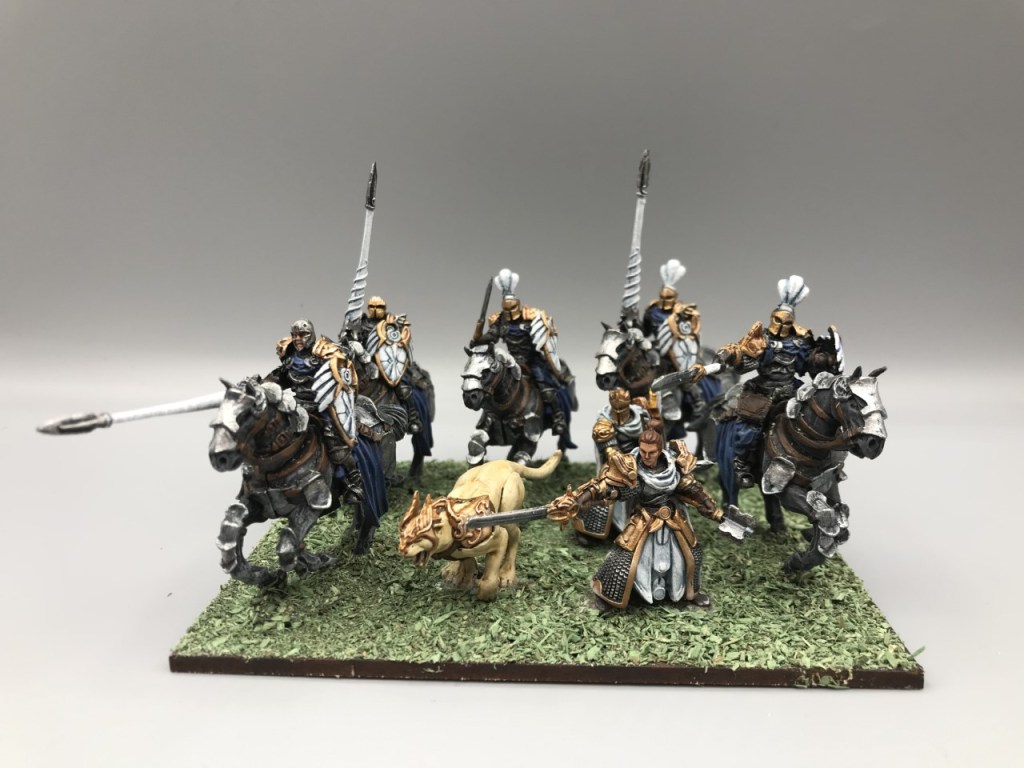
This gave me the sort of poke in the bum this project was designed to deliver. I had a think, which I’ll talk a bit more about later on – and they’re staying. So, I’m happy to report that there has been progress in the shape of a freshly based Captain on Winged Aralez and three lancers ready for a multi-base.
It’s nice to have taken a decision on what the basing is going to be. It’s also made me want to work out how to paint faces better. Now I just need to paint up a few more and get a workable army list together.
For me the best part of writing fantasy tales is the scope it provides to play with ideas. When I sat down to write the Rose of Amzharr a theme I really wanted to explore was immortality. It’s a pretty common thing in fantasy books. Afterall, so many stories are rooted in ancient history or lost times, and so often there is at least one protagonist who is in the story from its very beginning. Not only that, but gods, spirits and demons are also regulars when it comes to casting both heroes and villains of most other worldly dramas.
It’s not surprising that immortality has always been a feature of both fantasy storytelling and mythology. Afterall, so many plots revolve around the interplay between humans and superhumans. When considering what a being more powerful than a human might be like, the capacity to defy aging is a rather attractive ability for them to have. It opens the door for characters to accrue power, knowledge, and wealth far beyond that of any mortal, if only because they have had more time in which to do so.
From a story telling point of view there is another clear advantage to being able to fashion mighty heroes and fiendish villains who can withstand the test of time – it avoids the need to worry about timelines, which were probably less of a contentious issue in the days before social media. More importantly though it means that popular characters can simply go on and on without the need to create new ones.
Of course, immortality is all very well for those characters who have a busy diary, but a question that’s increasingly bothered me over the years is what if you’re immortal and you’re not busy? It might sound a bit antagonistic, but I’ve always believed that good fantasy writing is about making the bazaar and the far out relatable and finding new ways to explore existing stereotypes. Part of that process, for me, is about flipping the script and asking what will make my characters a bit different, whilst still remaining accessible.
Now you could argue that immortal characters should always be busy, after all they are often intended to be the stars of the show, but the older I get the less I find that to be a satisfactory answer. When we’re young I think it’s much easier to identify with immortal go getters out to make the world a better (or sometimes worse) place, because we feel we have a shot at doing the same sort of thing. But as I get on a bit and become more jaded, I start to understand how those most admirable intentions of our youth get blunted and seep away. Ambitions to rule the world have long since cooled, and I’m pretty pleased with myself if I know what’s going on around me from one day to the next. As my age increases, so to does my understanding that we all experience limits, both internally and externally, and that starts to shape our world view and what we choose to do. Interestingly, or maybe ironically in this case, age and mortality are two of those limits. I find myself asking how would the limits we stumble across as we age translate into the immortal experience?
I’ve found it particularly interesting to see how other writers and film makers consider in their work whether life eternal is all it’s cracked up to be. The first time I started to think about this was watching Dogma (a funny, but thoughtful consideration of some of the issues around Catholic beliefs and traditions by Kevin Smith). In the film two angels are kicked out of Heaven and are faced with spending eternity on Earth, and when the world ends having to sit outside the pearly gates forevermore. So how do they spend their time? Watching daytime tv and couples reuniting with each other at airports after time spent separated. There is something wonderfully poignant and desperately sad about this, all at the same time.
The next big thinking moment on the subject for me came whilst reading Brian Catling’s amazing trilogy The Vorrh. Similarly, to Kevin Smith’s vision, he writes about a number of angels who have been excluded from divine service. However, set between the two world wars there is no daytime tv to keep them occupied and instead they literally lie down and do nothing, letting the world grow around and over them. Once I started to think more deeply about these stories, I found myself with a question to consider – it’s all very well being an immortal with purpose, but what happens when that purpose is lost, or taken away?
Over the years it’s led me to ask a whole series of other questions about how immortals, particularly where they are part of a society of immortals, would be impacted by the life events that frustrate and restrain us real life folk and, occasionally, cause us to question our very reasons for existing. To put that into narrative terms – what happens to the elf that really wanted to be a mage, but just couldn’t get the grades no matter what they tried. Surely, they can’t all become super villains, or even not great villains – don’t any of them just spend eternity sat in their parent’s basements feeling a bit down? And if not – why not? How does elf society support these individuals? Disappointment can be a real demotivator for someone with a limited lifespan, why would it not be much worse for someone who has to spend the rest of forever feeling that they just aren’t good enough? I should make it clear that I’m not suggesting I want to read stories about elven mental health provision, but I think these are legitimate lines of consideration when developing immortal characters.
The theorising doesn’t just stop with the underachievers – what about the overachievers? What about the hero who slays their arch nemesis? What if there isn’t another arch nemesis whose as good? Surely, they’d get bored and spend far too much time thinking about the glories of the past with a bucket of ice cream in their lap and a tear in their eye. So, what happens to our hero after a few years of ice cream consumption and very little exercise?
I genuinely don’t ask these questions to be flippant – as a storyteller I’m intrigued, and I think that’s so important when it comes to moving fantasy story telling forward. So how does this relate to my own efforts in The Rose of Amzharr? This thinking has definitely shaped the way that I’ve started to build my world and my characters. It’s created some really interesting philosophical questions for my main character Gerald, who mysteriously stops aging but would have happily embraced old age and an uneventful passage to the afterlife. It’s also driven some interesting dynamics between long-time friends who risk being driven in different directions because of the impact of their differing lifespans.
The best thing about this theme is that there is just so much to explore, and the book represents the tip of the iceberg. I’m looking forward to exploring the relationships between immortal and mortal populations in the future, and how they differ to the nature of relationships between immortal and mortal individuals. It has also driven out another very important issue that deserves at least as much consideration, namely the relationship between immortality, injury, and death. Writing fight scenes has meant the impact of injury on immortals has already started to come up. I have decided that different immortals are able to manage pain and injury in different ways, but that’s far from the topic covered, so it seems sensible to leave it there for today.
If you’ve enjoyed reading this my latest novella is now available:
At the beginning of June I decided to sort out my hobby backlog. My aim is that in 52 weeks I want to have my painting backlog down to single figures and a handle on what is hiding away in my cupboards. I very grandly stated in my first post on the subject that I wanted to unleash the potential in my pile.
How’s it all going, I hear you ask. Well, an indication of how well its going could be deduced from the fact that I am now in week 8 of the project and this is the second post! It’s fair to say this doesn’t mean its going badly (and I have been trying to get a book finalised and released in the past couple of weeks), but like so many things in life its not going quite how I imagined.
The aim of the project was for me to be completing things – however, instead I am mainly starting them instead! It could be argued that starting things is an important precursor to finishing things, and I completely agree, so let’s park that awkwardness. That’s not to say things aren’t getting finished – and to prove it I will leave you with my first batch of completed Teutonic Knights, their Grand Master, and some sergeants.
At this rate I might be able to get a game of Saga in soon.
I have a partially completed a 1,500 point force of these guys for War and Conquest, so getting them completed would be great, and my first complete historical project. I’m definitely looking forward to sharing more progress with them over the coming weeks.
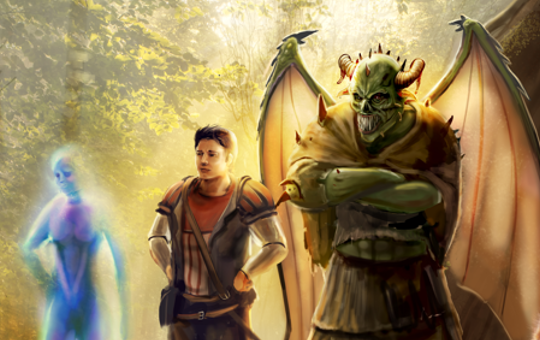
An irk sat in the cool canopy of an oak tree, watching a tall lad with broad shoulders, somewhere between his late teens and early twenties, skimming stones across a lake. His brown hair was long and a thick beard hid half of his face. He wore a simple white shirt and pair of trousers, both made from the same worn-out material. The garments were ill-fitting and poorly stitched, made for comfort as opposed to high fashion. The scent of summer jasmine laced the warm afternoon air, making the forest feel fresh and clean. It wasn’t the most compelling of sights. The man wasn’t particularly good at casting the tiny rocks into the cool, crystal waters, and most simply sank on the first splash to be reunited with their friends from the shore. This, however, was not the kind of afternoon that demanded a reason, compelling or otherwise, to simply be.
The irk’s head lazily twitched to one side, a sign of frustration that the man appeared to have spent so many years in this beautiful, blessed enclave, and yet had seemingly failed to achieve anything at all – including the mastery of skimming stones. Almost eighty years had passed since the irk had watched him scrabbling up the hill, over rocks and through the thick thorns that hid the entrance, snarling hounds and angry voices at his heels. The lad, then a boy of no more than twelve summers, had uttered the prayer of sanctuary and the spirits had responded. The Guardian trees had moved to hide him and, faced with a wall of wood that his pursuers could not see a way through, the snarling hounds and angry voices had quickly dissipated.
At the time the irk had been excited by the boy’s arrival. It had been many decades, centuries even, since the Guardian trees had last stirred. The boy had uttered words long forgotten, even to the immortals, and in return had received protection granted so very rarely, and never before to a human. The irk took this as a sign of greatness in the child, spending the next five years observing him. He wondered what powers he might have or grow into. But whatever powers or charms the child might have had, the irk eventually conceded, were at best well hidden – so well hidden that eventually the irk lost all interest in him. The child spent his days throwing rocks into the water and eating as much as he could of the food provided to him by the spirits of the grove. So, the irk began to venture out into the world again, returning frequently in the hope that there would be some significant evolution in his absence. If the evolution had ever happened, the irk told himself following each visit in a bid to keep the embers of his own hopes alive, he had not noticed it, and so his visits became fewer and farther between.
There is no easy way to describe irks. If you imagine a human squeezed into a squirrel, visually, you’d be on the right track. They are small, highly energetic, great climbers, talkative and have, for their size, huge bushy tails. They are long-lived, incredibly precocious, and very nosy. All this, combined with their passion for adventure, means they have a near encyclopaedic knowledge of the world, which they are only too happy to share whether asked to or not.
“Eighty years,” the irk muttered to himself. “Eighty years and he’s barely scraped through puberty. Talk about a disappointment.”
He reached out a small paw in a vain attempt to locate a half-eaten nut lying to one side of him, just outside of his peripheral vision, and something suddenly struck him. Because sometimes, no matter how clearly an image is presented to you, it takes a bit of a nudge to really see the whole picture.
“Oh,” the irk gasped, taken aback by what had been under his nose for so many years now. “That’s not right. Not right at all.”
The irk stopped feeling around for his nut and sat bolt upright. He quickly looked around to confirm the position of his snack. Yes, it was odd that a human who must have been around ninety summers old didn’t look a day past twenty, but not so odd it warranted losing food over.
He wondered if the lad had realised that he had now outlived most humans by about thirty years. He hoped he had, but given the lad’s apparent lack of achievements, including that of simply letting his body age, the irk decided there was a good chance it very well may have escaped his notice. There was, of course, only one way to find out. He scampered around and along a series of branches until he was within shouting distance of the lad.
“You’d have thought after all these years you’d be just a little better at that?” the irk shouted in his high-pitched voice, keeping a branch between them so that he would remain out of sight.
The lad, just about to launch another rock across the pond, stopped and looked around. “What?” he said in a tone that suggested a boredom with his current pursuit, as well as the wider pursuit of existence.
“I’m wondering why, after all these years, the best you can manage is just a couple of skips?” asked the invisible irk.
“I did four once,” the lad replied, seemingly unperturbed by the ownerless voice, determined to put right the slur levied at him. “Anyway, what’s it to you?”
“Just interested,” the irk replied genially before adding, “Exactly how old are you?”
Arm already moving, the man launched the rock in his hand. However, what little investment he had in the activity had disappeared the moment the question reached his ears. The stone plopped listlessly into the water some distance from its companions.
“I don’t really know,” he answered slowly, his initial disinterest in the voice and what it had to say starting to change. “Who are you?”
The man’s tone was now loaded with suspicion. He turned towards the trees, taking a step in what he thought was the direction the voice had come from. “What are you doing here?”
“Show yourself,” he demanded, suspicion starting to give way to anger.
The irk toyed with the idea of introducing himself, but there was something about the mix of fear, paranoia even, and anger that was growing in the man’s voice that suggested they might not immediately hit it off. It was clear that something about what he had said had rattled the lad, and he wondered if there might be an opportunity to provoke some sort of activity in the lazy slob. Deciding that discretion was, for the time being, the better part of valour, the irk withdrew. He returned to his half-eaten nut, interested to see what the lad would do next.
The abrupt silence completed the transformation of fear into paranoia. The man had heard a voice in the forest once before, when he had thought that the sanctuary was a safe place, sealed off from the outside world. That voice had taught him there were far more dangerous things in the world than other humans with hounds and pitchforks. It had taught him nowhere was safe; no matter how hidden, how protected, there was always a way in – old ways, dangerous ways, but ways nonetheless.
He continued to stand, but now he turned erratically on the spot trying to see, or hear, anything that might give away any sign of the owner of the new voice. He waited for more words, but there were none. He wondered what the voice wanted. It didn’t sound the same as the one he’d heard before, so many years ago now, still so memorable, and so chilling.
There had been a coldness that had made him shiver. It had pierced his skin and crept into his veins slowing everything down. Each word had hurt him. Each sentence had felt like a jagged blade pulled slowly across his bare skin. Yes, a price had been offered and paid for his services, but his agreement had been extracted.
He had been twenty when the voice had spoken to him. Old enough to be considered a man, but his lonely years in the sanctuary away from the experiences of the world meant he was only a man in years. He still viewed the world beyond with a child’s naivety so, despite the pain in the agreement, there was an excitement in the adventure that followed and discovery in the journey. There was even a fleeting moment of time where a return to the sanctuary seemed impossible.
Then the job was done. The fee was in his pocket, and he celebrated until he lay in the warm glow of booze and exhausted flesh. But disappointment comes just as certainly as the morning after the night before. The warm glow turned into a throbbing headache and a sticky mess with a terrifying bill to be paid.
Realisation dawned with the sun, and although there were no angry voices, or snarling hounds, the silence turned out to be far worse. Blood soaked the bed he lay on. Limbs reached out towards him from every direction, yet their owners’ heads and torsos were no longer attached to them. He felt something hover at his shoulder. Ethereal talons stretched towards him. Hurriedly he made his escape through a window before the scene could be discovered, and ran for the sanctuary, hoping whatever followed him would not be able to find a way in.
The vast majority of us have a bit of a collection of things that, it would be fair to say, don’t get done quite as quickly as we would have hope (if at all). I find there tends to be a bit of a glass half full/glass half empty view about this for most people with that collection of “if only I had the time to…” stuff either being considered a pile of shame or potential.
I tend to err on the side of potential, but then I’m not sure mines that big – I can still fit it all in a single wardrobe and there isn’t a new species of plastic-based life forms evolving in the lower layers. That being said I have got to a place where I really want to sort it all out.
I’ve decided to give myself a year to do it, and at the end of that time I want a nice orderly cupboard and a painting backlog in single figures. Is that too ambitious? I hope not.
Weekly Wins
I know that I’m not going to be painting everything I have, so part of the challenge will be about deciding what to get rid of. But to begin with I’m going to start with what I’m going to call weekly wins. These are mini projects to finish of bits of larger projects that lost my focus. I’m hoping this will also help me decide what is useful, can be painted, and so what is staying.
Over the past couple of weeks I’ve made a start on these so here’s a little share:
Elohi Horde conversion
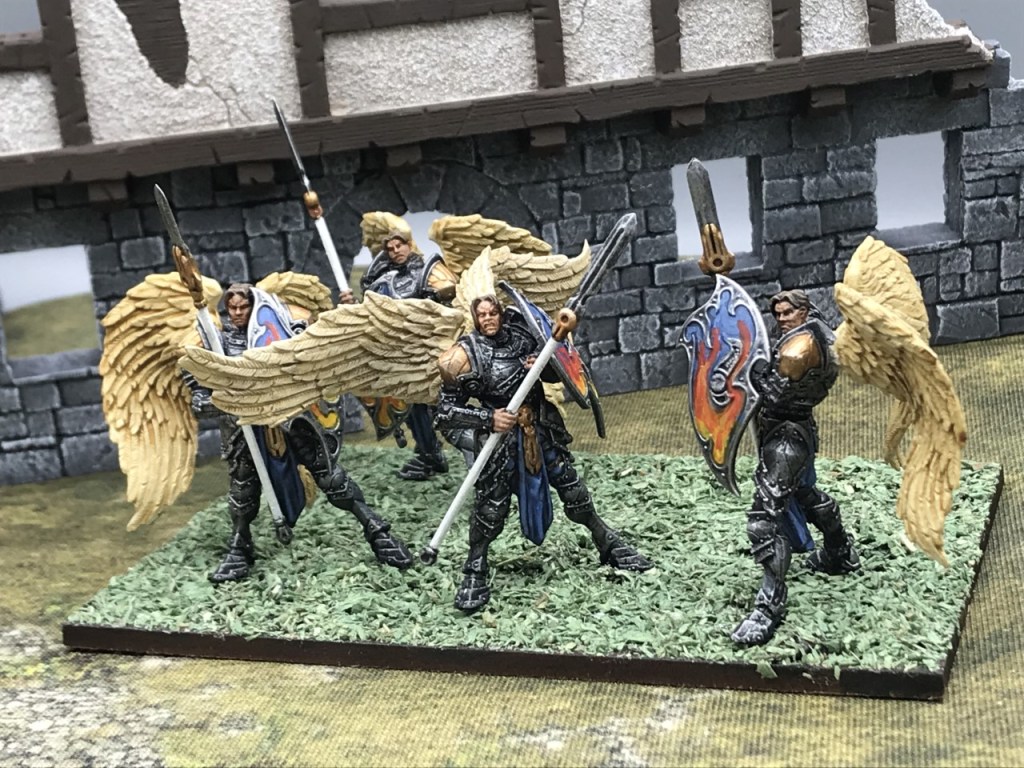
I’ve wanted to add another horde to my Basilean list for a while, and wanted them reflect the new options in the army since COK. I’m using the regular models for angels with Celestial Fury and these guys will be used for a unit that retains defence 5. The spears for these conversions came from Basilean men-at-arms and the shields from GW Arcanite warriors.
Villein Skirmishers
Since Clash of Kings 22 dropped I’ve wanted a Brotherhood army. I set out at the being of the year to build one using Fireforge models, but with a growing Basilean army I wondered if there is a more Mantic solution. There is, but I’m a bit stuck on how to represent up to four different types of cavalry. Clearly the solution is proxying in some GW wolves to cover one of the slots.
The last of the men-at-arms
With only a handful of these guys still left unpainted it was a pretty quick job to get these finished up.
So that’s it for now. I look forward to sharing my next bit of progress in the near future.
Over the last couple of years I’ve started to really enjoy a skirmish game. I’ve played, and continue to really enjoy, Frost Grave, Burrows and Badger and Stargrave. For me a good skirmish game delivers a really fun narrative experience with an efficient ruleset. Yes, the warbands should be balanced, but unlike mass battle games, I really want to get a feel for the members of my warband and for there to be the potential for each of them to play a part in the story.
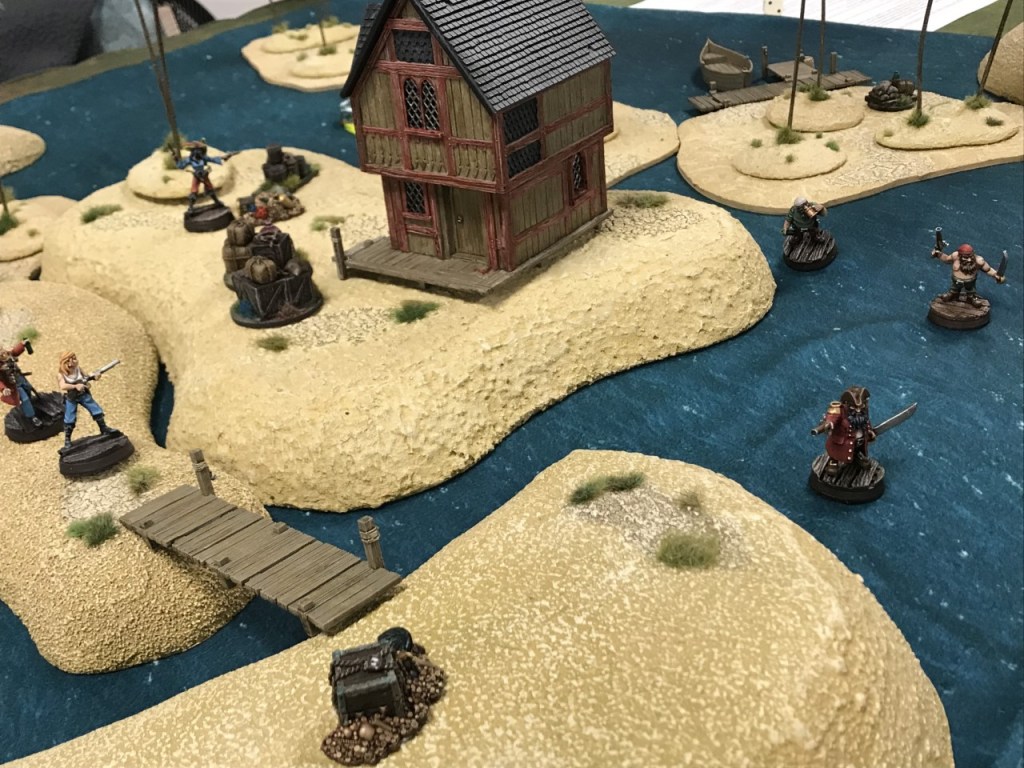
How did I end up trying Pirates of the Dread Sea out?
Paul, at Pandemonium Miniatures, dropped me a line to ask if I had some free time to run through the game as he is looking to run a demo at the FLGS. I’m always keen to get a game in so was only too happy to make some time, although I’ll be honest pirates are not a theme I’ve ever really gotten too excited about.
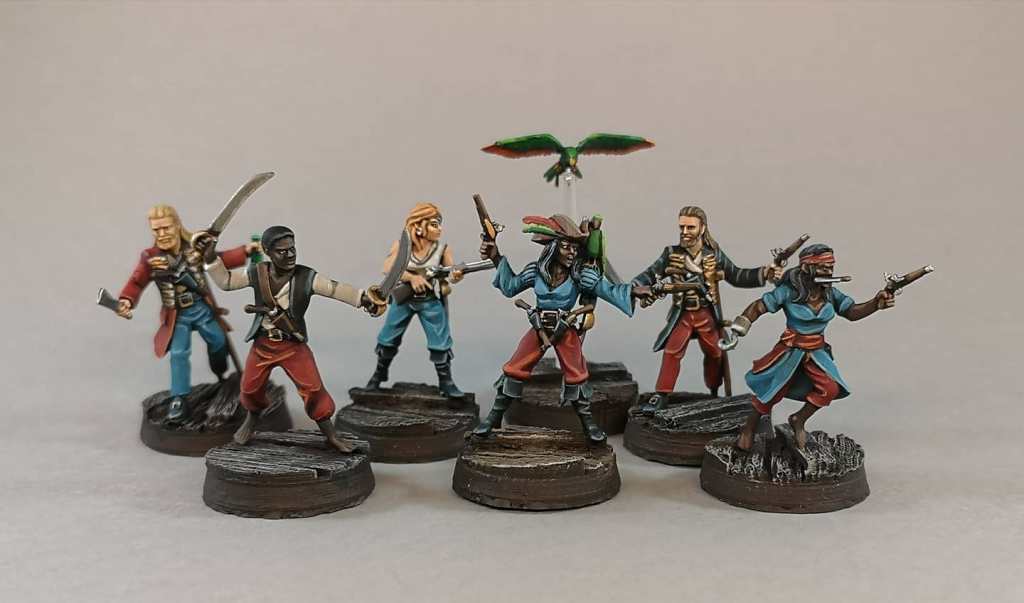
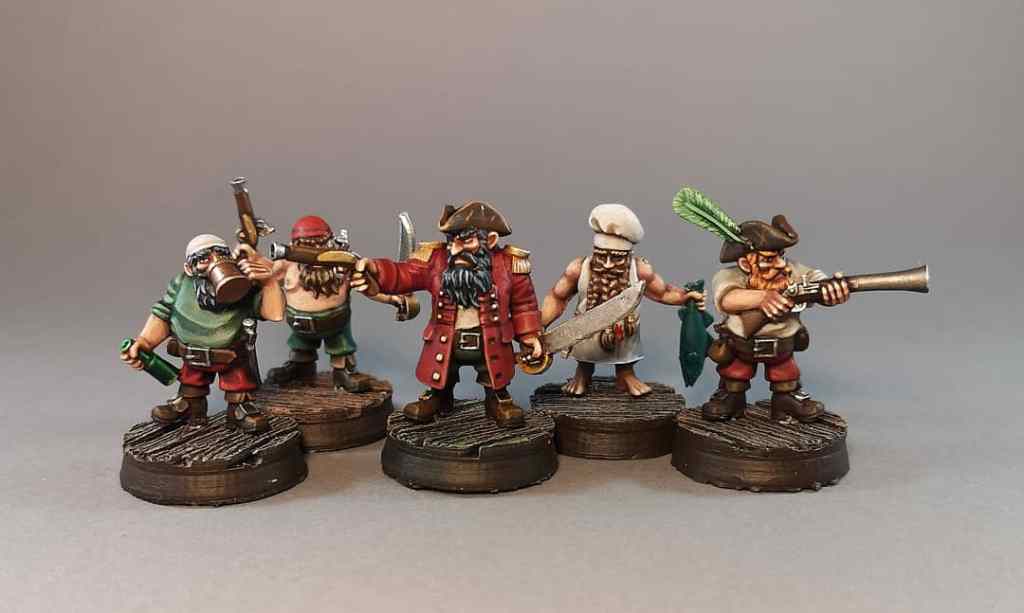
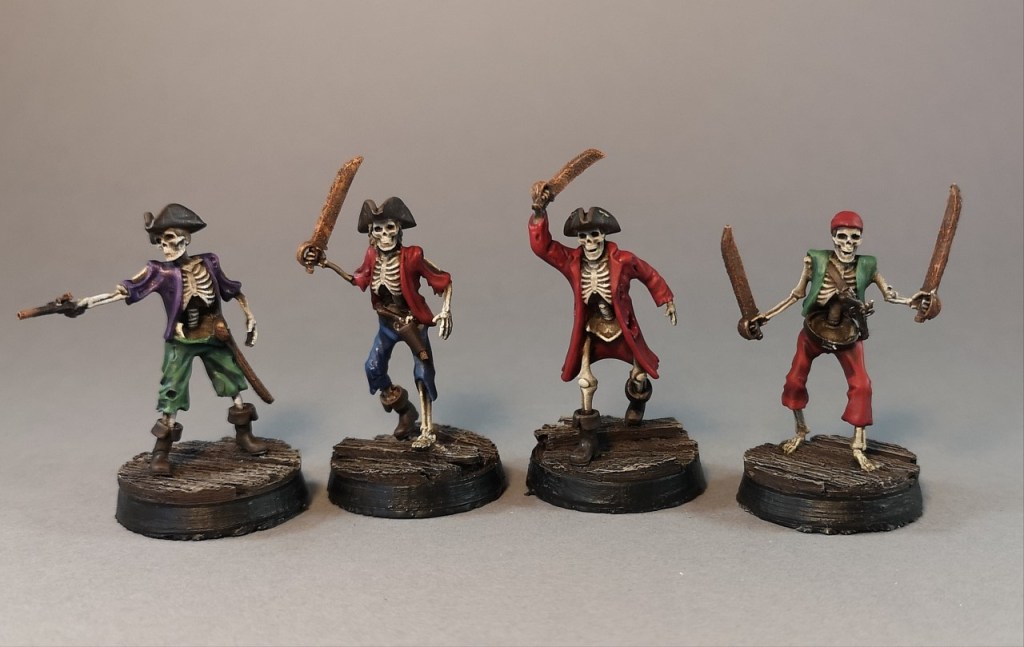
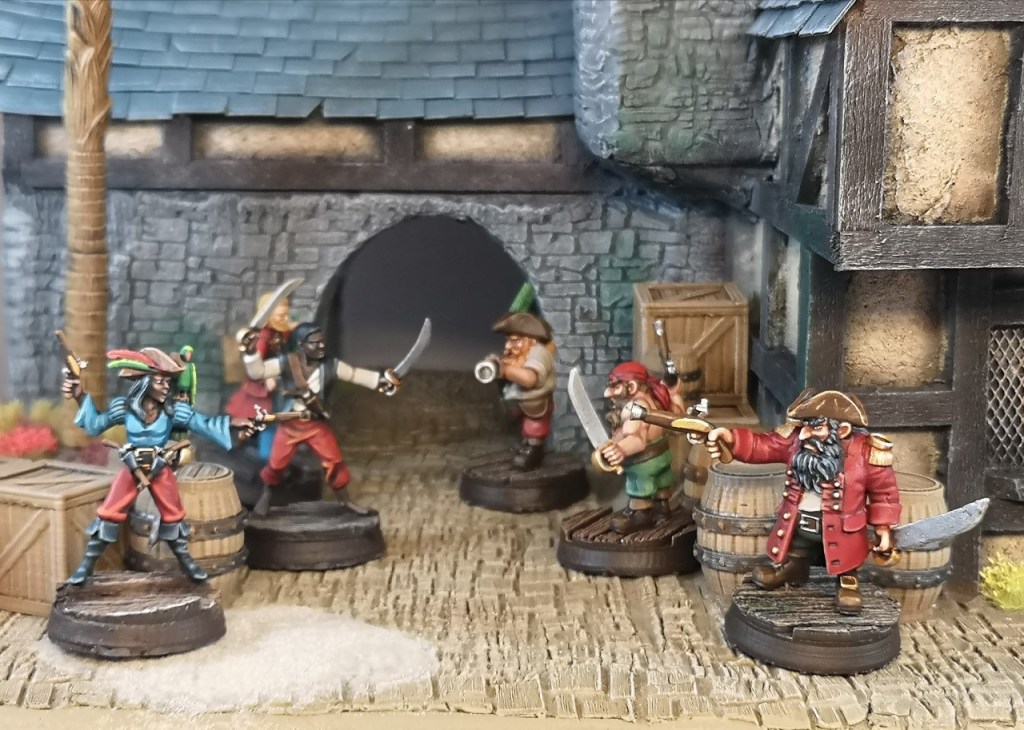
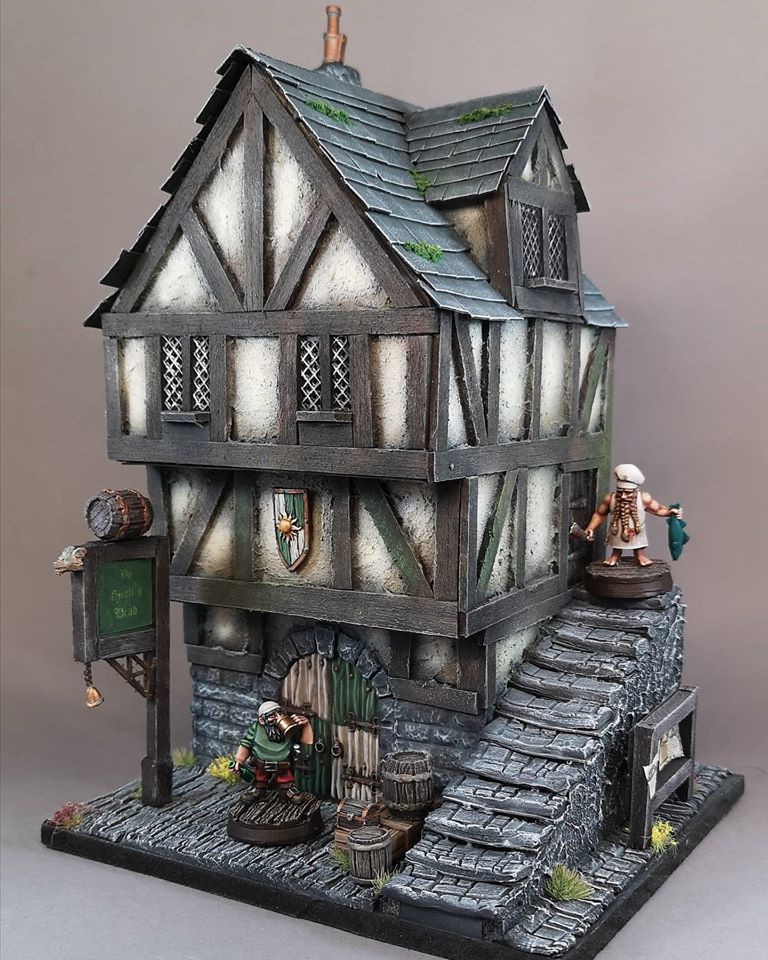
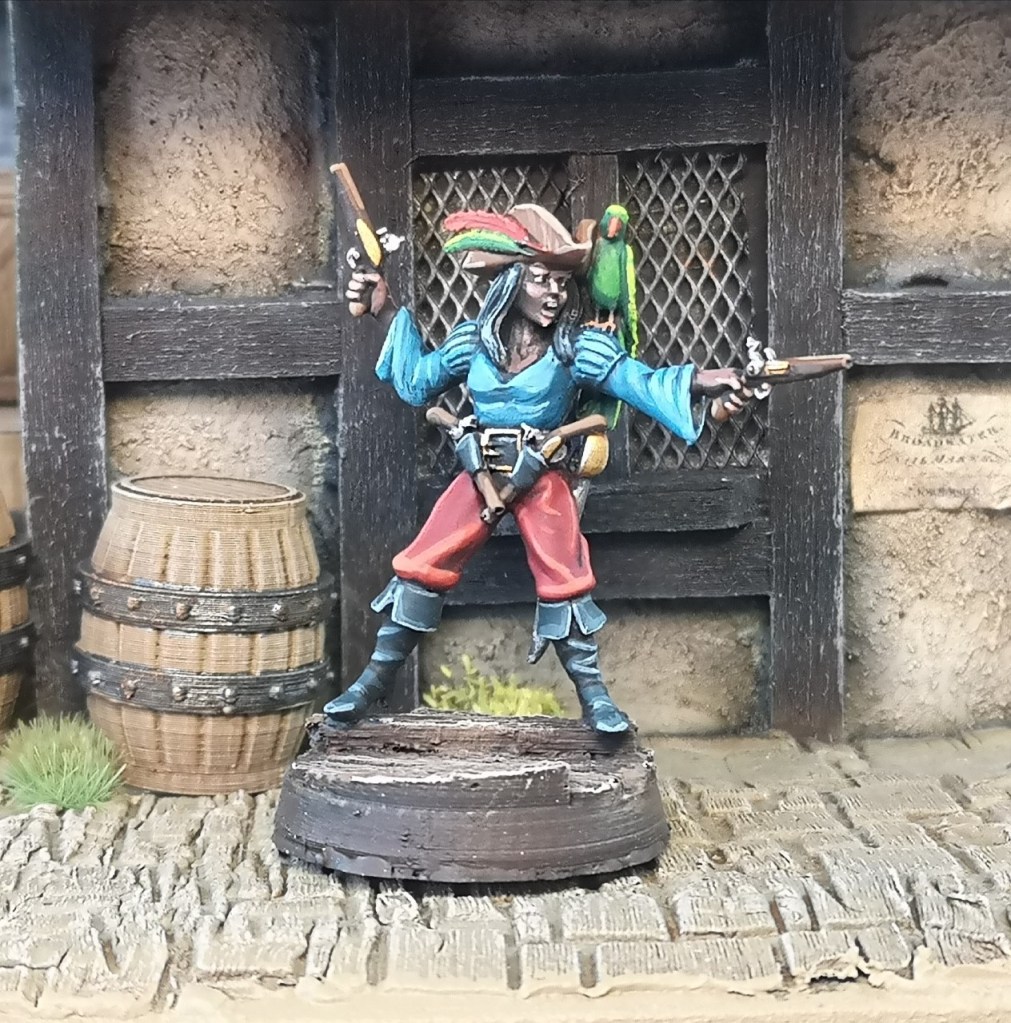
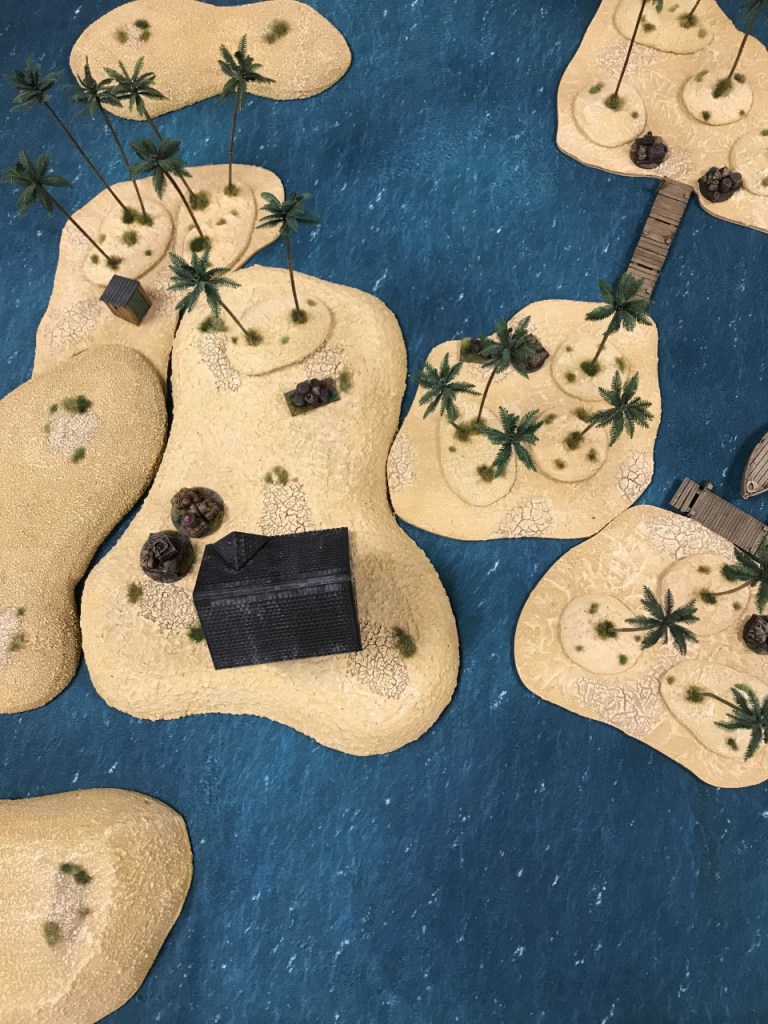
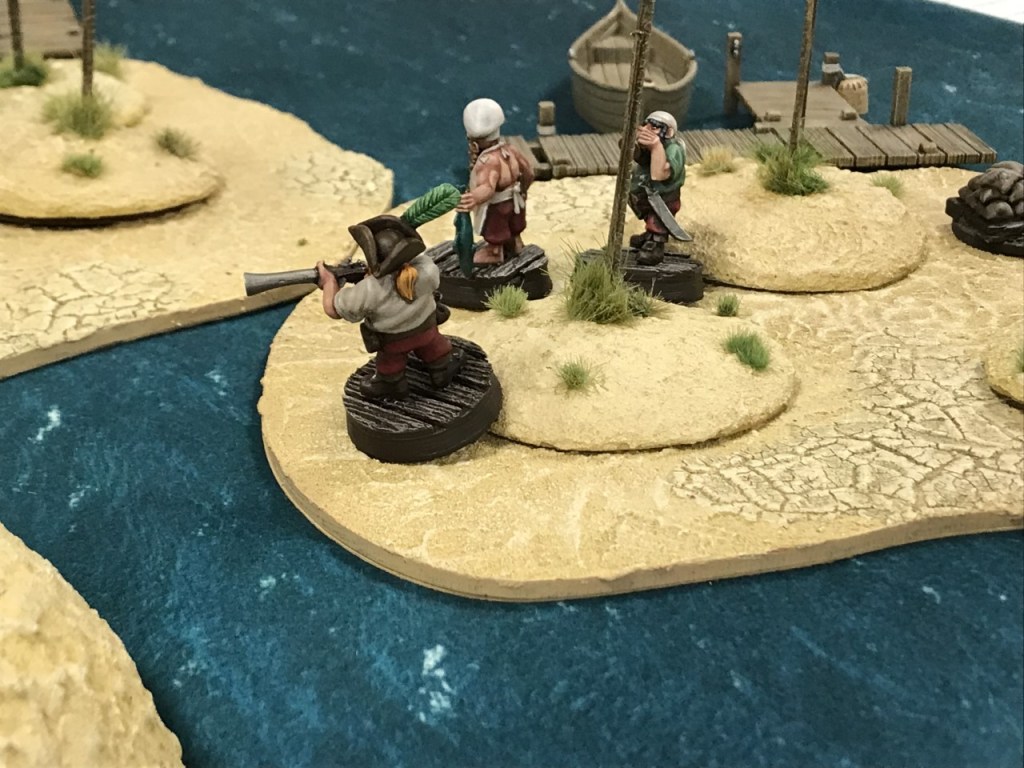
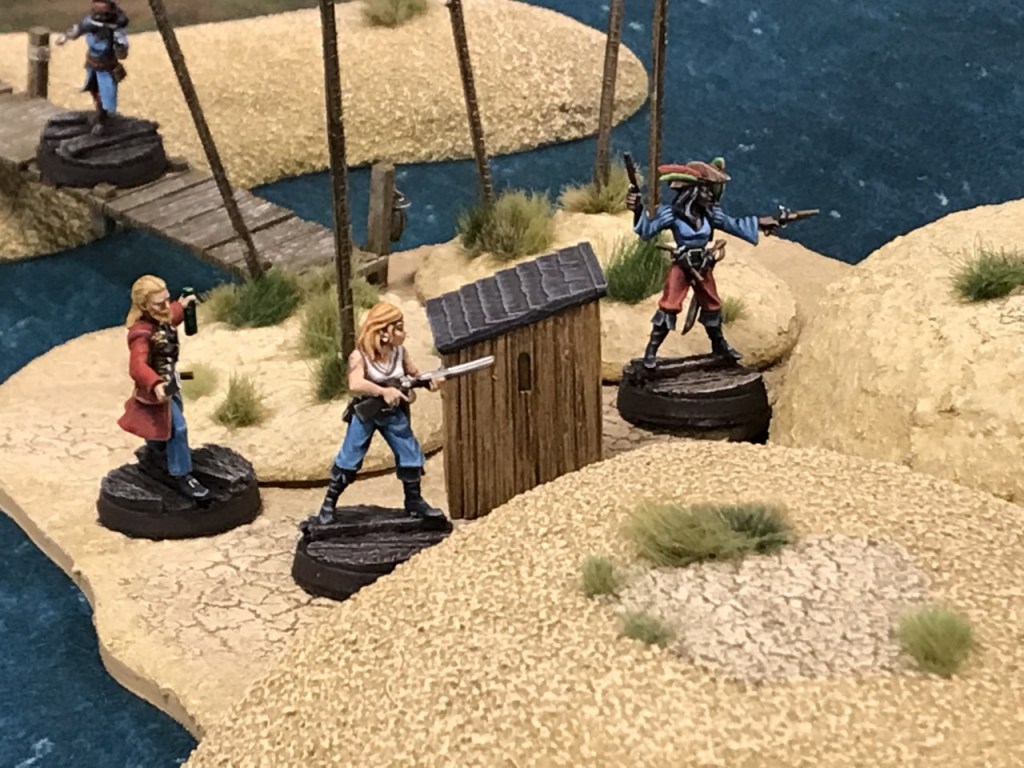
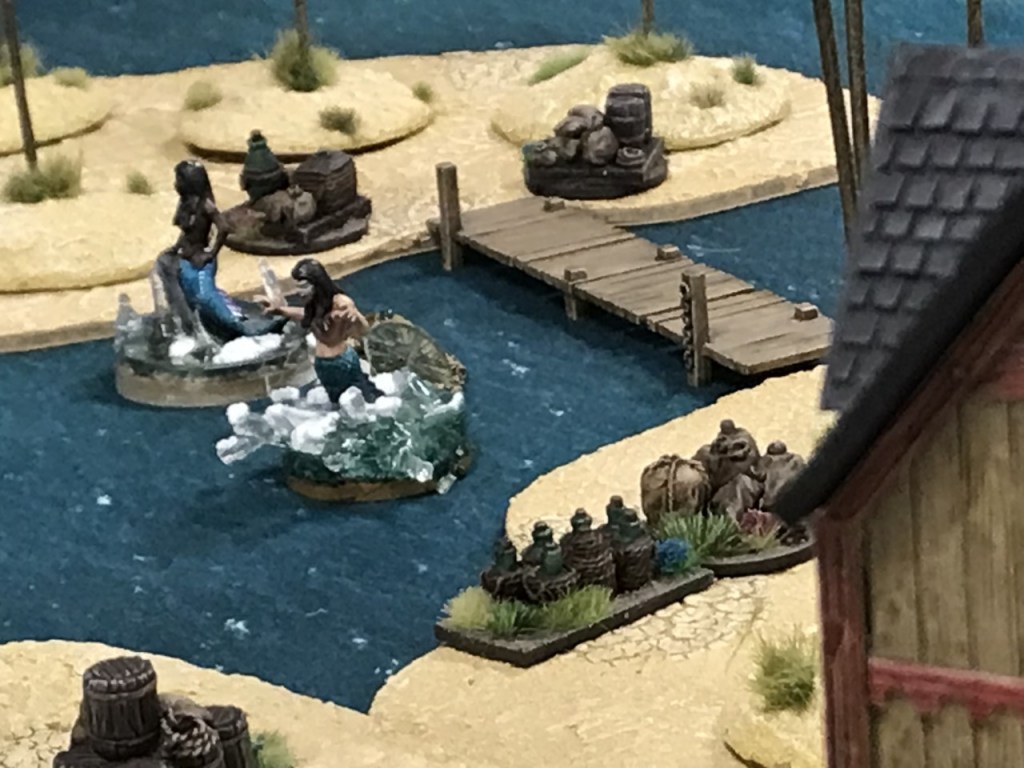
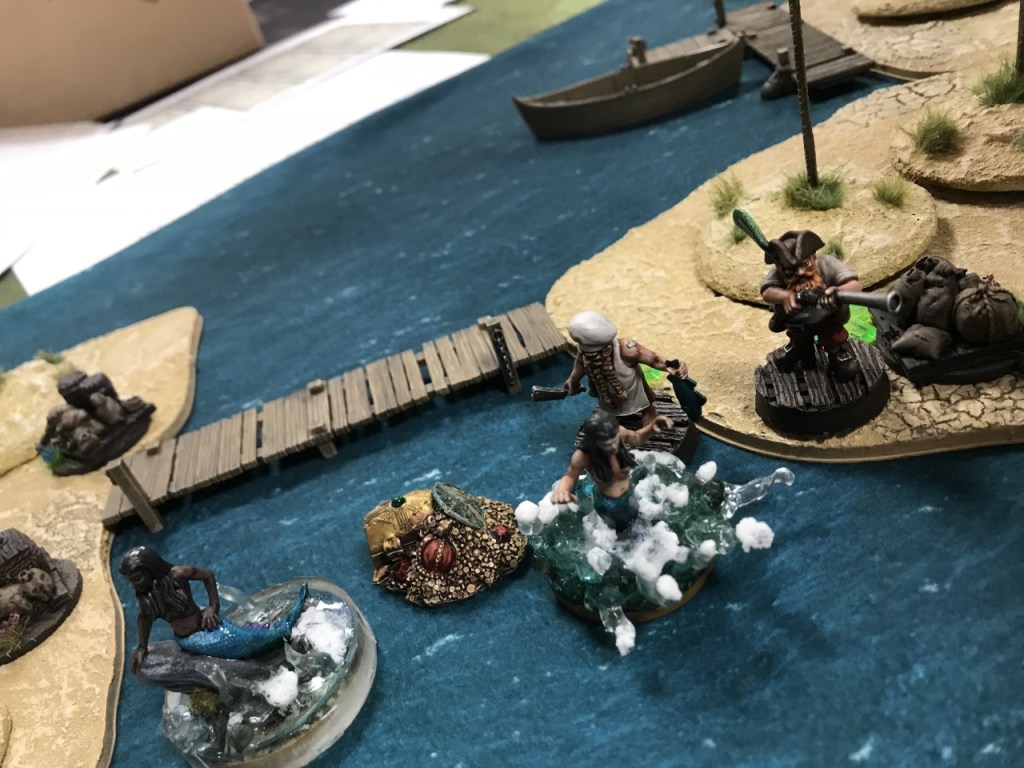
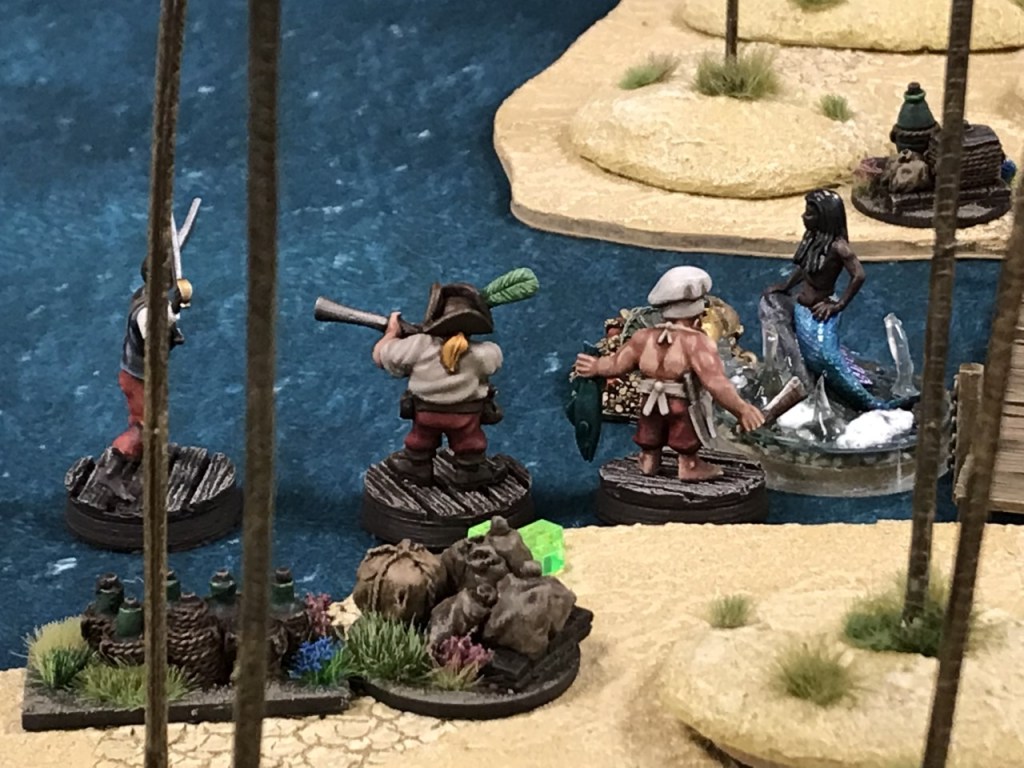
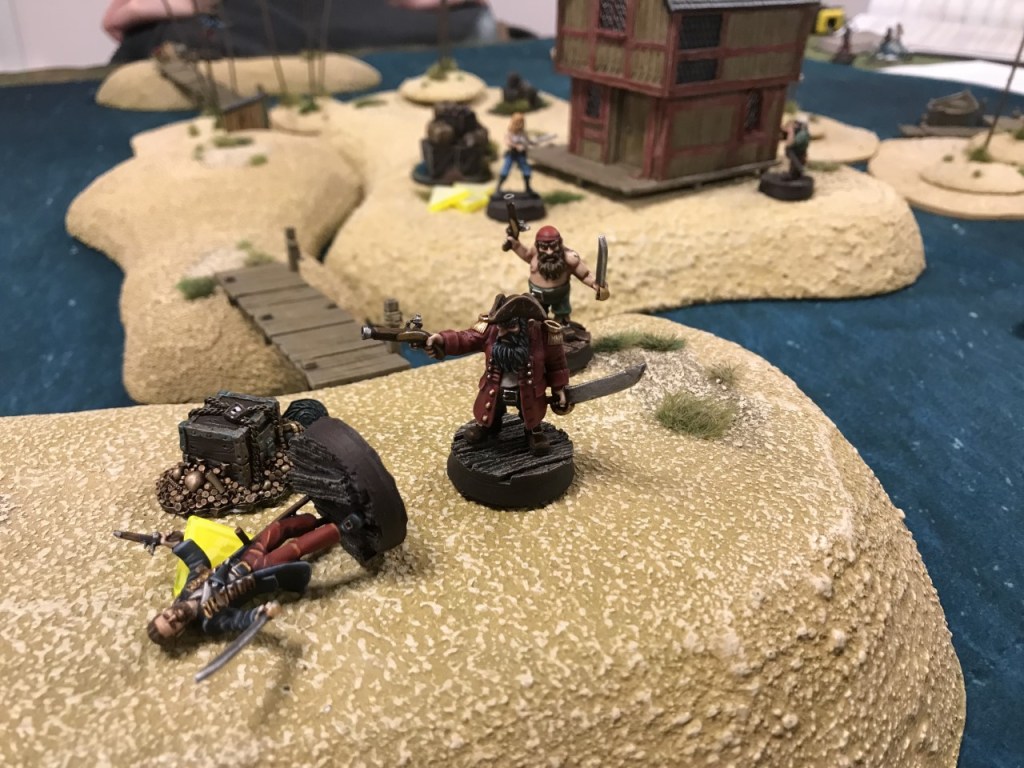
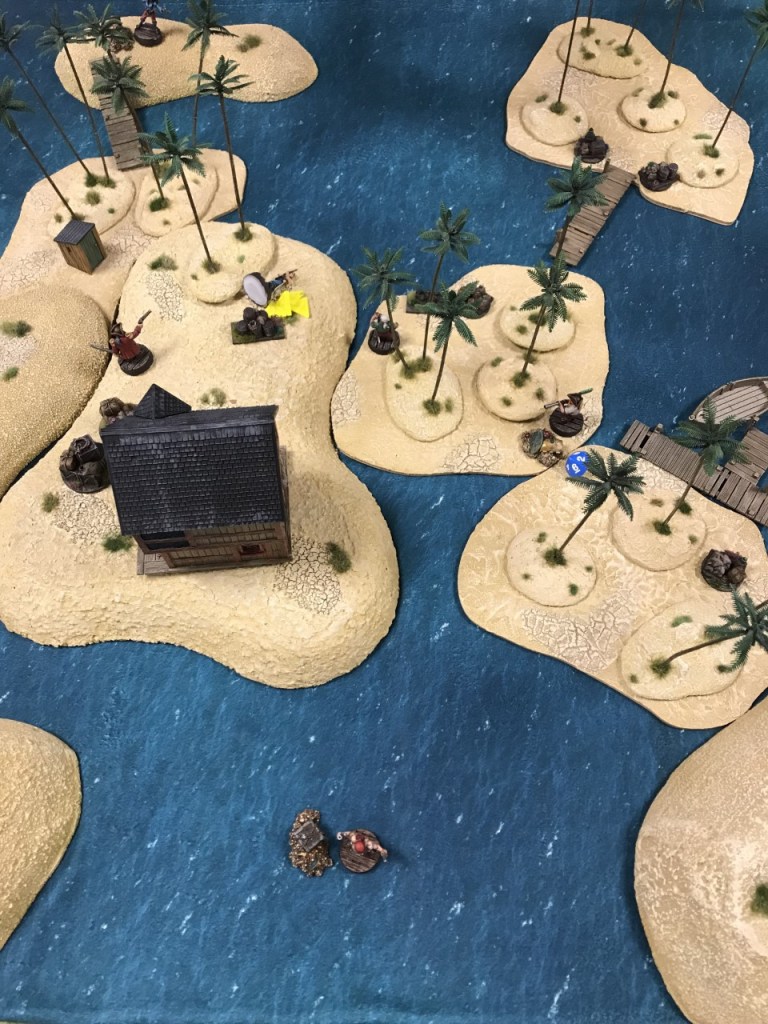
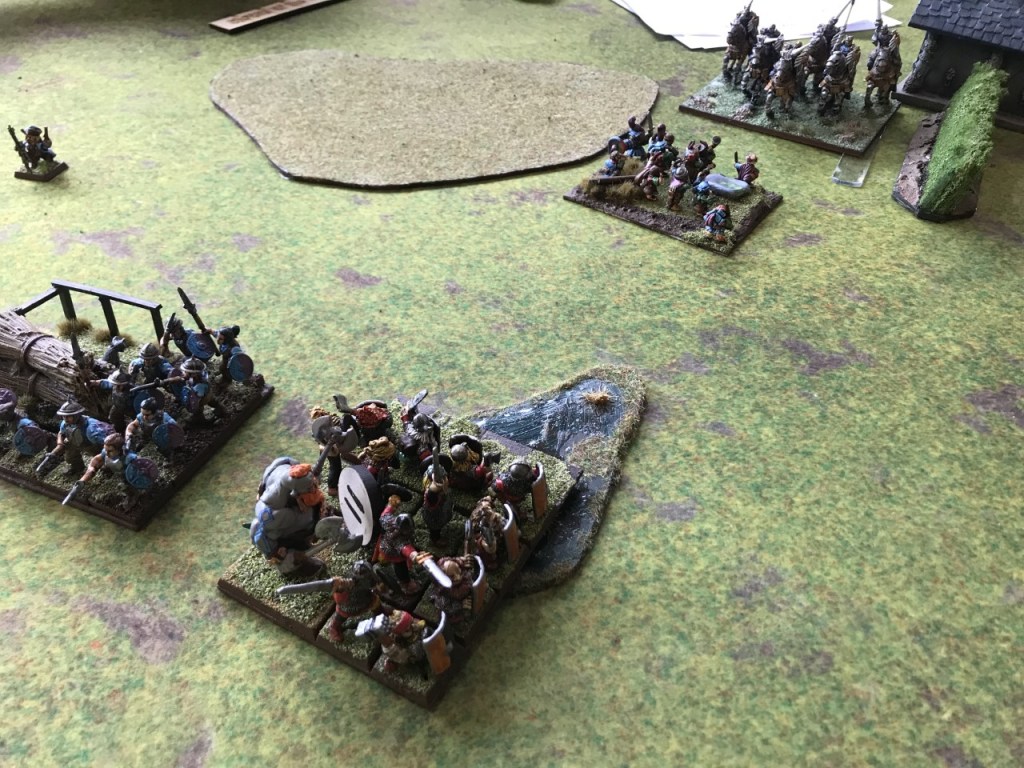
Of course, it always helps when you get introduced to a new game if there are a few nicely painted miniatures on hand and some decent scenery. Bristol Independent Gaming provided the scenery, and Paul brought his fantastically painted crews (and of course the rules knowhow).
Minis by Dead Earth Games, painting and inns by Pandaemonium Miniatures.Minis by Dead Earth Games, painting and inns by Pandaemonium Miniatures.Minis by Dead Earth Games, painting and inns by Pandaemonium Miniatures.Minis by Dead Earth Games, painting and inns by Pandaemonium Miniatures.Minis by Dead Earth Games, painting and inns by Pandaemonium Miniatures.Minis by Dead Earth Games, painting and inns by Pandaemonium Miniatures.
The miniatures we used are all the official miniatures for the game, made by Dead Earth Games (just like the game itself), and frankly they’re lovely. However, good miniatures do not necessarily make a good game.
How does Pirates of the Dread Sea play?
The game uses two six-sided dice and some card decks. As you would expect it involves warbands facing off against each other to complete a randomly chosen scenario. The rules were pretty straightforward, and by the third turn I felt I knew enough about the system to be confident on the key actions like combat and shooting.
Something else I really liked was the dynamic between shooting and hand to hand combat. The shooting in the human and dwarf warbands is really short range, and black powder weapons need reloading which means characters can’t stand around on the board edge taking pot shots at each other, which in my view is a very unpiratey behaviour. Hand to hand combat seems much more efficient, which encourages movement.
Throughout the game you can also play random events. Each player holds three cards detailing events throughout the game, which they can use anytime to do all sorts of things from deciding what treasure goes where to stopping an enemy crewmember shooting. I’m a big fan of random events in skirmish games and really liked the way these worked.
The verdict
All in all, I really enjoyed the game we played. Relaxed, fun and really easy to get into, but with far more to explore. I’m definitely taken by the Dwarf crew, the models are lovely. Hopefully it won’t be long until I have another excuse to splice the mainbrace and delve into the secrets of Davey Jones’ locker. I would definitely recommend giving this a go.
Finally, my first event of the year has come around, and it was all very exciting. I’m taking my Basileans to their first proper tournament after making a last-minute switch to rats at Christmas Carnage in December. So, let’s get into it.
Location, location, location
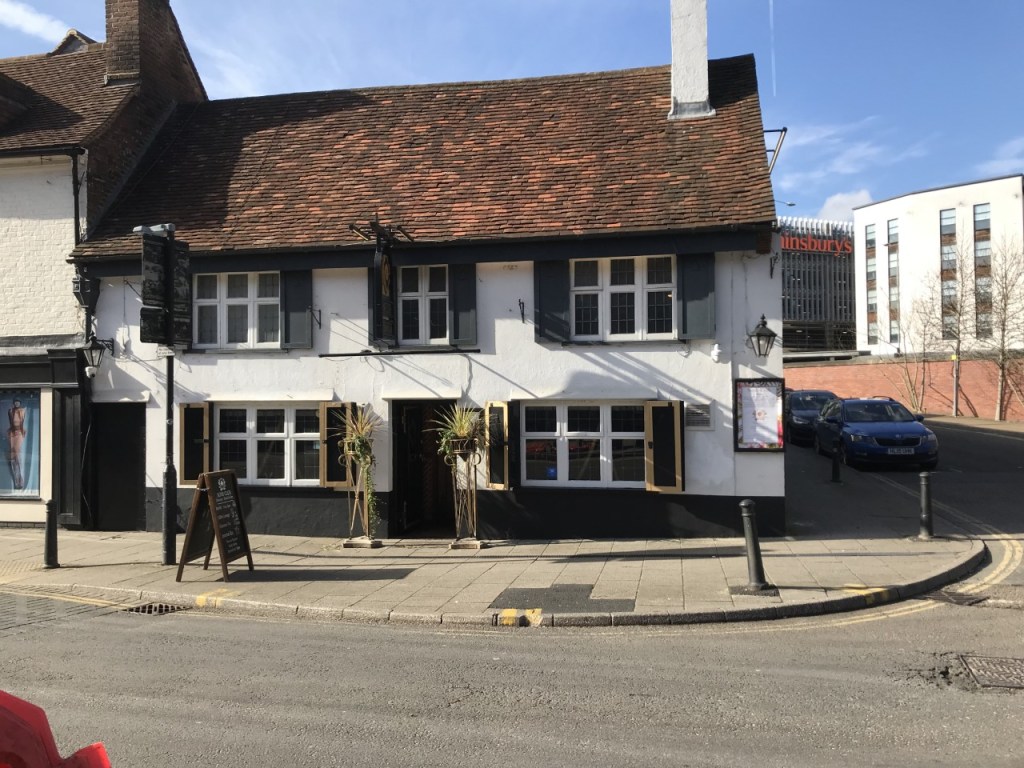
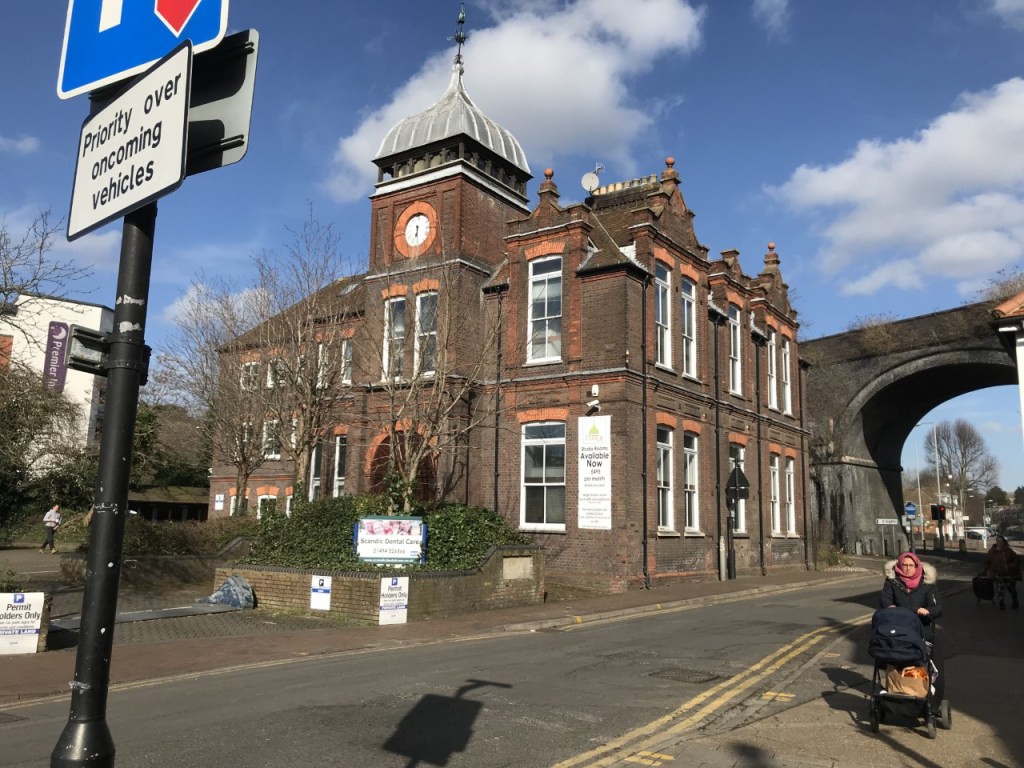
I headed down to High Wycombe, which meant a stop at the magical Reading Services on the way, and the event was held at the local games store Tabletop Republic. Venuewise, it was really easy to find, and there was loads of parking within a couple of minutes walk.
Some pretty buildings, shopping centres not pictured.
The store itself was clean and had good natural light, which is always nice. The town around it was very pleasant with a great range of food places. I opted for a quiet kebab at lunchtime covered in cheese sauce. What could go wrong?
The list
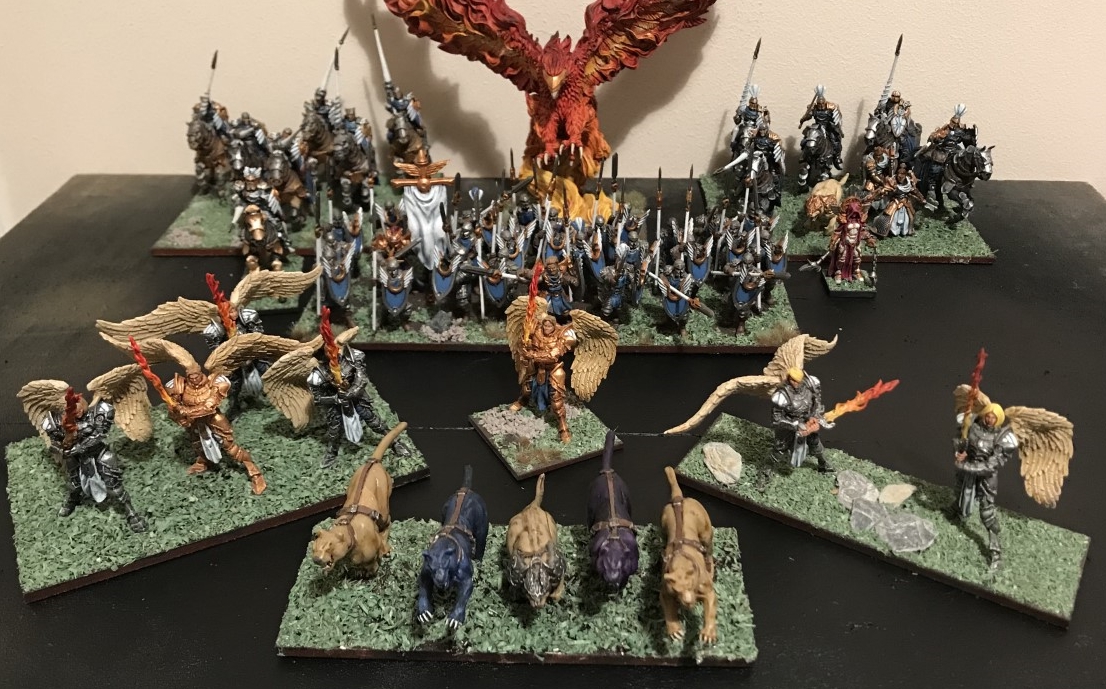
As with all the best tournament lists, I decided to make changes to the list I’ve been practicing with about a week before the event after a single game. So, I spent last week desperately painting a new regiment of mounted paladins and was really happy with how they came out. As a result, the list I took looked like:
A new knight regimentThe full force
Priest with Shroud of the Saint
Julius
High Paladin with Scythe of the Harvester
Phoenix
Mounted Paladin regiments (2) one with Caterpillar Potion and one with Sir Jesse’s Boots, both with Aegis Fragments
Elohi Regiment with Celestial Fury
Elohi Horde with Brew of Strength
Spear horde with Hammer of Measured Force
Gur Panther troop
How did the games go?
Game 1
Pillage, vs Elves, loss
My first game was against an Elf army that I’ve faced before, and that I have previously defeated, albeit in a lower point game. The army is a really nice mix of elite warriors and solid elf shooting which meant the pressure went on from turn one and didn’t let up at any point during the game. The biggest frustration for me was Julius getting held up by a troop of light cavalry for three turns as the rest of my army got battered. I’m not saying that having Julius available for more turns would have won me the game, but he is a significant amount of points that could have been more usefully deployed. Despite it all it was a fun game to start the event with.
The combined pressure of shooting and elite combat units took its toll
Game 2
Invade, vs Abyssal Dwarfs, loss
I would have been quite happy with this scenario and match up had the Abyssal Dwarf army not consisted entirely of cavalry and flyers. Since I’ve started playing Basileans I haven’t played another alpha strike list, and I did not cover myself in glory!
A poor set up, combined with some really revolutionary Elohi tactics, bearing in mind most revolutions fail, saw my Basileans swept away in short order. My approach to the game was diabolically bad, but sometimes you just do things wrong. Usefully my opponent asked me about the spearmen in my list, and what their role was. This has been a really useful challenge and has since got me thinking (watch this space).
A master class in how not to out alpha strike alpha strike armies
Game 3
Loot, vs League of Rhordia, win
This was my first game in 3rd edition against the League. It was a nice mixed arms force with a decent number of Halfings supporting, and structurally an army list I’m much more used to playing. All that meant the Basileans did what they do best, using their movement to stay out of the worst of the shooting and pick the combats they thought they had the best chances with.
An enjoyable game to finish the day off with
Final thoughts
As always, I had three fantastic opponents and three very relaxed games. It was an all-round enjoyable event, and I’m looking forward to attending more events around the South-East this year if I can find the time. I would definitely recommend this event to anyone thinking about playing in the South-East.
In terms of results, I’d say I was generally happy. I tend to pick armies based on units I like the look of and according to a loose narrative thread, which means they aren’t often as efficient as they could be. I find when I’m trying to build competitive lists its only when I start playing events with them I start to notice where the gaps are. My list has done well locally, so I’m not going to say it’s a bad list, but there are some improvements to be made. The first being the need to have a good think about whether the small amount of infantry I have are the best fit for the wider list.
So, with that, a final thank you to my opponents, the organisers, and of course all the friendly faces. Not sure how many times I should say this, but its still as true now as it was last year – its good to be back to face-to-face events.
The army is coming along nicely. With only seven models now with to do and a bunch of base related hobby it looks as though the Borthermark will be headed to the Throne of Ages at the end of February. I’m super excited. I might also get some updates into the King of Herts hobby campaign, but my approach to this army is proving… well… complicated.
Starting to look dangerously close to an actual army now.
I’m really enjoying this project because, whilst I hate painting cavalry, I’ve always loved the image of knights charging across a field. Let’s face it, it’s a pretty iconic sight and the Lord of the Rings films would never have made it past b-movie status if it wasn’t for the Riders of Rohan doing their thing. I mean there were no big charges in the first movie, then they add them into the next two – clearly this is pandering to the audience.
Cavalry is a really interesting proposition in Kings of War because whilst it can hit hard on the charge most units are not made for grinding, and there’s a whole host of cavalry traps that means a cavalry army is not a point and delete affair (although this can seem very player dependent at times!). The introduction of Scorched Earth is just the latest in a number of options people have to hinder the game’s hard(ish) hitters.
Cavalry armies are generally pretty elite, although the Halflings have opened up some interesting avenues to explore with loads of different light cavalry options. Cavalry rely of exploiting their speed and manoeuvrability to deliver multi charges, set up flank/rear charges and grab objectives. It’s an interesting way to play that requires a bit of thought, which is not so great for Sunday evening gaming, but rewarding when mastered (I’ve noticed this from watching my opponents immediately after I’ve been tabled by cavalry armies).
I’m having great fun so far pushing my brave knights down the flanks and crushing whatever is lurking down there under hoof, but that’s only part of the story. After that bit, its fair to say I’m having difficulty with my opponents’ centres – and that’s where I’m giving the games away.
So, I thought I’d dig into last night’s game and have a think about where I went wrong and the new initiate upgrade for Skirmishers. Last night I played a 2,300 point game against Steve’s Zombie Horde, there’s a link to the video battle report at the bottom of the page.
Spoiler alert – I lost. There was the obligatory inconveniently rolled double 1 that meant two regiments of Abyssal Hunt cavalry spent three turns essentially tied up with a legion of Zombies, but I’m not convinced that was what lost me the game.
Playing the scenario
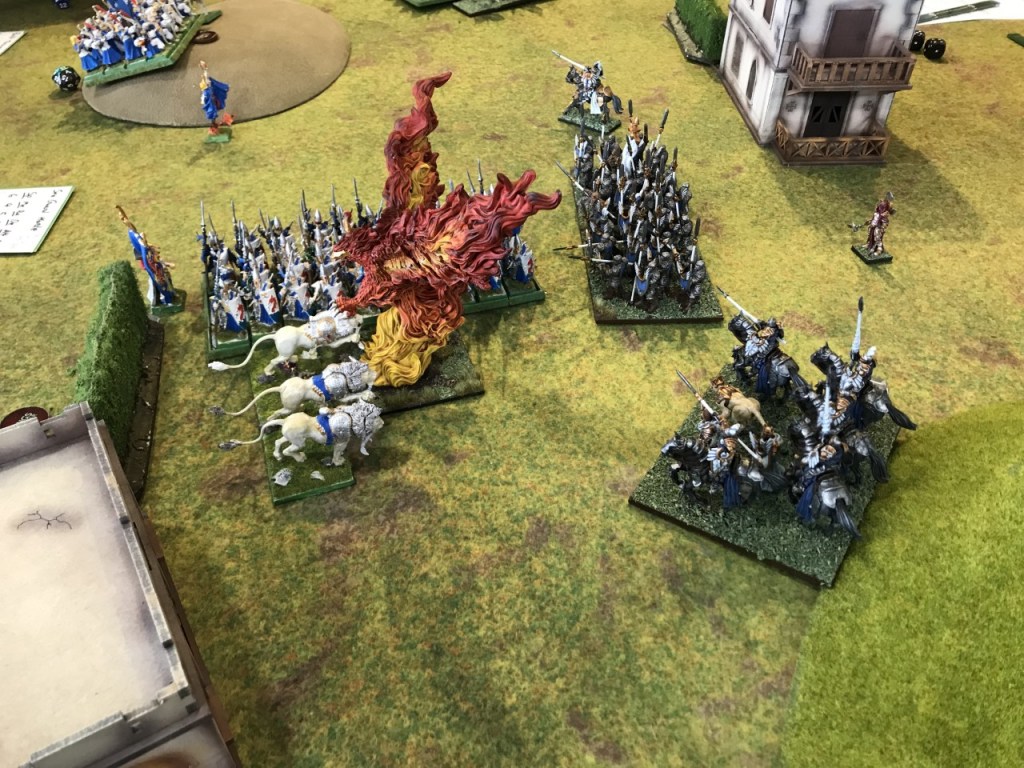
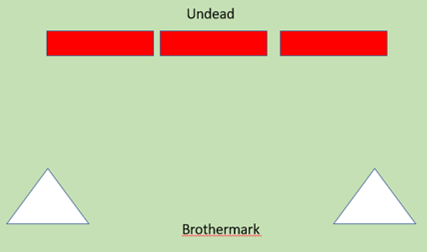
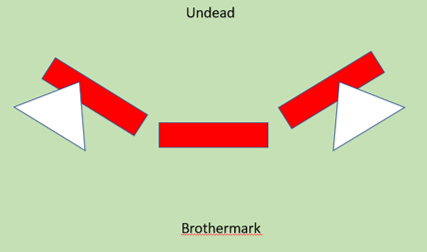
We played push and my plan was to get my tokens into Steve’s half and then capture the central one, ignoring his tokens that were on a zombie troll horde in the centre of the table. The diagram below gives an idea of how I set up. And how the plan would be perfectly executed.
How the plan starts…The brave knight charge into the enemy…Destroy the flanks and turn on the survivors… that’s the plan
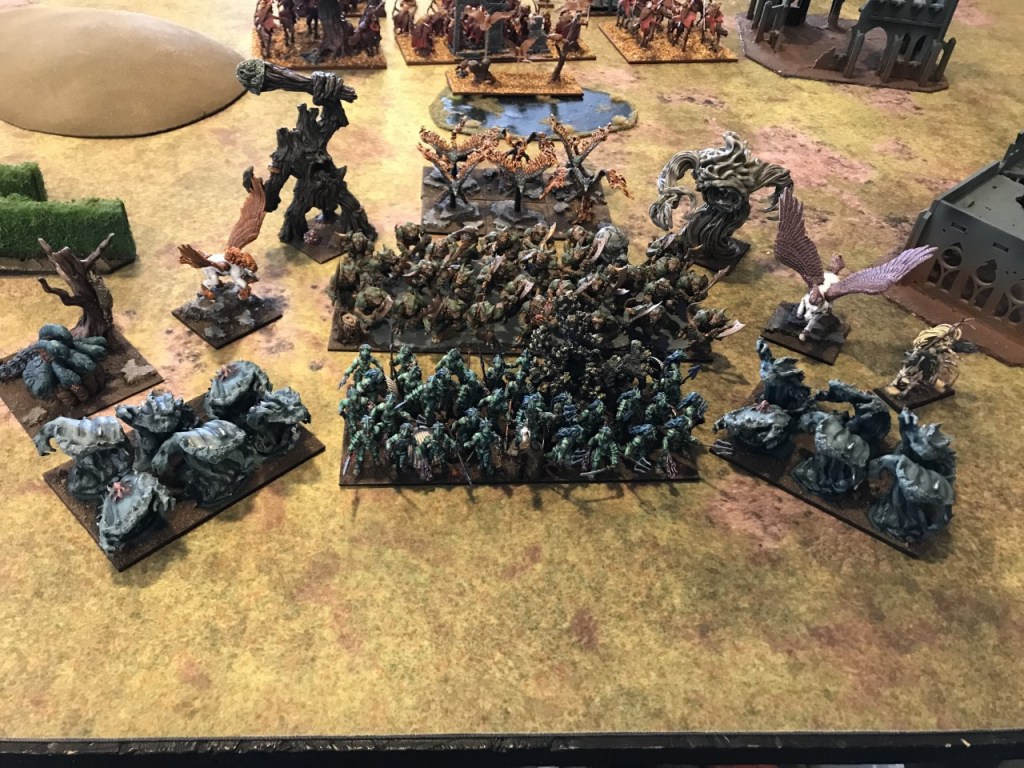
The theory was that I would crush the flanks and then ride around the back and up through the centre crushing skulls and taking tokens. It didn’t happen. What happened instead was my right flank got wiped out and my left flank took so long to chew through the zombies there wasn’t time to get at the central units with the tokens. The game ended looking more like this:
The Brothermark left flank achieves its first goal, but has no time to get the tokens. The right flank doesn’t manage anything.
So the question became – do I tear my list up and try something else – or do I try playing the list a different way?
Talking through the game last night it became apparent that the initiates, that I have two regiments of, may have held the key to a better outcome. The main reason for this being that they have nimble.
Nimble is an expensive ability in the game (check out the Wine of Elvenkind). It’s expensive because Kings of War is a movement game where manoeuvrability opens up so many opportunities from redeployment to flank/rear charges to last-minute objective grabbing. It also makes fast units much faster.
The best short-hand, to me, for the power of nimble in when a dragon moves 20 inches down the side of the table on the first turn, pivots 90 degrees and stares unnervingly down your flanks. It’s not the end of the world in itself, but it can certainly be a solid signal that its on its way if you don’t have a plan to deal with it.
My right flank consisted of 2 regiments of initiates, a dragon, a mounted chaplain and a regiment of Abyssal Hunt. All of these units, with the exception of the Abyssal Hunt, have nimble and move at least 16 inches on the march. That meant I could have brought a lot of troops over to the centre of the board by turn 2 that could have then started to contest the central token, leaving a token force to distract Steve’s shambling troops on my right in the hope of the undead maybe joining the game in a meaningful way in turn 8.
Sending a regiment of Initiates or two, and the dragon, off to hit the central token carriers would have been a lot more useful than doing what I actually did! Hindsight is a beautiful thing.
To add to the nimble, initiates have a nice combination of speed 9, 3+ melee and 14 attacks. That means they should be able to deliver quite a decent number of attacks to where they’re required quickly. I’ve added the Caterpillar potion to one regiment because I think it compliments nimble well, especially for redeployment moves where the double move/single turn is generally preferable to the single move/double turn option which woods and rough ground can force without pathfinder.
There’s obviously a whole lot more to nimble than just a chance to redeploy – there’s also a lot more to the initiates when you add in a chaplain – so I’m looking forward to exploring the opportunities all this presents. I’m hoping having a couple of reasonable combat regiments with nimble will makes it easier to get to grips with, just by virtue of the fact that more units with it should allow more opportunity to use it.
Ideally, I’d like to get to a position where I feel that I could get the full 40 points worth of value out of the Wine of Elvenkind, I’m sure the Order of the Abyssal Hunt wouldn’t mind a pre-game dram. At the moment though it just feels far too “situational” and without the confidence to make those situations happen virtually any item feels like it currently offers more value.
So for now the army list is staying as it is. I have three games lined up before the tournament with the next one being against ogres, which is where the knights should absolutely shine. We’ll see shall we?
If you’ve read this far and aren’t asleep why not give the like and follow buttons a click. What’s the worst that could happen?
Battle Report link – my Brothermark face off against the Lazy Pirate’s zombie legions.
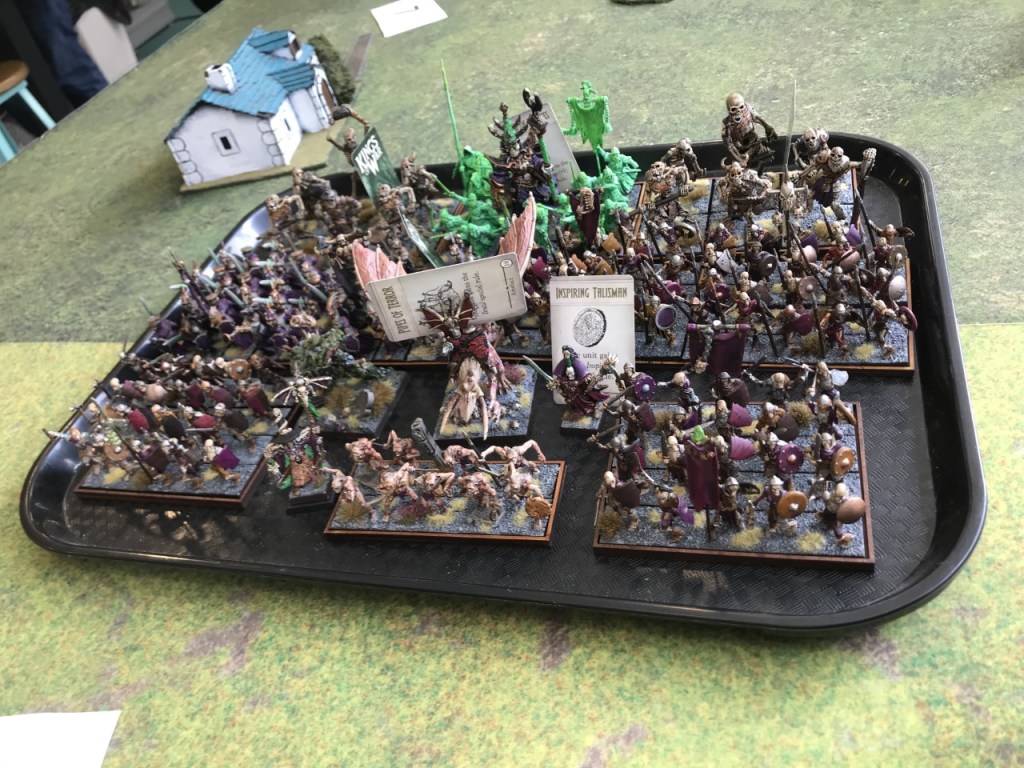
Brothermark 2,300 army list
Villein Penitent regiment
Order of the Abyssal Hunt regiments (3 with Brew of Sharpness, Brew of Strength, Sir Jesse’s Boots)
Villein Skirmishers troop (2)
Initiates of the Brothermark regiments (2, 1 with Caterpillar Potion)
Exampler Paladin, mounted with Scythe of the Harvester, Gauntlet
Exampler Chaplain, mounted with Inspiring Talisman, Aura of Fury
Exampler Hunter, mounted with Blade of the Beast Slayer, Gauntlet
War Wizard, mounted with Lightening Bolt and Curse Shadowbeast
The vision was hazy. There was panic. There were horsemen.
The vision cleared.
They would die by their hands if they did not run.
If they ran the horses and spears would bear down on them, blades and hooves slicked with their own blood.
The vision was gone.
The thunderseers watched with the confidence that only those who have already seen their victory will ever know, as the lone knight raised his axe and spurred his horse into a gallop towards them. They would survive.
They watched with contempt as his horned helmet lowered. Fool, they thought as one.
Clods of earth flew from the ground as the rider sped towards them. Tulgurt, the largest of the thunderseers, pushed to the front of their ranks. The great cyclops raised his hammers above his head and let loose a mighty bellow of defiance, naming himself as the champion who would swat this fly aside, so that the seers might prepare for the fight to come. The fight that would see them confront their visions.
Tulgurt found it hard to believe that this upstart had the temerity to ride alone against him and his brothers. He would have seen it as an insult had he not found the sterility of the rider strangely distracting. The knight’s face was hidden by a helmet that closed the window to the rider’s humanity, stopping Tulgurt from seeing the uncertainty and fear that lived in the hearts of the rider’s feeble race. Tulgurt also noticed the rider wore a simple white surcoat and shield, strangely uncluttered by the usual boasts of heraldry that so many men clung to in the face of their own deaths. Something about it unnerved the cyclops.
There were the horns though. Tulgurt allowed himself a brief smile at the horns that had been stuck onto the helmet. They broke the illusion the rider had clearly tried hard to create. The illusion that the knight was somehow above the vanity of lesser men, somehow purer. Somehow better. Tulgurt’s smile became a great roar of laughter. This was just a man, and like every other man he had crushed under foot so this one would fall as well.
He looked again at the horns, smiling, readying his weapons.
The rider was now closer, axe still raised, horse charging directly towards him, but the horns seemed to have grown. Tulgurt looked again. They were longer, sharper, but more than that they no longer looked like decoration stuck onto the helmet. It was as though they grew from it. The helmet itself had changed. No longer a shield to hide the rider’s humanity behind, it had fused with his face and the resulting mess of flesh, bone, and metal exposed and amplified the rider’s rage and fury. There was no humanity, no weakness, only the certainty of violence and death. The rider began to bark threats and challenges, not only to Tulgurt and his brothers, but also to the world. The rider demanded Garkan himself take to the field or be proven a coward for twice the length of eternity.
Panic ignited in Tulgurt and the seer lashed out with his hammers, but the blows fell too soon. They arched down and the horse danced to the right leaving them with nothing to hit, until they thudded into the ground. This brought Tulgurt’s head down. His single precious eye was now at the rider’s shoulder height. The rider raised a corner of their shield as the horse carried on past the cyclops allowing the rider to drive the shield home into Tulgurt’s face, blinding him and flipping him over with the force of the charge. The axe that had been raised dropped down by the rider’s side before arching up into the chin of another of the seers.
Confusion spread quickly through the ranks of the cyclops as the rider lashed out with axe and shield making of each a weapon equalled only by the other. Monster fell upon monster as screams, as much of bestial delight as anguish and pain, filled the air.
On a nearby rise the initiates held their horses steady, spears ready. The paladin leading them watched the hunter through the slits of his helmet. The example had been set. He raised his sword, barked an order and the horses started to canter forward.




















 The Wizard's Bookshelf