
Burn the stumps
One of the great things about Kings of War is the level of balance across the army lists. This means its possible to build a range of solid lists that explore different aspects of all the different factions. Personally I’ve always favoured elite armies, but playing the same build can get repetitive so I decided to have a go at a more grind style rat list, and after a few iterations I thought it was in a good enough place for a battle report.
BTW the narrative for this game is the second part of Stealing Shards, so definitely worth a look if you haven’t already.
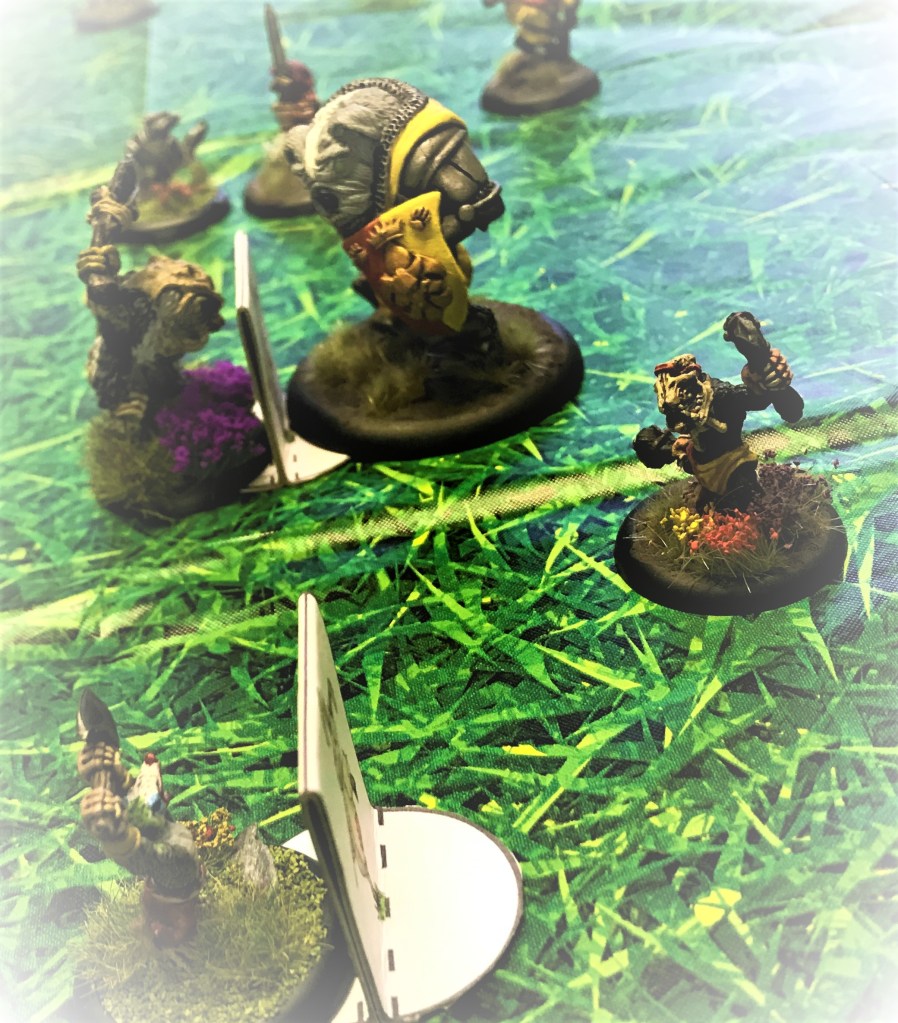
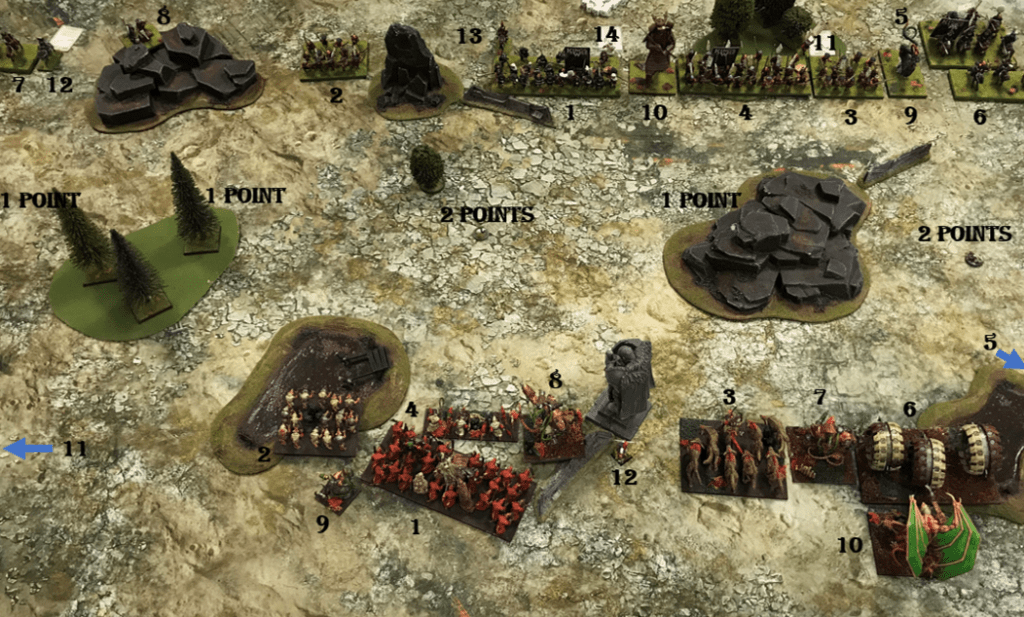
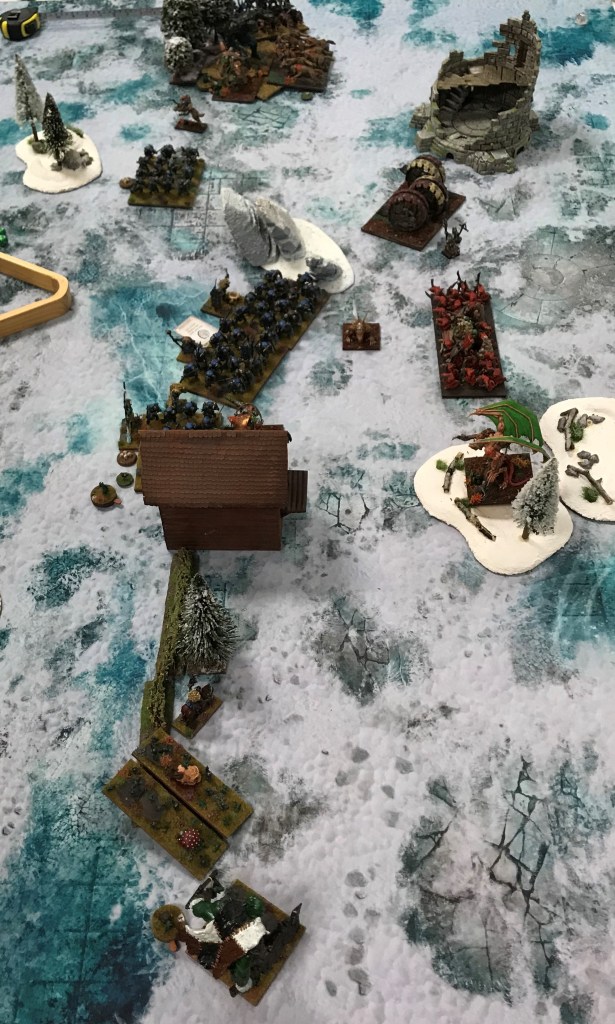
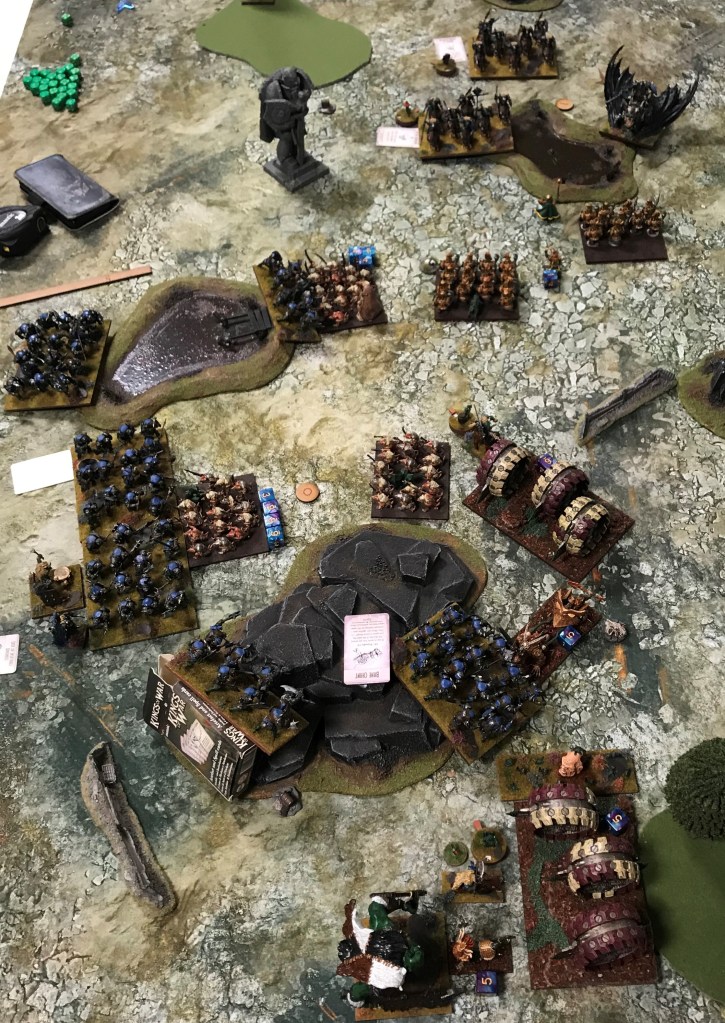
To the table. Raze. 1995 points.
Armies
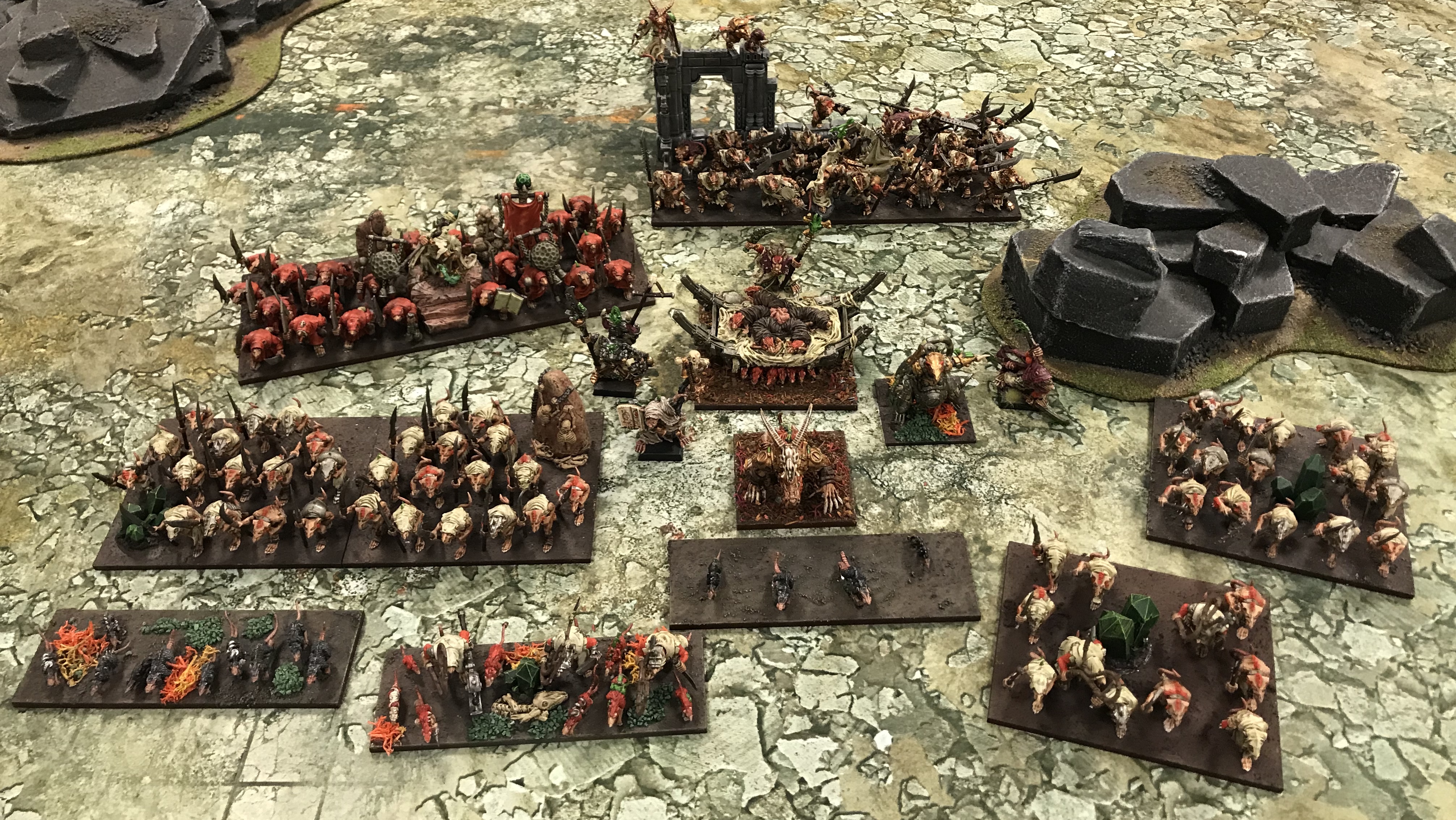
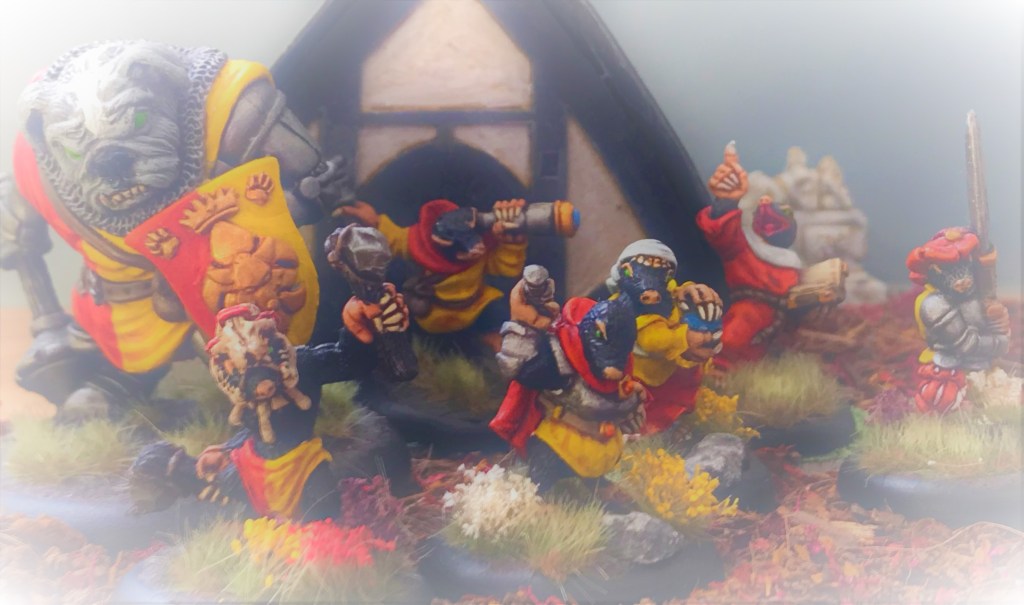
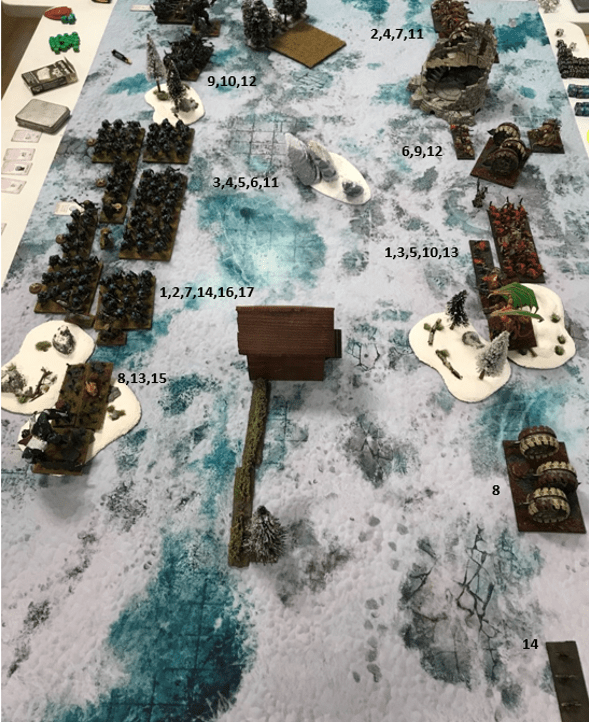
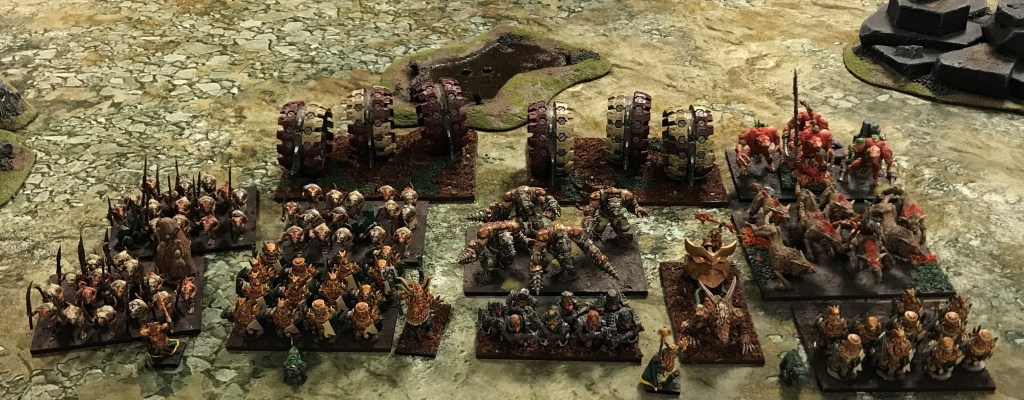
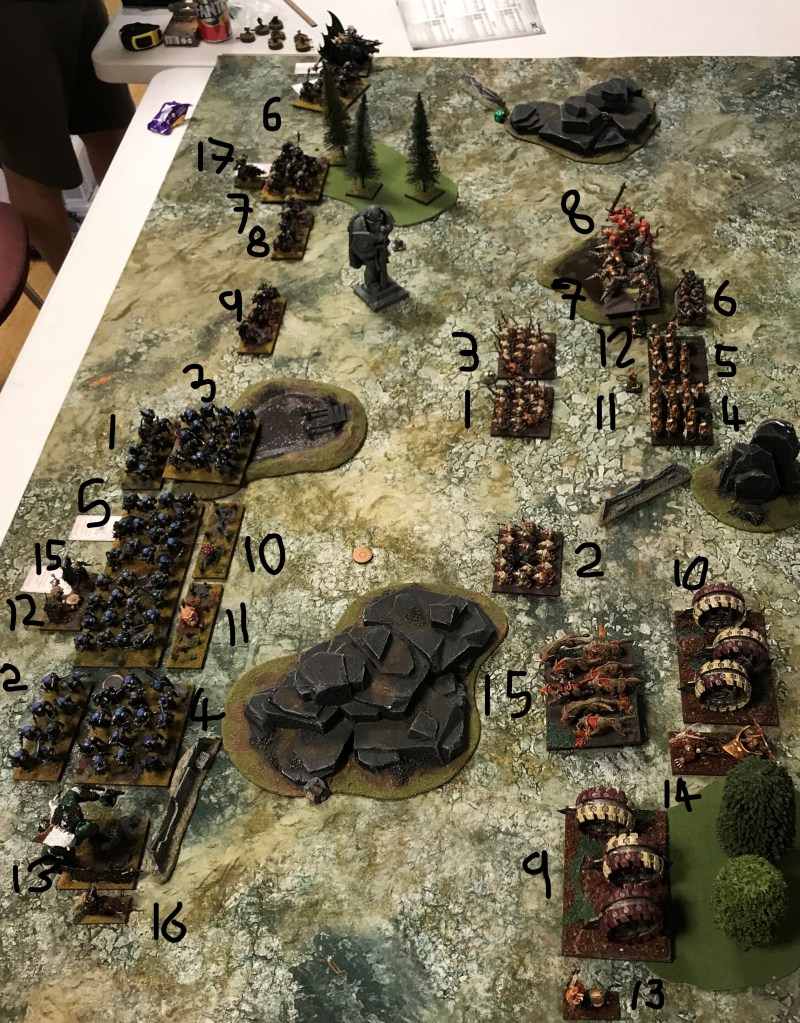
The Fyrefur Clan
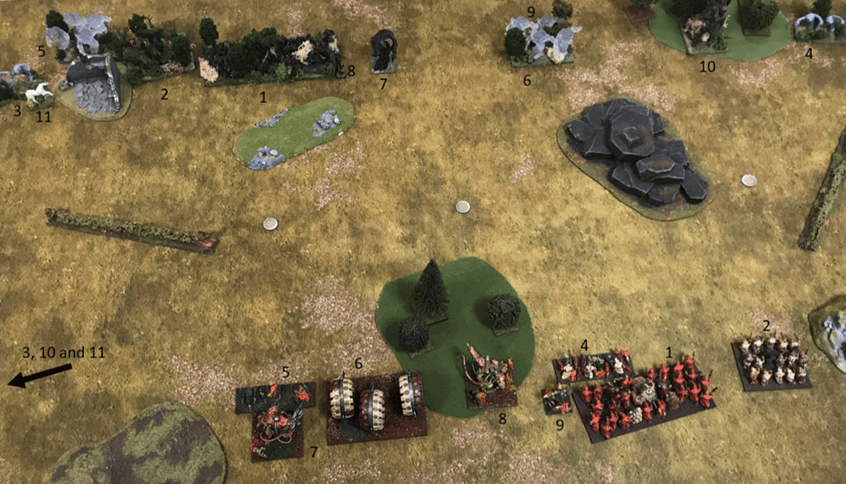
1 – Shock Troop horde with Plague Pot and Brew of Sharpness
2 – Shock Troop horde with Plague Pot and Caterpillar
3 & 4 – Warrior regiment with Plague Pot
5 – Spear horde with Plague Pot and Blade of Slashing
6 & 7 & 8 – Vermintide regiment
9 – Strayrat – Master Scurrier with Pendent of Retribution
10 – Night Terror with Blade of the Beastslayer
11 – Old Mother Cinderpaw – Mother Cryza
12 – Warlock with Boomstick
13 – Kiitsch Sparkthrower – Warlock with Banechant
14 – Tangle
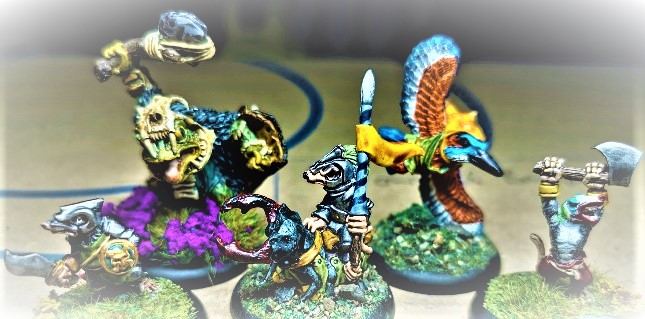
The Herd
1 – Spirit Walkers horde
2 – Hunters of the Wild regiment
3 & 4 – Gur Panther regiment
5 – Harpies troop
6 – Guardian Brute horde with Blessing of the Gods
7 – Lycan horde
8 – Beast of Nature with wings and 7 attacks
9 – Beast of Nature with noxious breath and 7 attacks
10 – Moonfang
11 – Druid with Banechant and Conjurer’s Staff
12 – Gladewalker Druid with Blizzard
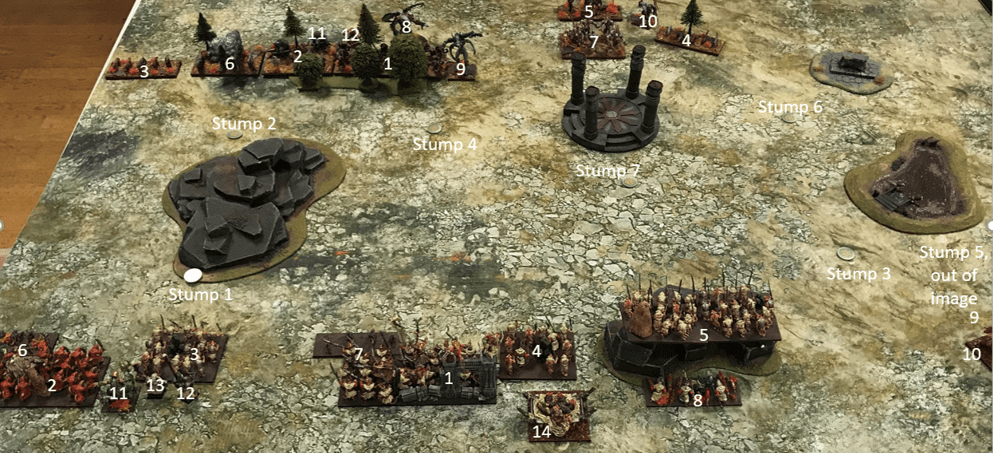
Turn 1
Cinderpaw drifted in and out of consciousness for what felt like an eternity. Long periods of dark nothing stretched out, punctuated by odd moments of lucidness. There was mud and violence. The rancid whiff of fleabag fur. The discomfort of being carried. Deep, deep slumber. Damp. Nothing.
The body surged forward. Thin and ragged like broken sticks covered in a sheer grey sheet of flesh long passed its prime. The chest shot up, arching the back, throwing the dead weight of the head up so violently the eye lids opened and the dull green balls rolled back. A breath stirred.
Strayrat knelt over Cinderpaw’s broken corpse and watched it fall back to the ground. He uncorked the small black vial again. The acrid smell scratched the inside of his nostrils. Carefully he tipped the next drop into the broodmother’s open mouth. One drop to wake them, two drops to get them up, three drops to take them away forever.
The second drop hit Cinderpaw’s tongue and her heart murmured. Muscles unused for maybe a day, maybe more, contracted and the black blood started to pump.
“How goes it?” said Sparkthrower, entering the cave with his apprentice by his side.
“She is responding.” Strayrat replied without looking up.
“Can she hurry up? This distraction does little for my apprentice’s education. Are we carrying a corpse back to the tunnels? Or will it carry itself?” Sparkthrower asked, irritation in his voice.
Strayrat shot the warlock a look as sharp as any of the knives that hung from his belt. Sparkthrower reigned in his frustration and reminded himself Strayrat was a rat he now needed to make a friend of, or least ways not an enemy. How many years had that runt led the hackpaws, disguising himself as a lowly tracker and outrider, all the time concealing his true position in the clan?
Sparkthrower was still trying to work out what he found harder to come to terms with. That he, the chief warlock of the Fyrefur clan, was not privy to the identity of the clan’s master scurrier, or that Old Mother Cinderpaw was so vital to the clan that Strayrat had been instructed to reveal his identity so that Cinderpaw’s carcass could be retrieved.
“The corpse will do exactly as it pleases, just as the chief warlock will do exactly as I please.” Cinderpaw’s chill voice spoke, “And what I please is that we take our vengeance on this malignant forest.”
Sparkthrower looked uncomfortable, he had heard about Cinderpaw’s encounter with the spirits of the forest. He did not want another such abject failure haunting his reputation.
“Come chief warlock.” Said the ancient brood mother grabbing up her staff, seemingly growing in vigour with every passing second, “We have the woods to wake up.”
As the triumvirate of rat leaders, and the apprentice, made their way out of the cave the sound of massed ranks of ratkin became increasingly apparent. Drums beat, horns sounded. In the clearing beneath the cave small groups of warriors ran around busying themselves in the undergrowth.
“What are they doing?” Sparkthrower asked.
“Searching for the stumps.” Cinderpaw replied.
“I’m assuming there is more to this than digging out lumps of dead tree?” Sparkthrower continued.
“Of course. These are special stumps. Consider them akin to the remains of ancient heroes.” Cinderpaw explained, before turning to address Strayrat, “How many have the found?”
“Eight, my queen.” The scurrier replied.
“Then they have found enough. Call them back to their ranks. I will summon the forest.” Strayrat motioned to a runner stood by the entrance of the cave to take Cinderpaw’s message to the warriors. The brood mother raised her claws, yelled defiance at the sky before sending a lightening bolt hurtling towards one of the eight tree stumps the rummaging warriors had cleared.
“What are you doing?” Sparkthrower asked, already guessing the answer was unlikely to involve polite conversations over mugs of wine.
“Getting their attention.”
Sparkthrower was about to share his thoughts on Cinderpaw’s clearly questionable line of thought, particularly given her recent near, or possibly actual, death experience at the hands of the forces of nature, when he noticed eyes on the opposite side of the clearing. A lot of eyes. He shuddered.
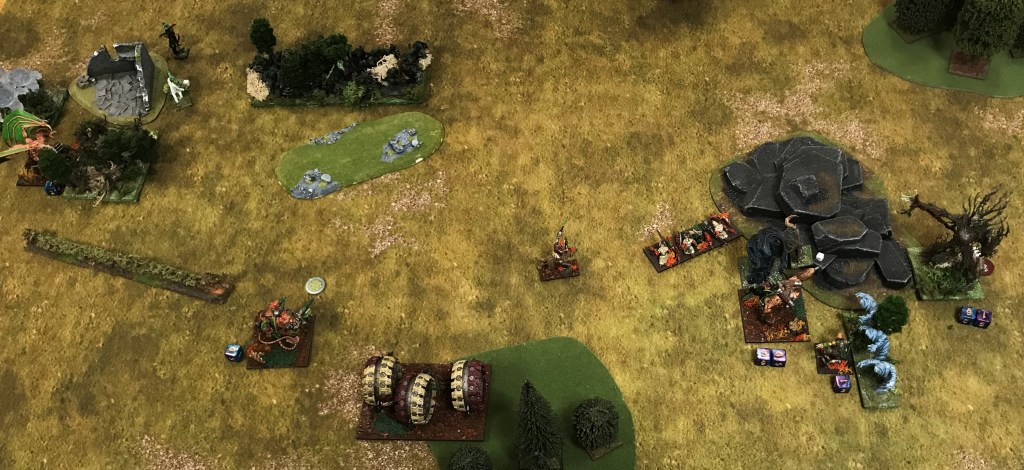
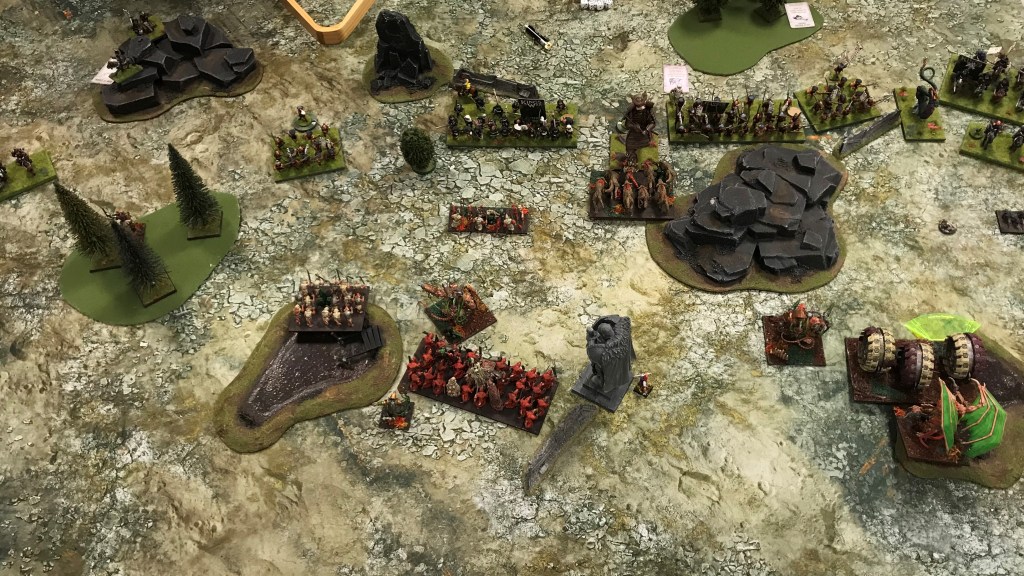
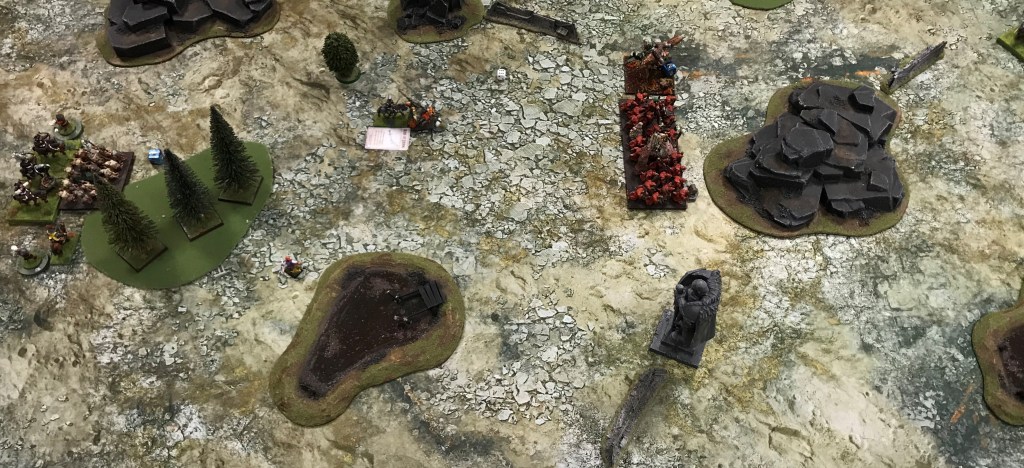
The Hunters of the Wild were the first to break cover on the left flank, although the hill protected them from the prying eyes of the enemy. On the right, Strayrat ran forward making himself as visible as possible to the hidden foe. Sparkthrower shook his head as he, Cinderpaw and his apprentice made their way to the left side of the field. How had he not guessed that idiot was what passed for a master spy, scout and killer these days. Clearly there was the need for a new leader of the clan, a more subtle and refined one. One that did not lead suicide missions against angry trees and their ilk. Repeatedly.
The spell casters took up position as the beasts of the herd moved cautiously forward. Cinderpaw sensed the running of wolves on the right. Clearly, they hoped to claim the unprotected stumps before turning and trying to slash their way behind the vermin lines.
An eldritch storm of ice and hail seemed to whip up around the Spear horde on the hill. Chunks of ice rained down bludgeoning several warriors to death who were not been quick enough to raise their shields against the weather.
“Make the forest bleed.” Cinderpaw yelled in a wicked, rasping voice that seemed to Sparkthorwer had a new youthfulness he had never heard in his lifetime.
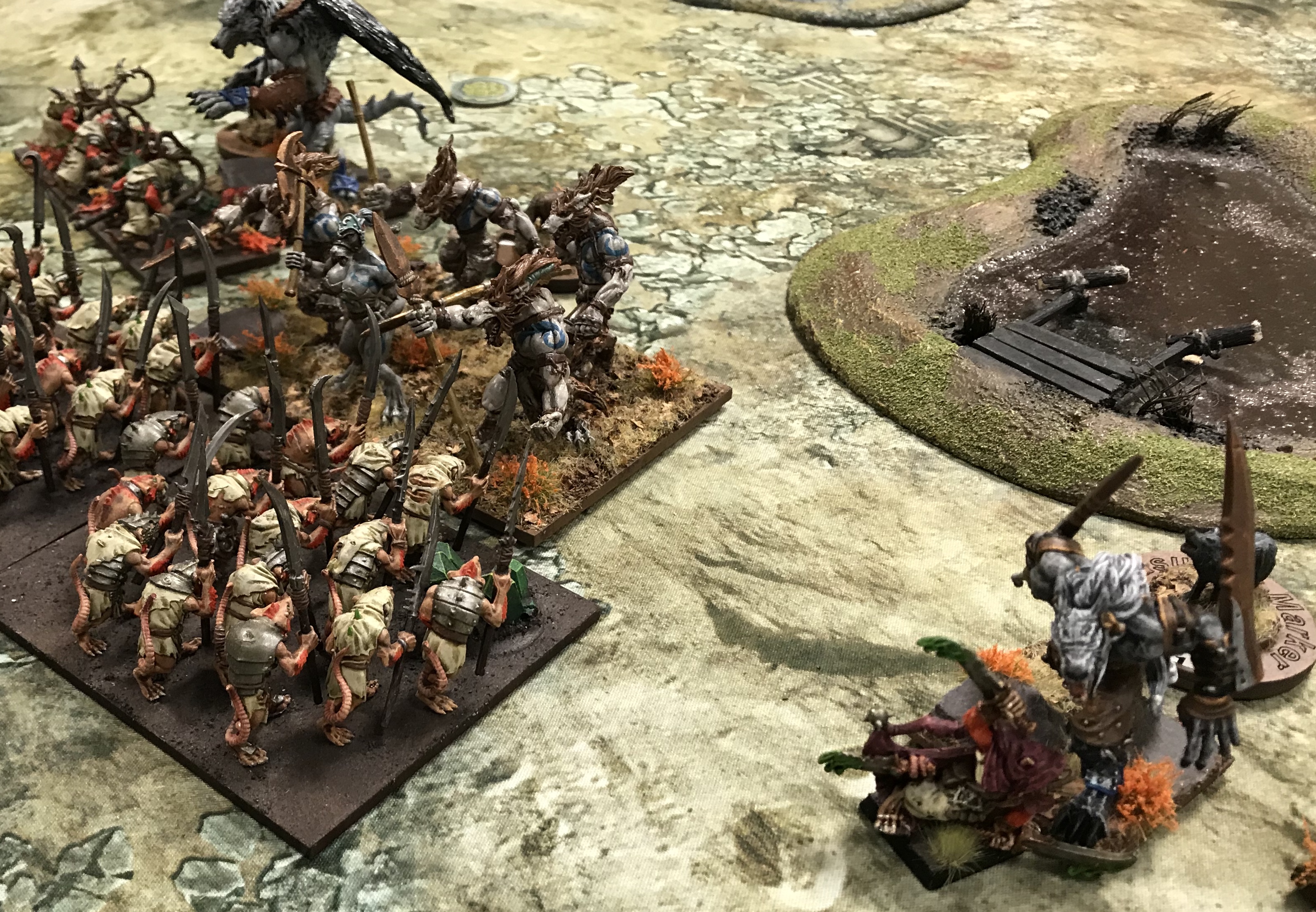
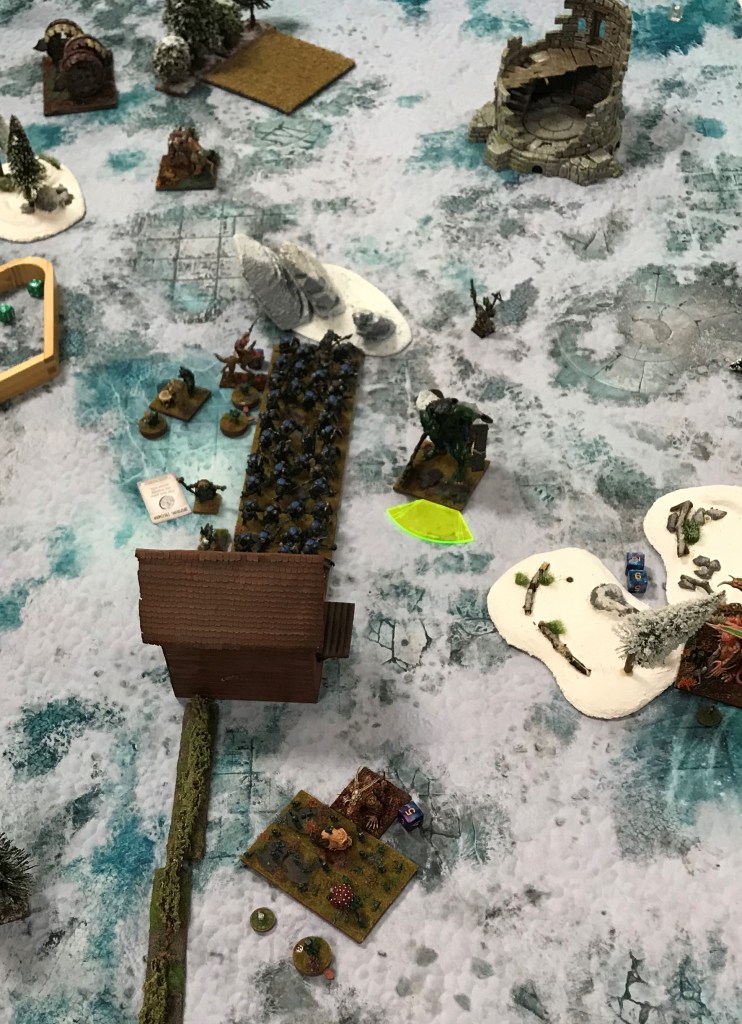
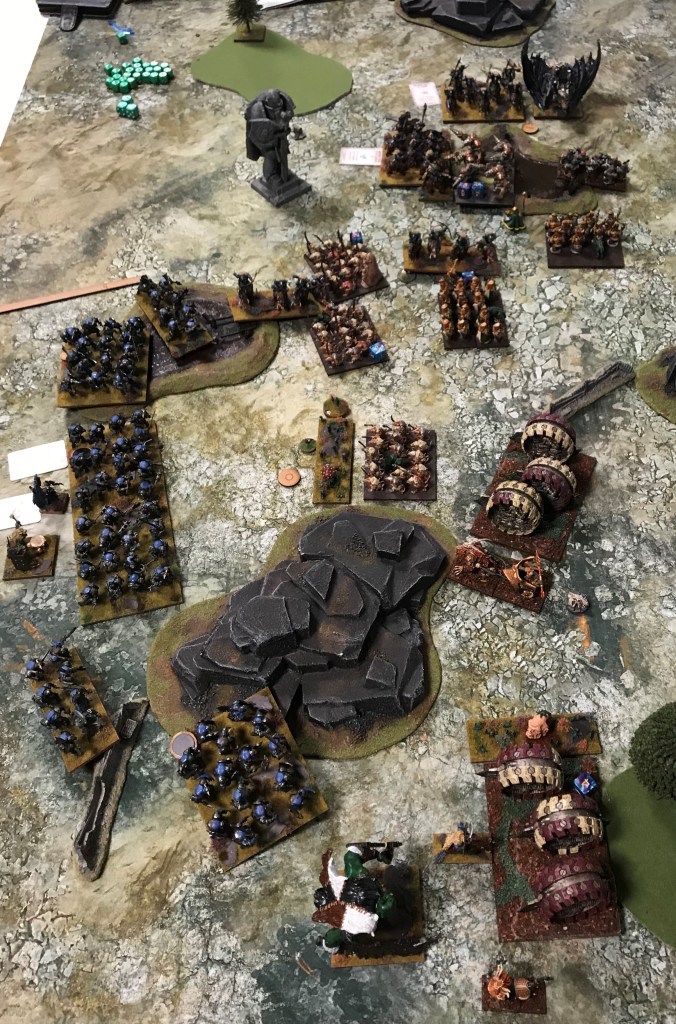
Wicked squeaks and beaten shields responded and the rat legions advanced as quickly as possible towards the warriors emerging from the trees ahead of them. The Spear horde and Vermintide on the hill broke off to face the wolves on the right. Strayrat ran from the Gur Panthers that stood in front of him, shooting at the Lycans by way of token aggression, allowing the Night Terror a clear path to charge the cats. Unfortunately, the panthers had moved around the slide of a lake and the terrain under claw was wet and slippery. Whilst the Night Terror reached its target the wet ground made it difficult to get purchase and the creature lashed out blindly, unable to hit any of the cats.
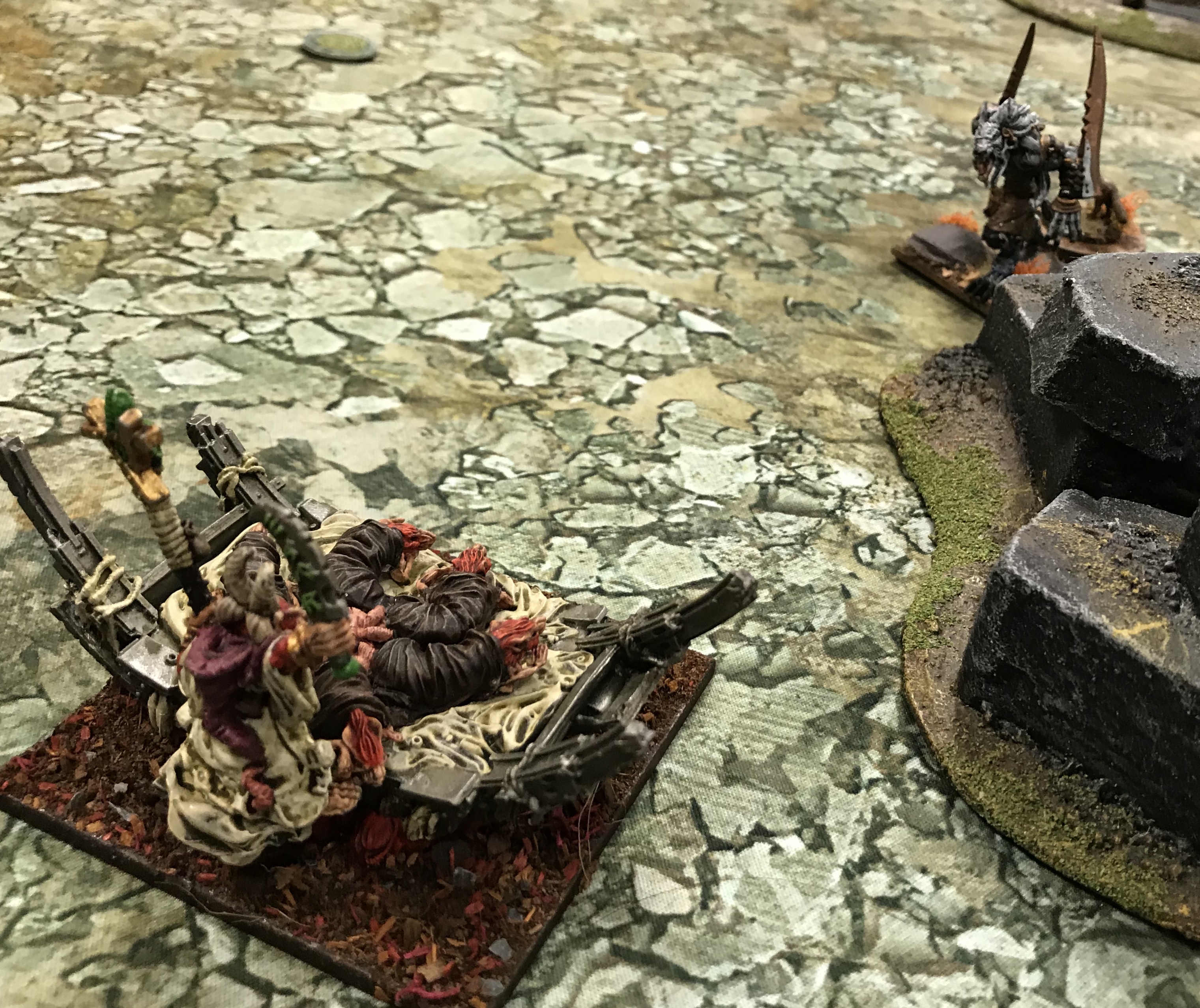
In the centre the priest on the Tangle cast weakness on the Spirit Walkers in anticipation of the combat that was to come.
Rage barely contained, Cinderpaw lashed out at the Beast of Nature in the centre of the herd lines with her lightening. Sparkthrower and his apprentice joined in. The creature reeled from the bolts that struck it, bloodied but unbowed it lowered its head to charge.
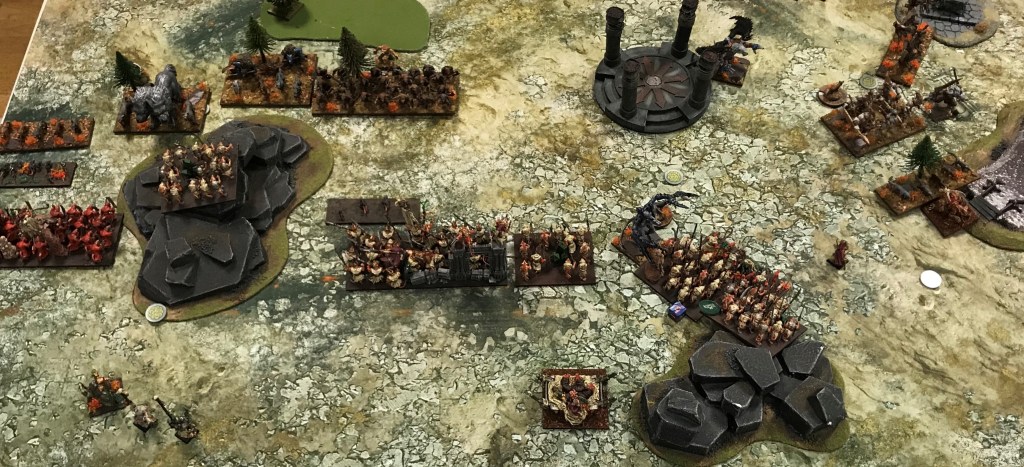
Turn 2
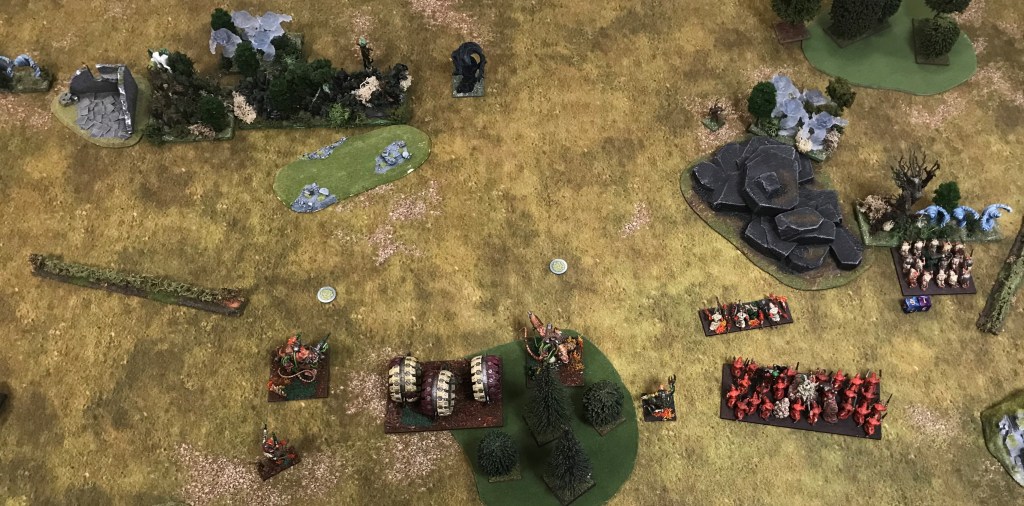
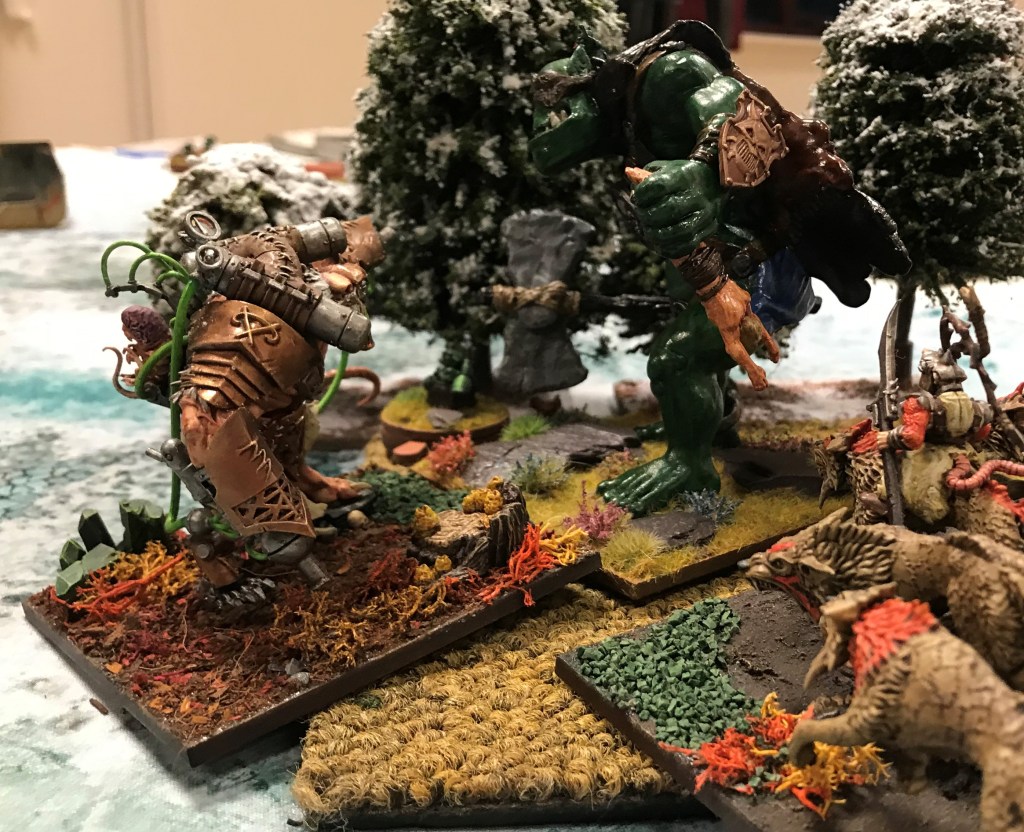
The lightening struck Beast of Nature, crashed into the exposed flank of the Spear horde. Vermin bodies were broken and tossed aside, but the horde remained. The Gur Panthers pulled back from the Night Terror and ran towards the Spear horde eager to join the fight. As Moonfang and the winged Beast of Nature also turned their attentions in the direction of the Spears, the Lycans charged the Night Terror. Still struggling to find a grip on the slippery lakeside the creature was rapidly torn apart by the wolfmen who were more at home in the varied terrain of the out-of-tunnel.
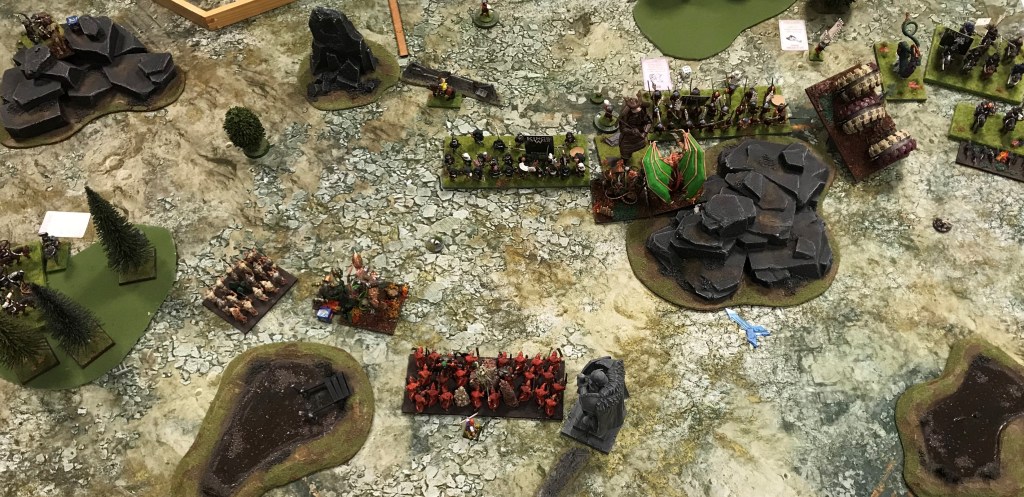
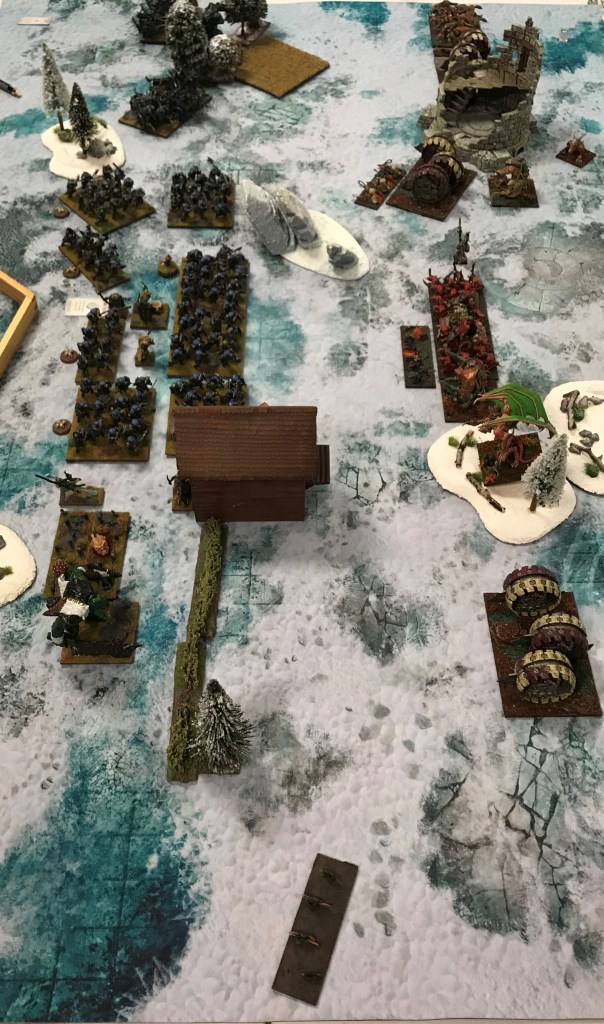
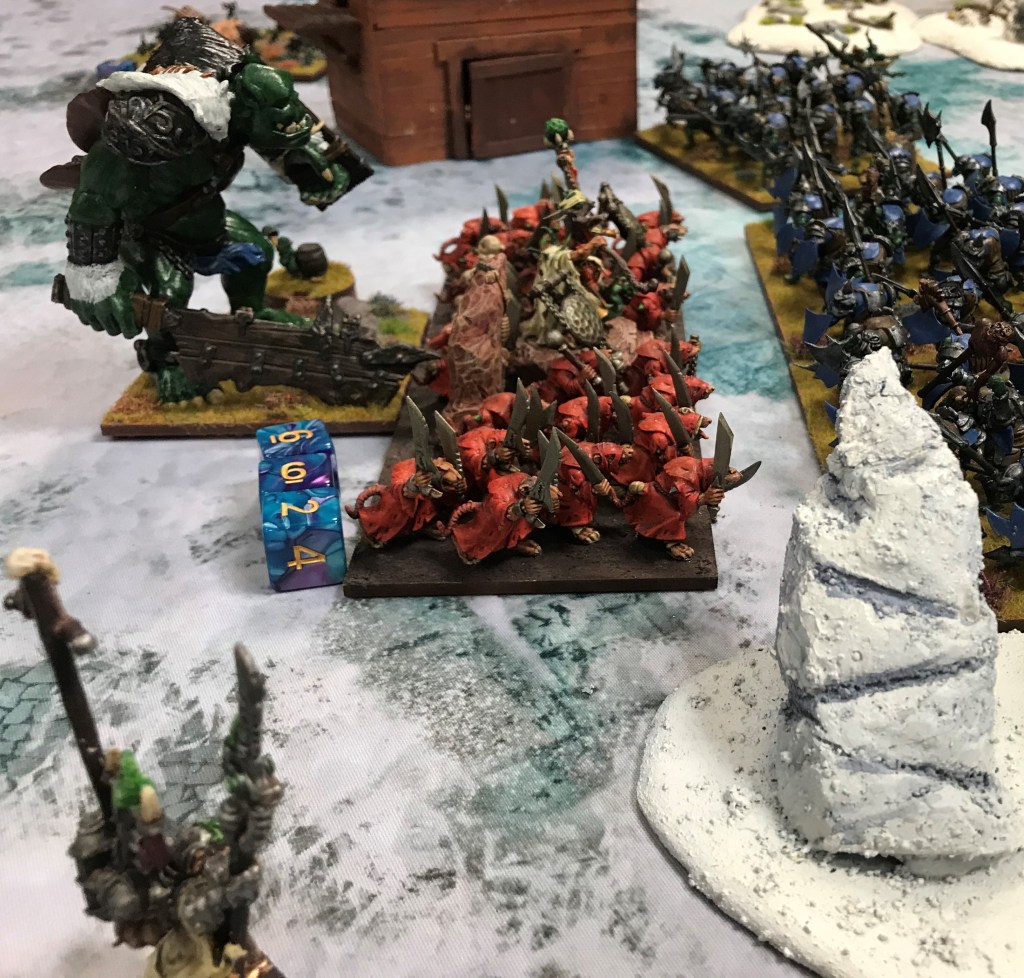
The hill on the left of the field, combined with the ratkin’s battle order restricted the movements of the warriors of the herd leaving them with little option but to charge what they could see. The Brute Guardians and Hunters of the Wild charged a warrior regiment whilst the Spirit Walkers ran into the central Shock Troops. The warrior beasts found their targets wreathed in filth, reeking of fetid water and putrid flesh. The stench shredded their heightened senses, breaking their concentration, making blows miss their mark or slip off shields. On the hill the herd’s sheer weight of numbers broke the Warrior regiment. The Shock Troops, however, escaped any real damage from the Spirit Walker’s charge as the plague pots and weakness blunted their effort. The few casualties we easily absorbed and the ratmen readied themselves to fight back. The response was brutal. The Warriors to the right of the Shock Troops joined the fray. Still engulfed in filth the Spirit Walkers choked and spluttered, seemingly unable to raise their blades in their own defence as the ratmen went gleefully about their slaughter. The Vermintide nearest to the central Shock Troops charged the Hunters of the Wild to prevent them from lending any assistance to their friends whilst on the far left, the other Shock Troops charged up the hill, into the Guardian Brutes. Jagged blades ripped through animal flesh and feathers leaving bloody pulp where noble beasts had once stood. Freed from the distraction of the brutes the Shock Troops set to hacking at one of the stumps until all that remained was a hole in the ground from which torn roots protruded.
On the right the Spear horde continued their advance, moving away from the frenzied beast gorging itself on their former companions. They charged into the Gur Panthers, sending them scattering and set their spears, readying for the inevitable charge from the Lycans that had turned to face them. The Vermintide ran towards the winged Beast of Nature, scurrying around its feet, small teeth sinking into its flesh, preventing it from flying for the moment.
Strayrat engaged his target, a flurry of blades sought ways around and through Moonfang’s preternatural blocks and dodges, but could not find an opening through which he could land a killing blow.
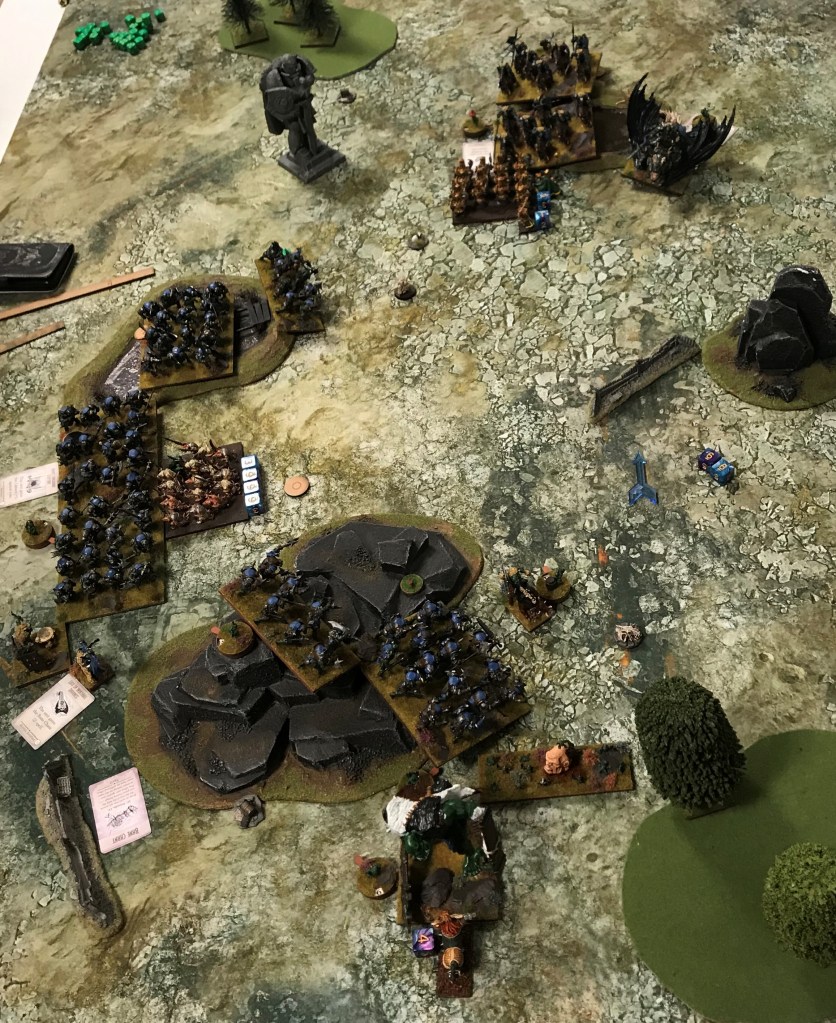
In the centre Sparkthrower and his apprentice eyed the Beast of Nature feasting on the dead ratmen. The creature seemed oblivious to the fact it now sat within the rat lines. Blocked in by fighting to is rear and one side whilst the casters and the Tangle completed the circle. Sparkthrower raised his claw, a blue glow emanated from it and sparks danced like fireflies around it. The thing was almost pitiable the Warlock thought, but what relevance has pity to a battlefield? Sparkthrower discharged the energy that had built up in his claw. It hit the beast making it jolt and shriek. Sparkthrower’s apprentice raised his boomstick and followed his master’s lead and finally gouts of flame shot from the Tangle with an intensity and heat that stripped flesh and melted bone into the forest floor. She wanted to make the forest bleed, I guess this is the next best thing, Sparkthrower thought.

Turn 3
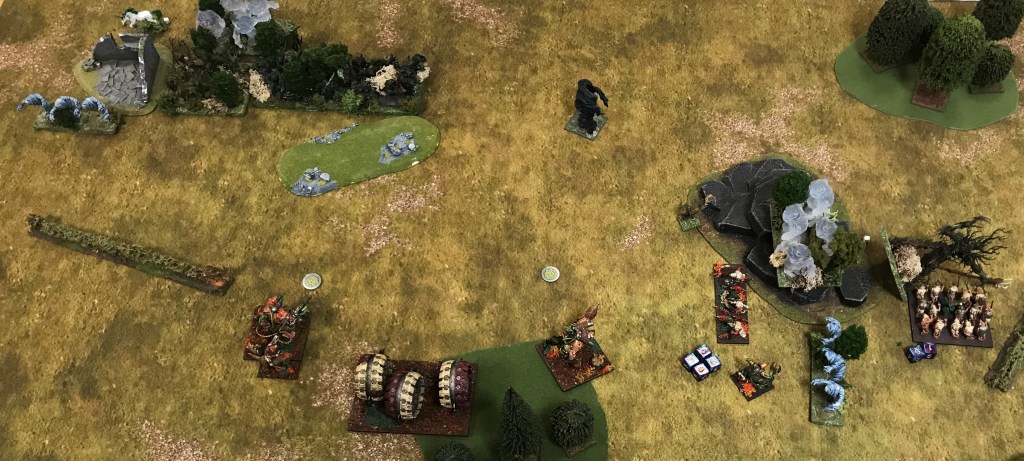
Cinderpaw smiled as she surveyed the left side of the field. On the far left the last troop of Gur Panthers snapped ineffectively at the Vermintide that swarmed round their feet, avoiding their jaws and nipping at their legs with dirty, diseased teeth. Meanwhile the Hunters of the Wild were tied up with their own vermin issues. Try as they might they could not push the squeaking swarm back, let alone break it.
On the right flank the wolves were very much is ascendance. Moonfang lashed out at Strayrat. The Master Scurrier tried to dodge away from the blows, but he was not fast enough. Moonfang’s claws made contact with his chest slicing deep channels through his leather armour and into the flesh below. Adrenaline pumped, numbing Strayrat to the injury and making him question his choice of targets.
With the Gur Panther’s routed the path was clear for the Lycans to strike at the Spear horde. The wolfmen let out a near paralyzing howl. Some took to all fours, whilst others ran upright on their hind legs, but all leapt and fell as one upon the Spear horde. The ratmen had broken open the seals on their plague pot, but the noxious fumes did little to stop the frenzied onslaught of the dog men and their attacks, which combined with the losses the horde had already suffered were enough to send the remaining warriors running from the field.
Grounded by the Vermintide the winged Beast of Nature could do little but swot at the tiny beasts until they finally broke. In a desperate show of defiance of the ratkin the harpies on the left flank landed beside Moonfang, having secured two of the stumps with magical charms that would hide them once more from the eyes of the evil vermin.
Driven to the height of blood lust by their destruction of the brutes and the desecration of the stump the Shock Troops on the left charged further up the hill and into the flank of the Hunters of the Wild. Already hemmed in by the Vermintide the spindly forest fighters could do little to resist the storm of seemingly insatiable violence that enveloped them. The forest was beginning to bleed.
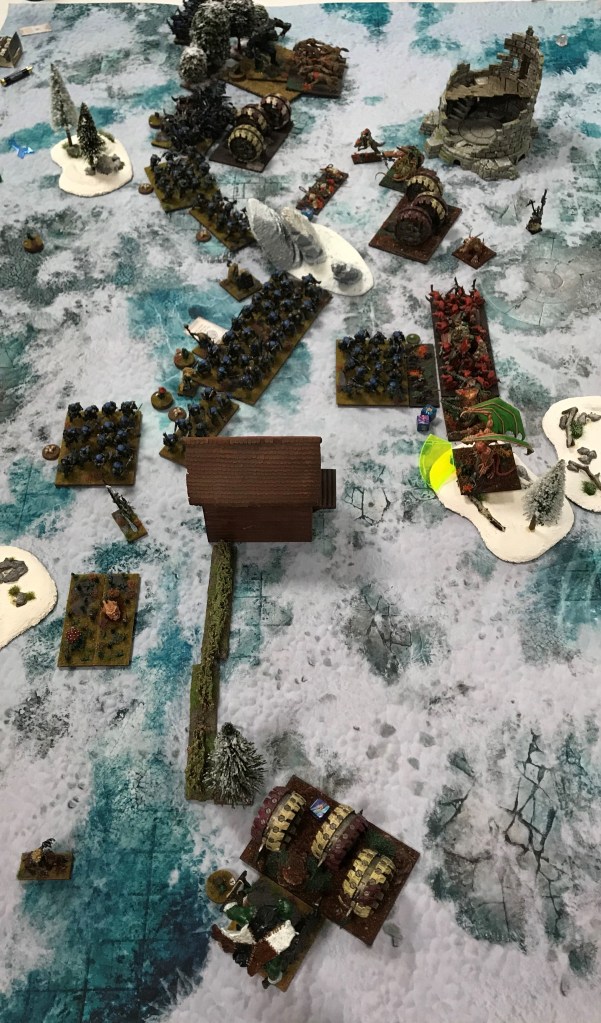
Damaged by the charge of the Spirit Walkers, and a localised blizzard conjured by the Gladewalker Druid, the central Shock Troops pulled back denying a charge to all but the bloodied Lycans. The remaining warrior regiment spied another stump and marched towards it, blades brandished eager to garner favour from Old Mother Cinderpaw.
Strayrat had pulled back from Moonfang. The brute was powerful and unbelievably fast. He was concerned he had met his match. Seeing the harpies coming into land just behind the beast Strayrat made a break for it. He turned and twisted away from slashing claws until he faced the bird women, but his exertions escaping the werewolf meant his attacks on the harpies fell short, failing to do anything except confirm in their minds the ratman was not a friend.
Encouraged by the destruction of the Beast of Nature Sparkthrower sought new targets. He pointed towards the Lycan horde, squeaking instructions immediately lost to the din of battle. His apprentice raised the boomstick whilst the Tangle turned to face the dogmen and seconds later they were bathed in lightening and flame. The heat and the shocks were too much for the creatures who scattered from the glade, tail between they’re legs.

Turn 4
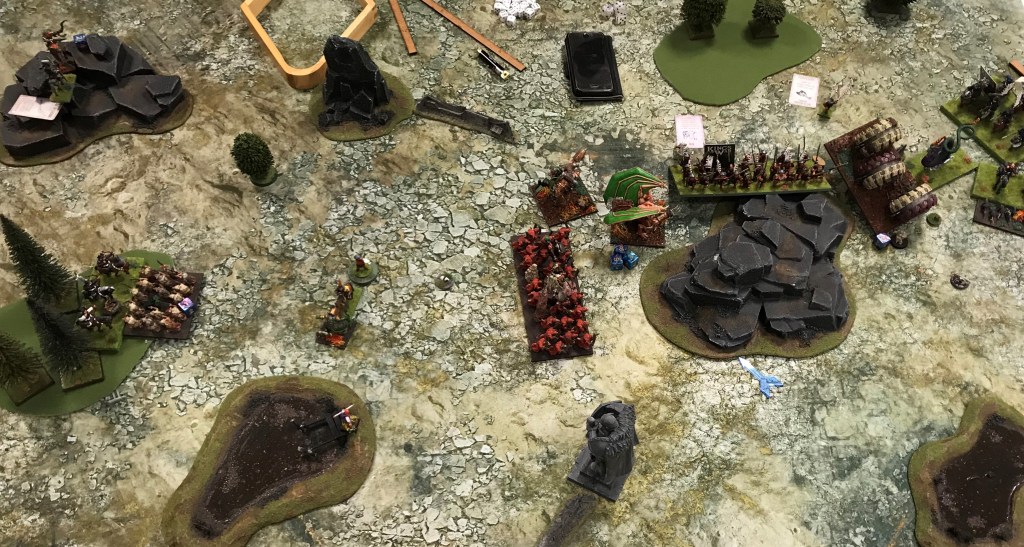
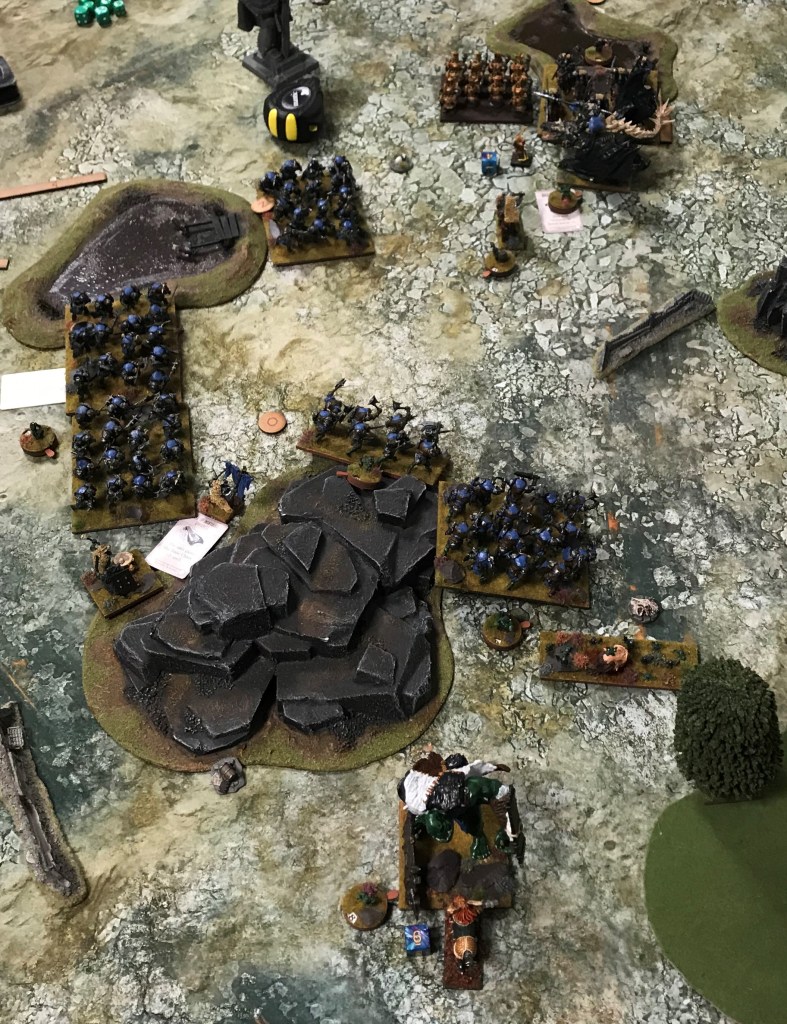
With much of the herd either dead or routed the Beast of Nature with Wings made a final attempt to save one of the stumps. It flew into the rear of the Warrior regiment that had set about removing another stump, but it was too late. Thin faces grinned with nervous excitement and tails twitched with glee at their destructive endeavours, driving the beast into a rage. It rained down furious blows, claws rending, fists pummelling until nothing recognisable remained of the rat warriors. The beast turned to face the Shock Troops on the hill only to feel the hacking of axes in its flesh as the Shock Troops in the centre charged its flank and ran it to ground before turning to face the central stump, their path to it now clear.
The harpies jumped and flapped, talons grabbed at Strayrat, but failing to connect in any meaningful way. Surrounded by the vicious, pecking, tearing bird women the Master Scurrier decided that discretion was the better part of valour and withdrew from the fight.
Moonfang surveyed the battlefield. The rats had visited the woods before. The trees had told him. He didn’t need the trees to tell him they were a plague, a filth, a cancer. He stalked forward anger and vengeance driving him on. Having seen the power of the rat creatures’ magic users he moved cautiously, skirting the base of the small hill the cowards hid behind. He felt the shot in the back first. A burning sensation from the assassin’s pistol, but such was his mood the bullet, if it penetrated at all, did not slow him. The Tangle shuffled into view, releasing a great gout of flame. The werewolf continued to stalk towards the rats. Finally, the lightening bolts came, scratching his skin but not deterring him.
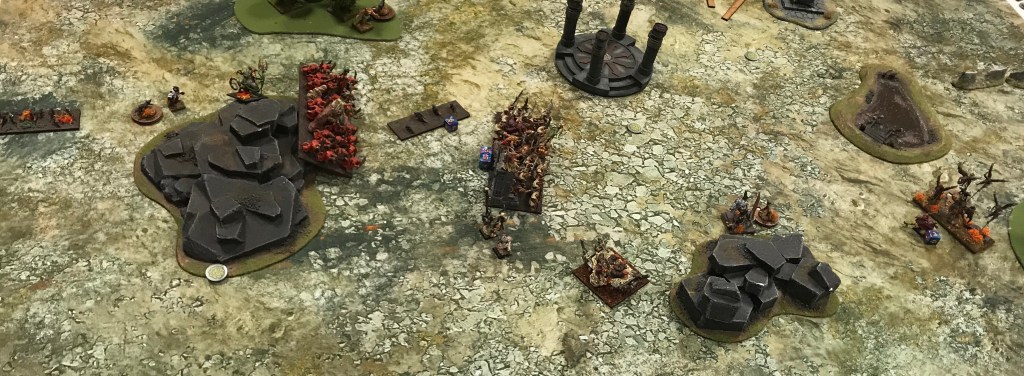
Turn 5
Moonfang picked up the pace as he saw the two casters ahead of him. He bounded towards the first. It raised some kind of stick, but whatever it was intended to do failed to happen and creature’s brittle body snapped in Moonfang’s claws. Anger still coursing through his veins he leapt to the next robed rat jaws tearing its throat clean out as the thing looked on in shock, not noticing what had happened until it was too late.
The harpies followed Moofang’s lead and swooped on the assassin once again. This time they managed to pin him to the ground. Deciding he had contributed enough to the battle Strayrat manged to pull a stone pendant from around his neck. Its shiny stone setting distracted the bird women long enough for Strayrat to roll away leaving the neckless in his place. The harpies crowded round the hypnotic gem, quite forgetting the ratman, and then in exploded, shattering into a million pieces that flew around embedding themselves in the harpy’s flesh, weakening, but not killing them. Snapping them out of their trance.
On the right flank Cinderpaw watched as the Gladewalker Druid ran for the woods preparing to unleash another tiny blizzard. The old brood mother knew instantly the danger this creature presented. The Shock Troops in the centre were badly wounded. It wouldn’t take much, even surrounded by their brethren, to send them scurrying from the field. Cinderpaw signalled to the central Vermintide regiment and together they charged the caster. The woods hindered their efforts, but a single blow caught the wizard, distracting him from his next spell.
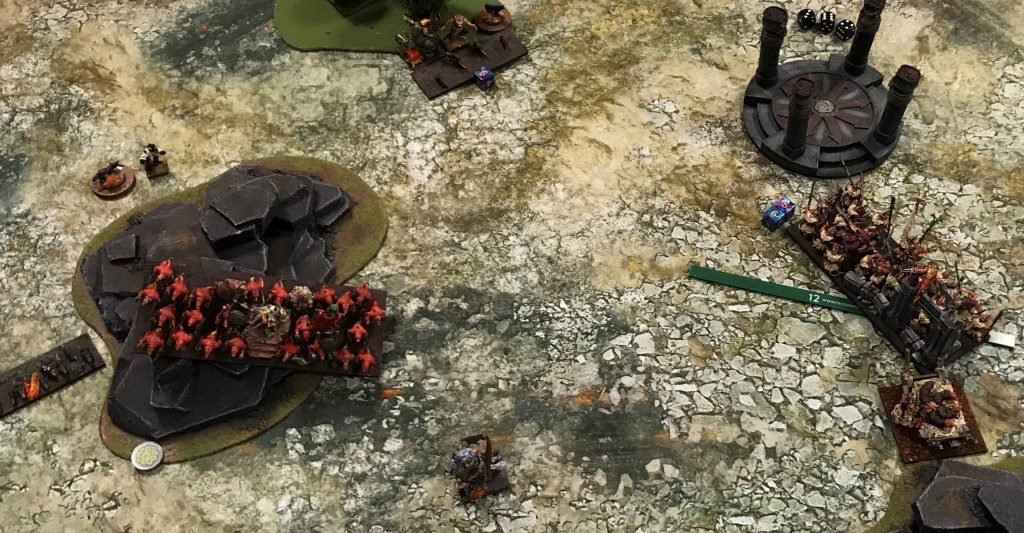
Turn 6
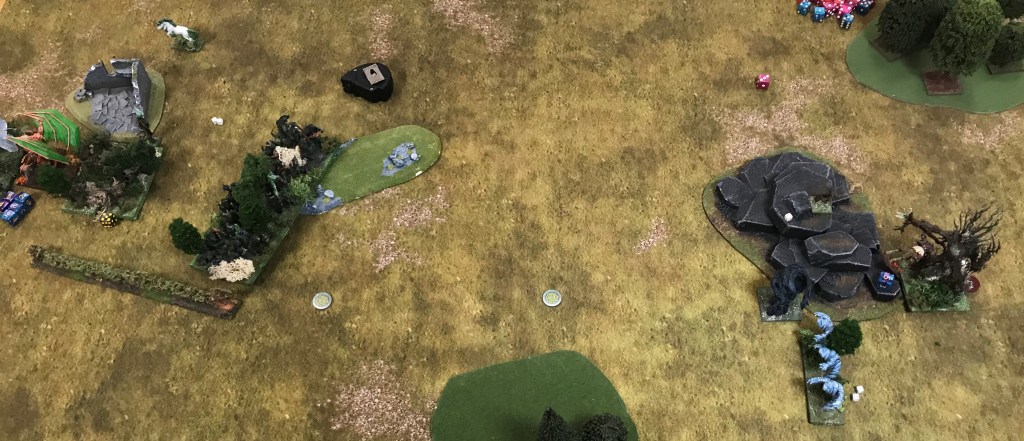
The central Shock Troops had reached the centre stump, noticing another not far away they ran to secure it. The Tangle advanced into the centre claiming the final stump and releasing a gout of flames that drove the harpies from the field.
Angry, alone and powerless Moonfang howled in a final act of defiance, before retreating to the safety of the trees.
In the aftermath of the battle Cinderpaw stood over the bodies of Sparkthrower and his apprentice.
“Best thing for traitors.” Strayrat said, appearing at the broodmother’s shoulder.
“I’ve always believed treachery is an action rather than a thought. Until it happens it is at best ambition, at worst indecision. Besides, I see dark days ahead for the world. The Halpi Mountains are crying out to the world, something is trying to escape, a book is needing to be opened. Nothing good ever came from a book that needed to be opened. Sparkthrower’s ambitions are for my position, its not personal. Besides, all good leaders should have someone capable for their duties to fall on, when they inevitably fall.” Cinderpaw mused reaching into her robes and producing a tiny black vial. “Who knows, maybe this experience will finally teach him a little humility.”
One drop to wake them, two drops to get the up.

As the dust settles
The game was a 4:2 victory for the rats. As I mentioned in the introduction this is a new list for me and the aim is very much to understand more about how the Tangle and plague pots work as I’ve never felt they have a place in my usual rat builds. So here are my final thoughts:
Perseverance – my previous attempts at this kind of list have failed miserably. I first tried the Tangle and a more infantry heavy list at the beginning of the year against a similar herd list and got shredded. Even the previous iteration got itself pretty much tabled by the Kingdoms of Men. The key thing is perseverance and listening. I’ve got some really experienced opponents whose advice went a long way to moving the build forward, and of course I have to thank the Facebook Rat group for the Master Scurrier Crystal Pendant suggestion. I think rat assassins are an iconic part of the army and I think this build gives him a place. I very much believe Kings of War is a balanced game, allowing loads of different options to play armies in a variety of ways, but thought and practice still need to go into different builds to make them as effective as possible. I’m looking forward to playing with this list again soon.
Have a plan – I can find scenario play quite difficult. I tend to get wrapped up in the battle and start thinking far too late about how I’m going to achieve the objectives. In this game I actually went in with a plan that played to my strength. Because rats work best close together (primarily because of rallying) I decided from the outset I would look to secure the objectives on my left and the centre, whilst trying to prevent my opponent from accessing his. This meant I was able to concentrate my forces over a smaller area taking advantage of rallying and cloak of death support as much as possible, but also allowing relatively short range spells like fireball and banechant to be easily deployed where they were needed.
Rat of the match
I never thought I would say this, but the Tangle. I know this tiny titan has had glowing reviews from so many rat players but my traditional approach to rats has just meant the Tangle, and plague pots, have not been part of the equation. Now I get it. It is a perfect multi role tool that provides so many useful options. From using weakness to blunt the Spirit Walker’s charge to using fireball to supplement the lightening bolt shootiness I would go as far as to say this construct played a part in virtually every key moment in the battle.
















 The Wizard's Bookshelf