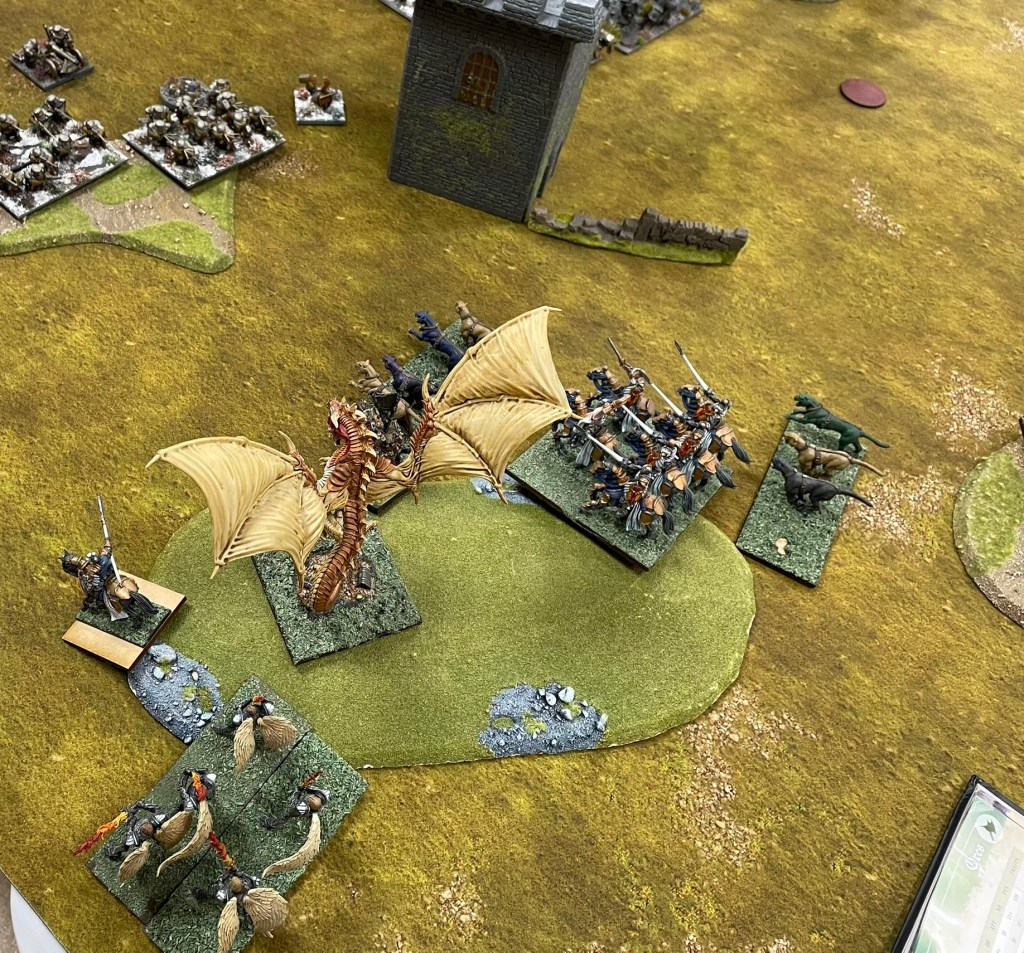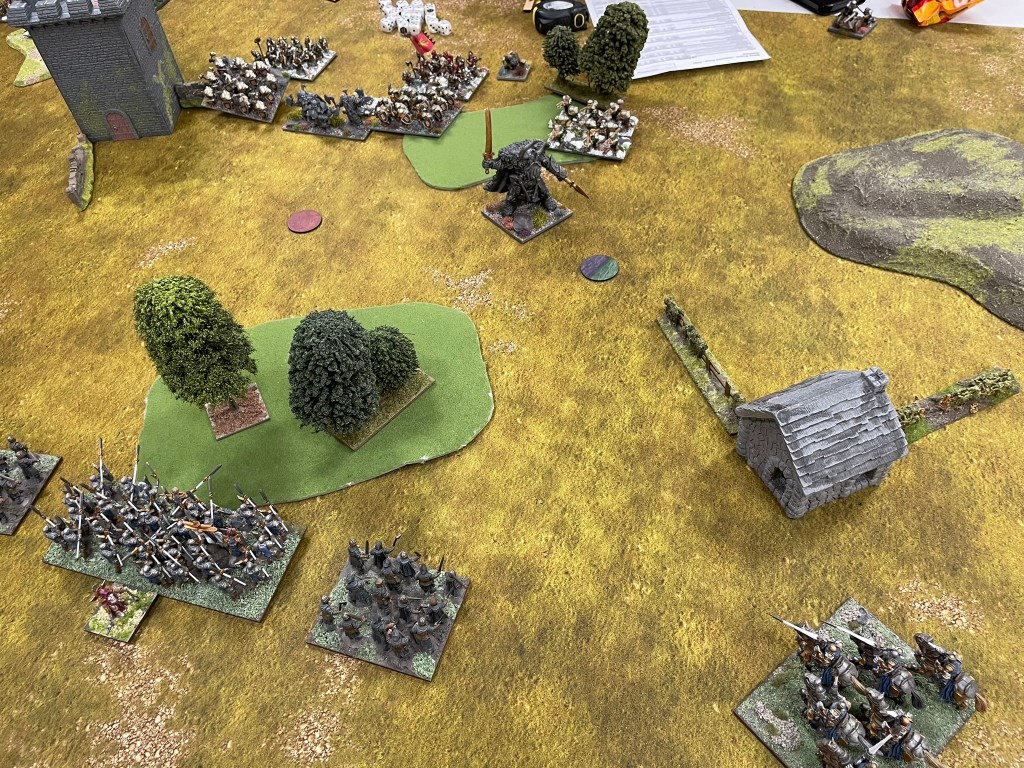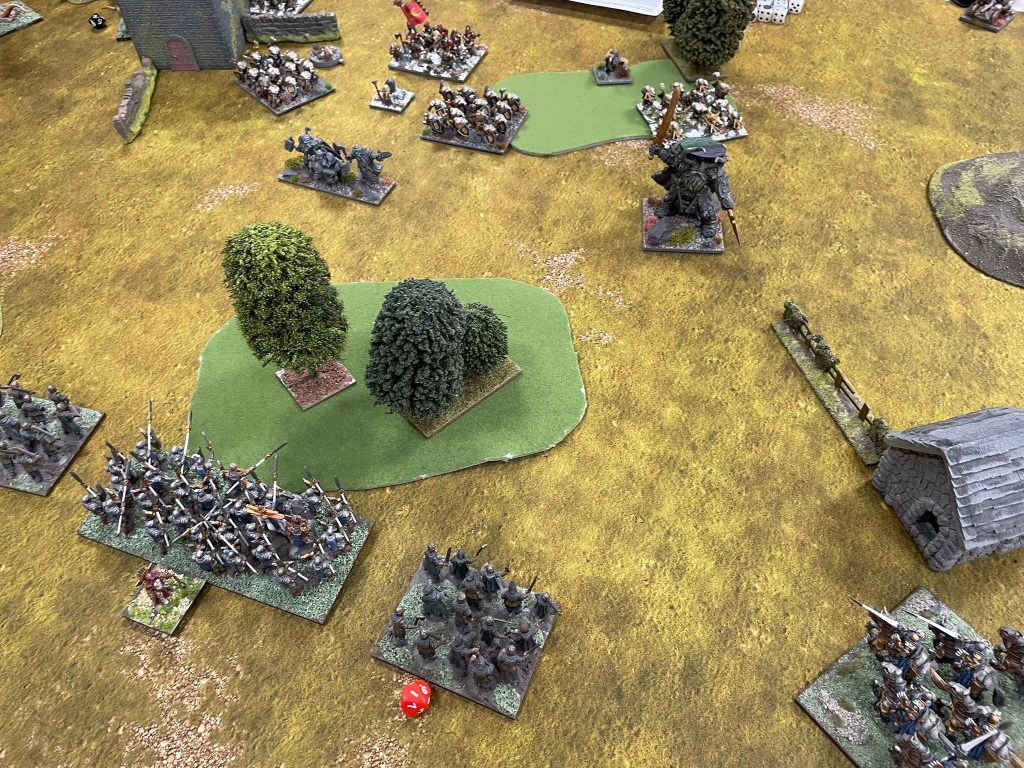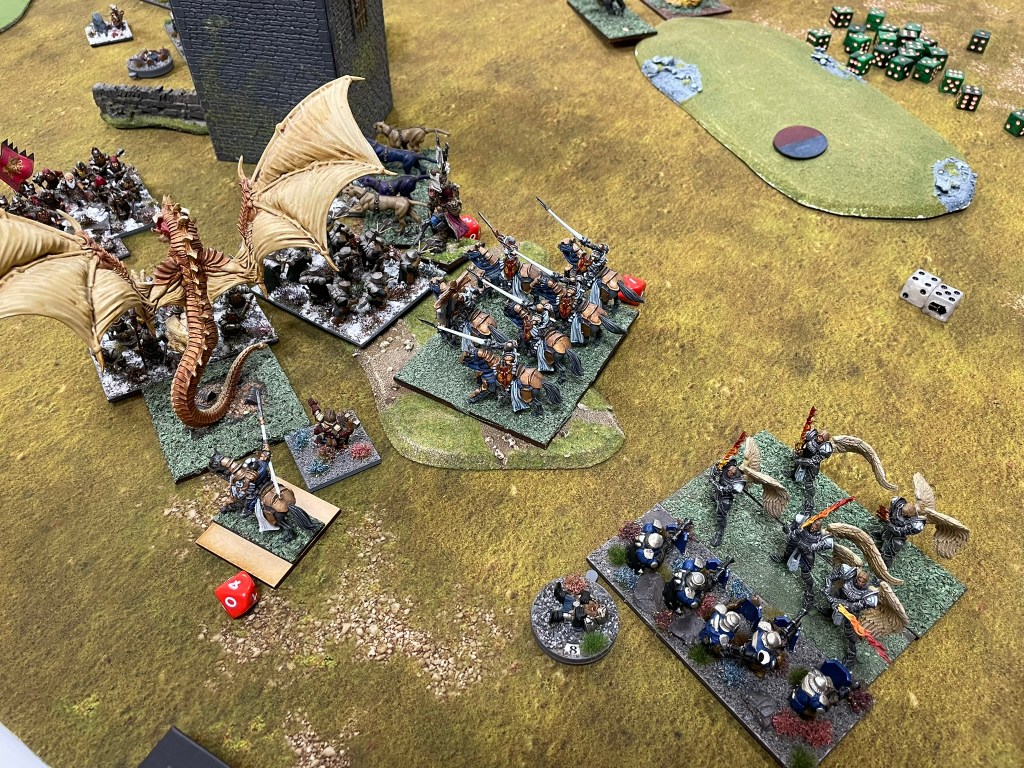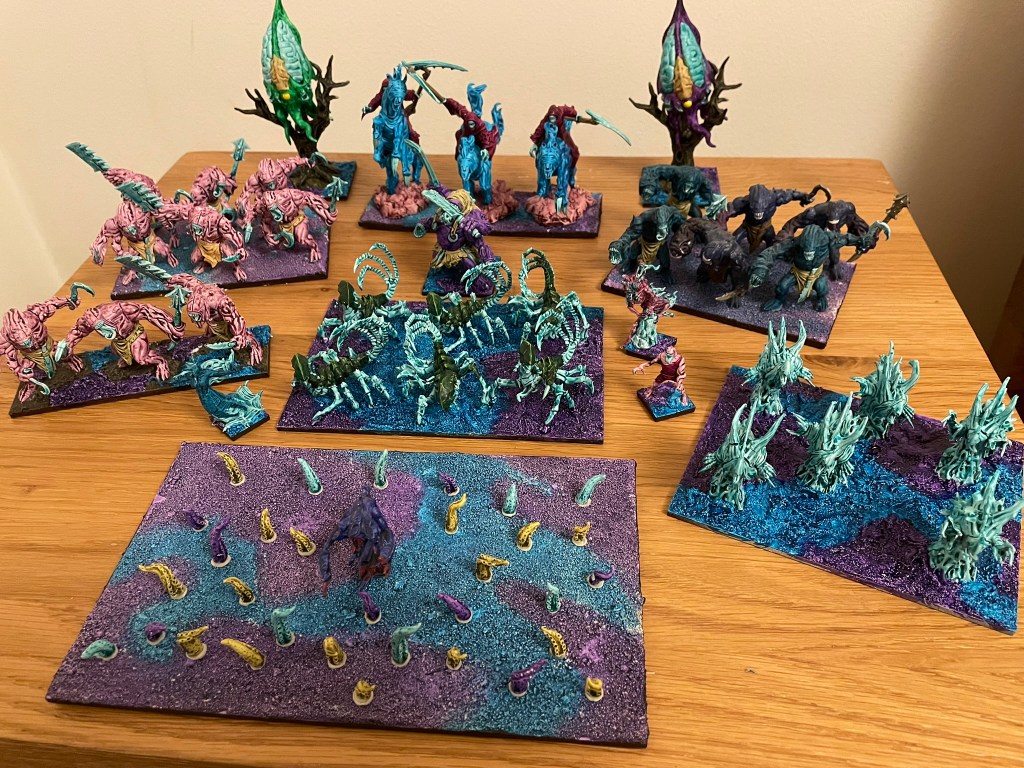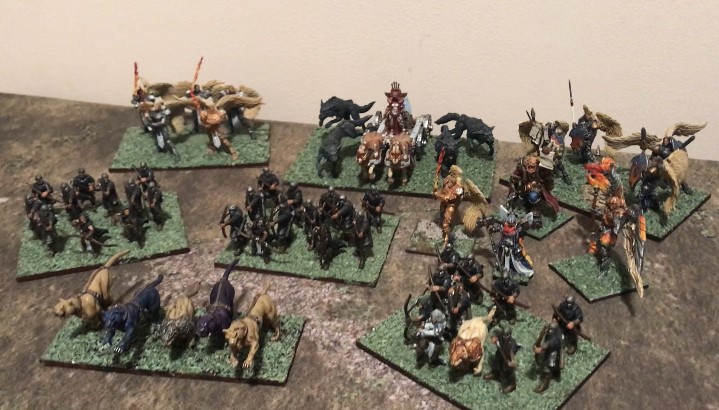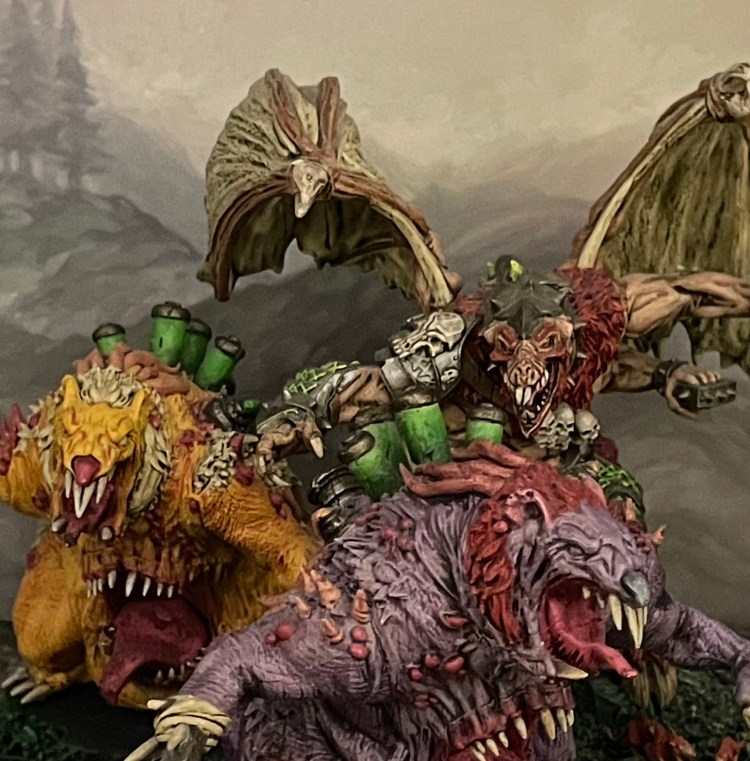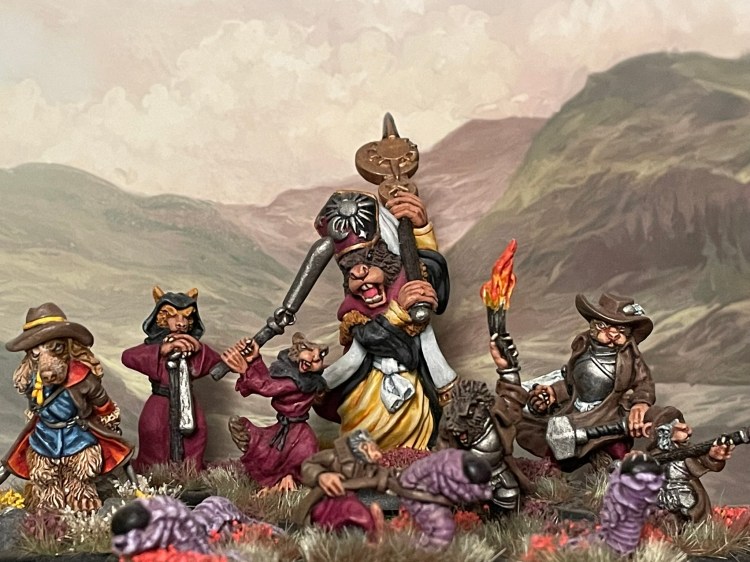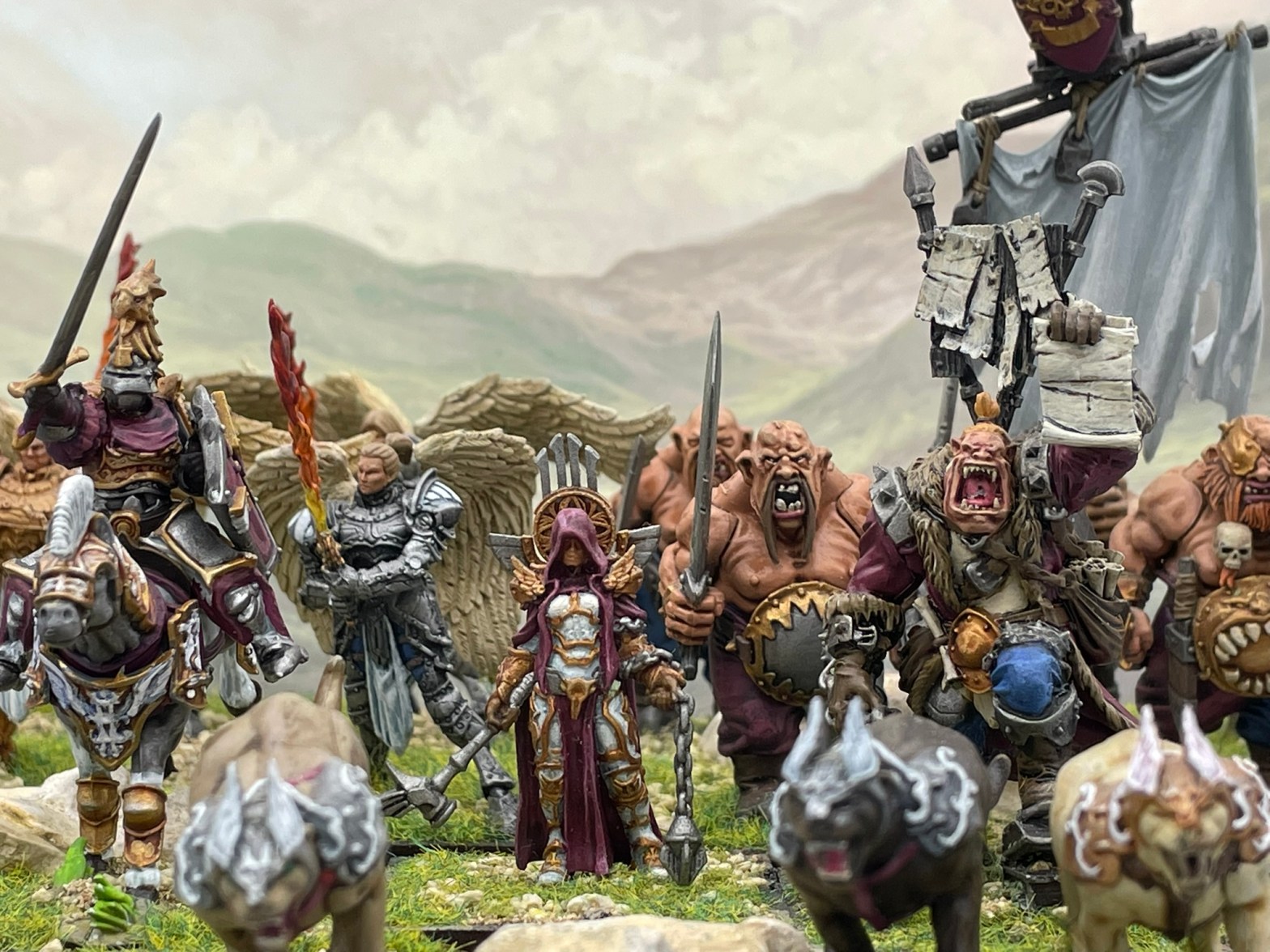
Slow proGrowress: rebuilding the Basileans

I started my Basileans back at the beginning of third edition when I was just getting back into the hobby. During my twenty-year absence from toy soldiers it felt like a lot of things had changed and I definitely hadn’t kept up. Something that really attracted me to the game was the multibasing concept.

There were three reasons for that. The first was that I didn’t have to fiddle around with hundreds of individual models during games. The second was that because the unit’s footprint was more important for play than what was on it, I could start testing out army lists really quickly, and the third and final reason was that rules around minimum and preferred model counts meant I didn’t have to paint up anywhere near as many models as I once had. These things were all great for a gamer who sees painting as a bit of a necessary evil.
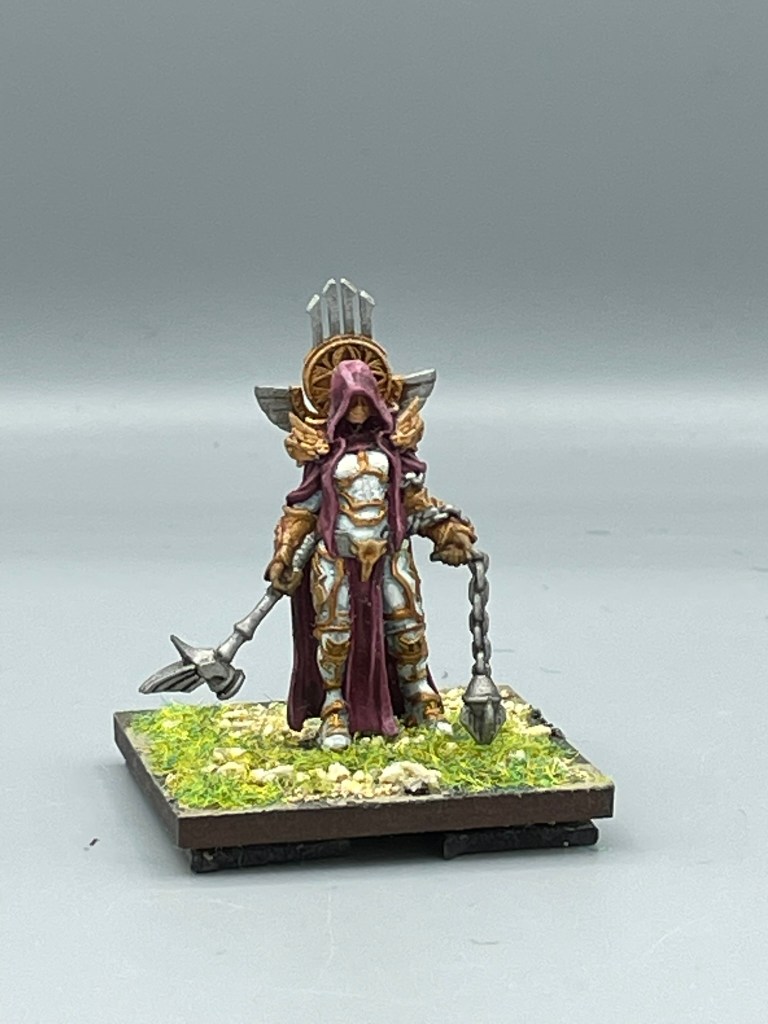
Possibly the Mantic model with the most sass?

As with most things that seem simple in life, if you willingly choose not to ask too many questions or don’t know what questions you should be asking, I engaged with it all in good faith. To the credit of both local players and tournament organisers I was genuinely impressed that everyone else did as well. It’s one of the enduring features that I really love about the tournament scene in the UK in particular is that most players turn up to most events with fully painted armies, which is great. What’s even better is that some of those armies will grow further over the course of the year as more models get painted and added to bases, which is great to see.

I’m definitely in that particular bracket in the moment. Working up a minimal viable army, that I’ll then top up with models and scenery as Clash of Kings approaches. I don’t need to do that, but as I’ve improved my hobbying skills I’ve increasingly wanted to field fully based, full model count armies, with a display board. Add to that a pragmatically driven desire to magnetise my bases to make them easier to transport and I’m starting to get to the unnecessary “all in” approach to Kings of War army building, which does leave me strangely satisfied. So, I thought I’d share a few updates on progress with some thoughts on how it’s going and the direction I’m headed in.
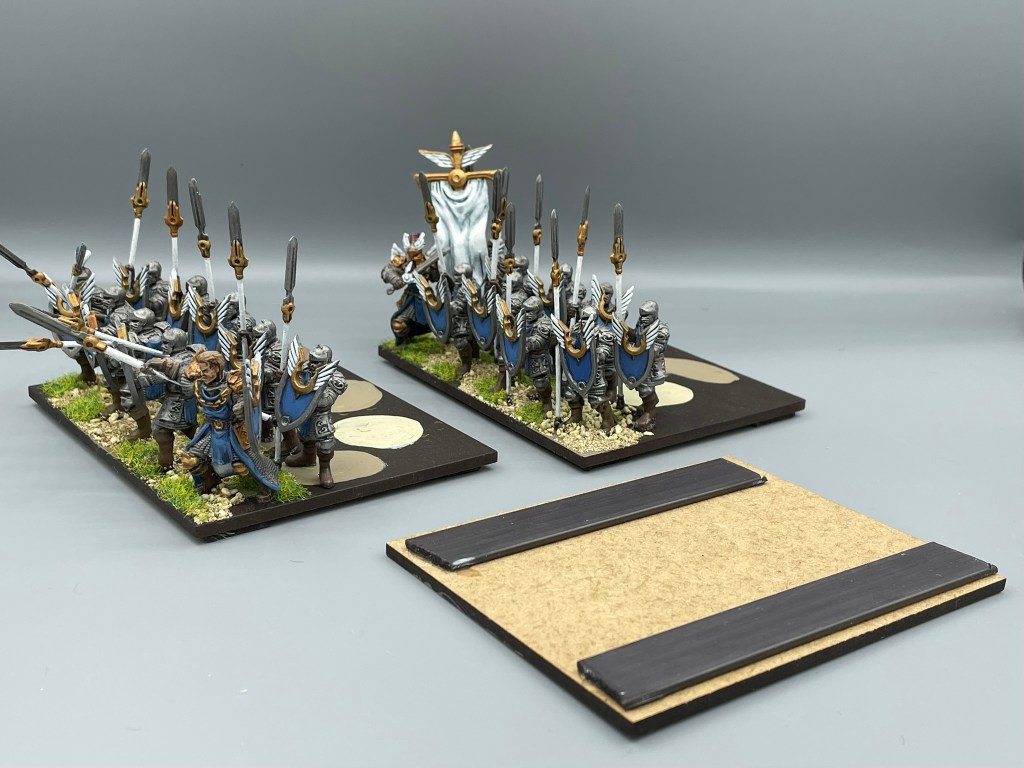
Magnetic tape and sparce bases are great for starting out

As I travel quite a lot with my armies I started dabbling with magnetic tape on bases and magnetic box bases to reduce movement of units whilst on the road. The process could not be simpler. Get magnetic tape (this is 3mm) cut strips off and stick it on the underside of the base. I like to super glue the ends and place the base on a metal surface to get everything straightened out. I’m enjoying worrying less about how my army will look after a long car journey now.

Simple basing can look really good. My original basing for this army was simple, but not great. One reason for doing this refresh is because I believe I can do better, the benefit of experience right there. I’m using three basing materials across these units. Some desert rocks and sand (with little bits of flock in it) both from Hobbycraft, and some static grass from Army Painter. Because I’m looking to do full model counts for all my units I’m generally basing them quite sparingly to ensure models can be laid out in a fairly even way.
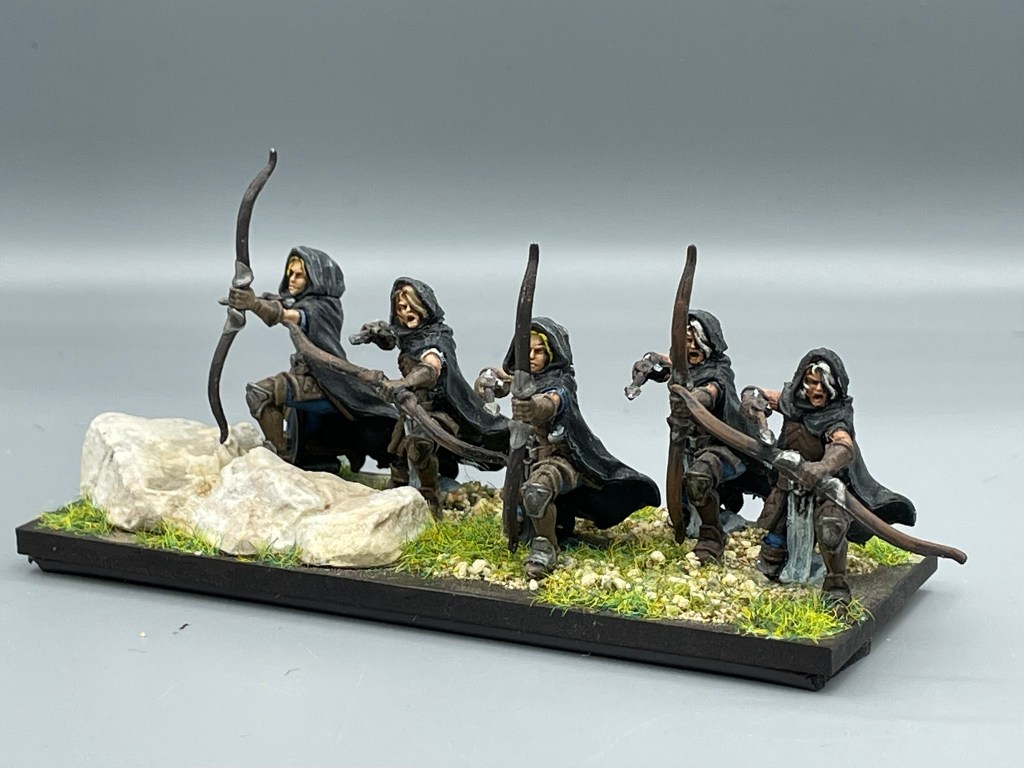
More models don’t always capture the spirit of the unit

The general requirement for model counts in the UK at tournaments tends to be a busy looking base. This doesn’t mean full model count, it doesn’t even have to mean half model count, if you want to go overboard on the scenery it’s down to you. A great example of this is the troop of Sisterhood Scouts. Full model count would suggest 10 models, but given they’re intended to be skirmishers that guideline doesn’t work for me, and I know this won’t cause anyone else sleepless nights.

Growing units can be a time-consuming process, especially if you have a suitable proxy and motivation easily escapes you. However, proxies can play a number of different roles within a Kings of War army from “temporary gap filler” to “integral component of the force that there is no intention of ever changing”.
Find units that fit the narrative

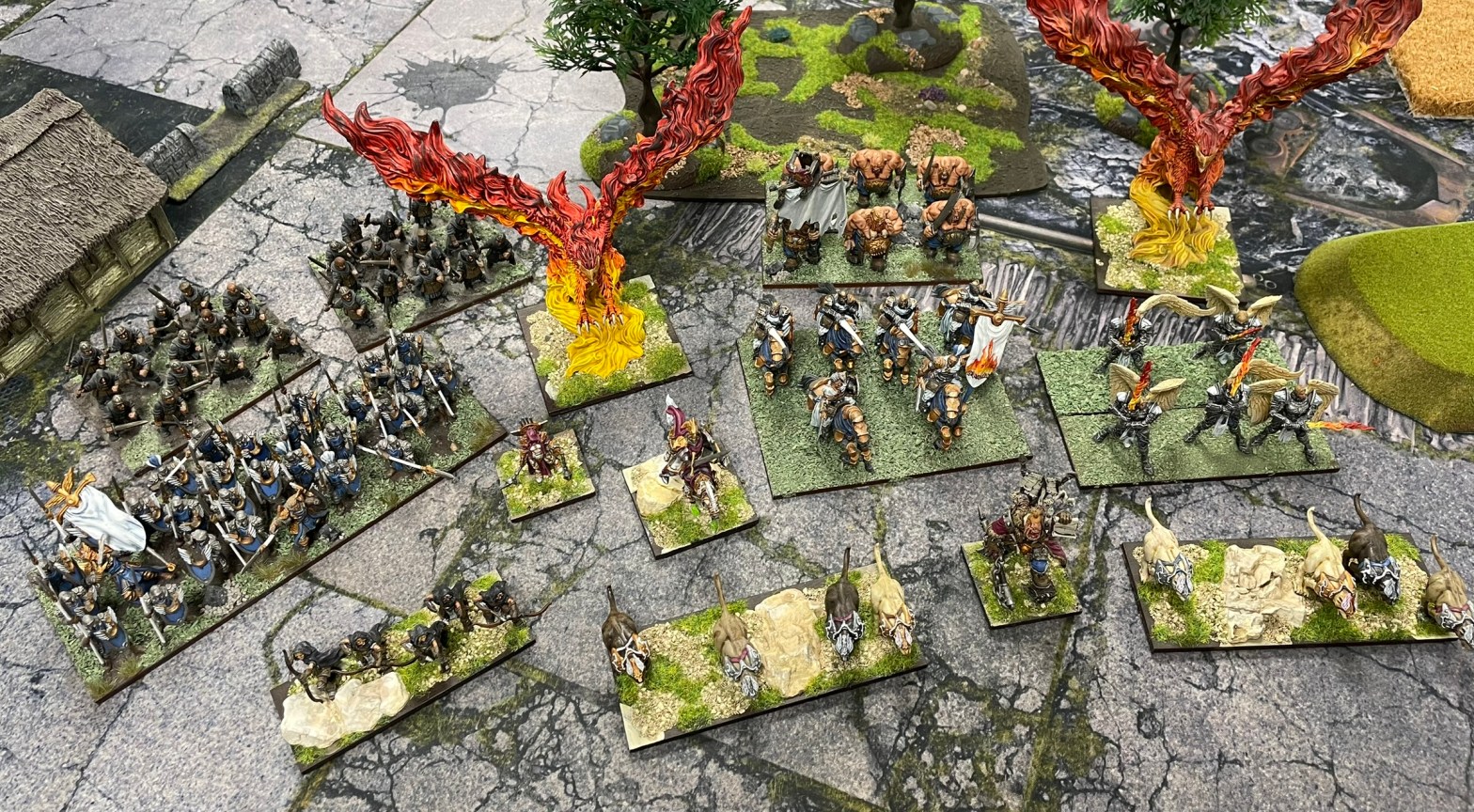
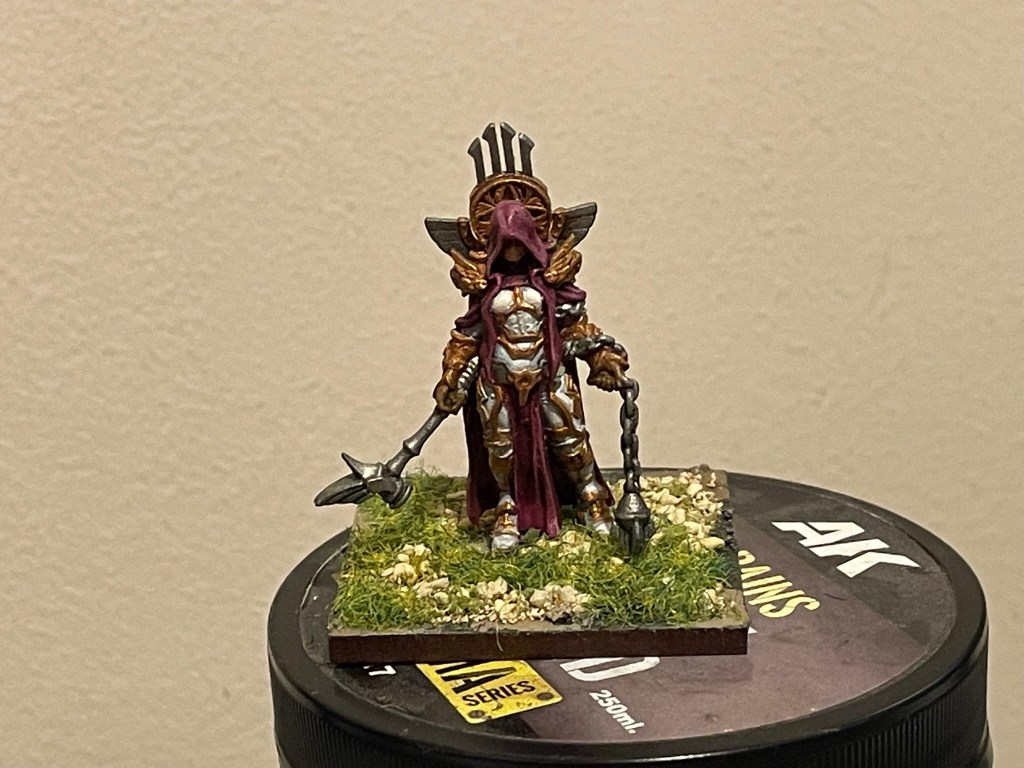
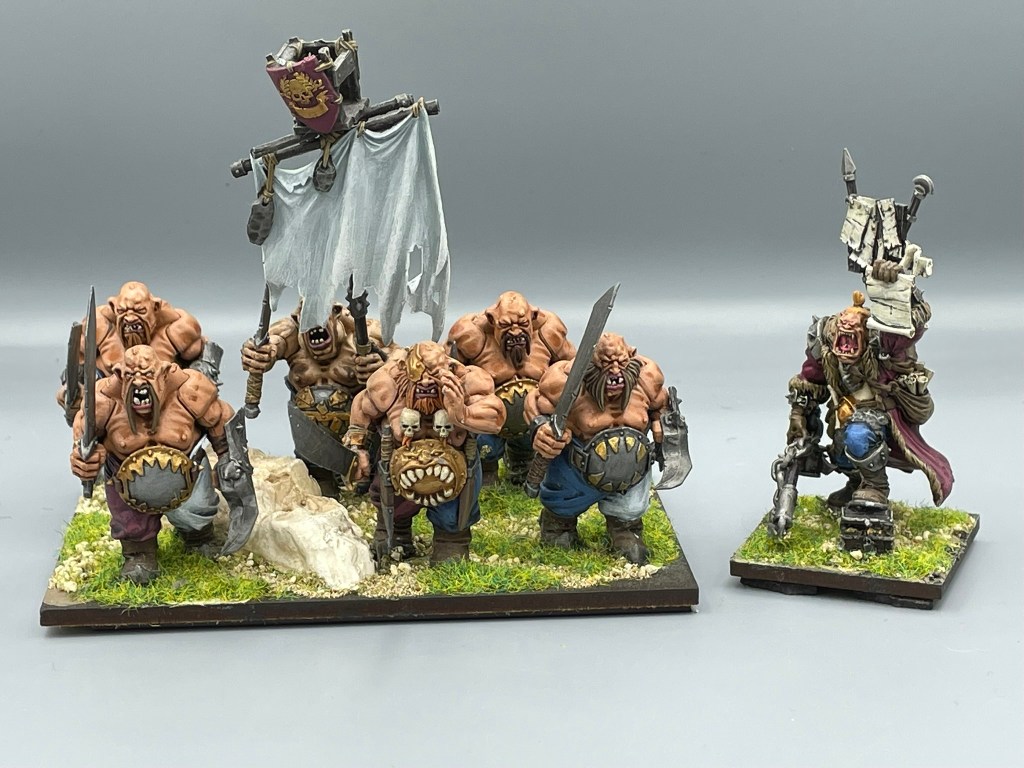
I currently have proxies in several different roles that are both Mantic and third-party models. The Basilean Abbess model is possibly my favourite Mantic model, she has a lot of sass and fills the role of a priest equally perfectly. The model has also shaped the narrative of the army and brings Sha’leis to life, so she won’t be changing ever. Similarly, the Ogre Paymaster who plays the role of the Ogre Palace Guard Captain. As well as being a cool model, there’s also a bit of a narrative decision here since the ogres that follow my priestess are members of the ships crew who rescued her as their vessel was split apart on a coral reef. The Paymaster model fits the bill perfectly, and it brings me on nicely to the ogre regiment. Rules wise these are my Palace Guard, but the GW models work better for their nautical theme. I may change them in the future if I can find a better option, but the Mantic choices don’t quite work.
Gap fillers are a nice way to give a bit of breathing space to play

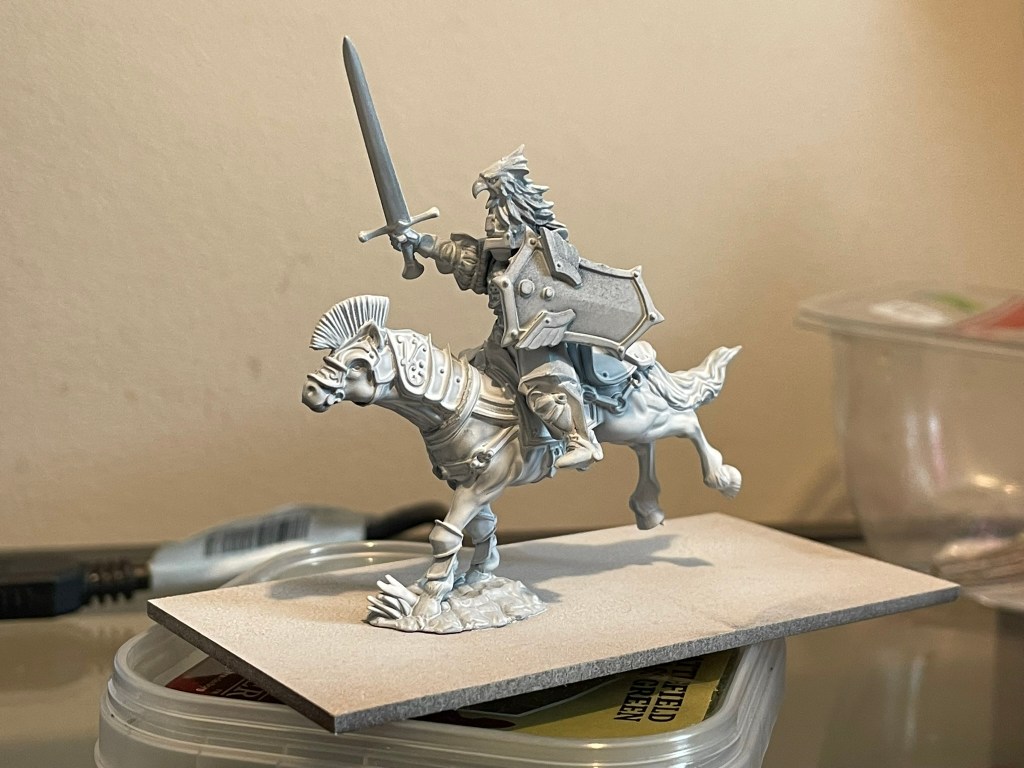
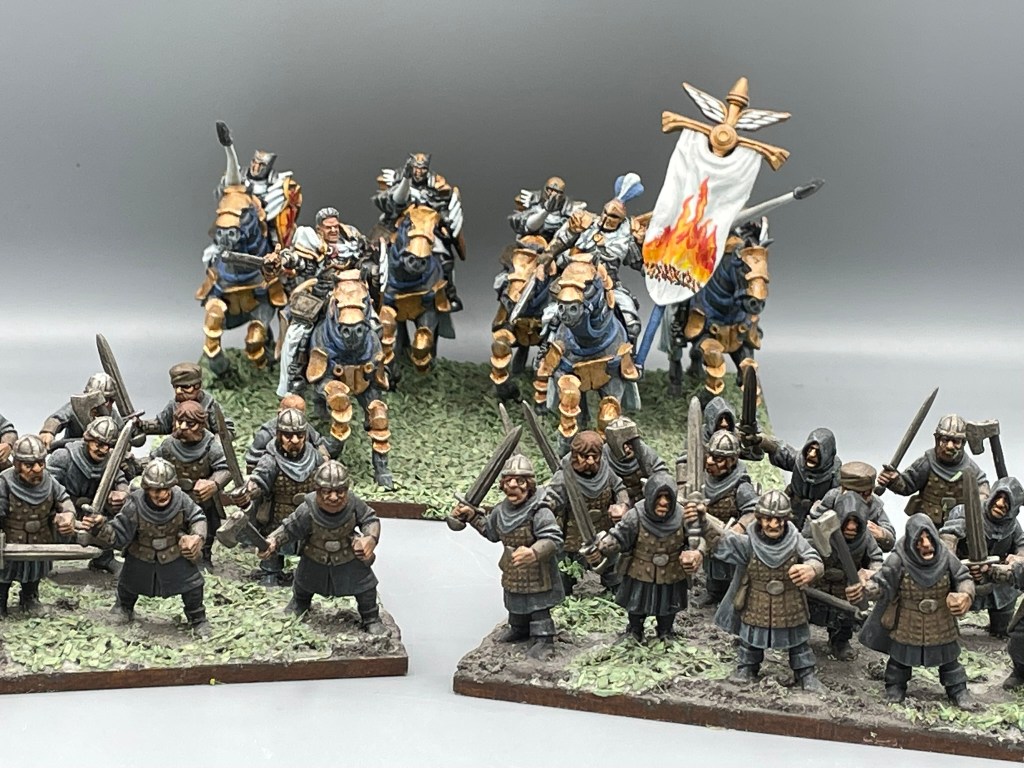
The final proxies are ones that will be going the moment I have enough of the remaining pile of potential finished. These represent my swordsmen and mounted paladins. The eagle eyed will recognise the paladins as the old Mantic ones. As the remaining empty bases start to grow, they will make it into the army, and once they’re full, I’ll then start thinking about display boards.

To keep up with what’s going on you can follow @wizards_bookshelf on Instagram and Threads or drop you’re email below to subscribe.
The Devils by Joe Abercrombie: a book review

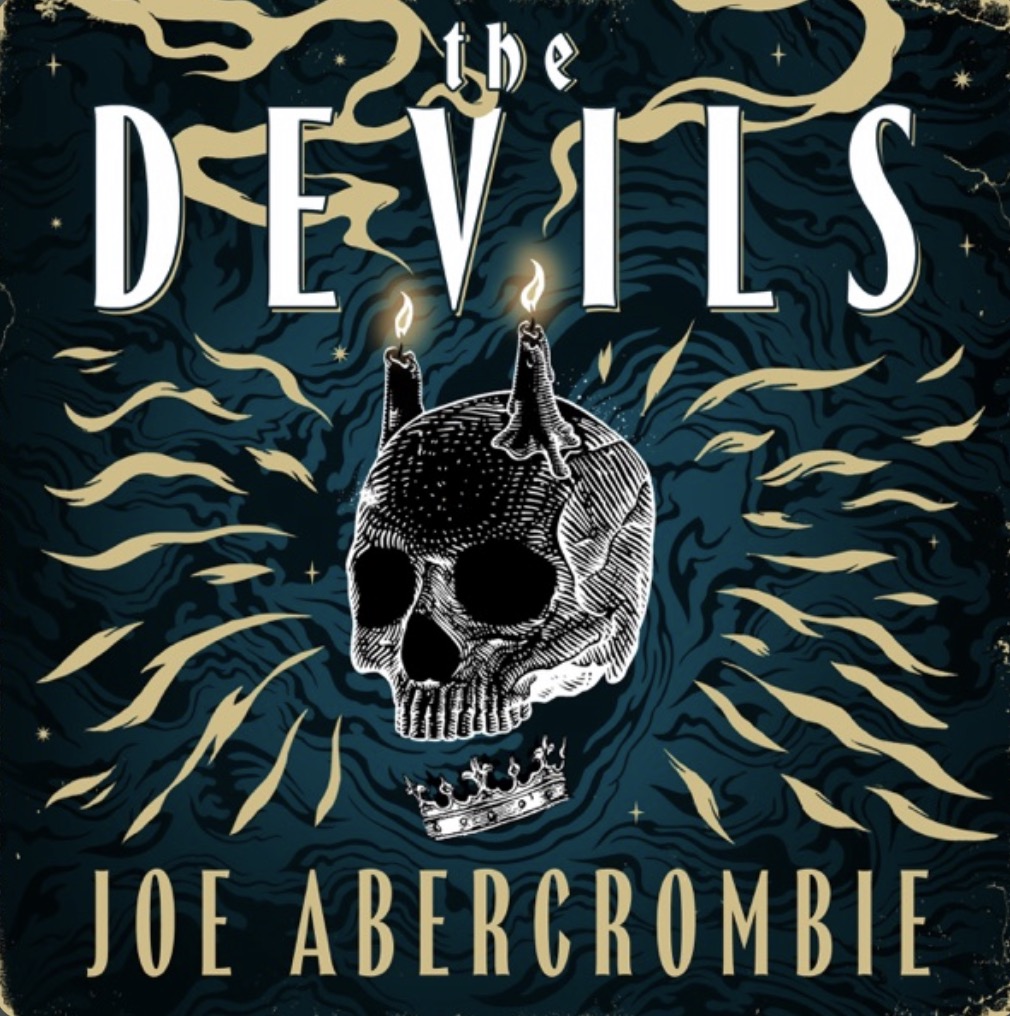
The last book I read from Mr. Abercrombie was the tantalising The Wisdom of Crowds. This was, in my opinion, Joe at his absolute best; rounding off a fantastic trilogy in his beautifully crafted fantasy world, with the promise of interesting times to come.

Of all the books I was expecting him to release next The Devils was not it. Set in a high fantasy, and I suppose expectedly grimdark, version of Earth the book tells the story of a Dirty Dozenesque collection of undesirables, retained by the Pope to resolve God’s greatest challenges. The adventurers are released to undertake the sort of do or die mission most D&D dungeon masters would be proud to lead their adventurers on.

It was a surprise because I associate Joe’s work with a more human fantasy. Yes, he brings a dark sense of humour and the occasional sex scene you wouldn’t want to read with your parents, but personal and political introspection are at the heart of his writing. The demons and dangers of fantasy exist on the peripheries to further unsettle the fundament chaos of human machinations. So, to find myself, as a reader, launched into a world of vampires, werewolves and elves was unexpected. Add to this a relatively straight forward course that the story plots from beginning to end and it all felt very different.

I’ll be honest, it took me a little while to get into, because it seemed to be less complex than his previous work. As I progressed through the book I couldn’t help but wonder if this wouldn’t have made a fantastic comic book (one of the big classy ones, like Watchmen). And it was at that point, as I enjoyed the humour and became marginally unsettled by the amount of werewolf sex that the penny dropped. Whilst the storyline was not as layered as his more recent work, the characters were incredibly well developed, and in them was the depth I’d expected.

This might not have been the book I’d expected, but it rapidly became the book I’m hoping forms the basis of his next trilogy. Simply put I’d recommend this to any fantasy fan looking for a bloody good questing tale.

To keep up with what’s going on you can follow @wizards_bookshelf on Instagram and Threads or drop you’re email below to subscribe.
The Halflings Muster: first thoughts on Halflings in fourth edition Kings of War

Fourth edition is going well. Rules wise I’m enjoying each game and whilst there have certainly been some interesting changes the whole experience still feels very Kings. As that familiarity with the rules grows, I’m starting to find some direction with my armies.

Basilea has been pretty straight forward, and I feel like I’m now playing the sort of army I wanted to play in third edition (and really enjoying it). So, for the time being they are going to be my faction of choice for tournaments, and they’ll get a lovely base upgrade for their troubles. Rats and Halflings though have been a bit more challenging. I think this is because their rules were very characterful, and they just haven’t translated across directly in the new army lists.

Halflings have changed massively for me since third edition. In part this is because my army was built around Juggers, the Muster Captain with the strider aura and Gastromancy. Together they created a really effective, but fun, battle group that defined the army and its narrative background.

A second attempt at a list

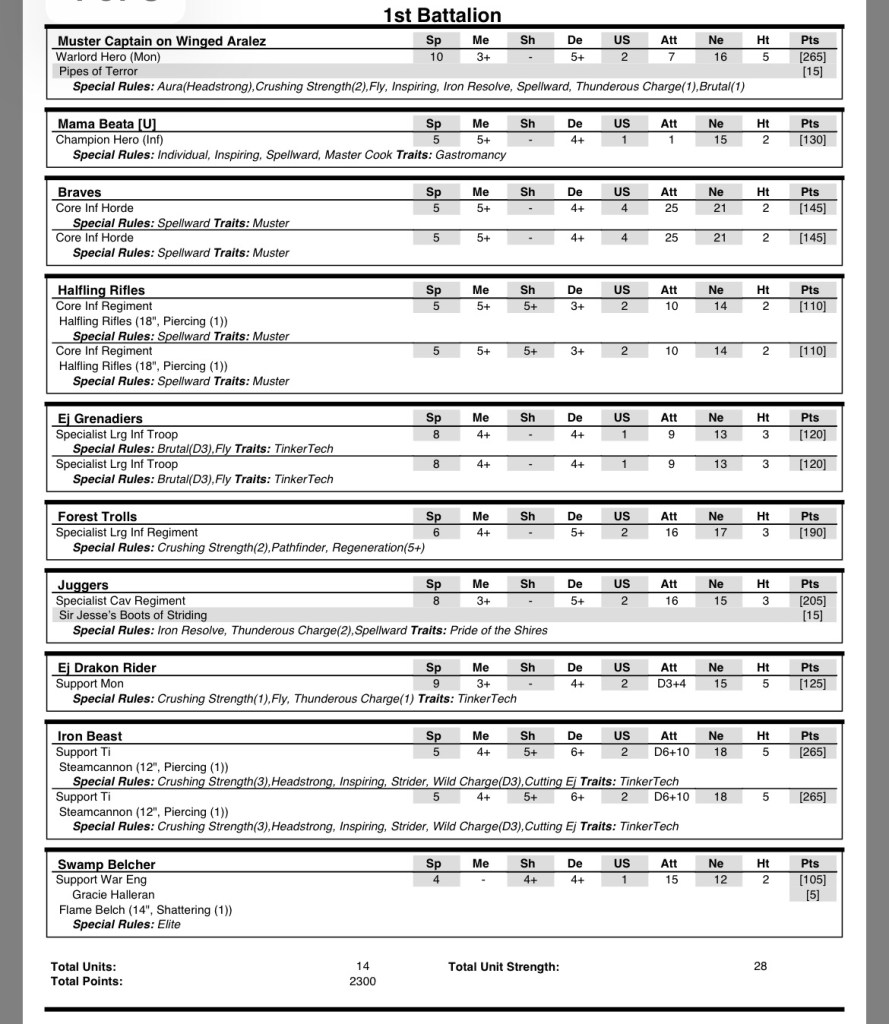
For my first outing with the Halflings, I took an army that was vaguely reminiscent of that previous list, but it now functions significantly differently. Changes to the EJ Grenadiers to reduce their speed, as well as the changes to characters and Gastromancy made for a very different play experience, however, there was a very recognisable vibe about the army. For that first game I decided to give Aaron a try, and whilst I’m still in two minds about how to build an army around him, there’s something suitably Halflingy about him that means I will definitely be returning to him once I get my first army fully built, especially if Mantic can make a suitably nice model for him.

The first two observations I have about the little folk is that they feel slower, and that Gastromancy functions differently (it’s really all about Mama Beata and brutal). This has definitely left me questioning as to whether leaning more into Tinker Tech is a more interesting route, but for the time being I’m going to stick with the special saucery and the broader commands.

Despite having eight commands (five general and three gastromancy) the general commands largely work on five ups. I find these pretty unreliable and as a result I’m not going to try and build an army around them. What’s more, because Iron Beasts are so damn good it’s hard to get overly excited about the characters. For this reason, I decided to go for a Muster Captain on a winged Aralez as the warlord, purely to get some movement 10 into the army and have a unit that is reasonably self-reliant. Mama Beata has joined the fold because she just about makes taking Gastromancy worth it (a few years of experience with rolling three dice tells me you certainly can’t rely on getting a high score, and a few games in now I’m convinced the most useful thing she’s done is seize an objective so the call of Greedy Guts is getting louder, but for now I’m enjoying rolling dice for her).

The core of my new list is a bunch of the old favourites Juggers (one regiment with the Boots of Striding are still pretty damn good), braves, trolls, EJ Grenadiers and my two beautiful beasts are providing me great value. The big shift is moving towards more shooting.

Shooting is turning out to be really interesting. Intuitively the move to no more death by arrows should make it weaker, but I genuinely think a shift to better shooting in some armies is creating some cool dynamics and making mixed arms forces really viable. Great news, because I’ve always seen Halflings as being a mixed arms army. Iron Beast shooting is brilliant, with an additional hit when rolling sixes the pigs have created some happy moments (especially the one where I was hitting on sixes anyway and then proceeded to roll six of the afore mentioned sixes). The Swamp Belcher makes the perfect support unit for the pigs, as well as being a really fun model. Leaning into shooting has resulted in me taking two rifle regiments, which have already set about proving their worth (which means I now have to paint two regiments of rifles).

The final slot in the army is taken up by the EJ Drakon Rider, and I’m genuinely hitting a bit of a weird place with him. I absolutely love his model (incidentally he comes with rider options, you can choose between a fish and a sword, and I’m convinced that it’s some kind of a personality test). His stat line is really interesting, certainly not compelling, but what’s struck me most is how useful he’s been without seemingly achieving much, other than heroic deaths. Don’t get me wrong, I think he’s a really great use of points, but I couldn’t tell you exactly what it is you’re getting for the investment. Of all the army he is the character I’m most interested to see what he’s going to get up to next, I think over the course of a few more games I’ll work it out, he also needs a name.

I would say at this stage the Halflings are coming together pretty well, although there’s a fair bit more painting to do before we get them near a tournament table.

To keep up with what’s going on you can follow @wizards_bookshelf on Instagram and Threads or drop you’re email below to subscribe.
The Hegemony goes to Hinckley: a Kings of War tournament report

I have to admit I’m really enjoying playing Basileans in fourth edition. I loved the idea of having a more human centric army in third edition but found it hard to get working. In fourth things seem to have settled pretty well.

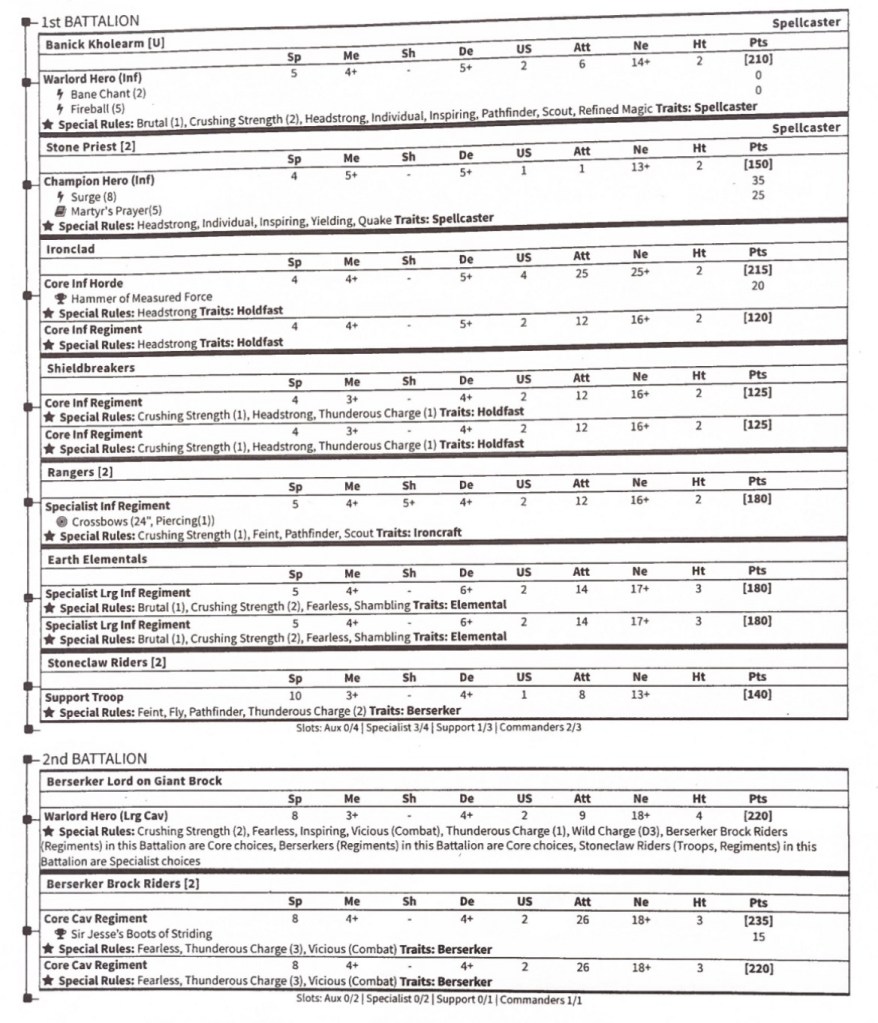
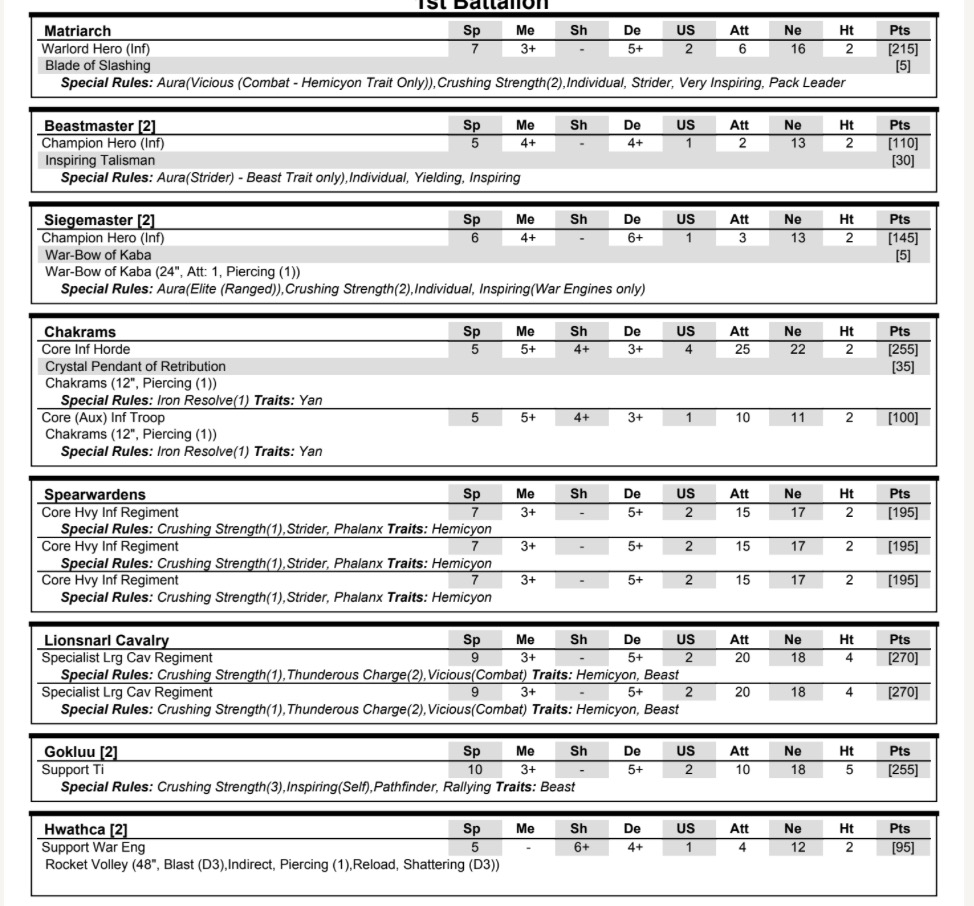
I’ve been playing a mixed arms list that does a bit of everything, the sort of list I really like, although unlike my old rat and halfling lists I’m quickly realising it is a far less forgiving army. I feel that Basilea retains an elite build even though you now have to include the basic men-at-arms, or sisterhood units. It’s big hitting units are expensive and unsupported by the command orders so you have to think before you act. The humans though, including the paladins, are pretty resilient, but not massively reliable in the fight so there’s a delicate balance to be considered. The list I settled on for this event was:

Screenshot

Martin has been running events at Hinckley for a year or so now, they are well organised and attract a great crowd of friendly gamers from all levels. This event had 24 players and a good mix of lists without too many duplications, which was nice, and going through the lists there wasn’t anything that stood out as looking particularly nasty. That being said there was a range of styles from melee heavy to shooting heavy (no frogs) and everything in between. So, let’s get into it.

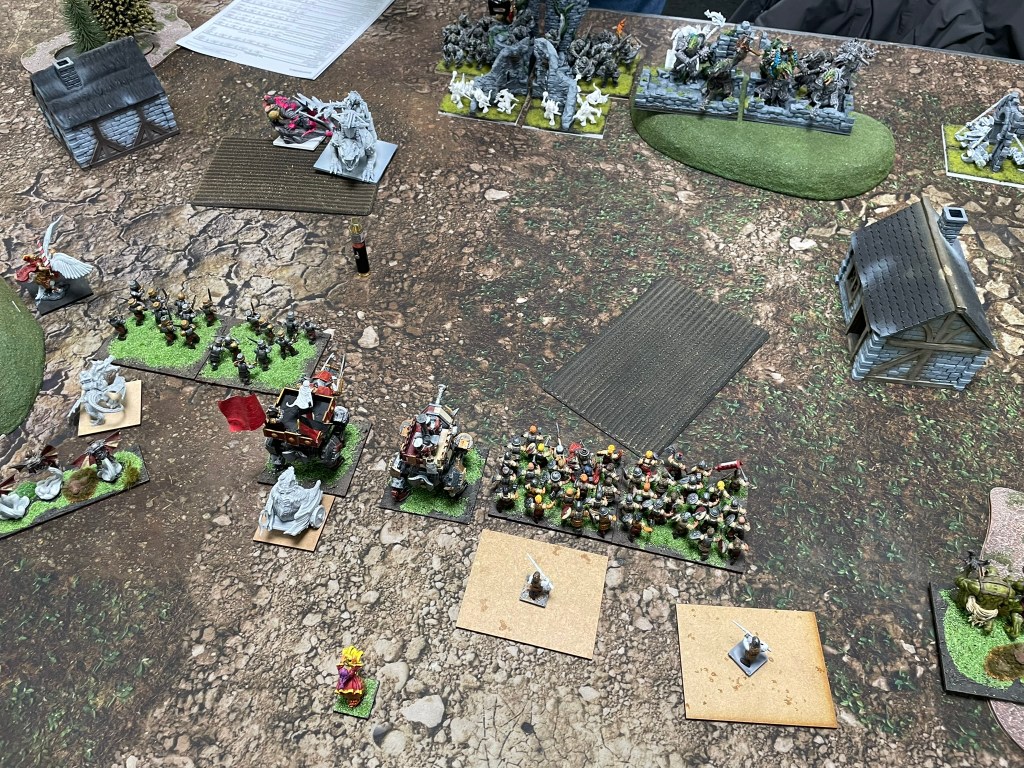
Game 1 was against dwarfs and the scenario was pillage. With some quite fast components I decided to scatter objectives across the table to try and break up my sturdy opponent. Although the dwarfs had some fast units a combination of Elohi, panthers and shooting meant I out ranged my opponent and was able to pick my targets. My shooting was the perfect foil for the Brock Riders, forcing them to deal with my scouts and a phoenix before they could turn their attention on my main battle line. By then they were badly injured and failed to do any major damage, allowing my men-at-arms to secure objectives.

On my left flank things didn’t go all my way. In the turn that the Paladins and Elohi exploded a regiment of rocks, a charge from the Palace Guard into the second resulted in four wounds being taken before the rocks rolled out of the box and took my ogres off in one turn. Whilst it was a surprise, I managed to take back the initiative by getting the Elohi into the backfield whilst my Paladins charged onto the centre most objective. With panthers and the ogre captain also claiming objectives the game was a win.

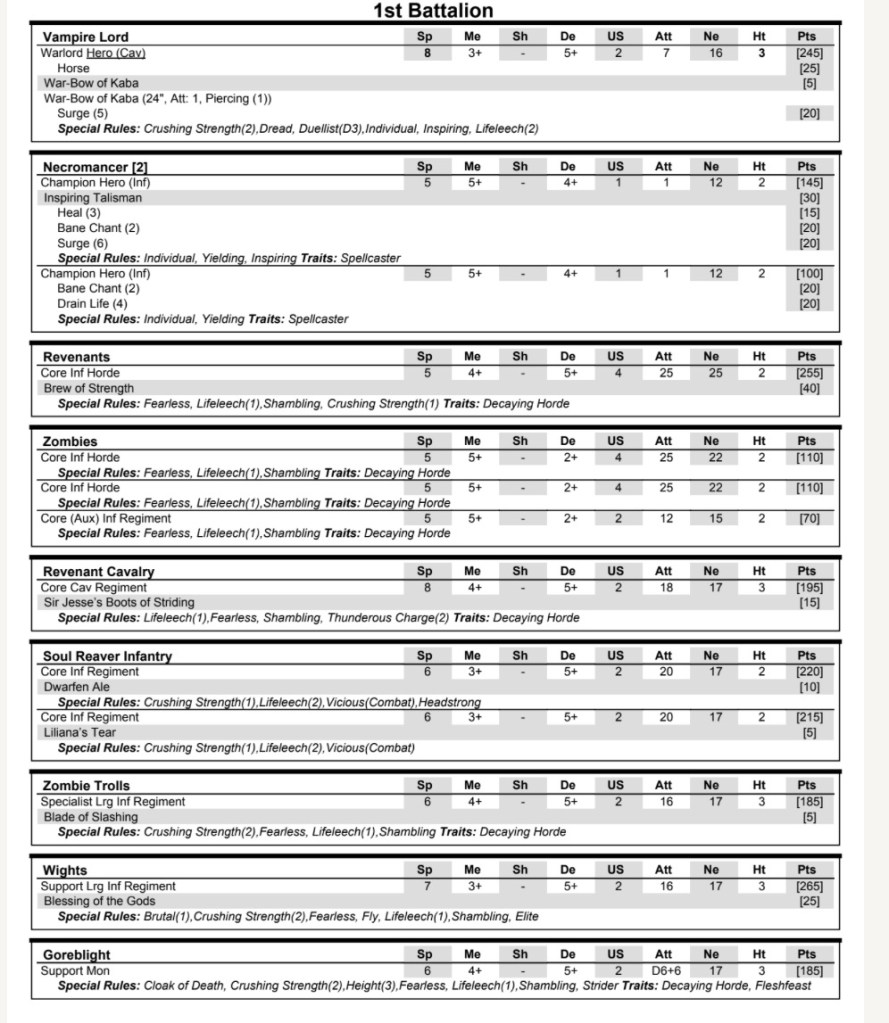
Game 2 was against a nerve heavy undead army, playing Hold the Line. Shooting played an important part in opening moves, badly damaging the Wights, forcing them and the Revenant Cavalry into bad charges. I think this is possibly where I made quite a fundament mistake. I had the opportunity to take down both the Wights and the Revenants with the Elohi, but left the cavalry alive, thinking for some reasons the two Phoenixes would deal with them, which of course they didn’t.

I think I was feeling the pressure of needing to get the big hitters into the centre to try and destroy some of the infantry hordes shambling into the scoring zone. Despite a sinking feeling around turn 4 that there was just too much to munch through, and my Palace Guard getting wiped out after a single round of combat again it was a really enjoyable close game, but ended with an undead victory.

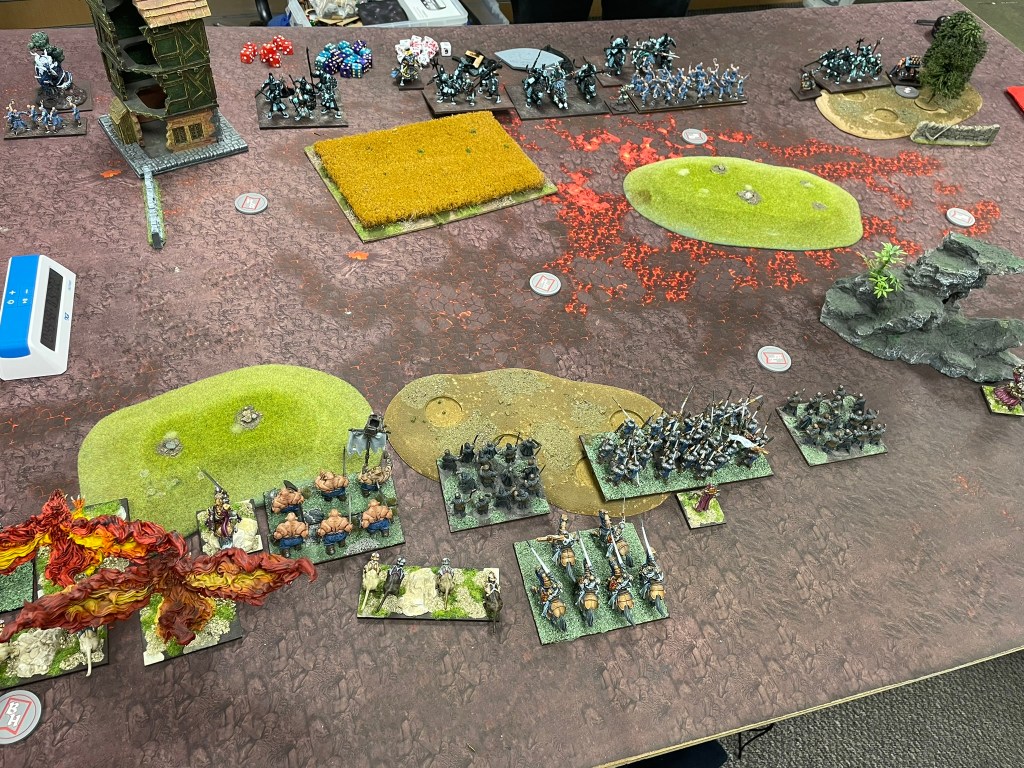
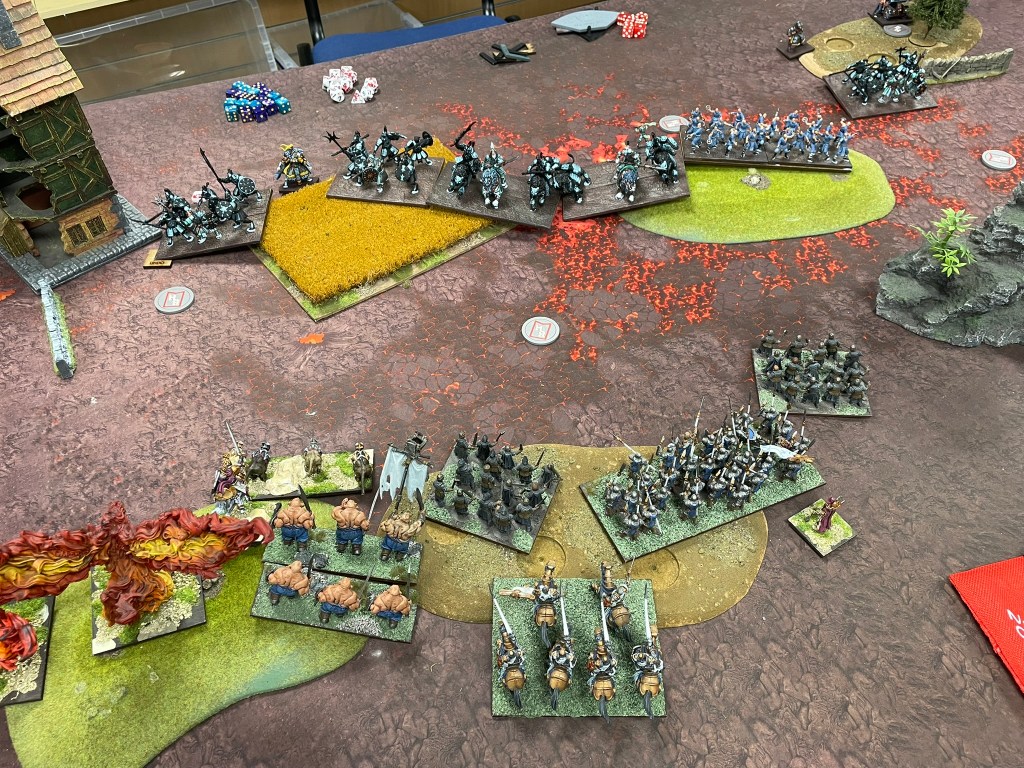
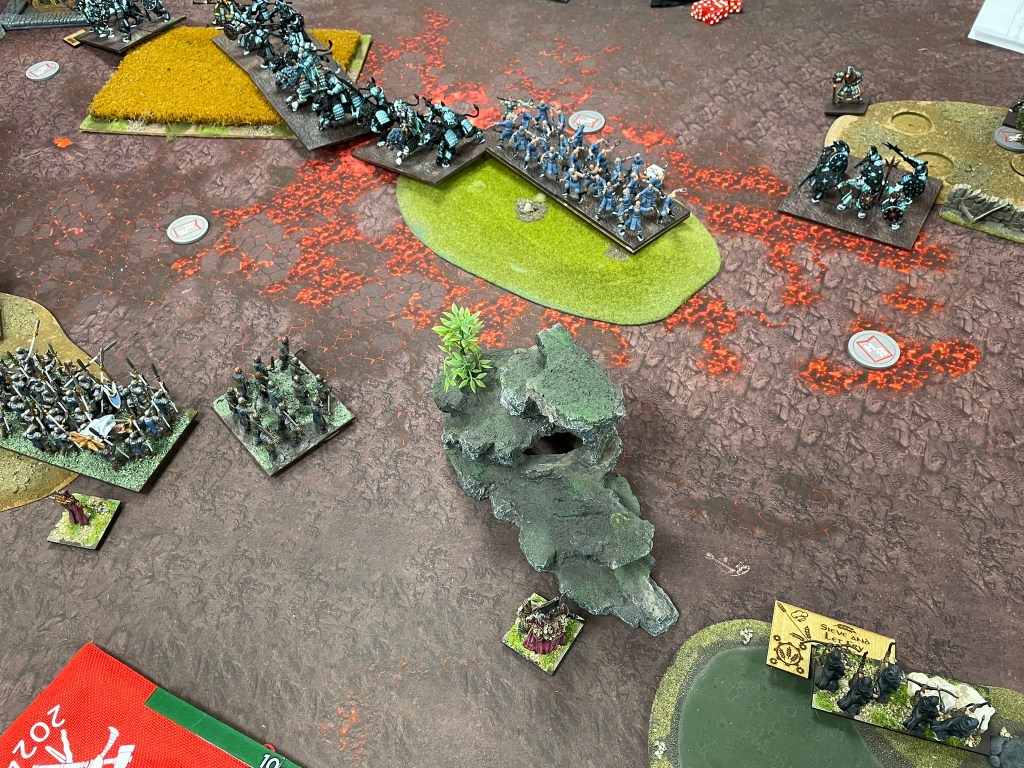
In game 3 I came up against the Xirkaali, Mantic’s newest faction. I have to admit I’ve been nervous about playing this faction, and in particular this type of list. The melee units are pretty elite and can all access strider, whist the Chakram horde is an incredibly powerful shooting unit, which is hard to focus on when it’s surrounded by highly competent dog soldiers.

With so many defence 5 units, and a huge amount of speed, I didn’t think my shooting would play much of a part. What’s more, if my ogres continued their track record, they were unlikely to either! What played out was interesting though. The Chakrams were predicably powerful, taking my ogre captain, a men-at-arms regiment and my paladins pretty much to their waver points with their shooting (each time with one round of shooting).

However, the elite nature of the army, and stickly combat meant there weren’t sufficient units to then take those wavered units off the table. Yes, a second round of shooting would have taken the unit off, but target prioritisation meant they were reacting to try and stop more pressing threats with each turn. Add to this my army had just enough chaff to pin units in place, shooting to chip away at the nerve values and the ogres survived long enough to deliver some fantastic blows mean the Basileans managed to squeeze out their second win of the day.

Final thoughts

I couldn’t have been more pleased with the way the army performed. It’s been a while since I’ve played an army with so many specialist units, and it went well. I’ve definitely got a few games ahead of me to get back into using a list like this, but the most important thing is that I’m having fun. I will be making some minor changes before the next time I play. Whilst the High Paladin was a bit of an MVP, cruising around, generally helping out the Banner of Command really didn’t do what I needed it to. I wanted to get the Elite command off more regularly to help the paladins. Unfortunately, over the three games it worked about twice, across all the characters, and it wasn’t for the want of trying. For me, this is where commands fall down. If you can’t rely on them working when you need them I’m not sure you can really say they are providing any flavour to your army. Removing this and the Sanguinary Scripture from the ogres gives me enough points to upgrade the scouts, which is well deserved given how much they contributed to the day. Some extra nerve and a couple of extra attacks will be very welcome for the next encounter.

Overall, I really enjoyed the day and felt the armies I played against were pretty well balanced. Shooting is most certainly not dead. If anything, I think the damage capacity of shooters has been increased, Phoenixes shooting defence 4 units whilst hitting on threes is pretty impactful, but the new dynamics of ranged combat make it really interesting. I definitely think mixed arms army will continue to be strong, although they will probably need to take more shooting than in third edition to have as meaningful impact. It’s a theory I’m trying out with my Halflings, which I’ll be doing a first impressions post on in the not-too-distant future.

So, with that, I think all that remains is for me to thank Martin and my fantastic opponents for a great day out. Also, I’d like to give a massive shout out to everyone involved with the development of fourth edition, because it’s shaping up pretty damn well if you ask me.

To keep up with what’s going on you can follow @wizards_bookshelf on Instagram and Threads or drop you’re email below to subscribe.
Ratkin return: first thoughts on Ratkin in Kings of War the Fourth

Rats are my spirit faction for Kings of War. They’ve been my go-to since second edition, so changes to this army we’re always going to get my full attention. I won’t lie, my first reading left me with mixed feelings. The way the units were divided up and structured didn’t come as a great surprise, and a I really like the improvements to units like the War Chief and Birthing Daughter. What I haven’t been so keen on are the changes to plague pots, moving to commands, and the reduced impact of rally.

In third edition rats were considered one of the harder lists to get to grips with due to the various synergies and support interactions. Playing at events I’ve had a few people mention that they like the idea of rats but found they couldn’t get them to work. I can relate. It took me the best part of third edition to really get my head around them, find a list I really enjoyed playing and get them to perform reasonably well. For me rats were all about reliability. It’s a strange thing to say about an army that is powered by melee scores that rarely pass 4, but rallying, plague pots and the various other mechanics worked together to create dependable units. For anyone who doesn’t know I also played a Halfling list built around gastromancy in third edition, and whilst they relied on many of the same mechanics and units with stat lines that aren’t a million miles away from rats, they played very differently. The Halflings were much more random, far less reliable and delivered a very different type of enjoyment.

The impact of rallying has now been much reduced and plague pots have become unreliable, unless you get some Birthing Daughters on board. Yes, they can be used more often and there are ways to improve the chance of the command working, but I found an unjustifiable amount of satisfaction in getting the one-use version deployed at exactly the right moment. I appreciate that a lot of people are excited about strider being a command, but the range of units it can be applied to feels like the guard rails are sufficiently raised to not cause too much upset (it’s not like we have a cavalry unit with 20 attacks and movement 10 that can benefit from it). All this may sound like sour grapes, and I accept that, although I’d prefer to consider this a bit more of a cathartic ramble. An attempt to cleanse before pulling the plaster off and reminding myself that this is a new edition.

This is all the more important since I like the Mantic rat aesthetic, am largely enjoying forth edition and really want to see my army on the table. One positive I’m hoping from all this is that rats become a little easier to play and we see people revisit them, as well as starting shiny new armies.

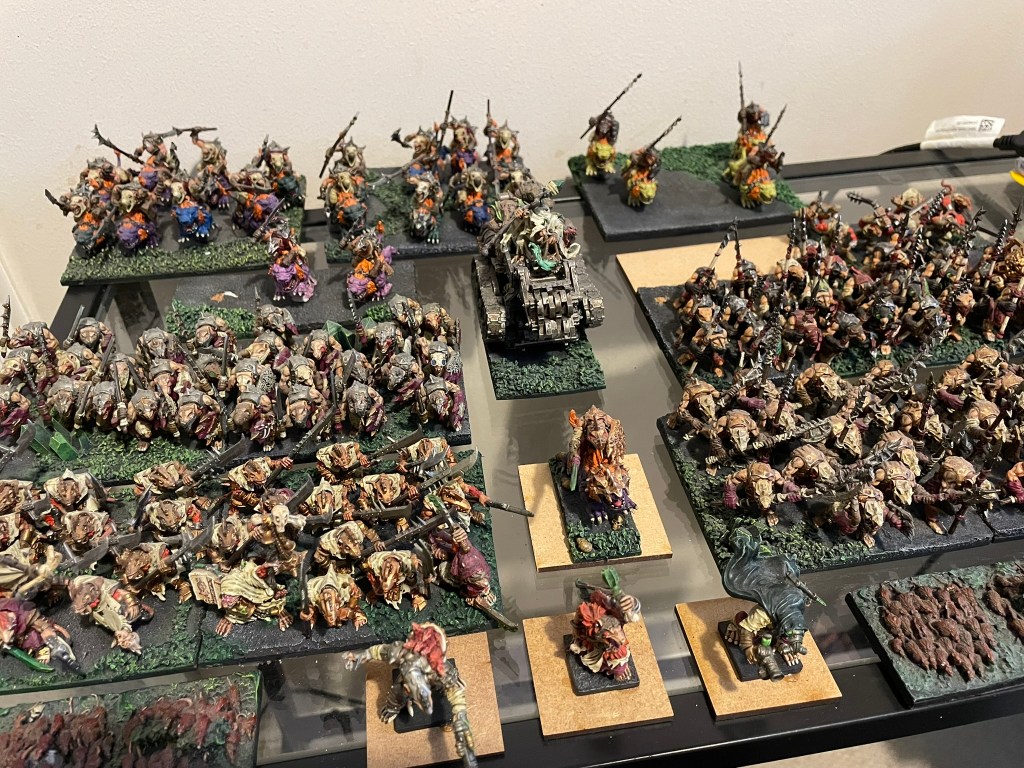
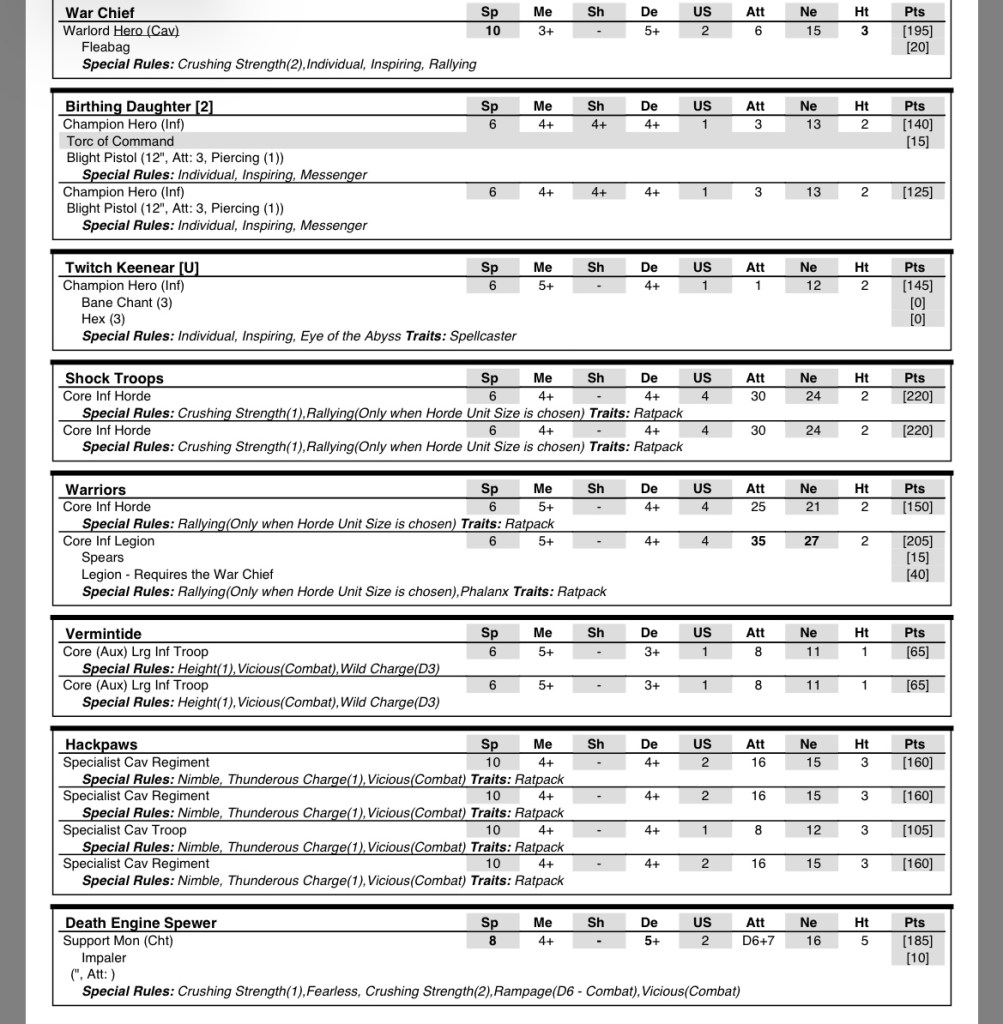
I definitely won’t be burning my miniatures just as soon as there’s a break in the rain in the UK. In fact, last year’s plan for this year was to build a brand-new army, I’d still like to do that. To that end I decided that for their first game I would try running out a version of one of my favourite fun lists, all so known as “The one with all the Hackpaws”.

I do love the changes to the mounted vanguard of the Ratkin and so I built a list around the three and a half regiments of riders I have in various states of disrepair, tournament travel has taken its toll. I also took a War Chief, mounted of course, and two Birthing Daughters. I think these characters have a lot to offer, because they provide so much support. I would go as far as to say that Birthing Daughters will replace Brute Enforcers as auto includes as they are cheaper, can perform the same roles and make those all-important commands easier to get off. In addition to dishing out commands, the removal of disordering and the fact they aren’t yielding makes them ideal for slowing up any flying beasties that get into your back field, and they can score.

One cool thing about seeing multiple Birthing Daughters in armies is that the background states Birthing Daughters quite often become Master Scurriers, which gives me a great excuse to use both of these brilliant models.

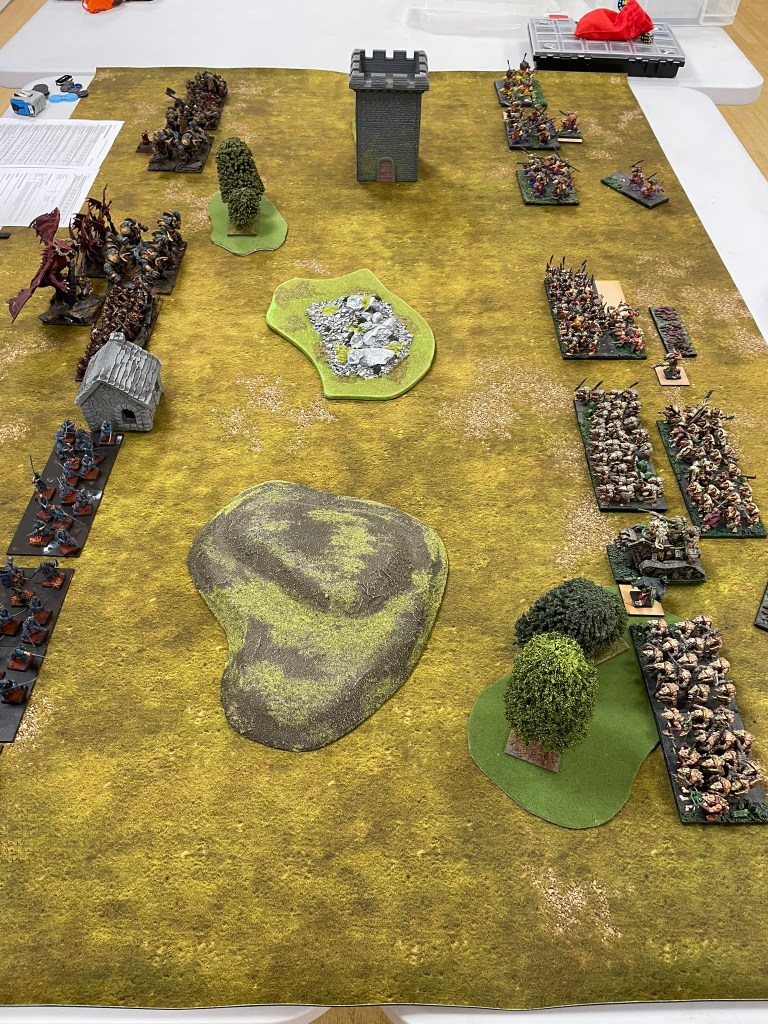
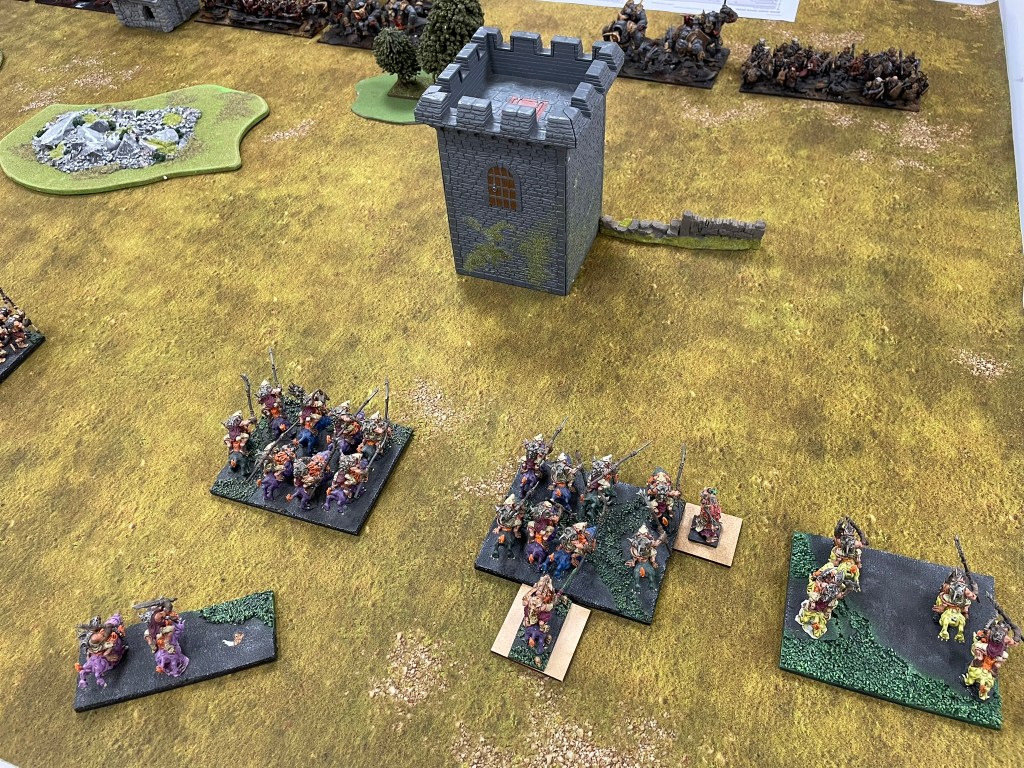
The rest of the army was made up of Shock Troops, warriors, vermintide and a Death Engine Impaler. Unfortunately, my opponent’s list turned out to be a pretty solid counter to lots of light cavalry and relatively poor infantry. He brought Abyssal Dwarfs with 3 horde of Black Souls, 2 regiments of Golems and a horde of Decimators as the highly survivable core. My opponent played well and the result was a solid win to the angry dwarfs. Now, my intro of gripes is certainly not intended to be a response to the outcome of the game. The game was great, and there were certainly a few interesting moments. Watching the War Chief take down a horde of Decimators, pretty much single handedly was brilliant, whilst riding multiple unhindered regiments of Hackpaws into blocks of infantry felt fun (although watching them bounce off was not quite as much fun). In the end my units were simply not able to chew through the enemy as quickly as they chewed through me.

The commands may have been successful on almost every turn, but they don’t guarantee a win. Now please don’t think that I’m suggesting based on my one game that Ratkin are not a good army, that’s not true, a much better player than me has already shown that’s not the case. However, what I do think is that the army feels very different which I suspect will mean whatever list I eventually settle on will look very different. One thing I’m currently wondering is if we’ll see less diversity of units in lists going forward for rats. My pervious list featured 12 unique unit types out of 16 drops, lists that I’m currently working on seem to drift towards quite a bit of repetition, but this is only the start.

To keep up with what’s going on you can follow @wizards_bookshelf on Instagram and Threads or drop you’re email below to subscribe.
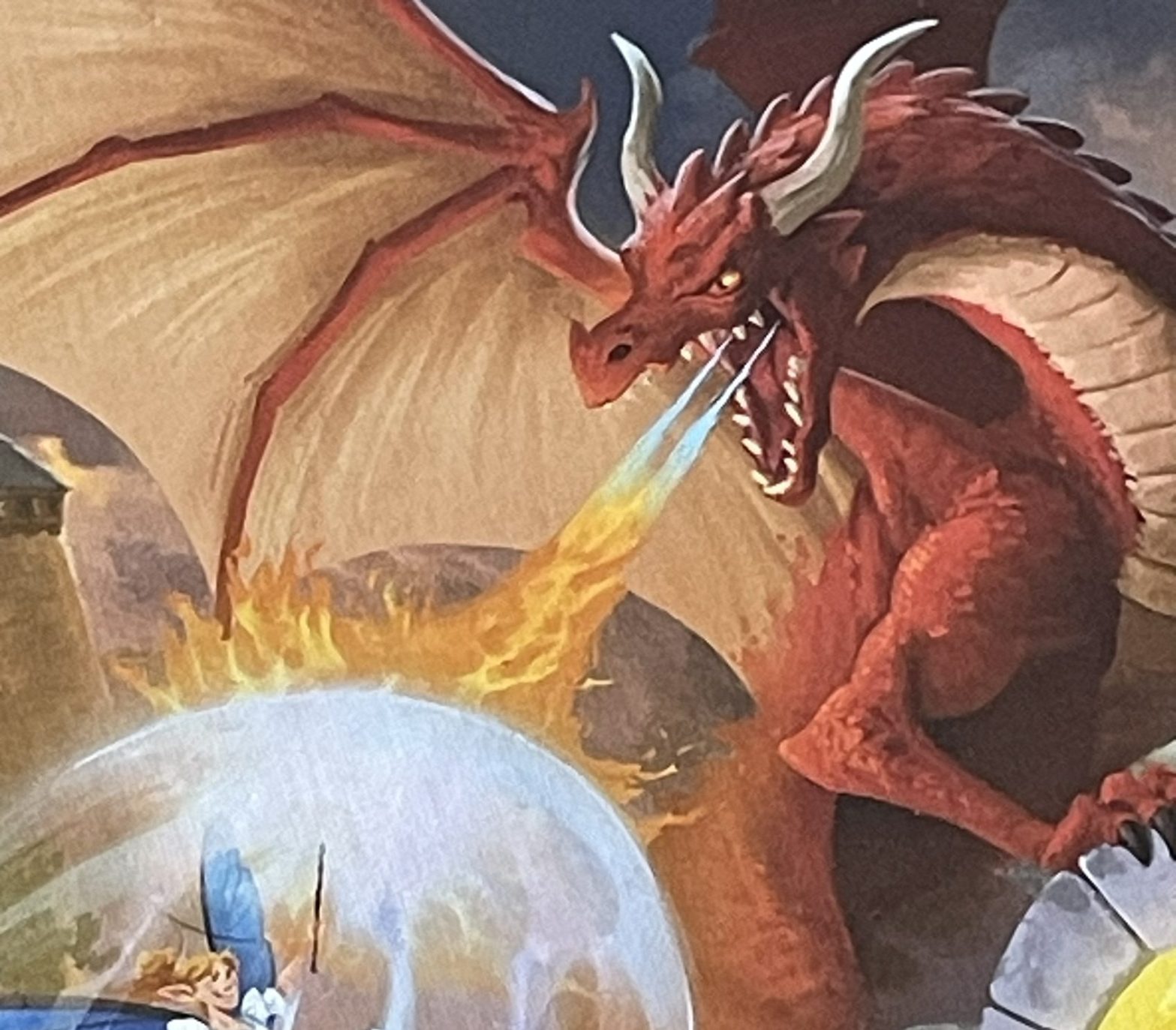
Enter the Dragon (and Fairy): Carcassonne style

Carcassonne is a great game. It’s simple, aesthetically pleasing and packs quite a strategic punch for a game that generally lasts no longer than thirty minutes. Like so many successful games it’s spawned a huge number of expansions, which I’m slowly becoming more and more intrigued by, so on the basis I can find people who will support me in this quest, I’m going to attempt to review an expansion set a month until I’ve played them all.

The plan is then to rank them based on how worth they are including in the game. I’d also like to try playing a mega game with all the expansions, but I feel that is for another year. One thing at a time!

To date I’ve played three expansions: Rivers and Bishops (which were included in the original Carcassonne set I bought), Inns and Cathedrals (which I don’t think I’ve reviewed so that’s something for a future date) and most recently Dragon and Fairy, which will be the focus of this blog.

I’ll start by registering an enjoyment of the expansions to date. Whilst I think Carrcassonne is a great self-contained game that’s ideal for getting people playing quickly, as a wargamer I do like my games to have a bit of extra involvement. So far, I’ve enjoyed adding on an occasional expansion for a bit of extra thinking and a bit more rules diversity. That being said I do recognise that not all expansions are created equally, and including extra rules can turn people off a simple game if there isn’t immediately recognisable value in adding those extra rules. So, as I review my way through the expansions I’m going to take this into account, so let’s get into it.

Being a predictable fantasy enthusiast I will admit to being attracted to this set because it had a dragon in it. Yes, I’m that basic. Getting my hands on a dragon meeple was undoubtedly central to my decision making, however, I was intrigued as to how this would work in the rules. In addition to the dragon, this set also introduces the Fairy and portals. There are also a number of new tiles with relevant terrain features.

What struck me immediately about this set was it introduced a certain amount of mischief to the game allowing you to attack opponents, potentially robbing of them of their constructions, and claim unfinished features that do not have an owner without having to build onto them. All this is done in a really slick, but fun, way.

The Dragon is a marauding beast that is powered by a combination of game mechanics and players’ pettiness. Players can’t take possession of the Dragon, but they can influence its movement. Honestly, there is nothing worse than watching a dragon appear close to a half-finished city and threaten to remove the only meeple you have in it.

Happily, the Fairy provides some help. Complete a feature that you don’t score, out of the goodness of your own heart, and karma rewards you with some protection from the Dragon and extra points if the meeple they are protecting completes a feature whilst the Fairy is still with them. Beware though, the Fairy is fickle and can vanish off to help another player as quickly as it came to help you.

The final component of this set are the portals. They solve a problem that the Dragon creates, namely unoccupied, unfinished features. Pop a meeple on a portal and they can claim any unfinished, unclaimed features. It’s a neat set that fills in some interesting strategic gaps in the core mechanics, and for the time being will make it the clear number one recommendation when it comes to expansions. I’d also mention that this set got a really good reaction from my opponent, who is not as keen on uber complicated games as I am, this was because, unlike with the other expansions we’ve tried, the new mechanics brought something really different to the game which was fun, and pretty easy to pick up.

To keep up with what’s going on you can follow @wizards_bookshelf on Instagram and Threads or drop you’re email below to subscribe.
The Fellowship of the Bishop’s Ring: the journey continues

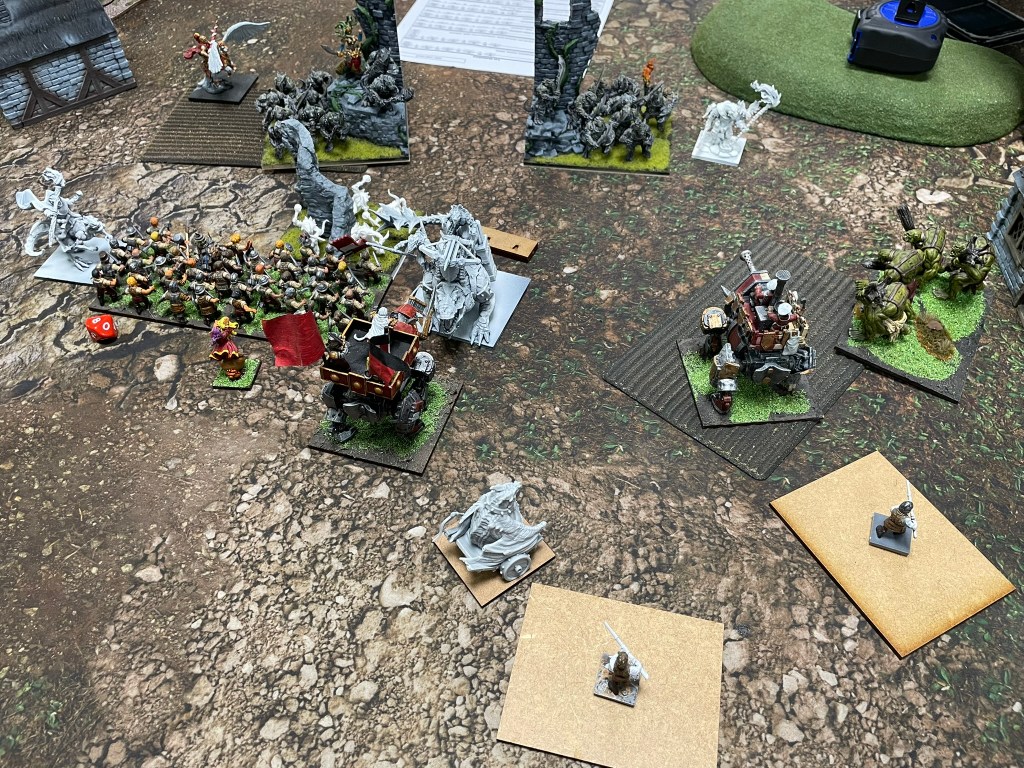
A little while ago now my witch hunters took to the table for the third time in this particular campaign. After their initial forays that have seen plenty of rolls on the injury tables and a decent few experience points earned their legend is growing. At this stage in their development, I would consider them to be tenacious, enthusiastic even, but lacking in direction.

Both my leader and second have major injuries, bad enough to play a part in games, but not sufficiently life changing for me to justify retiring them, although they are accruing a decent pension. Whilst my second is establishing himself as a reliable fighter, my leader is still trying to work out which end of his double handed flail he needs to point at the creatures trying to hurt him.

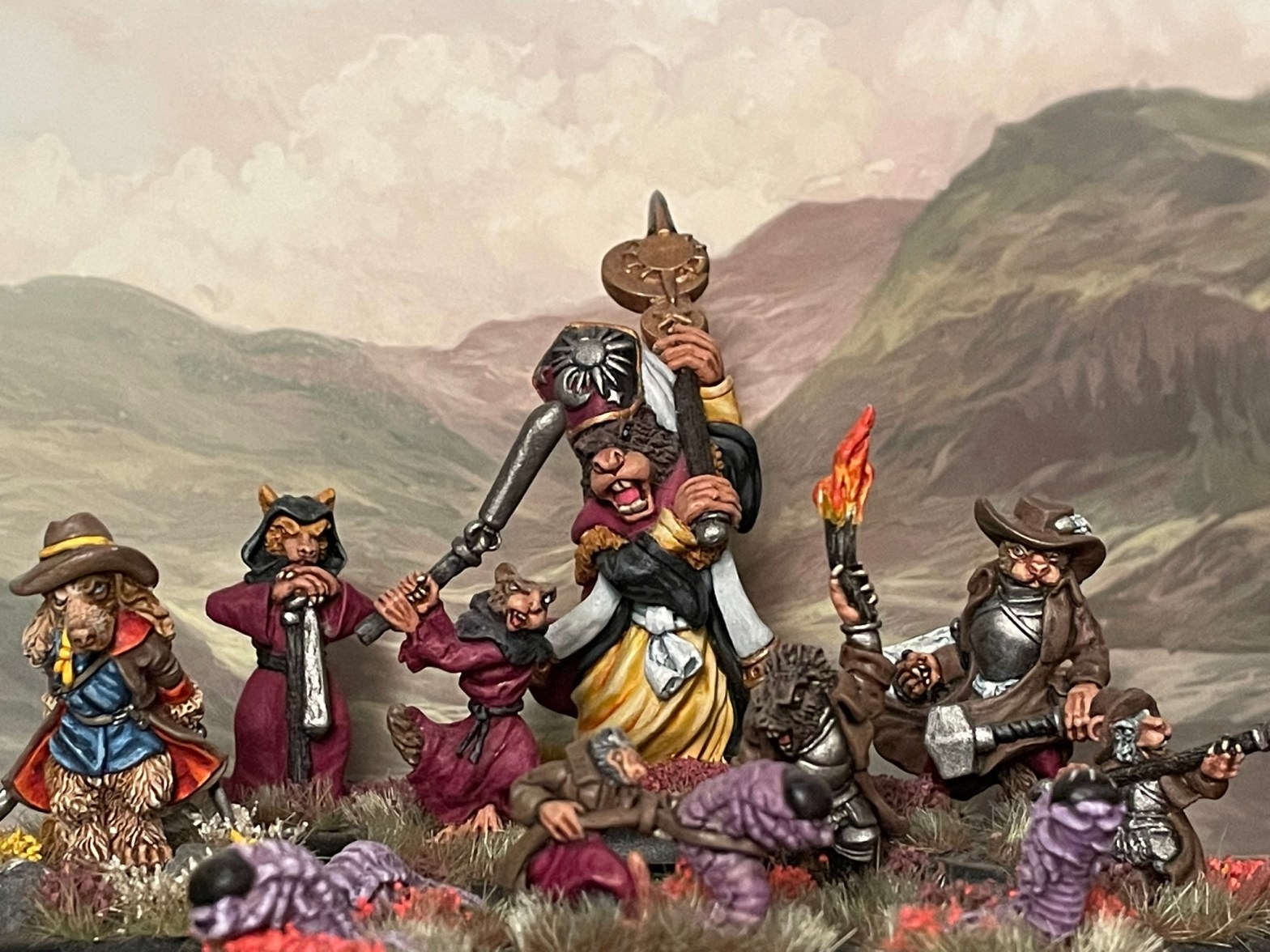
Originally seven creatures strong (a fox, an otter, a weasel, three mice and a sparrowhawk) they have added a mole and an attack grub to their brotherhood. Advances have seen the mouse magic user discover a hidden talent for fate magic, the weasel get faster and the sparrowhawk had an enchanting experience whilst out wandering and was blessed with no less than 5 fate points. On balance life has been good to my beasts.

Their most recent game saw them come up against a shiny new warband, although one that had clearly upset them in some way as they had kidnapped one of their shrews. And so, the scene was set for a dramatic rescue. The first order of the day was balance, initially there was a 15 level difference between the two groups, however my otter (and second in command) has become a little flaky and couldn’t make it onto the table for this game, having rolled the obligatory 1 on a d6 to ensure he’d be putting his feet up. This reduced my head count, and then my opponent hired the lovely Lady De’ath from the freelance chapter of the book, which evened up the warband levels.

I enjoyed seeing mercenaries on the table in the first edition, so I was really happy to see them continue into second edition. I think it’s a very neat way to balance warbands, and the characters bring some interesting combinations with them. Lady De’ath is a poison specialist, so I wasn’t looking forward to taking her on without my otter and his massive hammer.

The game itself started out with a bit of tit for tat as the weasel tried to take out the freelance, only to end up in the “just resting” pile. Fortunately, the attack grub avenged him and the mercenary was gone. My rivals did manage to rescue their companion from my base, but they couldn’t make good their escape, and the hostage was grabbed again.

The secret quests brought predictable chaos. My fox drew Showdown, which requires him to take a successful swing at the opposition’s boss. This worried me, as not only did my fox’s injury make him likely to wound himself, but his track record at making successful swings at anyone has been non-existent. To make matters worse, the hare in question was pretty competent in a fight, with a double handed weapon, the parry skill and light armour, I had very low expectations.

In spite of everything (and at least two other animals pinning the hare in place) the fox not only managed a hit but also took his head off. Things were shaping up nicely at this stage in the game. A turn or so later and we were rounding up the escapee, and it looked as though things were going to be pretty straight forward. However, it was now time for my opponent’s secret quest to play out. His angry squirrel with a shiny new halberd stormed across the battlefield and smashed my sparrow hawk up. There was another flurry of attacks and in what seemed like a very long turn pretty much all of my warband were sporting bandages.

I have to admit to having a pretty lucky set of rolls for injuries and most of the team managed to walk away unscathed. Unfortunately, my Sparrowhawk didn’t make it out of the medical tent. The only difference between him and a dodo being that he was a bird of prey. Despite their loss, or possibly because of it, my critters went off wandering. One group managed to get a few hours of cleaning work at the local inn. Another group took a wrong turn in a dark forest and ended up somewhat lighter in the purse than they had been, and then there was the wandering weasel. Stewie, as he will now forever be known, discovered a rather attractive looking leather belt and a small pouch of pennies. Upon buckling the belt around his waist he felt an urgent need to move, to walk, and then to run. Unbeknownst to him he has found none other than the legendary Belt of Balmorr that not only gives him +3 to nimbleness rolls and adds 3 inches to move actions, but also inflicts d12 wounds if Stewie can’t move more than 3 inches a turn… should be interesting!

To keep up with what’s going on you can follow @wizards_bookshelf on Instagram and Threads or drop you’re email below to subscribe.
Basilea rides out: first thoughts on the Hegemony in their first game of the new edition

I’ve mentioned a few times over the last couple of years that I was unhappy about my Basileans. There were a lot of minor contributing factors that just meant I lost interest in playing them. A big one of those was that having played a competitive alpha strike list for a while I really wanted to settle into something a bit more thematic and narrative.

In my mind’s eye I’ve always seen Basilean armies being based around their men-at-arms and knights, with the odd Elohi or Phoenix to support. Not only that, but I have a retired priest character, Sha’leis, who had several intriguing adventures at the beginning of third edition who I’d quite like to bring back into the fray. Happily, the new army lists require players to put humans on foot at the heart of your lists, and this appealed.

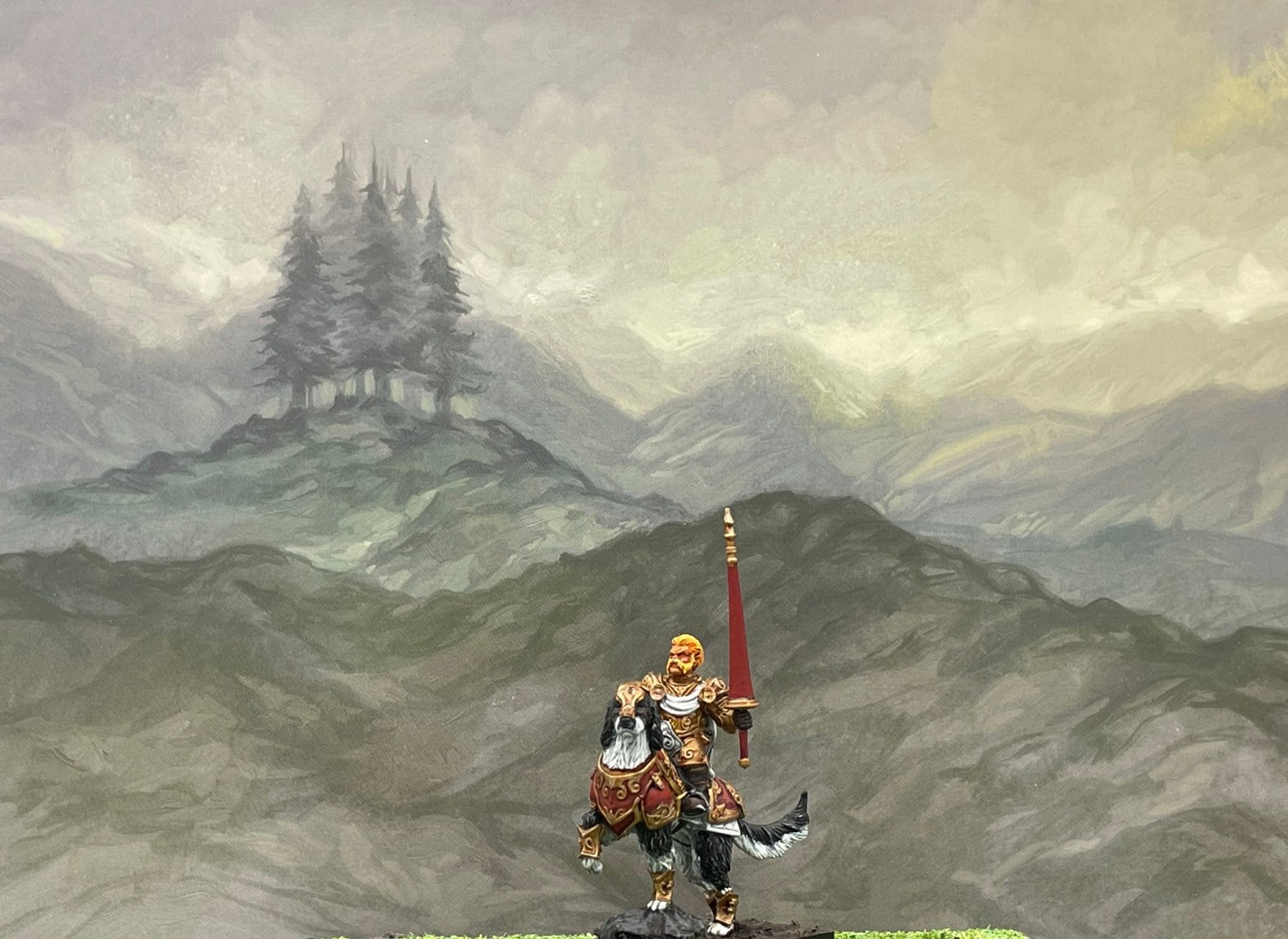
One of my favourite Mantic models looks at home on her bigger base

Of course, this means I’ve given myself a bit of an uphill struggle from the outset because of the three armies I own, this is the only one that requires units adding in order for me to get it onto the table. It’s also quite battered and has been very unloved for a while. Fortunately, I have a couple of regiments of generic human infantry painted up that meant I could at least field a painted army for my very first game.

Approaching list building

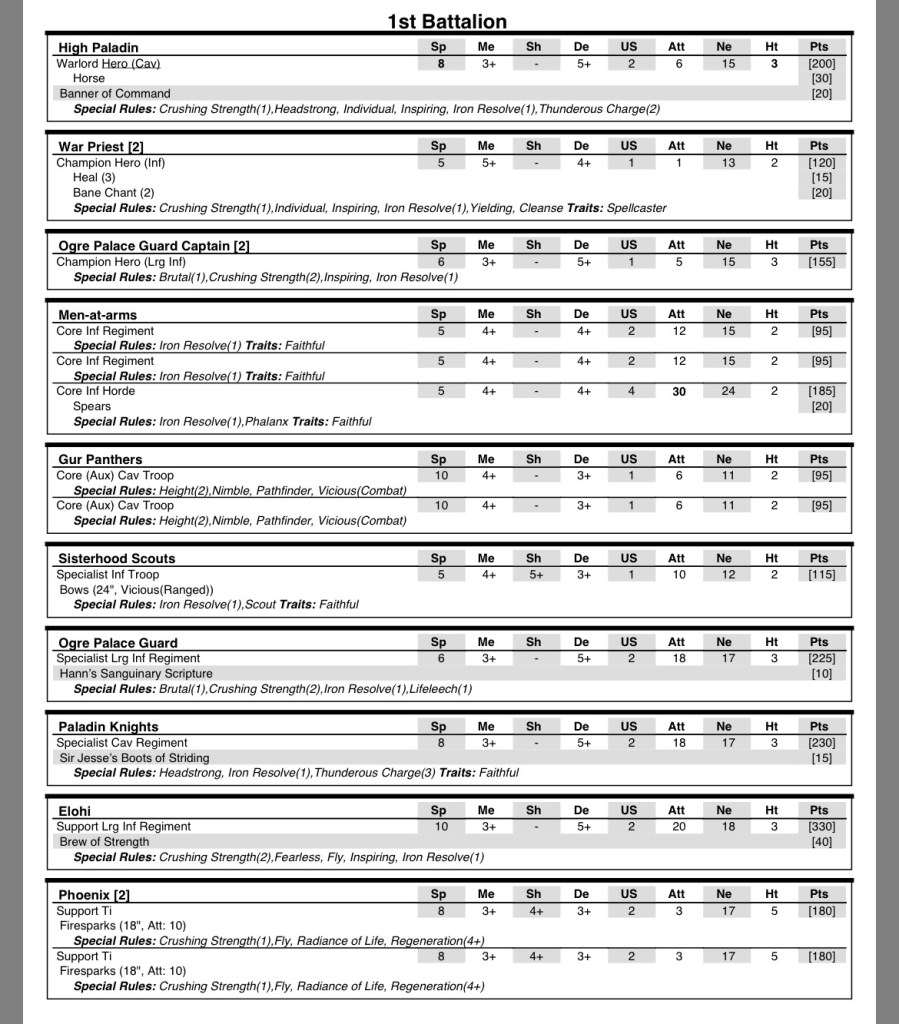
After a brief reading of the rules and watching a couple of battle reports on Death By Dragons I felt that, with the exception of shooting, things hadn’t changed so much that there was a pressing need for me to deviate from the guidelines I’d followed when army building in third edition. Over the past couple of years I’ve found reasonable success by sticking to a rule of thumb where I will only pick a maximum of 4 units that cost 200 points or more, 3 of which should be really punchy. The rest of the army should have a bit of shooting, a bit of healing and a decent number of drops.

For the core I decided to go for a horde of spears and 2 regiments of swordsmen. Yes, this was partly because I had the models painted, but I also think it’s an efficient way to get some bodies on the table and they open up plenty of options in what has traditionally been a fairly elite force. The next choices were 2 troops of Gur Panthers, amazing chaff before and I can’t see them being anything less than that now.

The big hitters were up next. I love knights and in particular the new mounted paladin sculpts, I just need to get them painted. I like what has happened to heavy cavalry in the new edition, I want them to be good, so I decided to start out with 2 regiments, 1 with Sir Jesse’s Boots, and then the iconic Elohi. The angels are now pretty monstrous and will only benefit from having a Brew of Strength. Now I needed to allocate the final points.

Characters went next. I’ve always loved priests, I think they are really versatile support pieces for infantry, and as I mentioned I wanted to get my narrative character back on the table. Support comes best in the form of strength and healing, so Sha’leis took healing and Banechant.

Thematically I think High Paladins are fantastic, and their new stat line is interesting. An additional attack and thunderous charge 2 when on a horse should give him a bit more umph in combat, and I thought his commands would be a helpful source of healing for the mounted paladins, so much so that I decided to provide him with the Banner of Command for extra healing and maybe a shot at elite.

Great model, great for a kitbash

One difficult choice was between the Dictator and the Ogre Palace Guard Captain. I really like the Dictator model and am a massive fan of rallying, however given I was intending to bring a couple of Phoenixes I felt there was quite a lot of healing in the army and rallying was unlikely to add much. The ogre’s better movement and extra point of nerve won out in the end. Finally, after the 2 Phoenixes were added I had enough for a troop of Sisterhood Scouts, which became a requirement to ensure I had the right number of unlocks to have 3 characters and 3 support units.

The first game

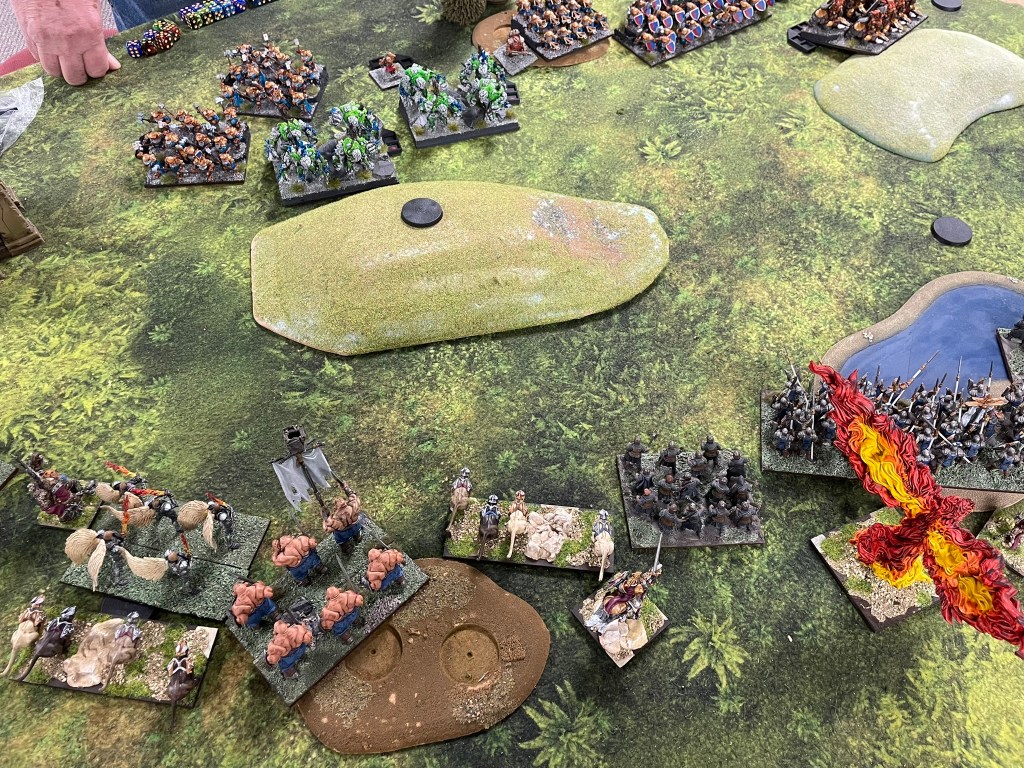
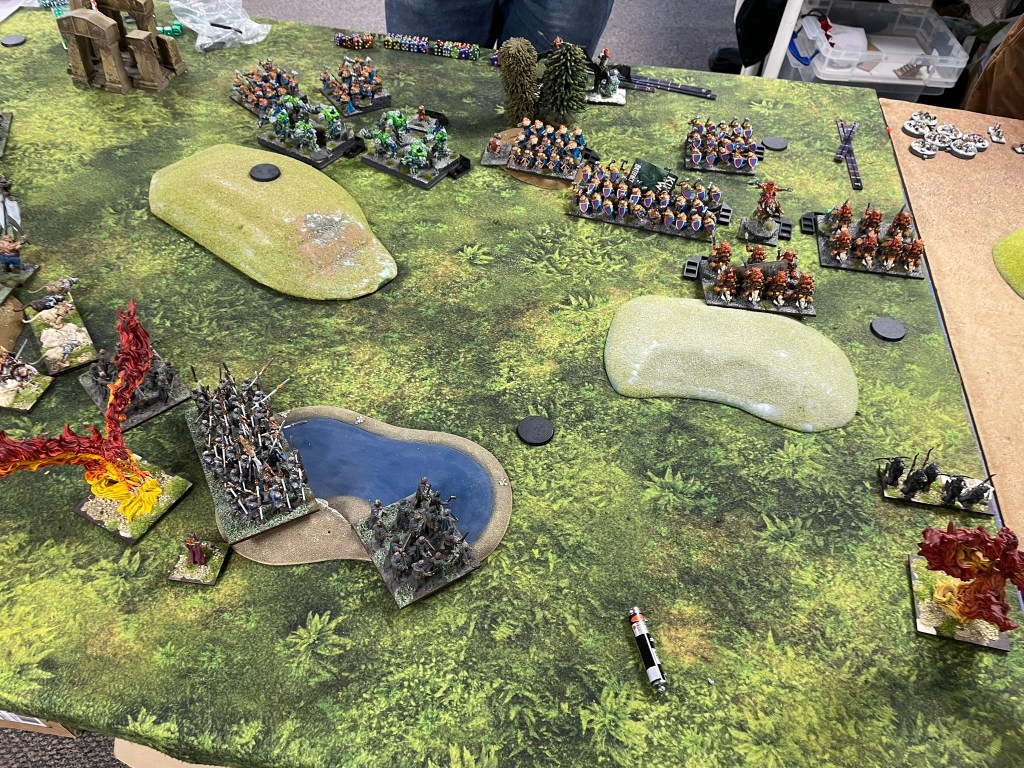
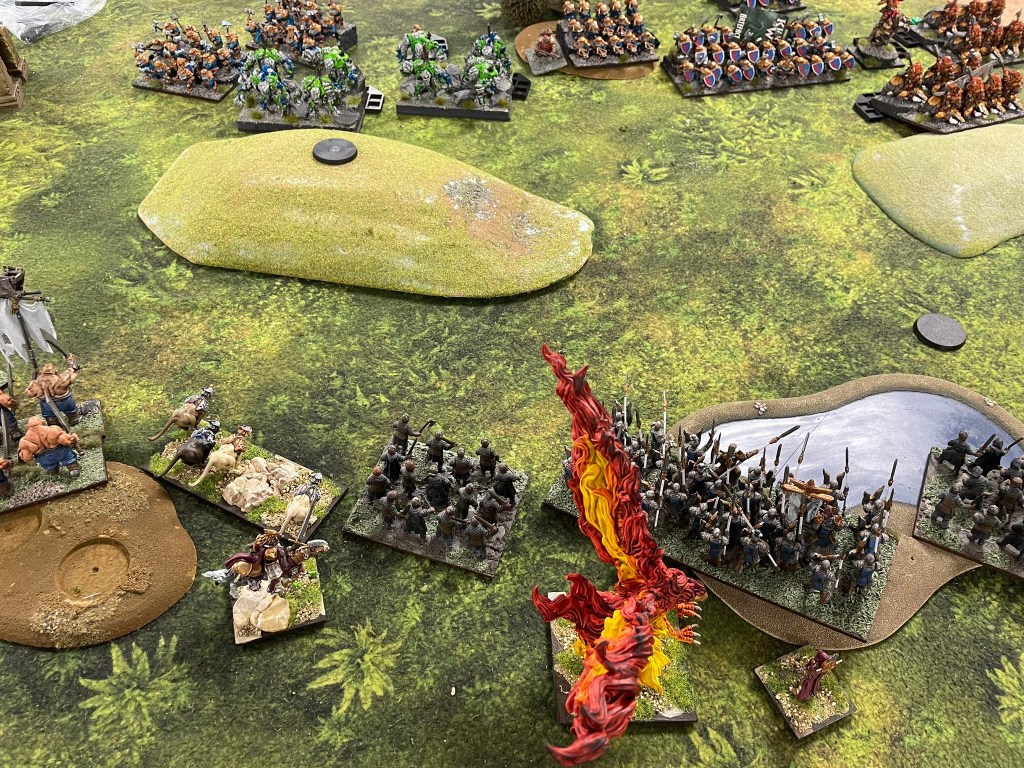
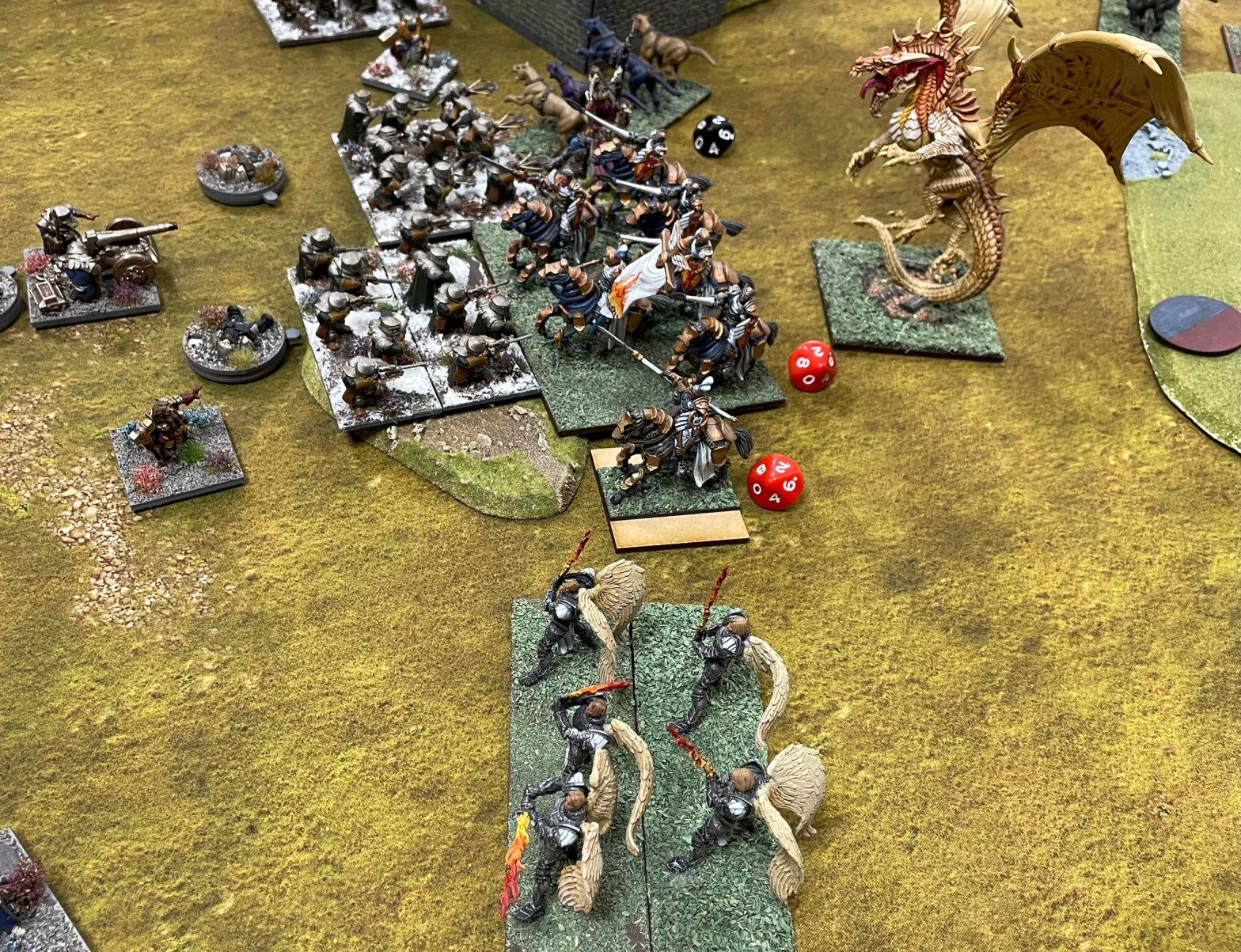
This was an interesting kick off as it was against a Dwarf army with a rather large amount of shooting, spread across 17 drops. I’ve never bought into the idea that shooting is not going to be effective, it still has a role, and playing this sort of army I worried shooting might impact my ability to deliver effective charges by wavering units and generally blocking things up.

Fortunately, this didn’t happen because of the sheer volume of healing in the army, but without that healing things would have been very different. My own shooting had a great couple of turns, taking an Ironclad regiment to waver before a troop of Gur Panthers nimbled their way around a wall to deliver the knockout blow with a single extra point of damage.

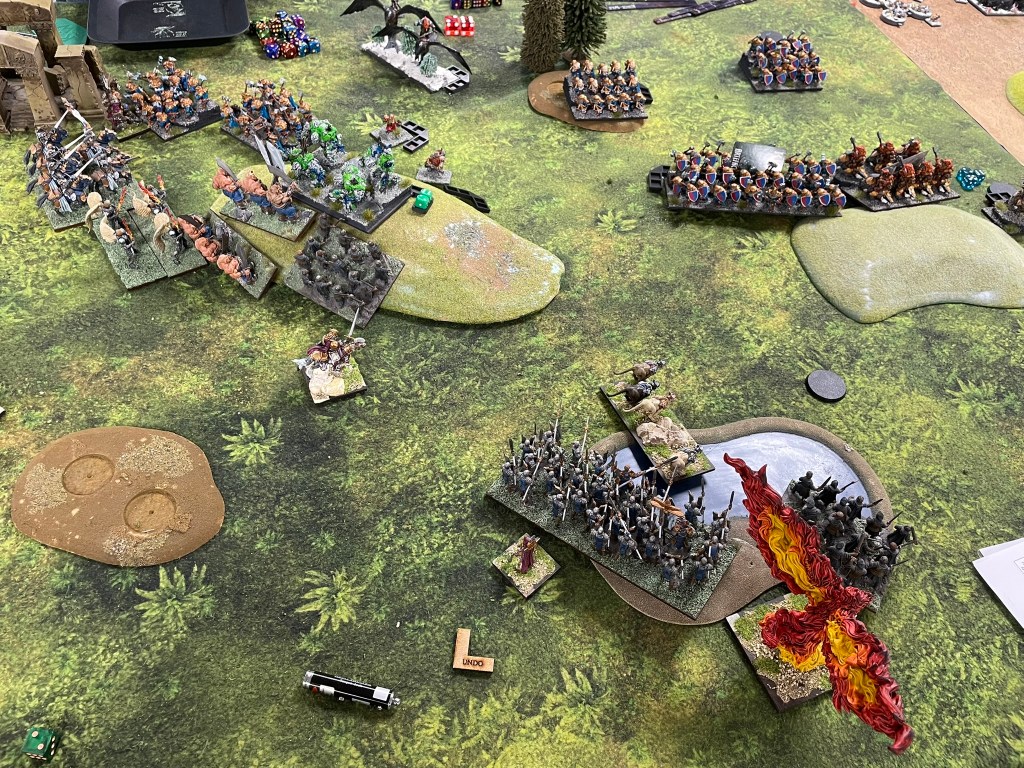
Sticky combats were easy enough to navigate and felt oddly familiar. I tried out a withdraw movement that led to a Gur Panther troop routing but allowed the Elohi to execute a flank charge on another Dwarf regiment. All in all, I was pretty happy with my list. The Elohi carved their way through 2 regiments of Shieldbreakers, 1 troop of Sharpshooters (which took 2 turns with the obligatory double 1 on the first nerve test) and 1 regiment of Ironclad.

The Phoenixes were also brilliant, impossible to shift and utterly annoying. I also thought the High Paladin put some fantastic work in turning the mounted paladins into a damage sponge. In fact, so resilient was the army that I only lost 1 troop of Gur Panthers to my opponent’s forces, whilst I deleted 11 out of his 17 units. Unfortunately, a poor decision on charges (made by me) gave him the all-important scenario victory.

It was a massively fun game, with only two slight issues that were both army related. The first was the elite command order, which was hard to get off. Despite having a character with 4 command dice I only managed to bring it into play once, and that was a lucky roll from the Ogre Captain. My issue with this is simply that it makes the command unreliable, which is a bit frustrating. The other issue was with the heavy cavalry, whilst the additional attacks and thunderous charge make it appealing, the impact of being hindered feels like a much bigger punishment. I’m going to stick with my paladins with the boots, but I am going to give some thought to swapping the other regiment out for Ogre Palace Guard.

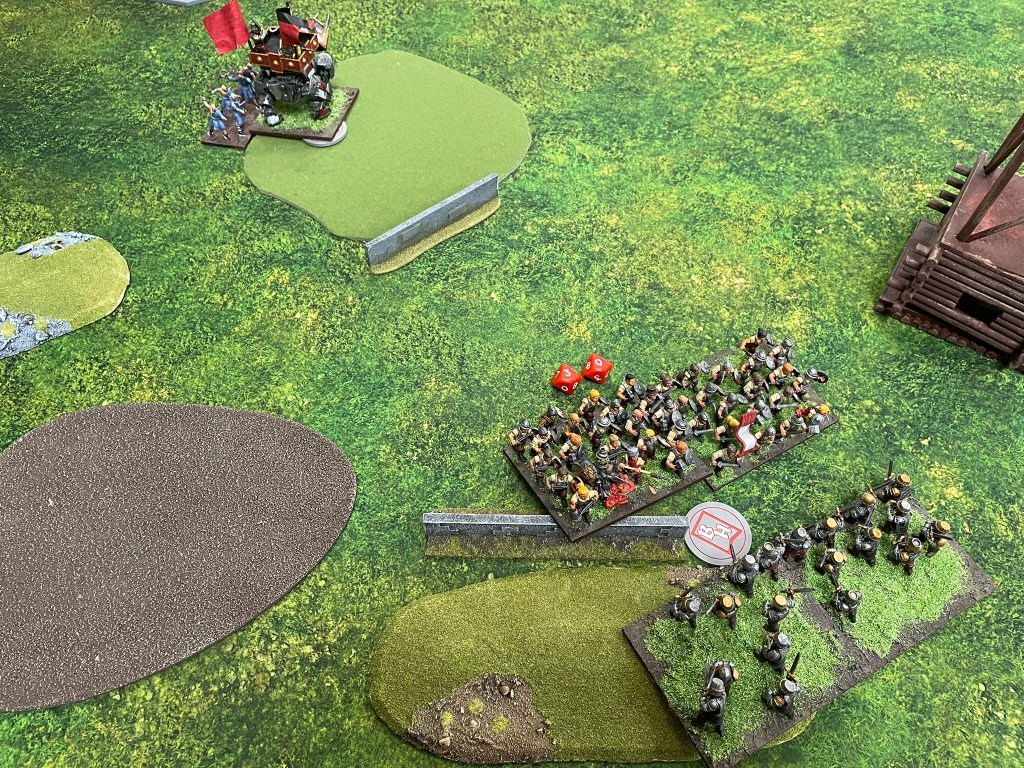
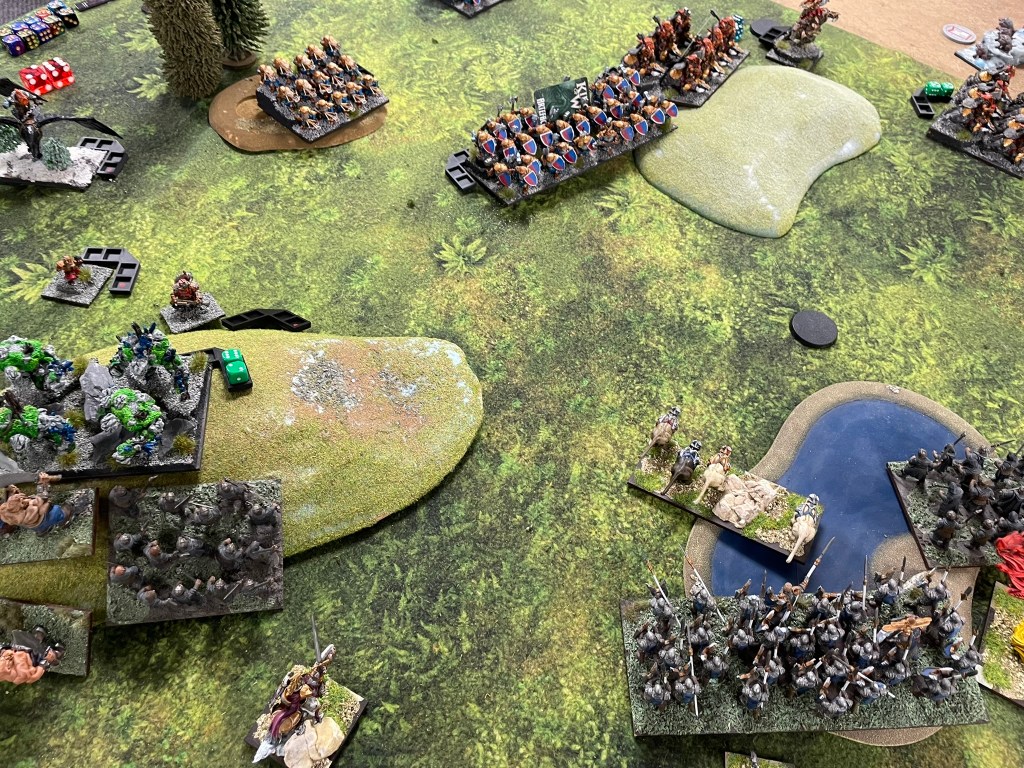
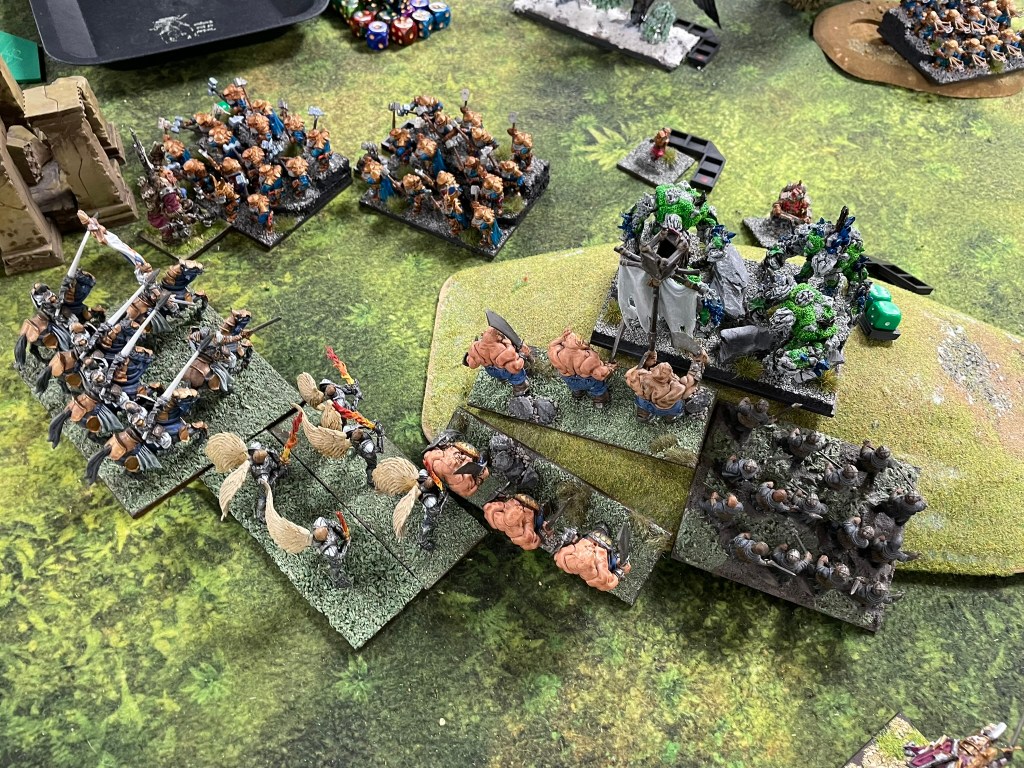
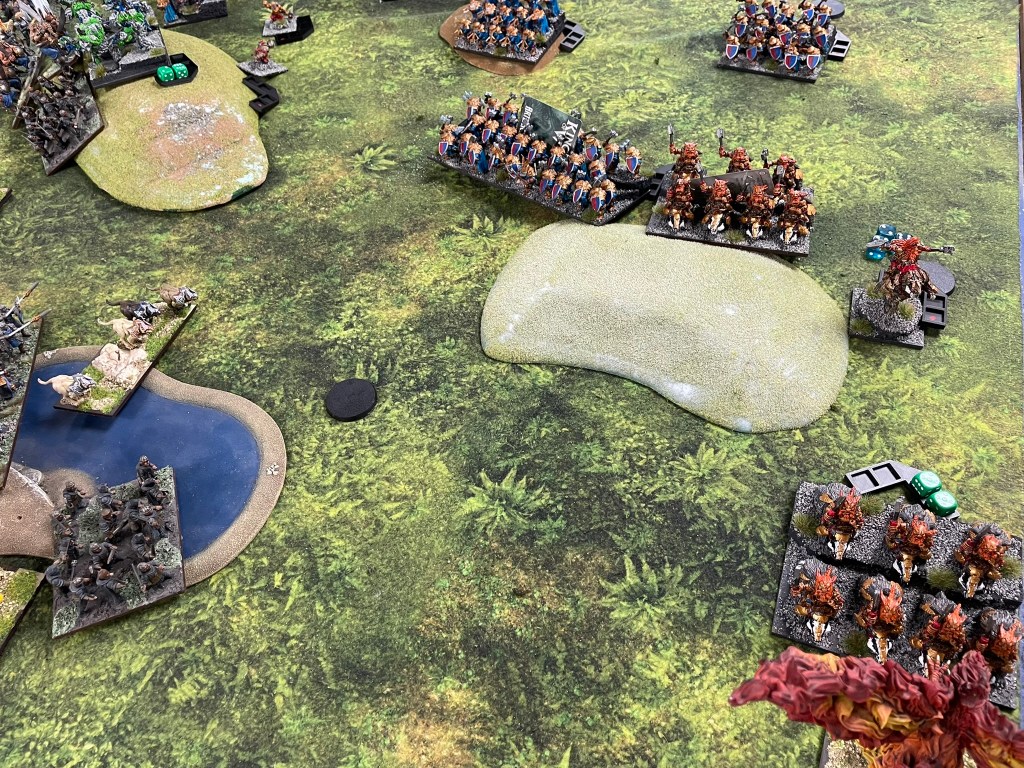
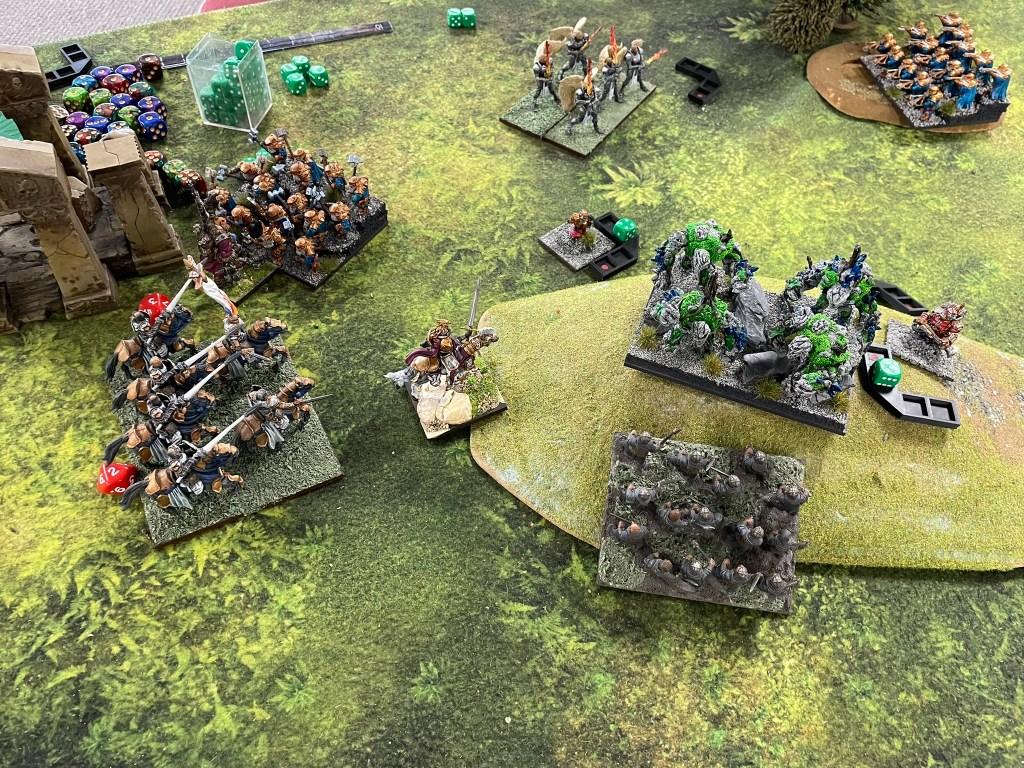
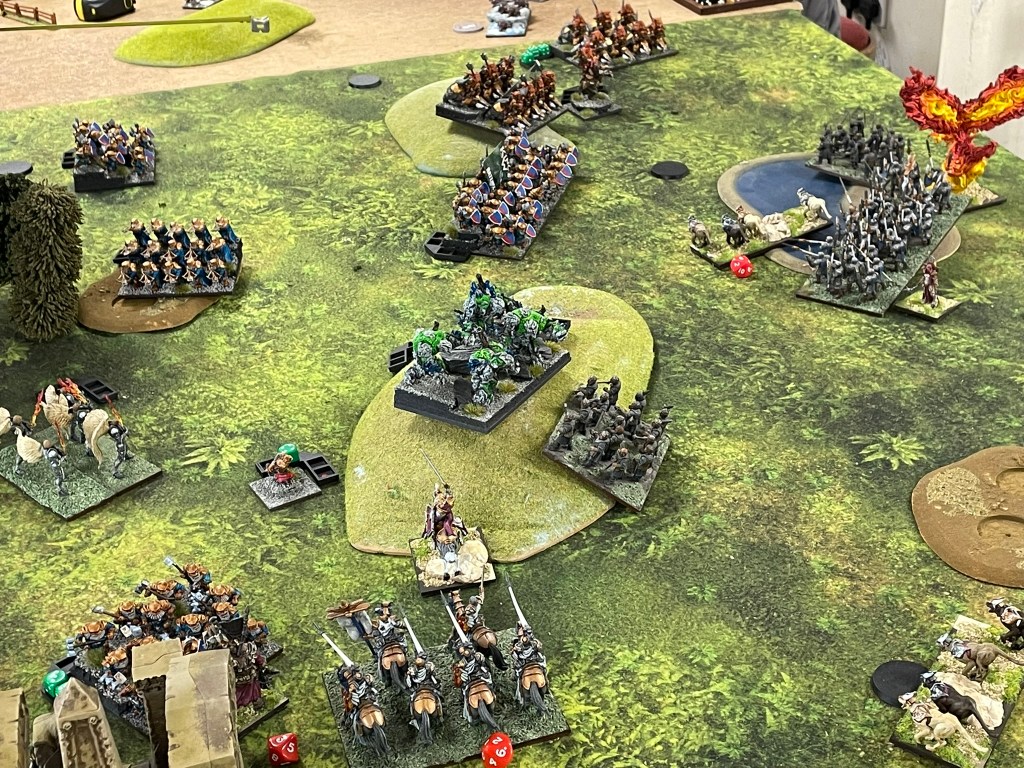
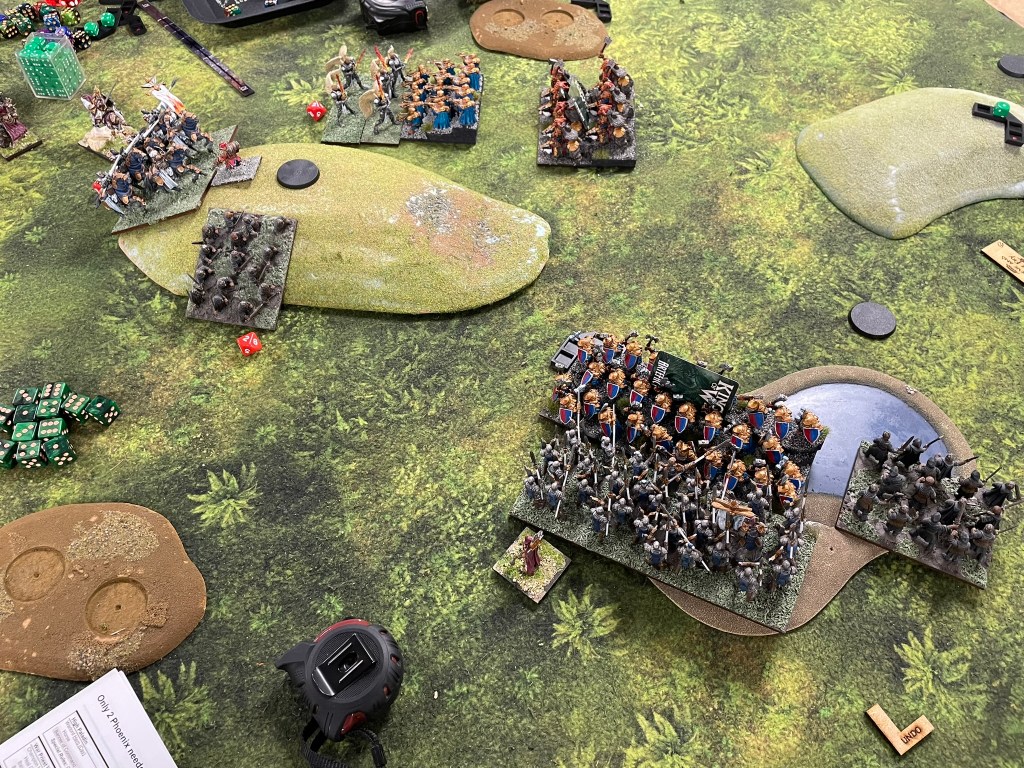
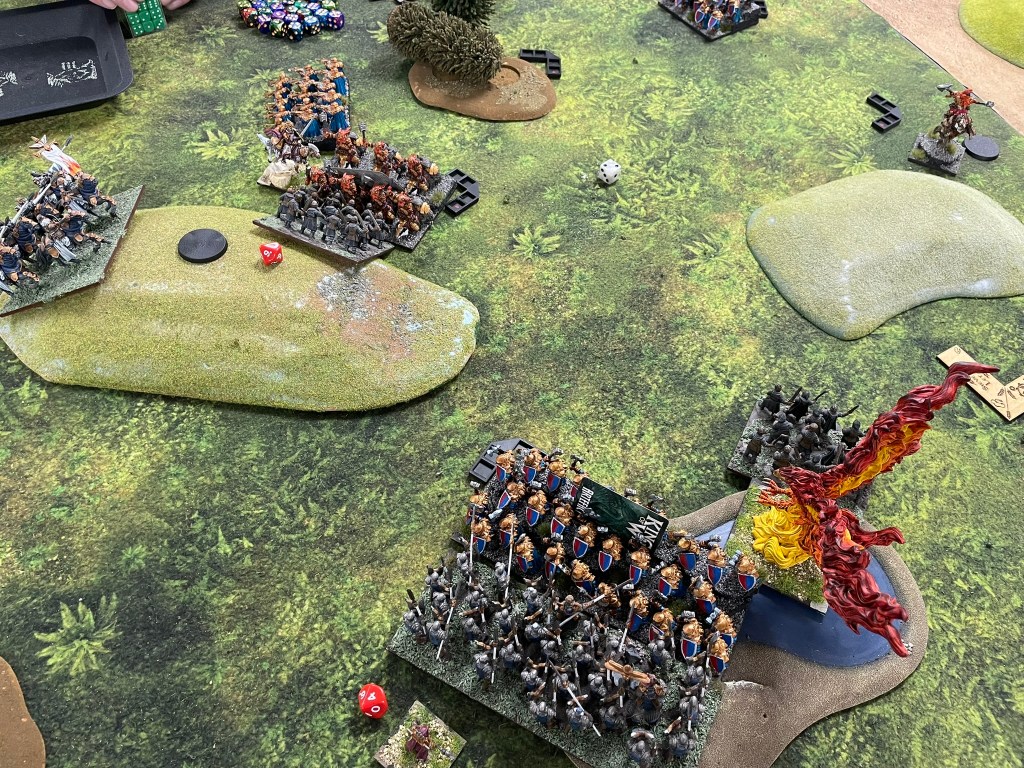
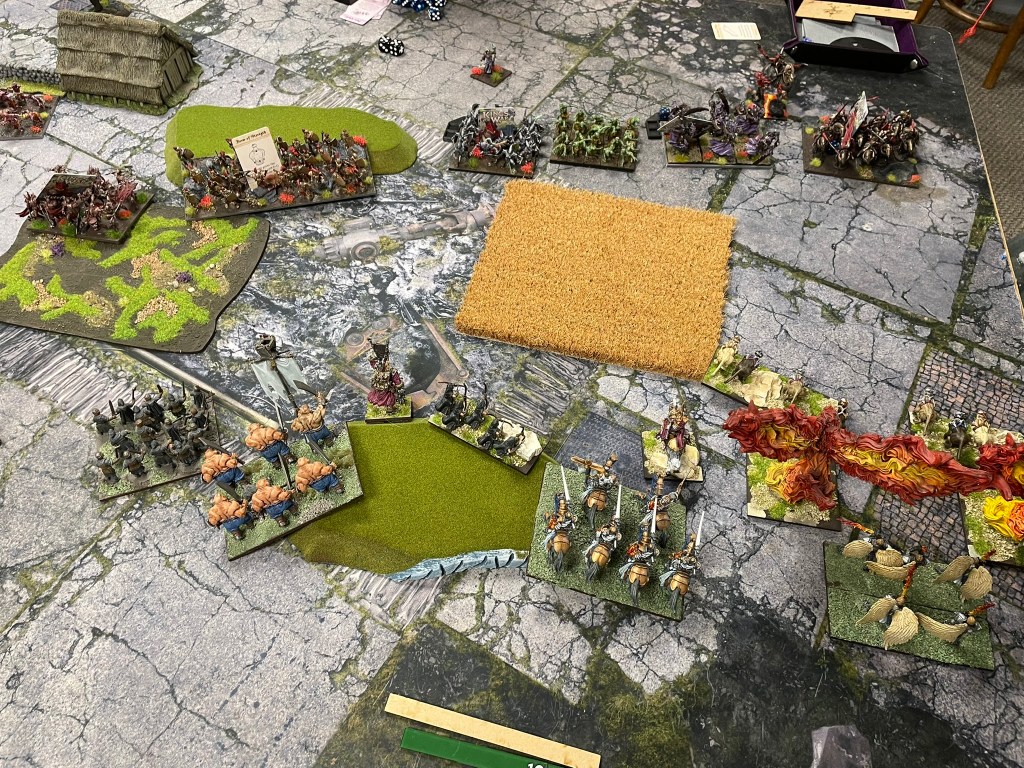
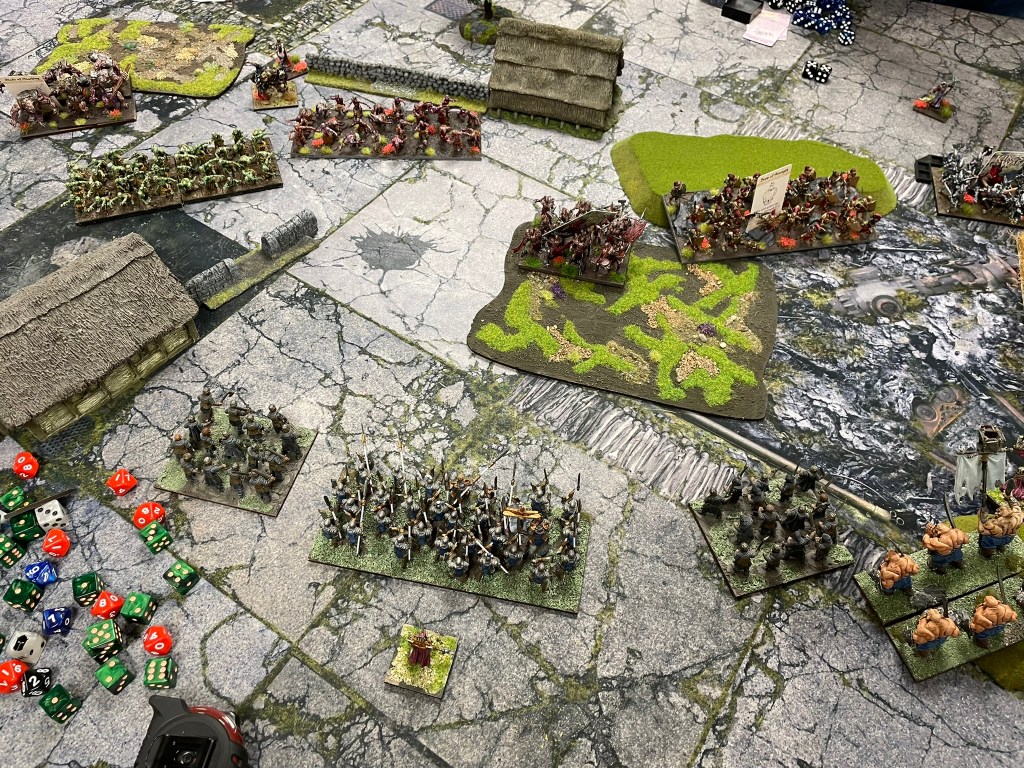
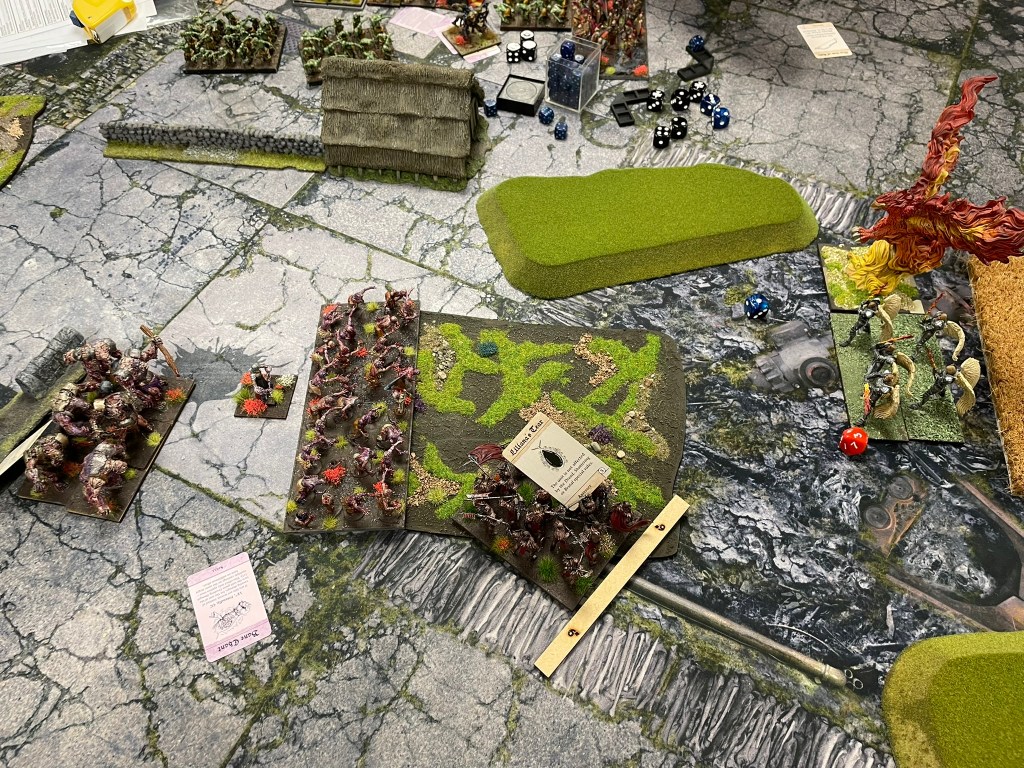
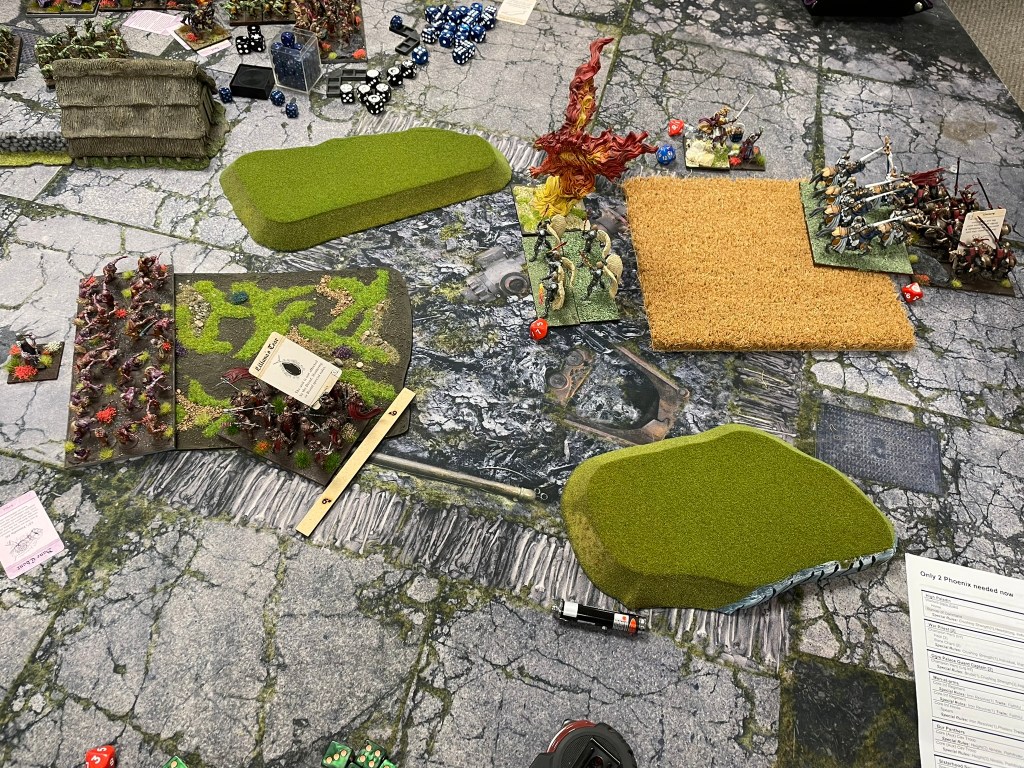
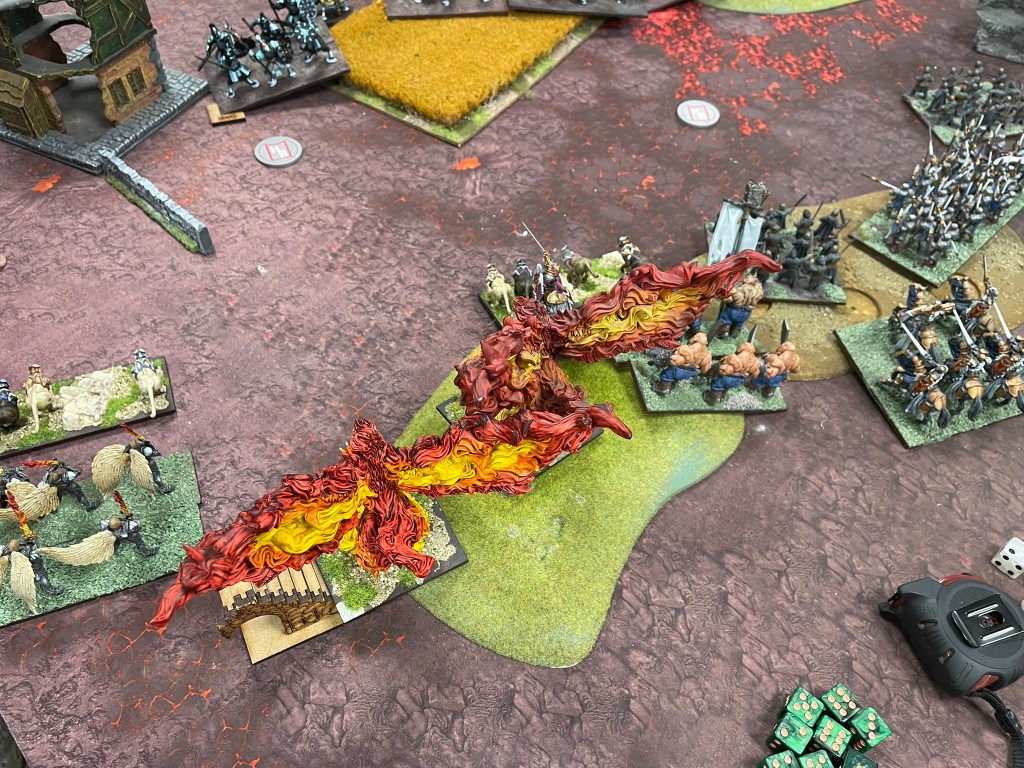
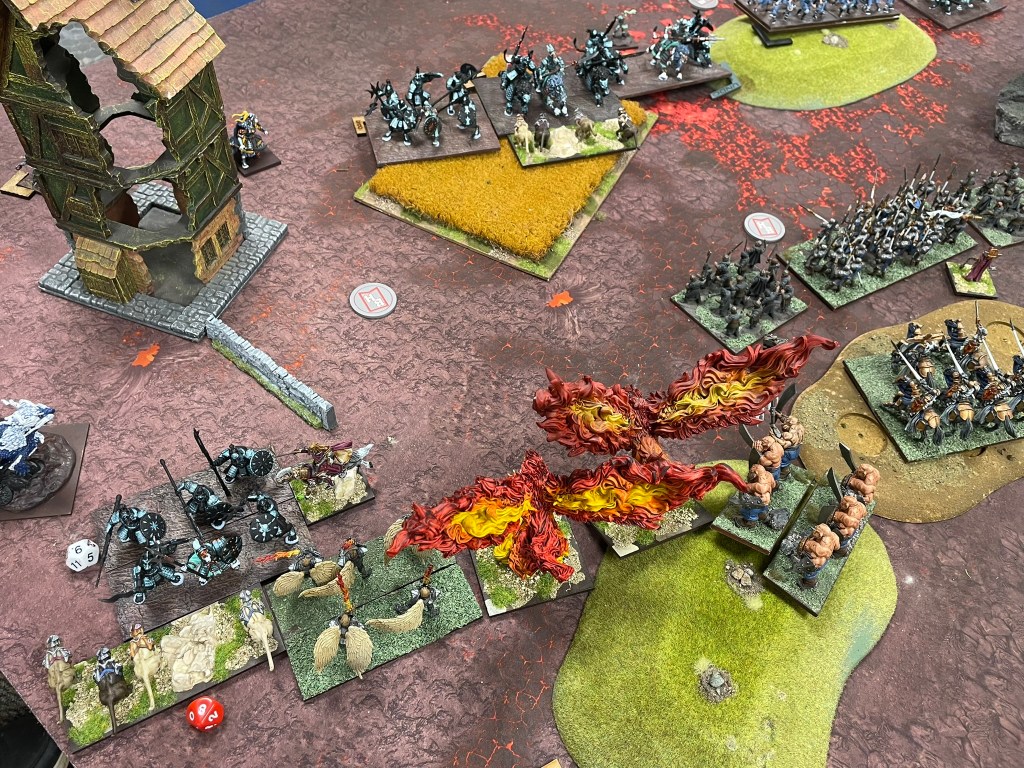
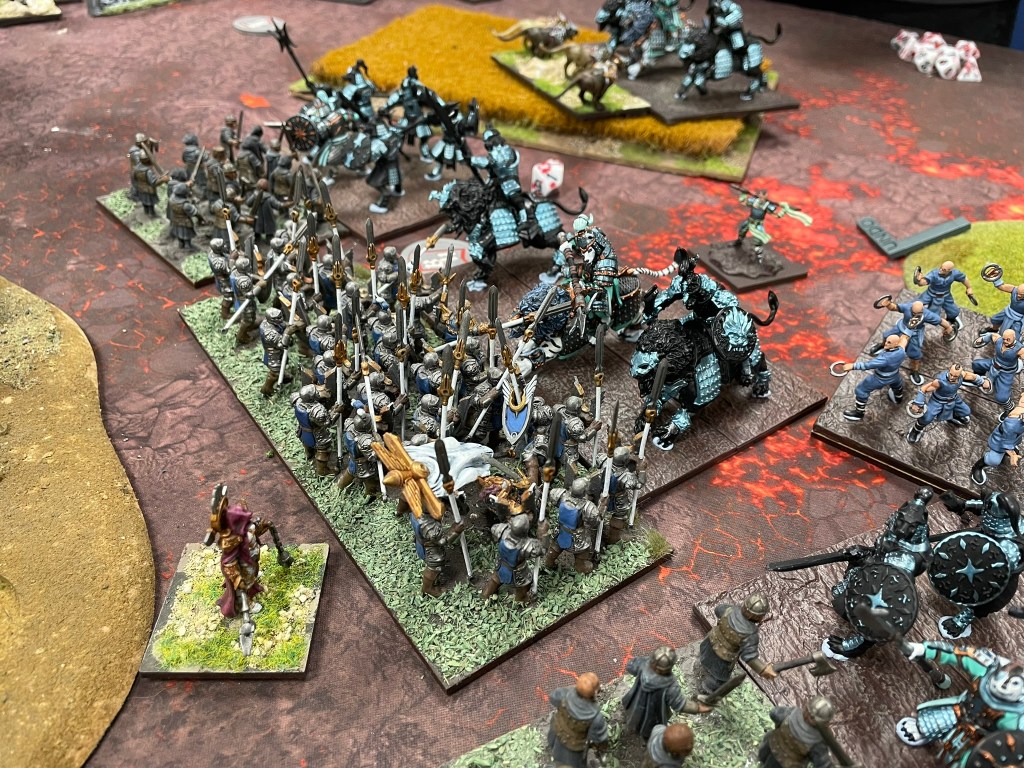
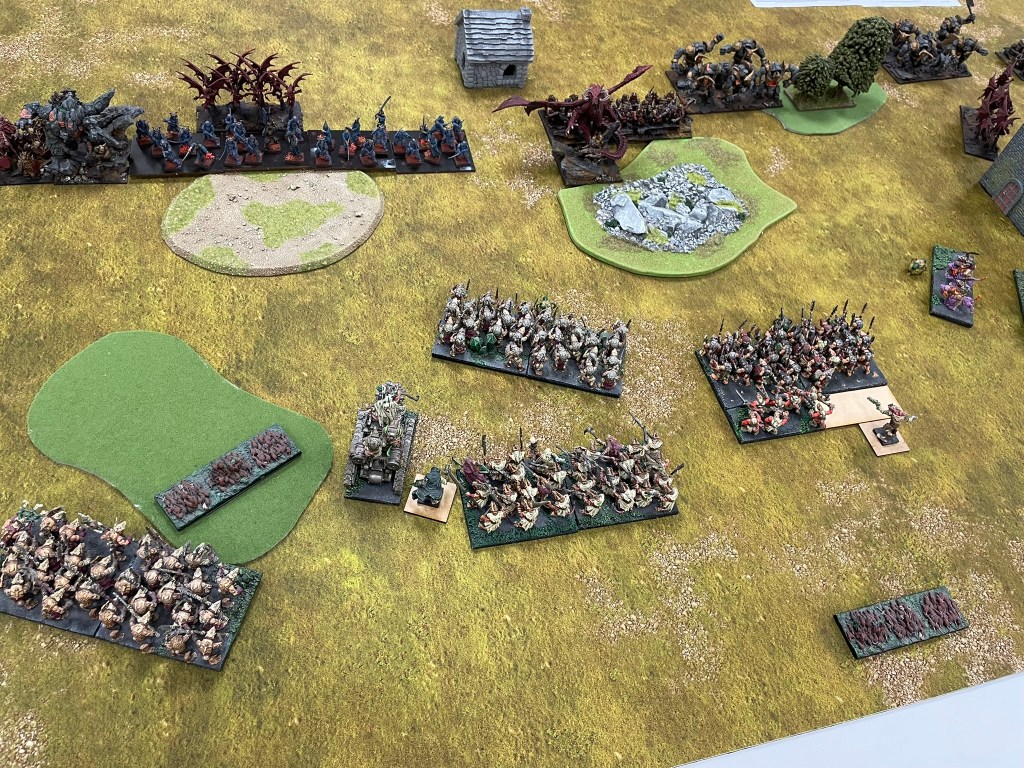
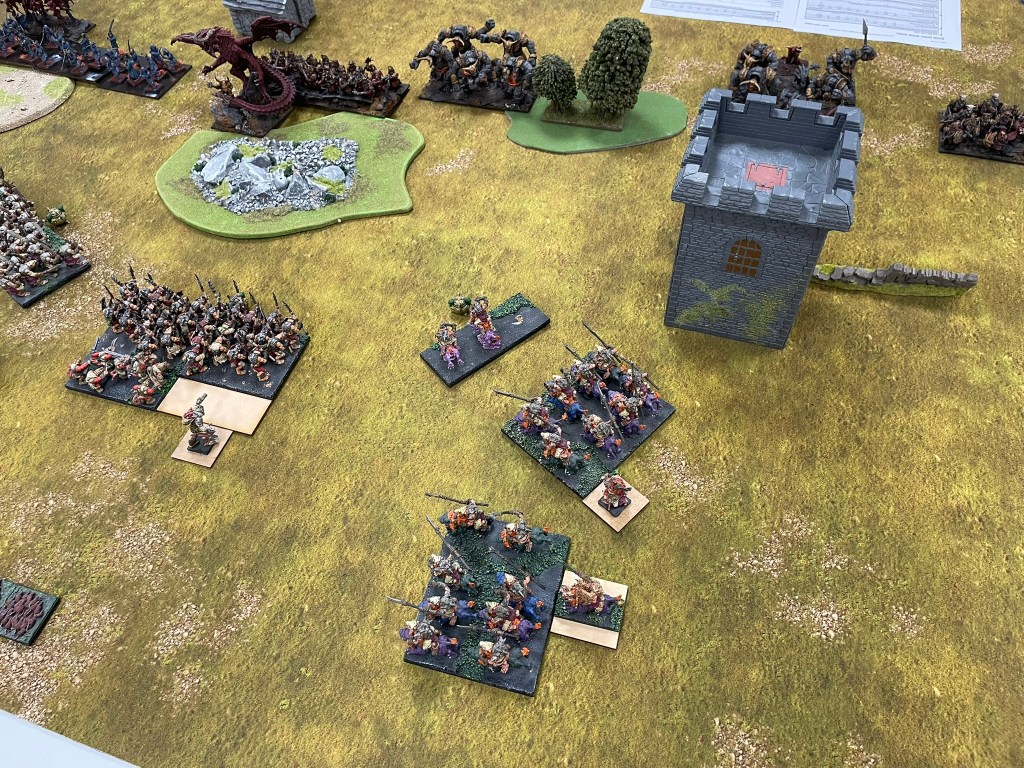
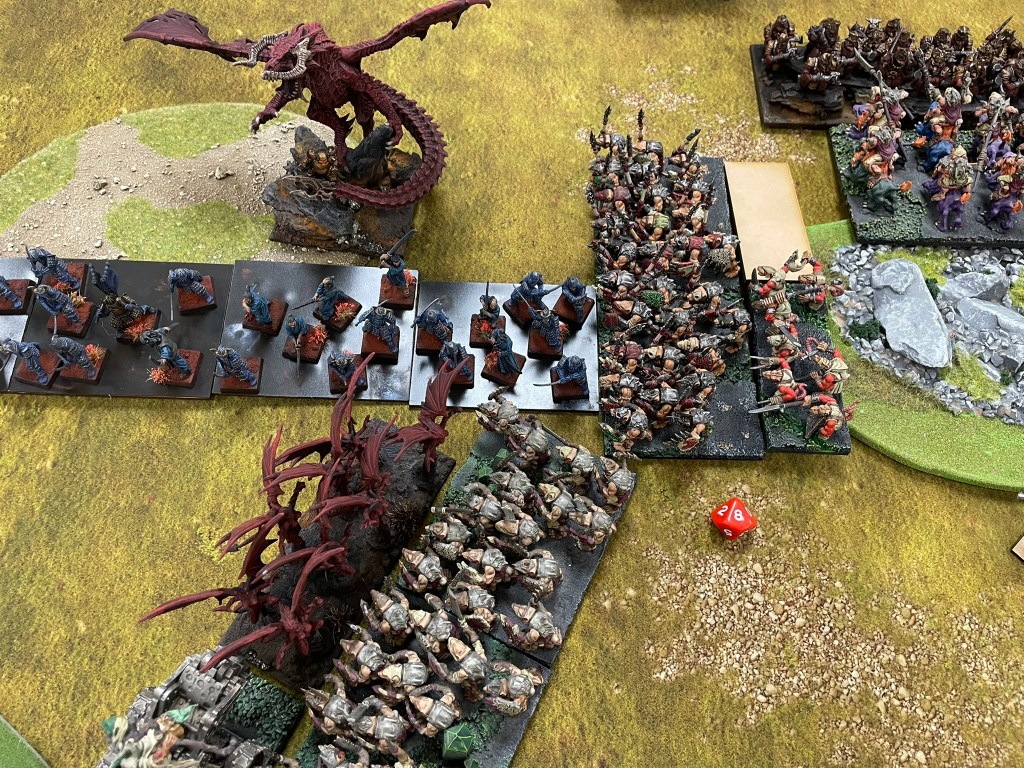
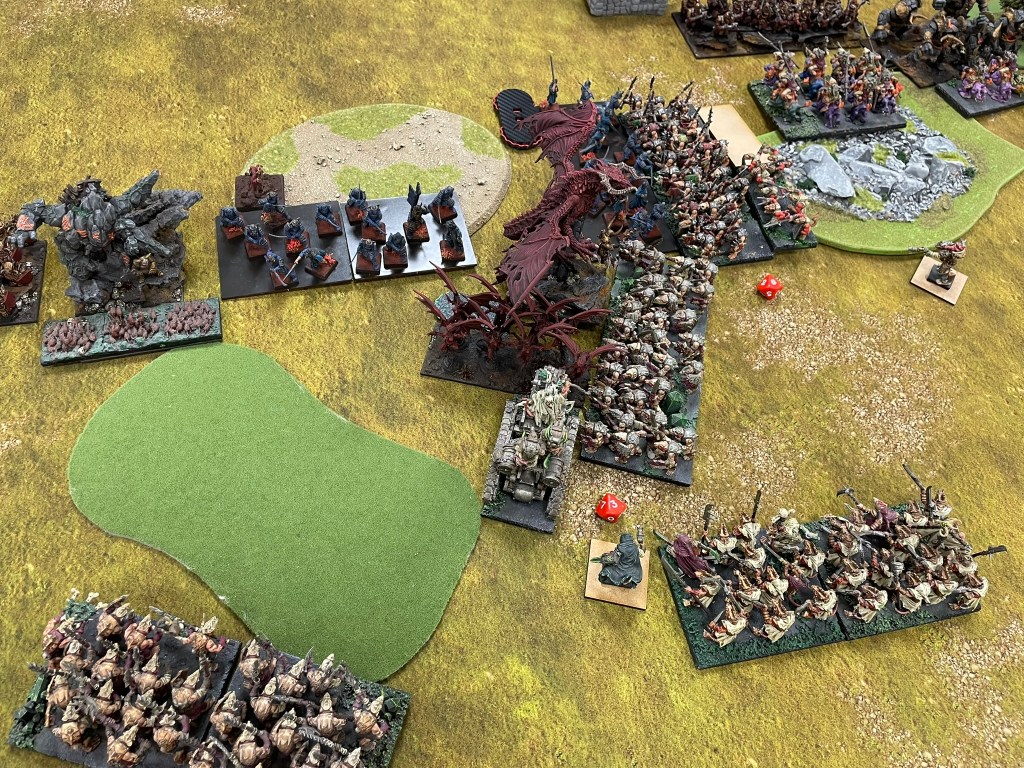
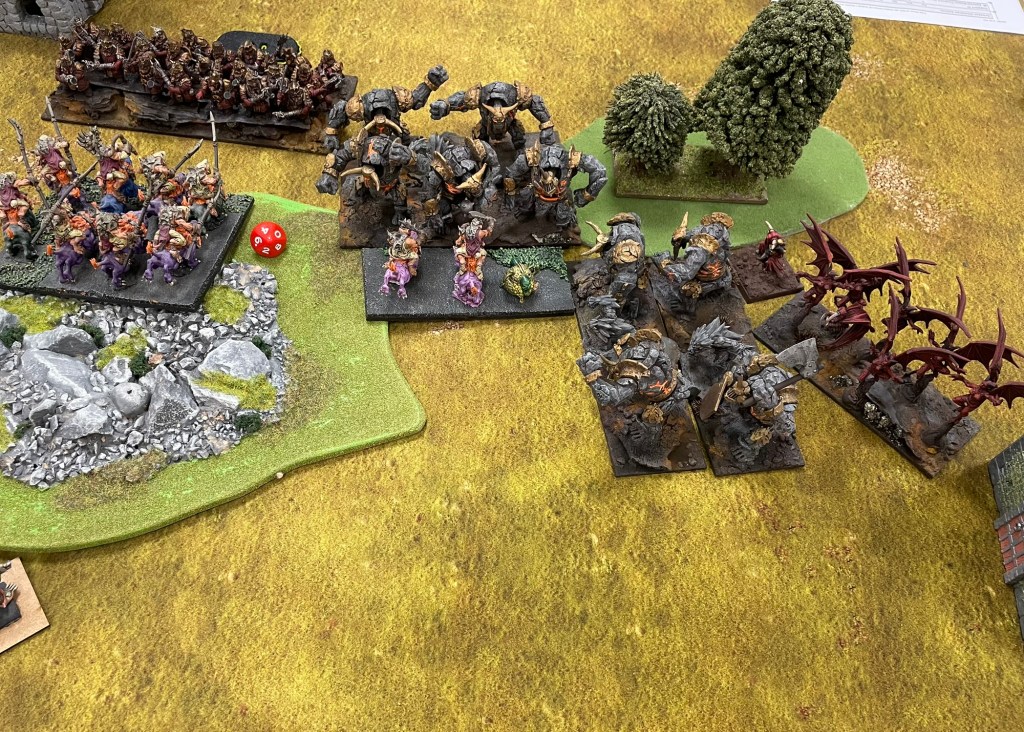
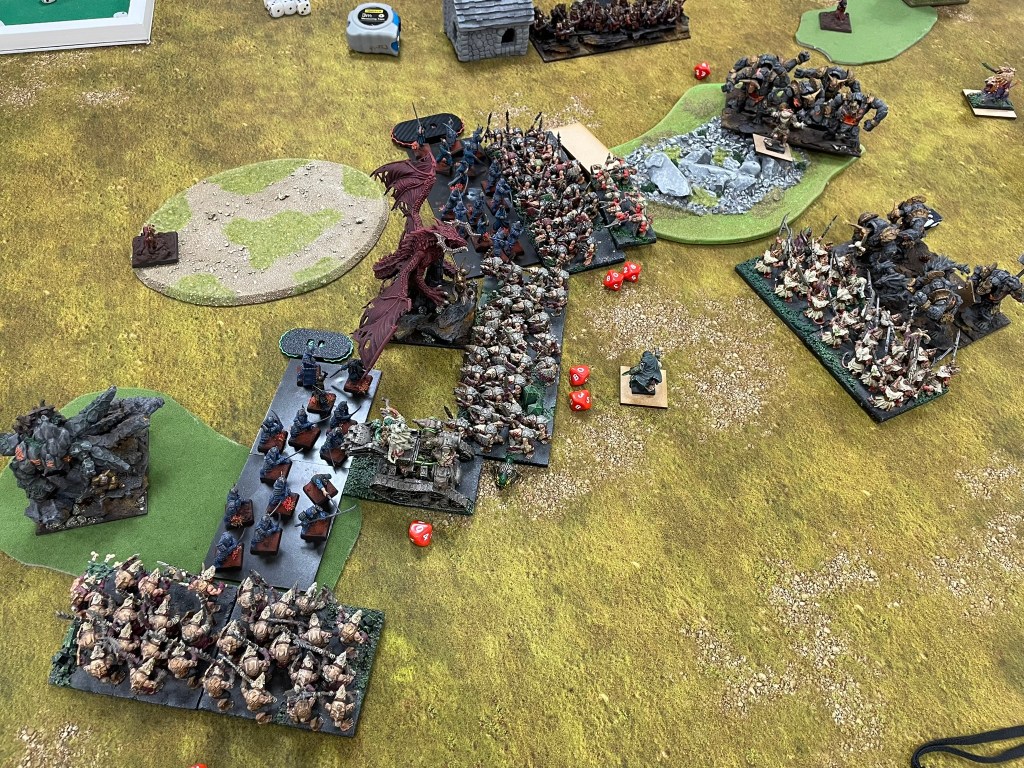
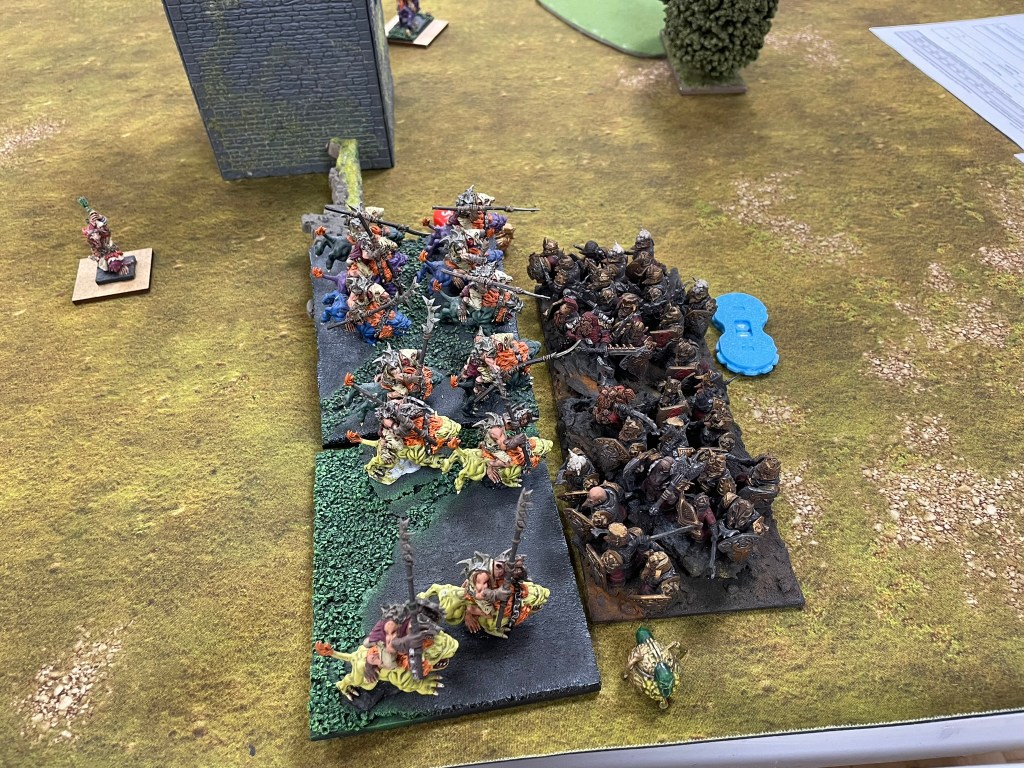
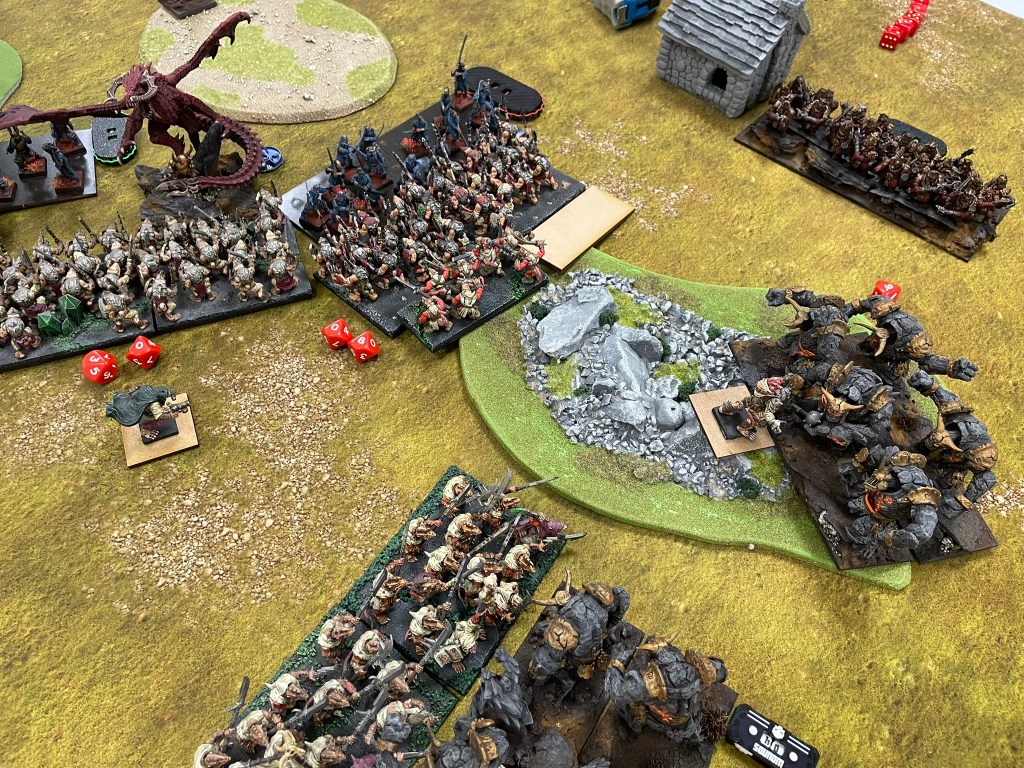
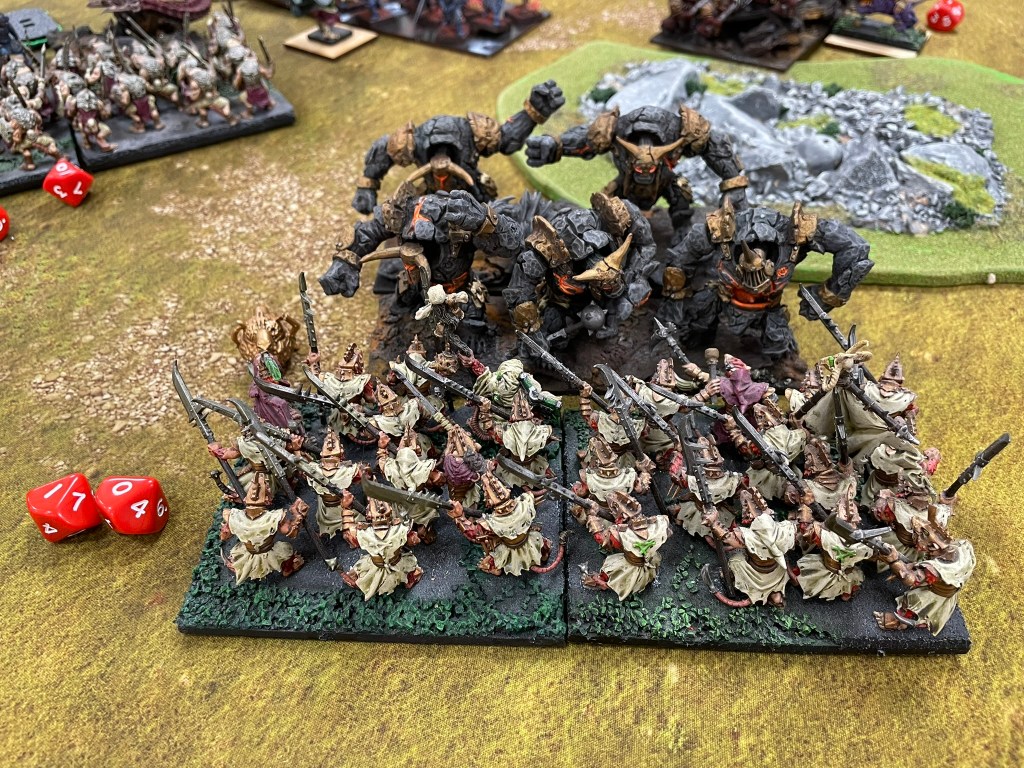
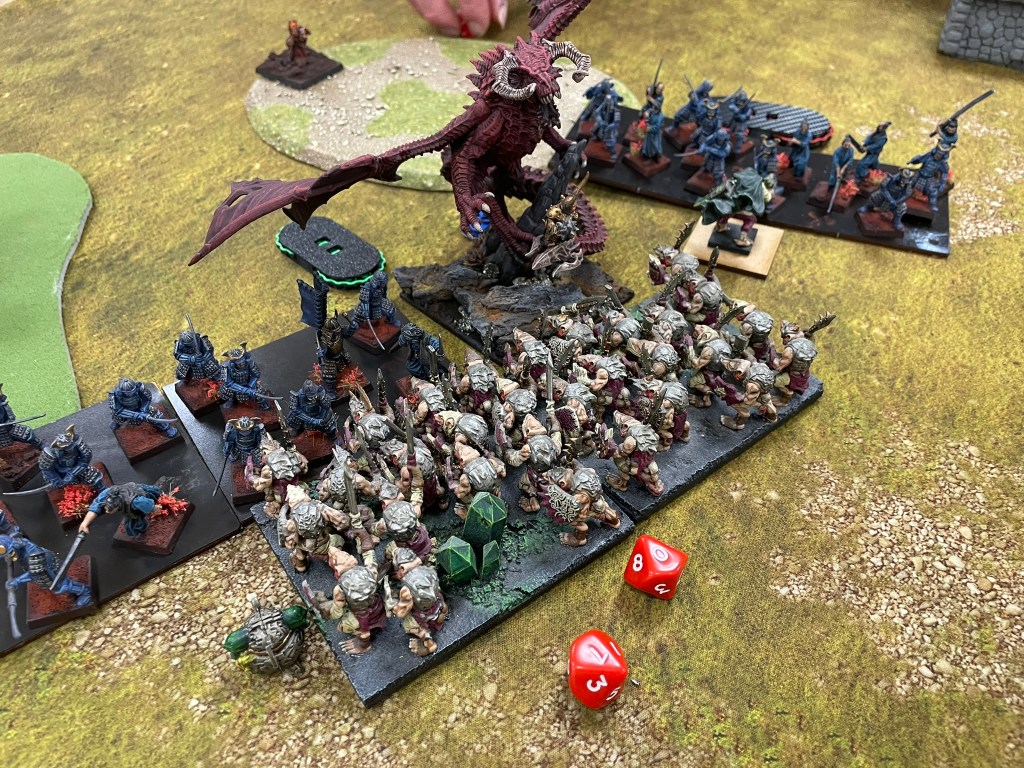
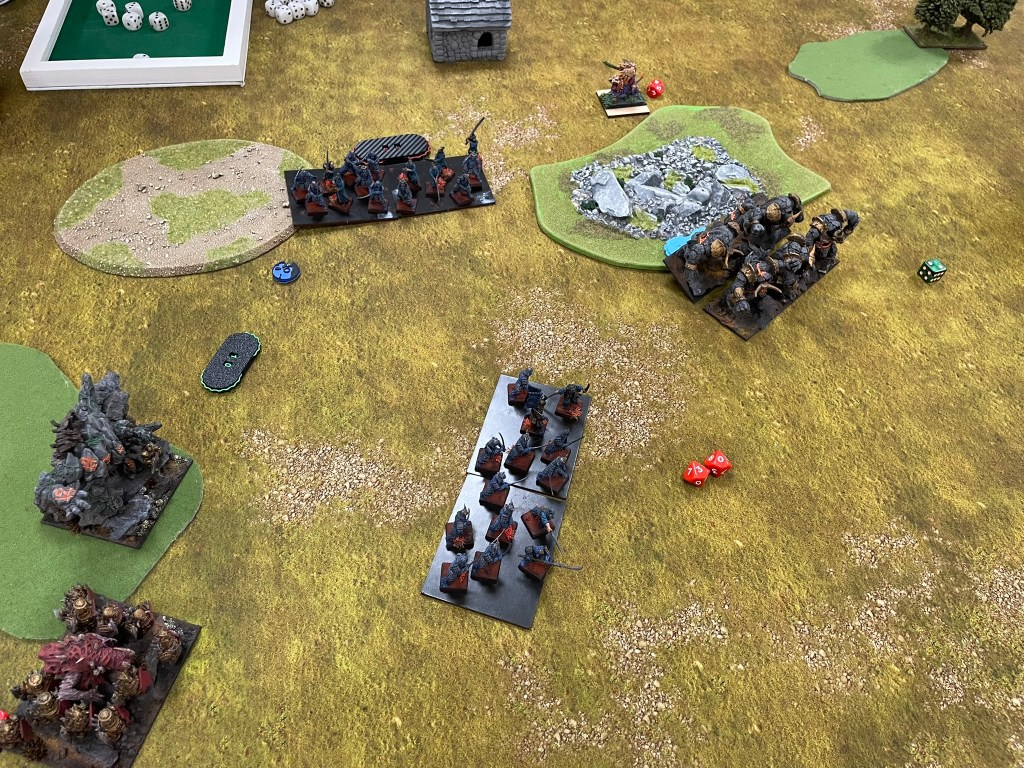
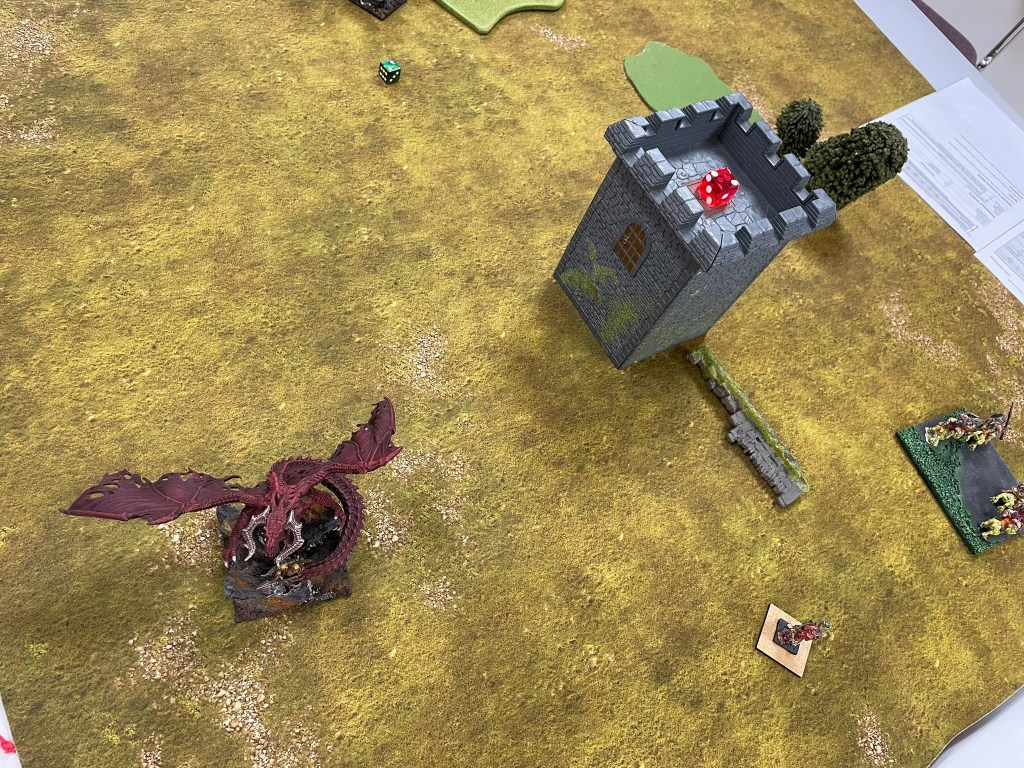
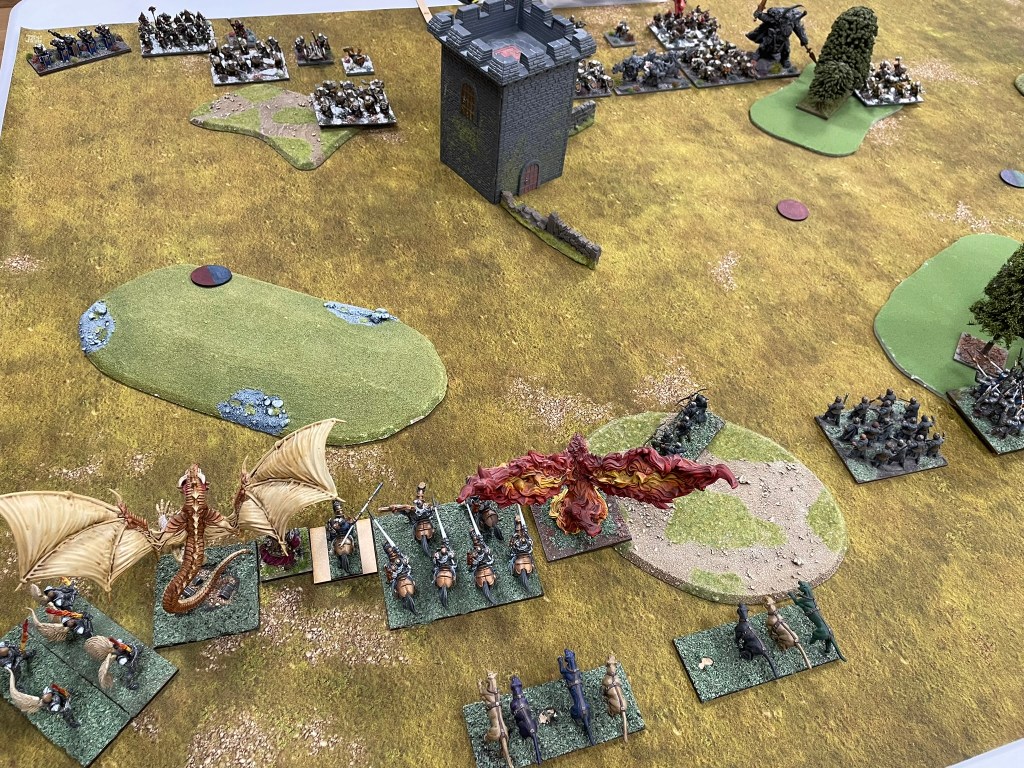
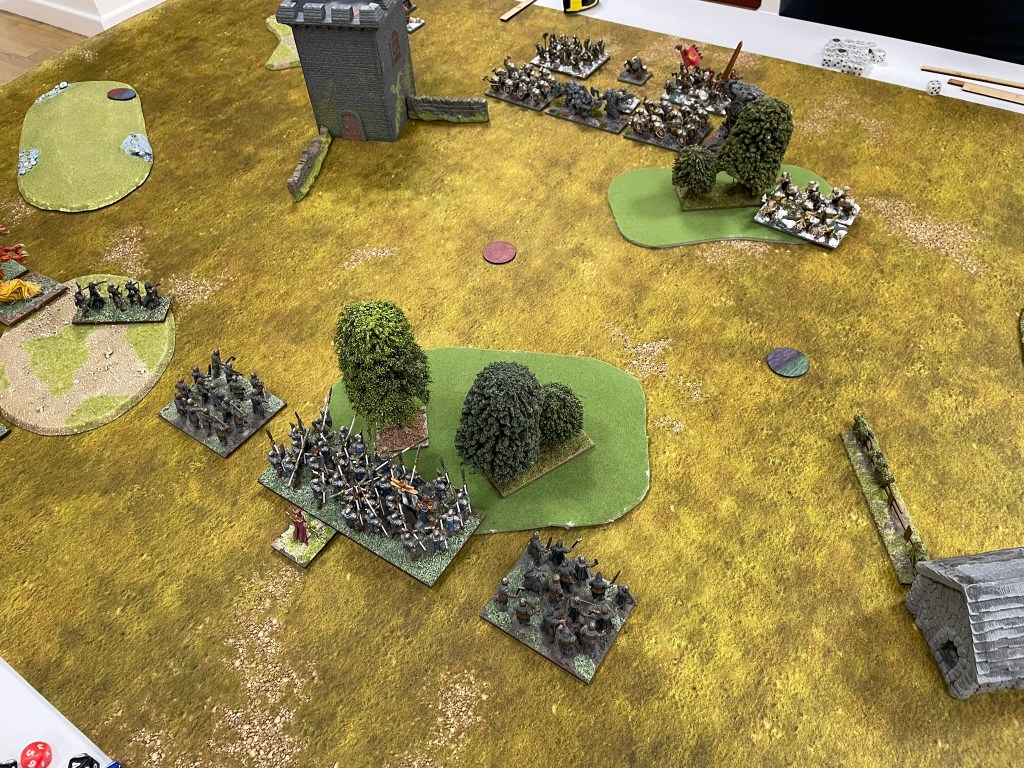
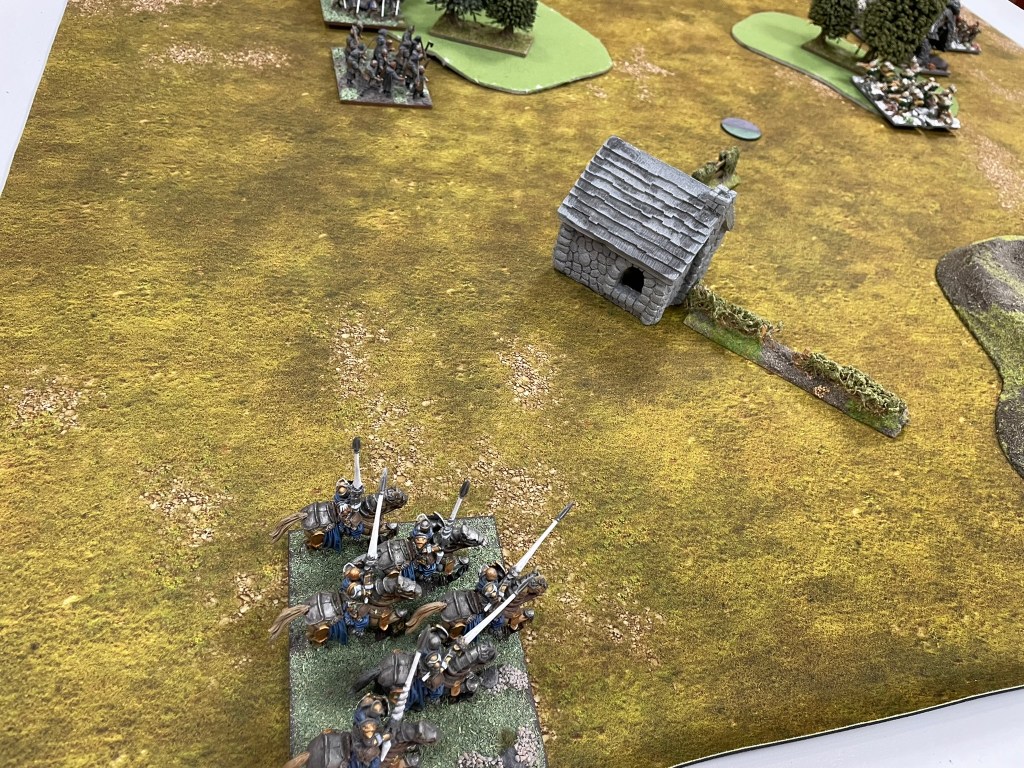
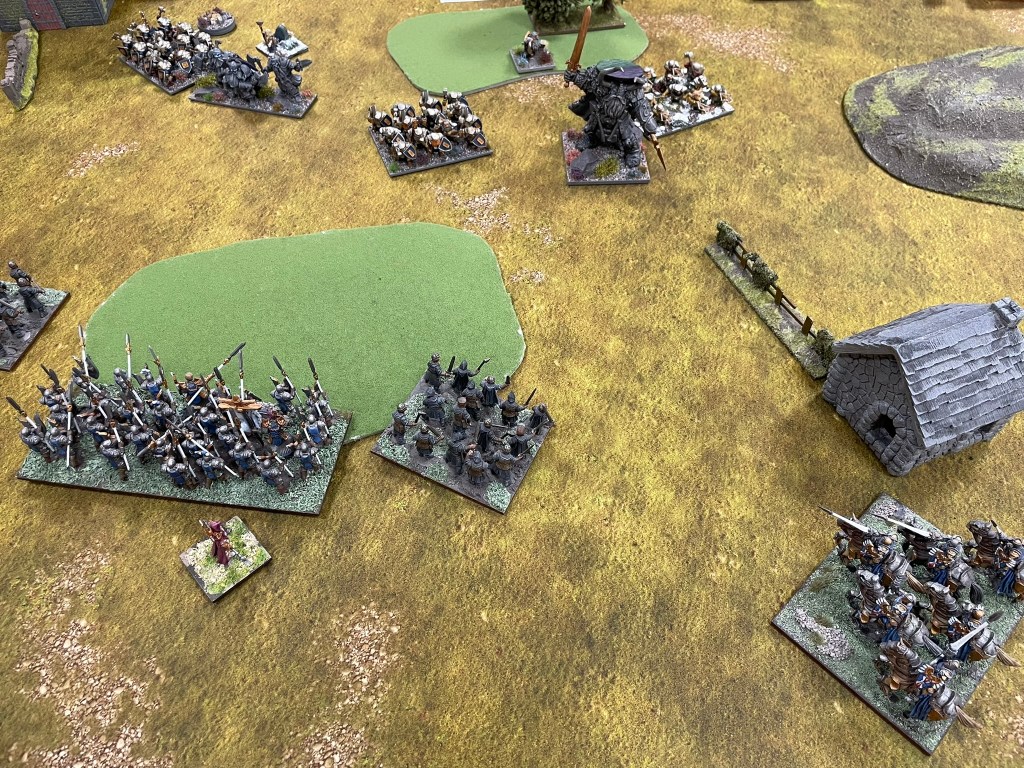
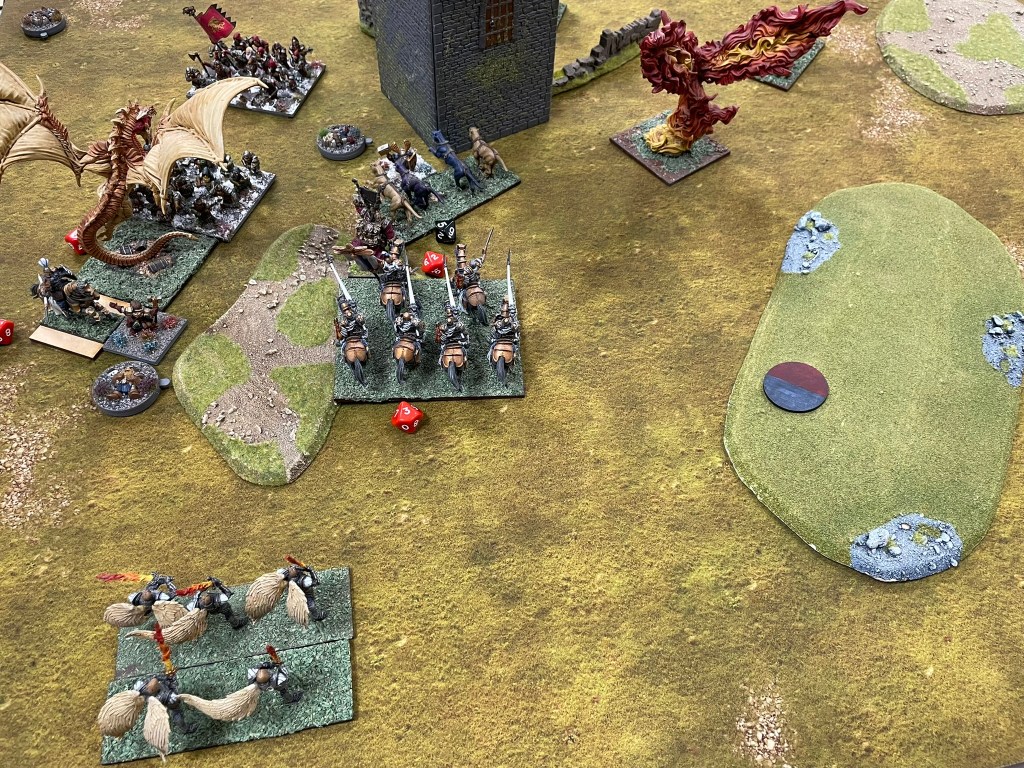
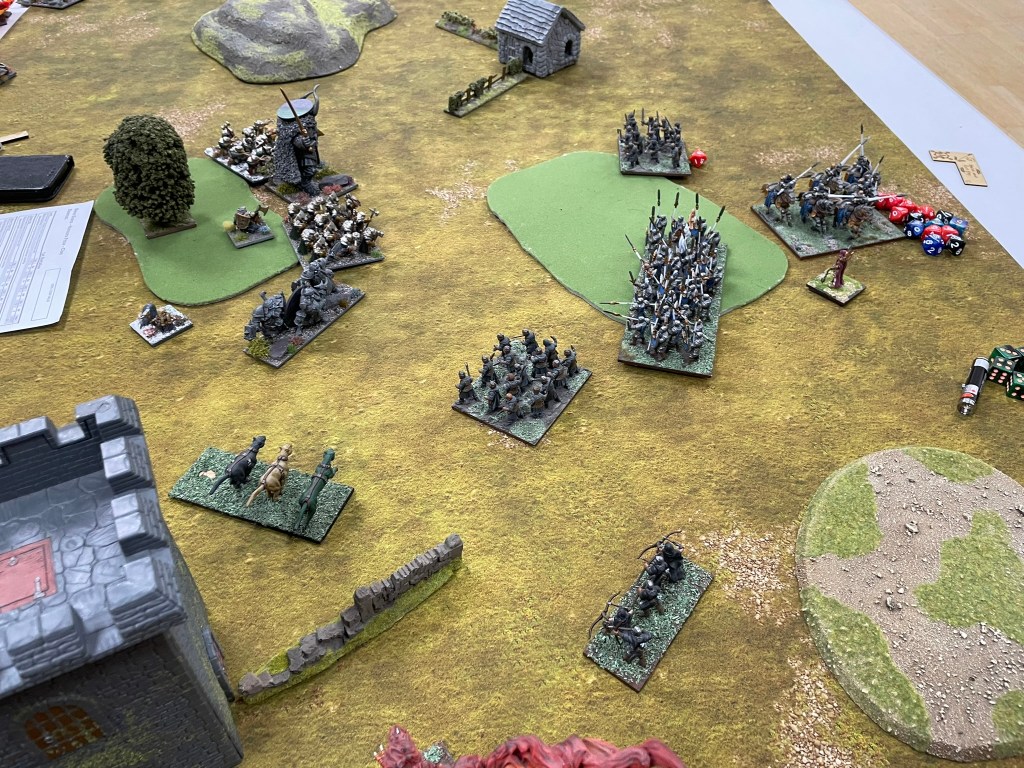
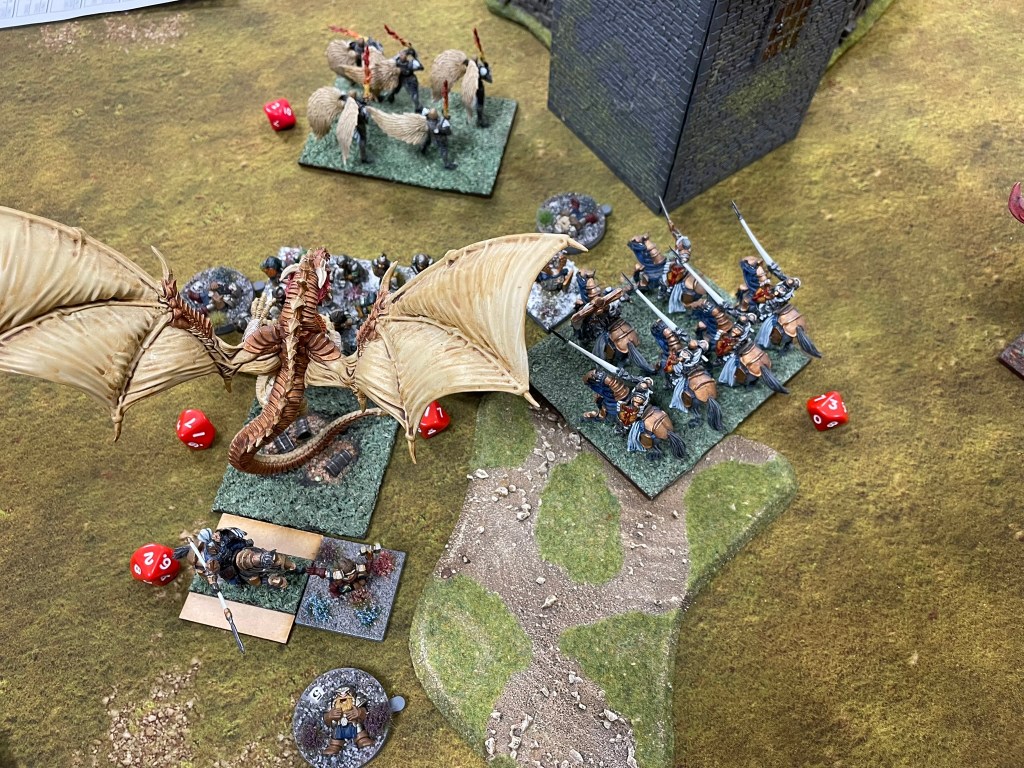
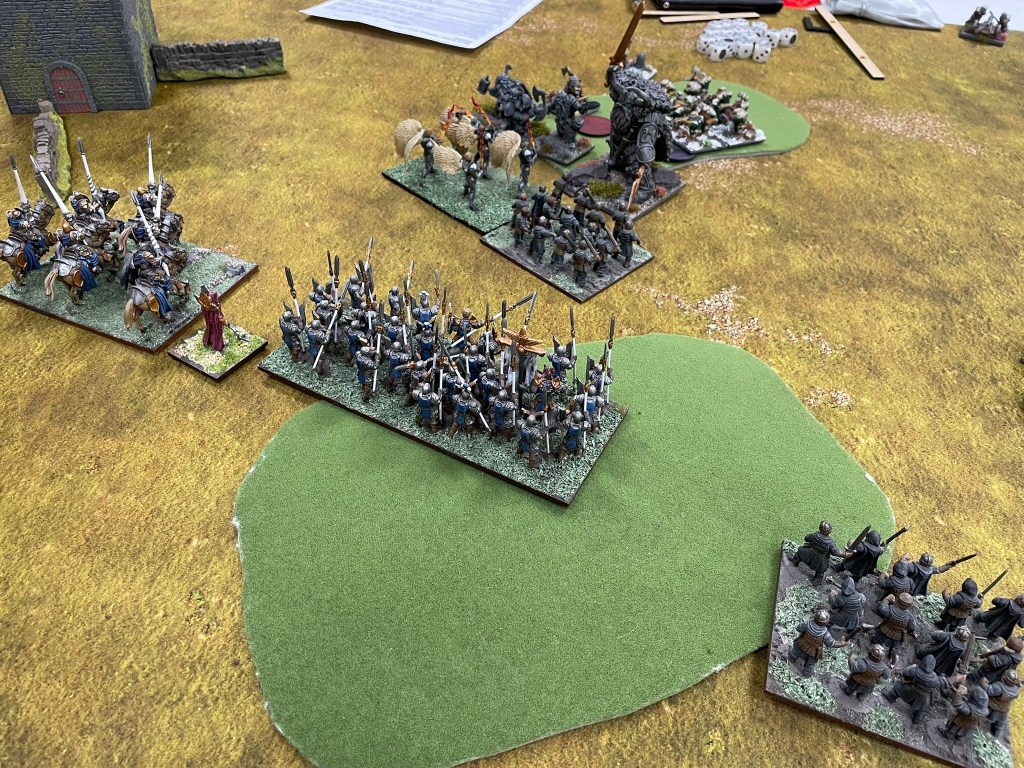
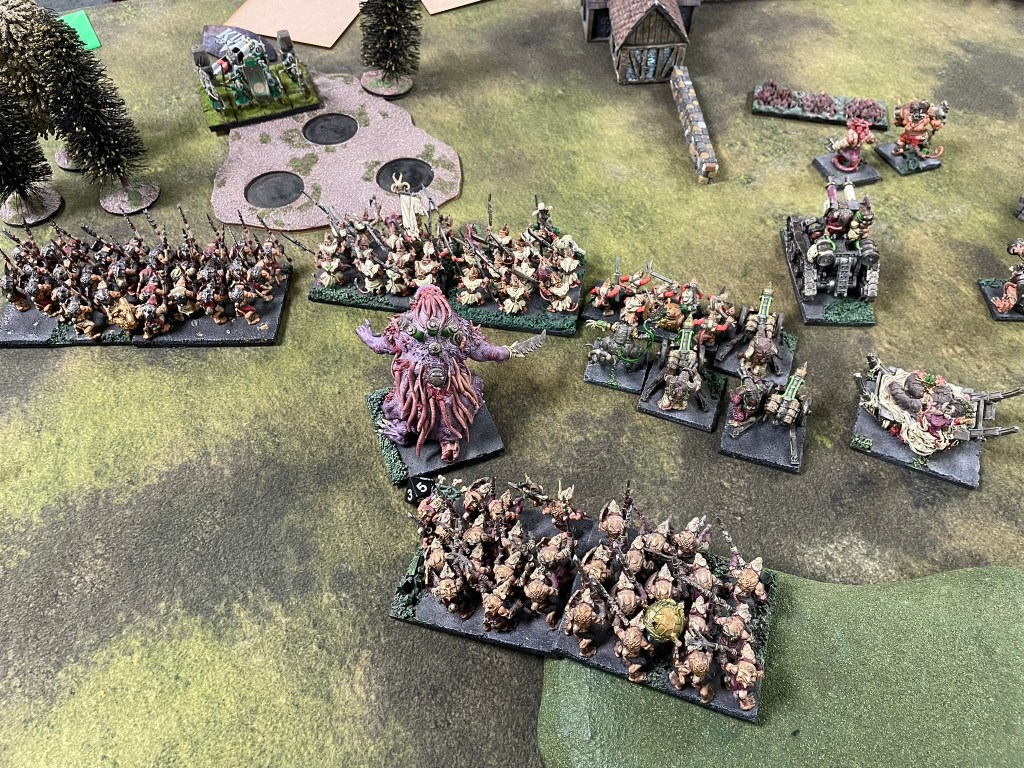
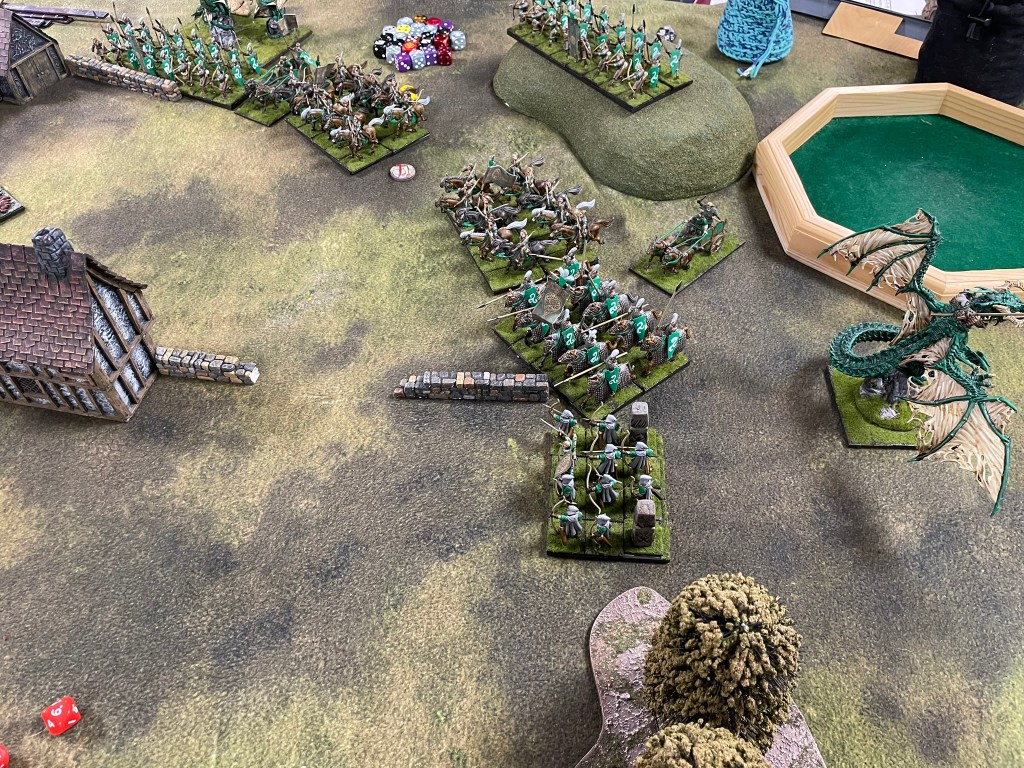
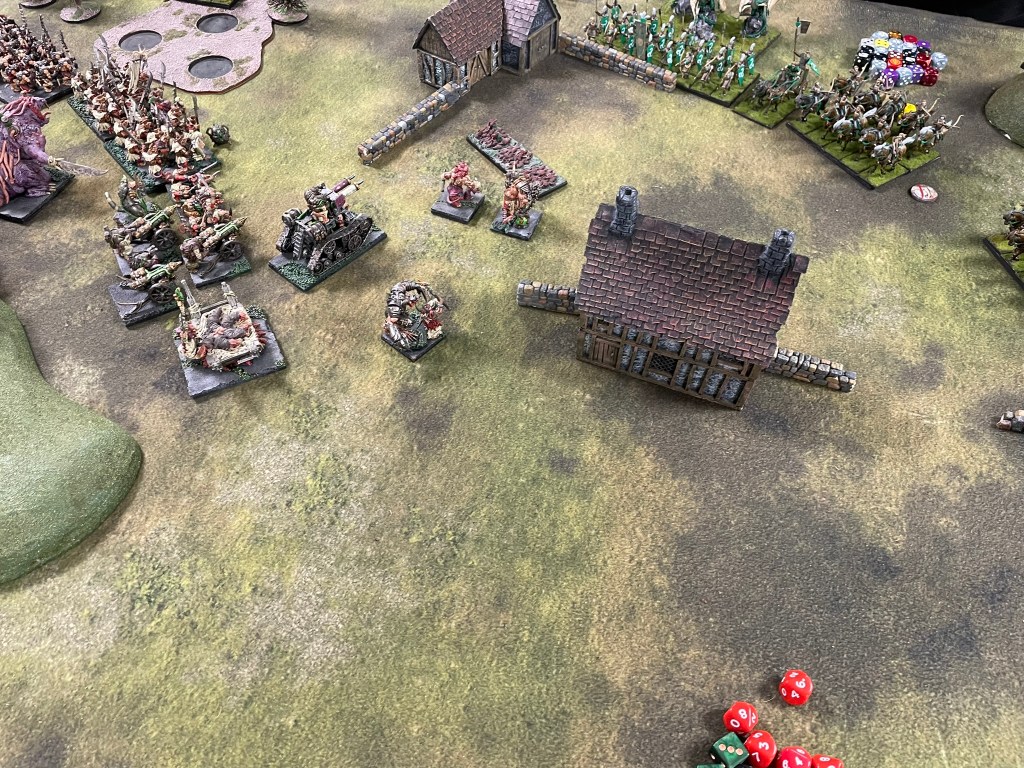
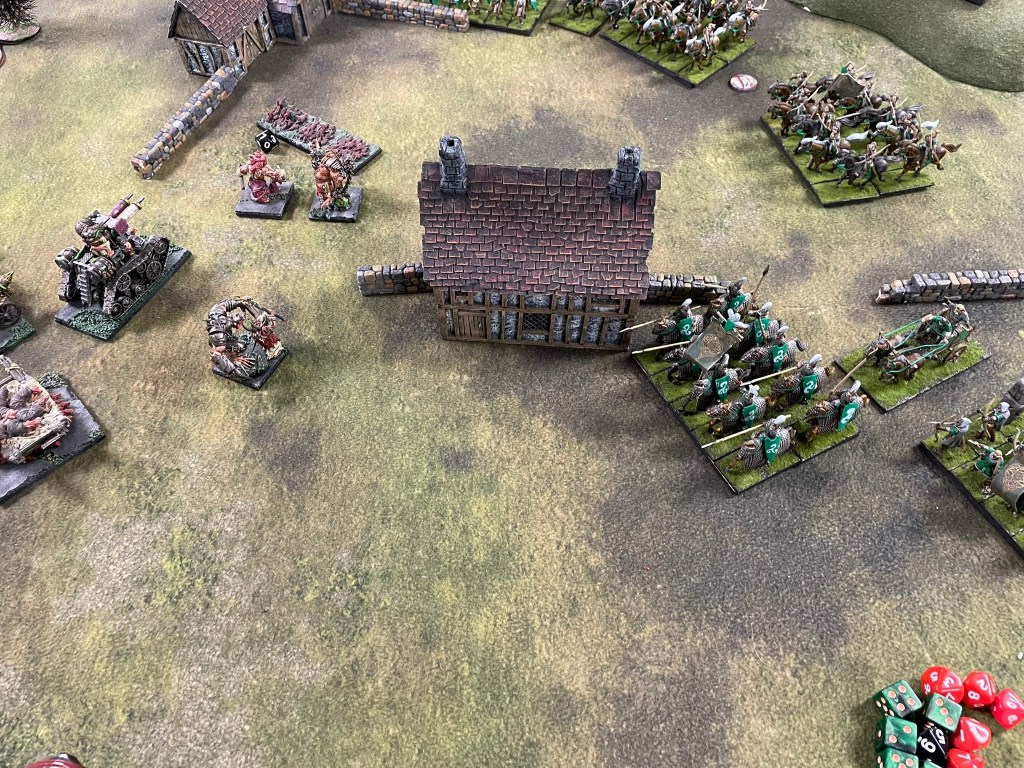
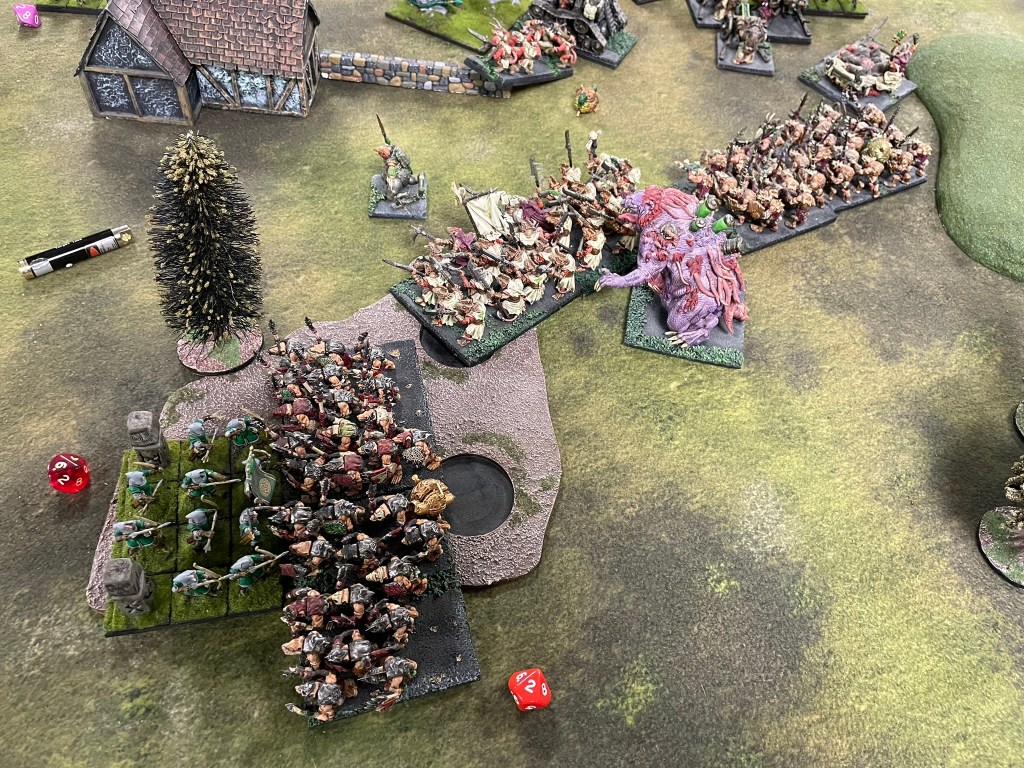
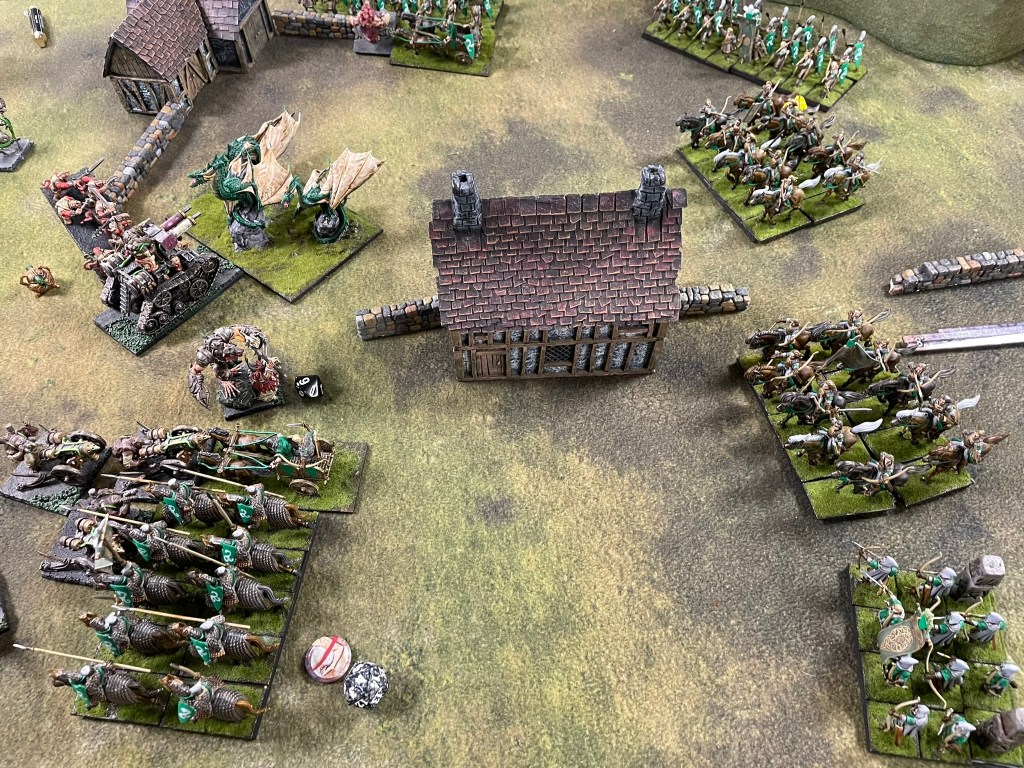
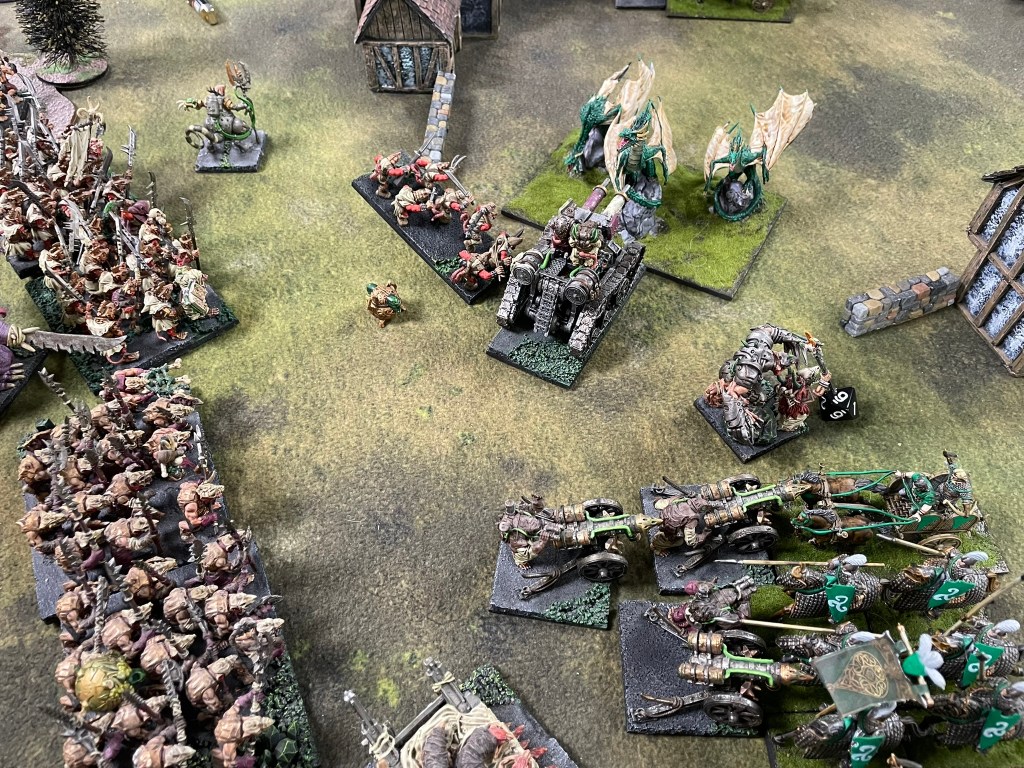
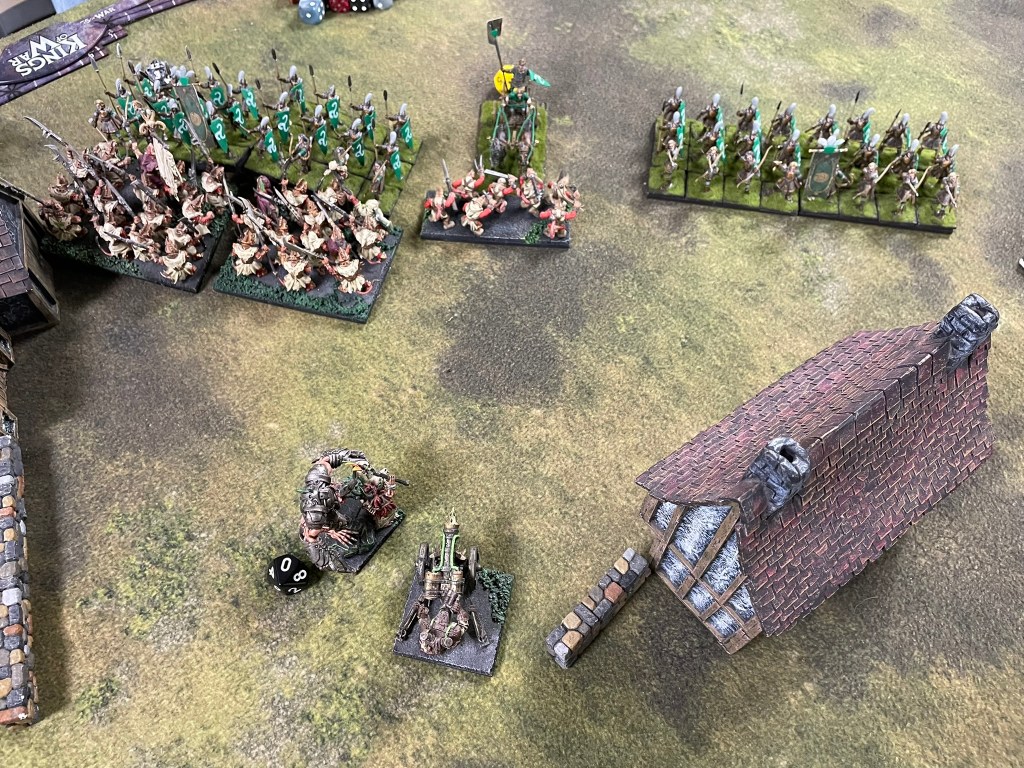
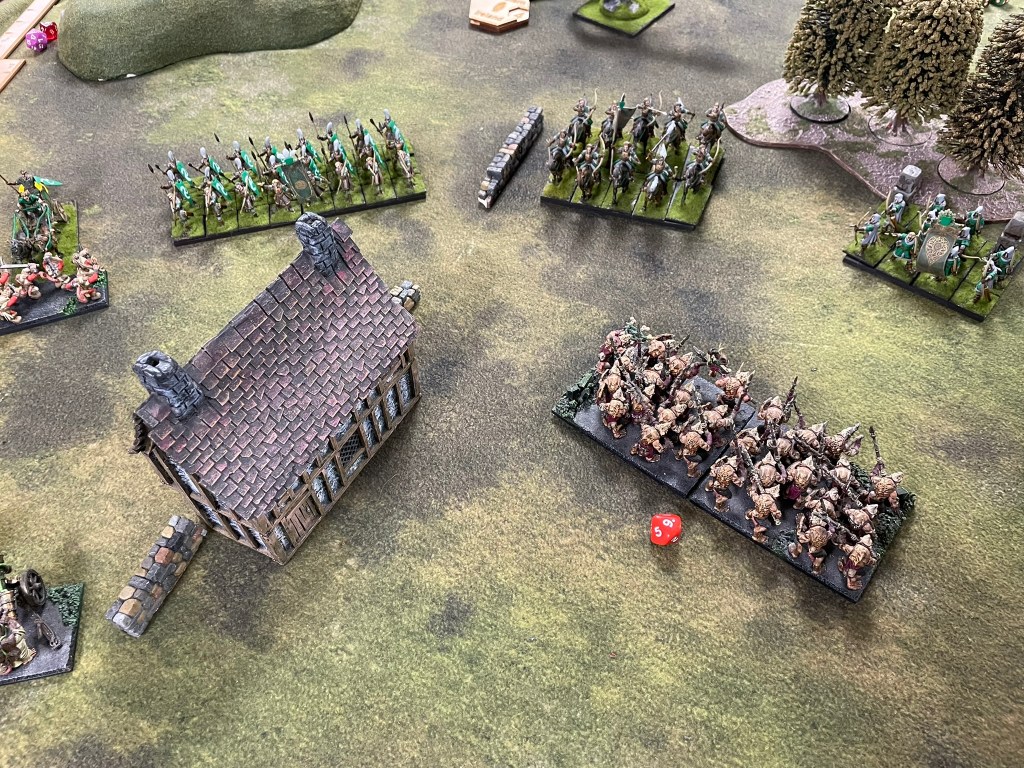
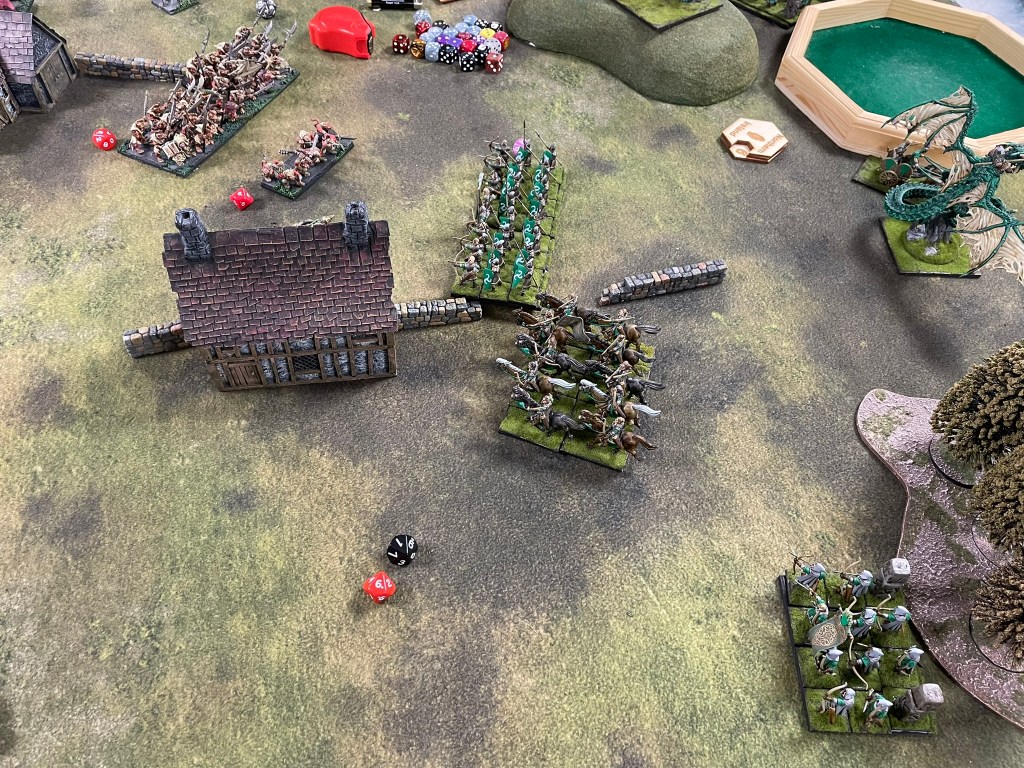
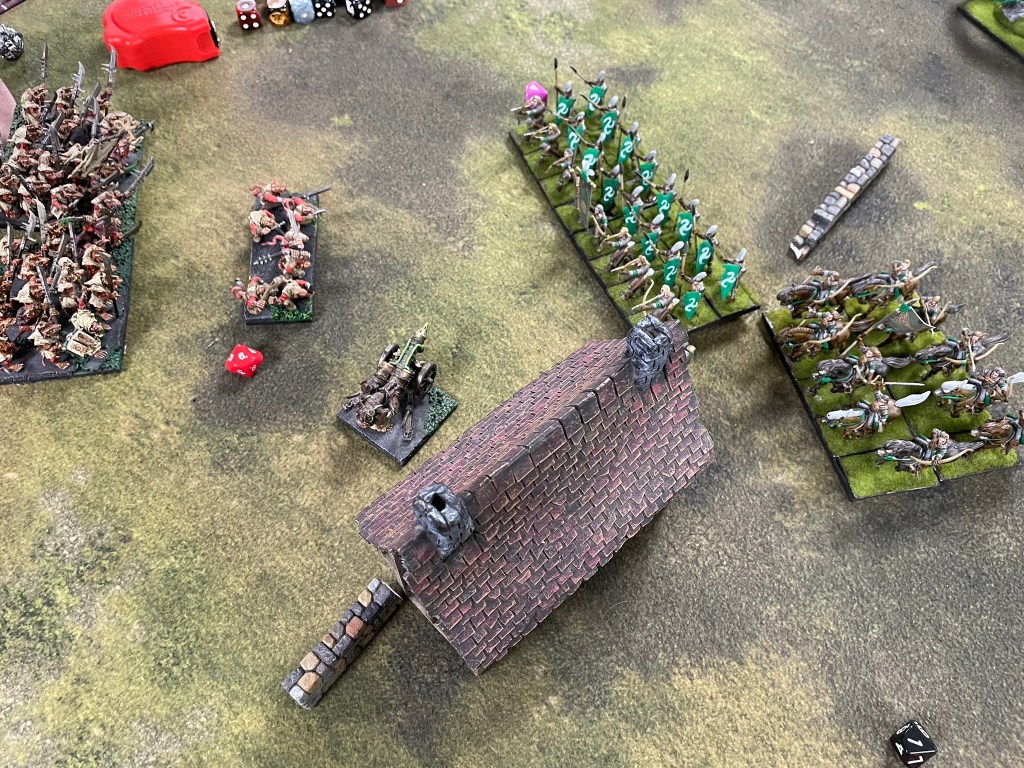
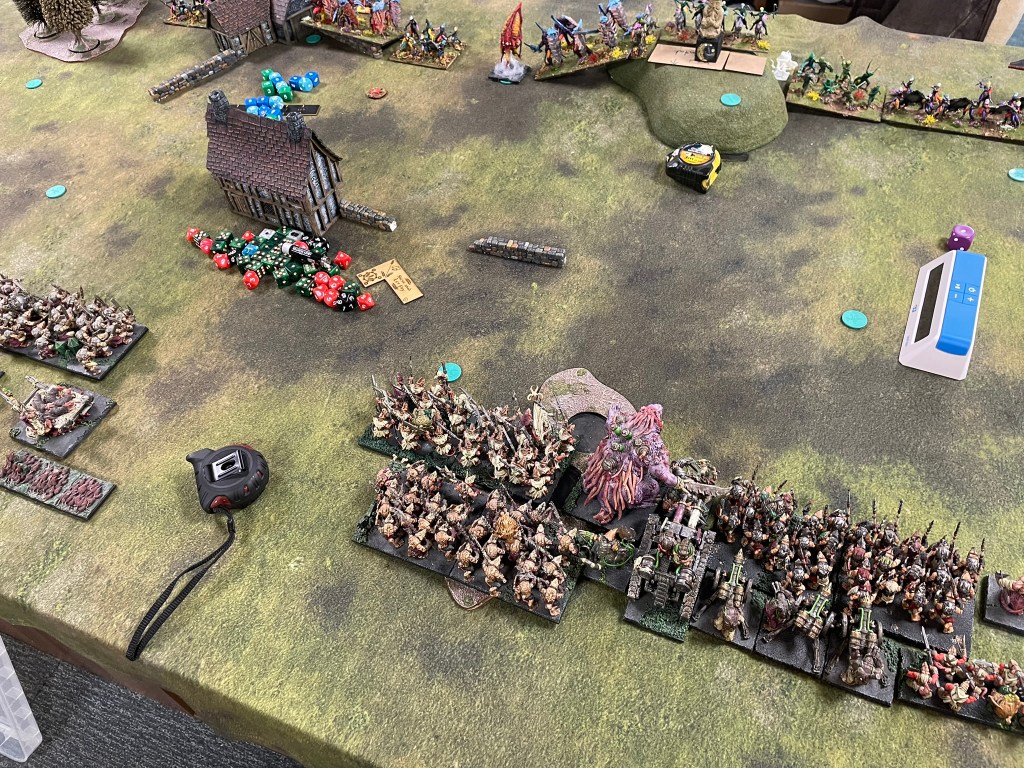
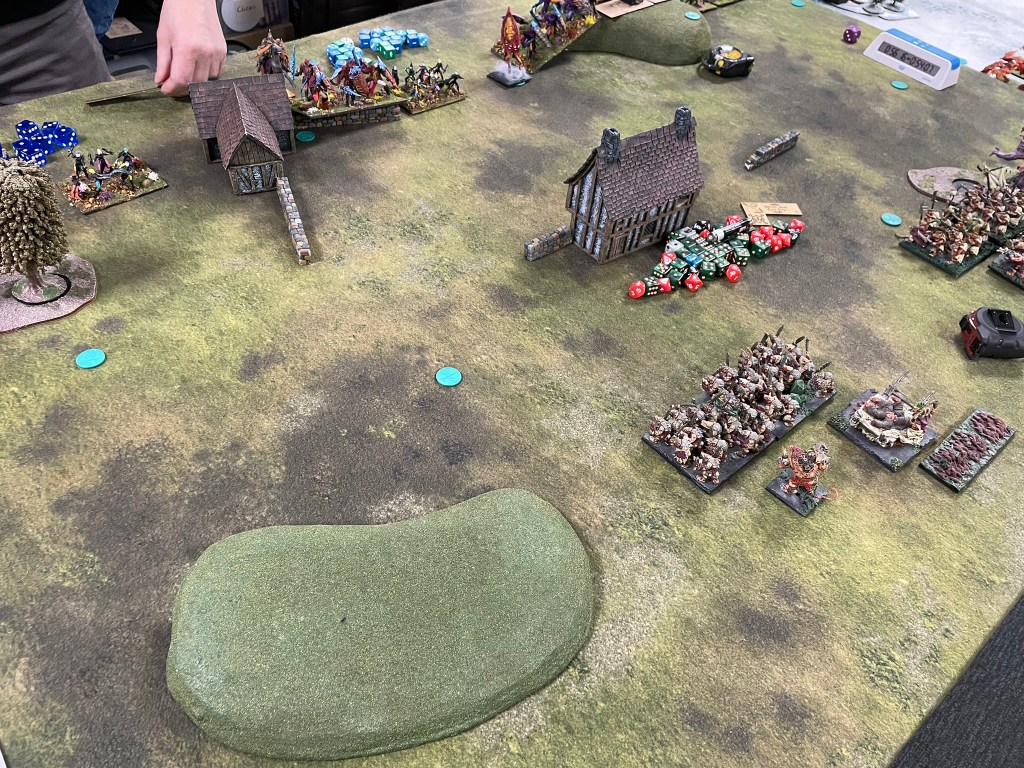
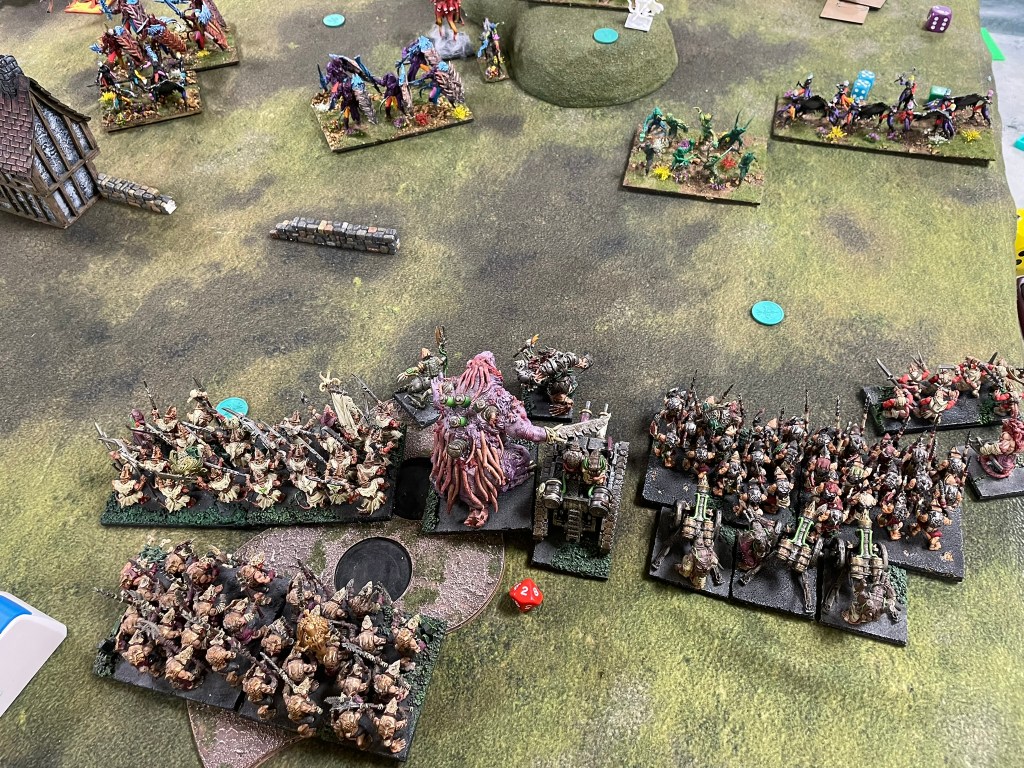
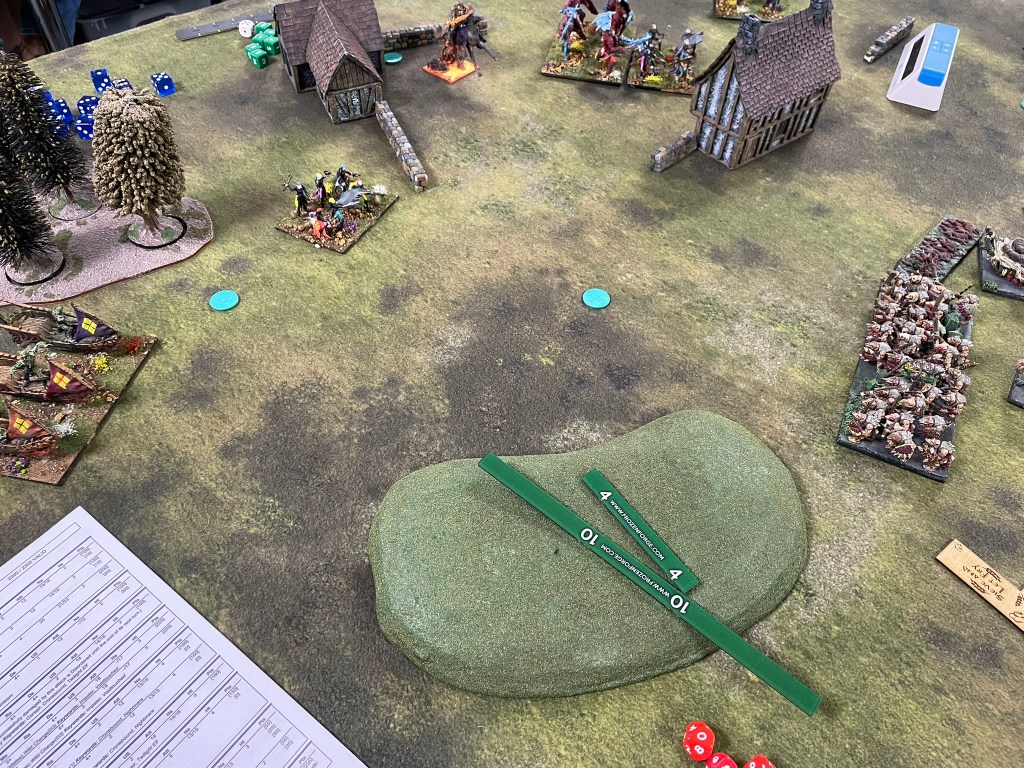
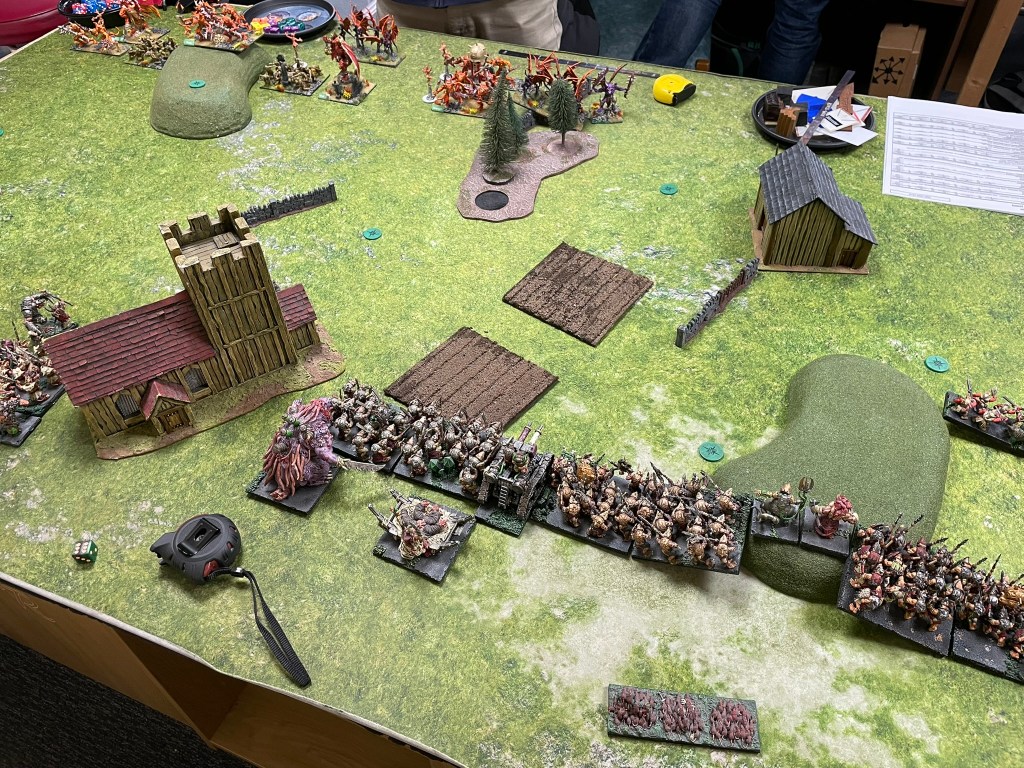
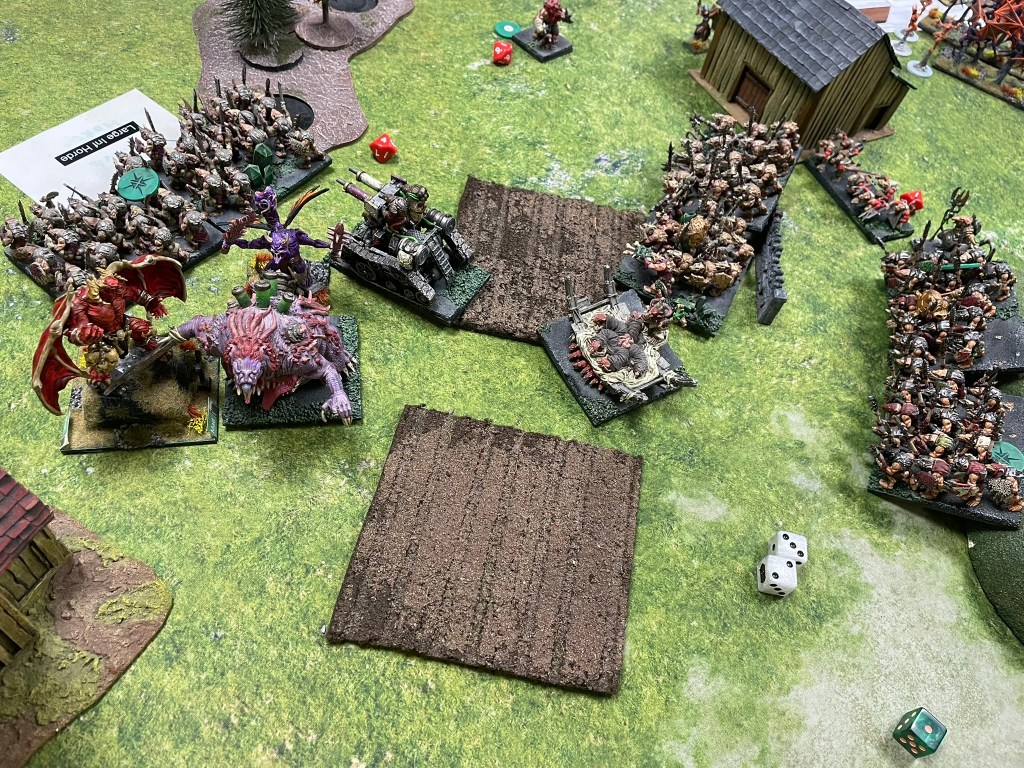
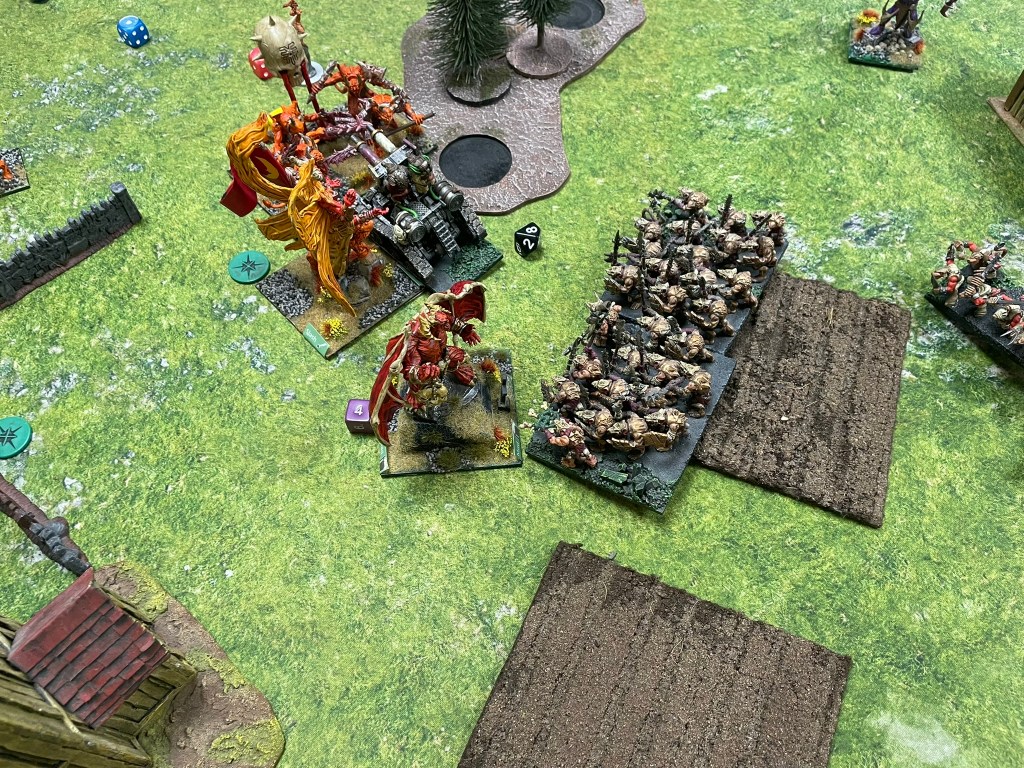
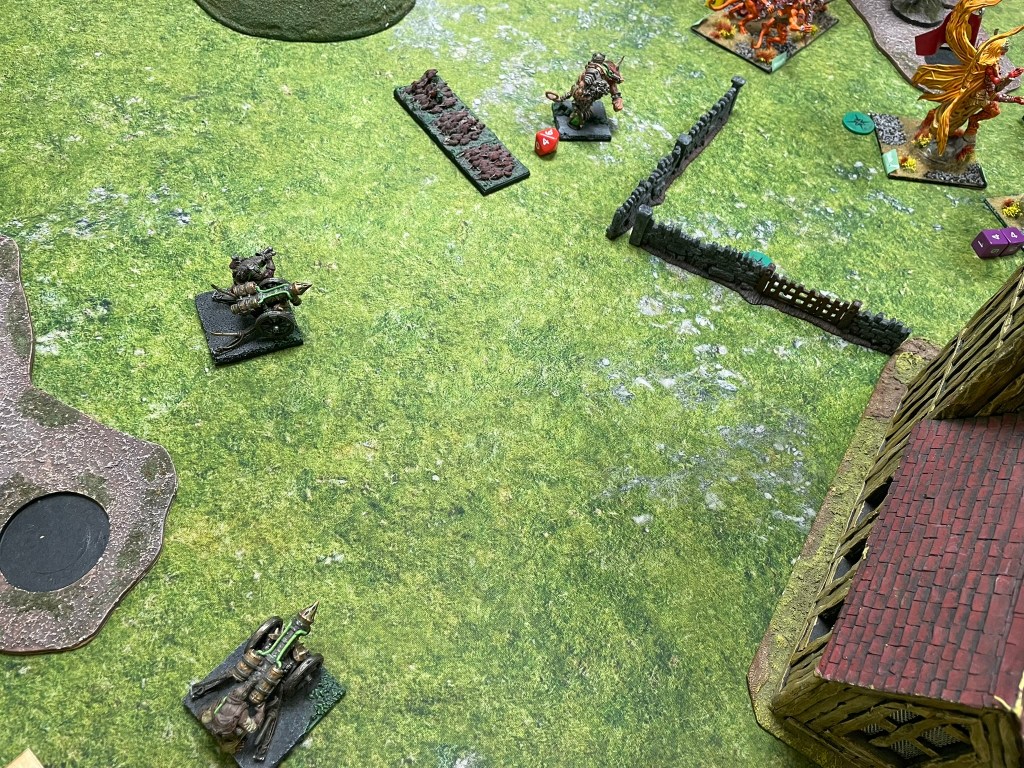
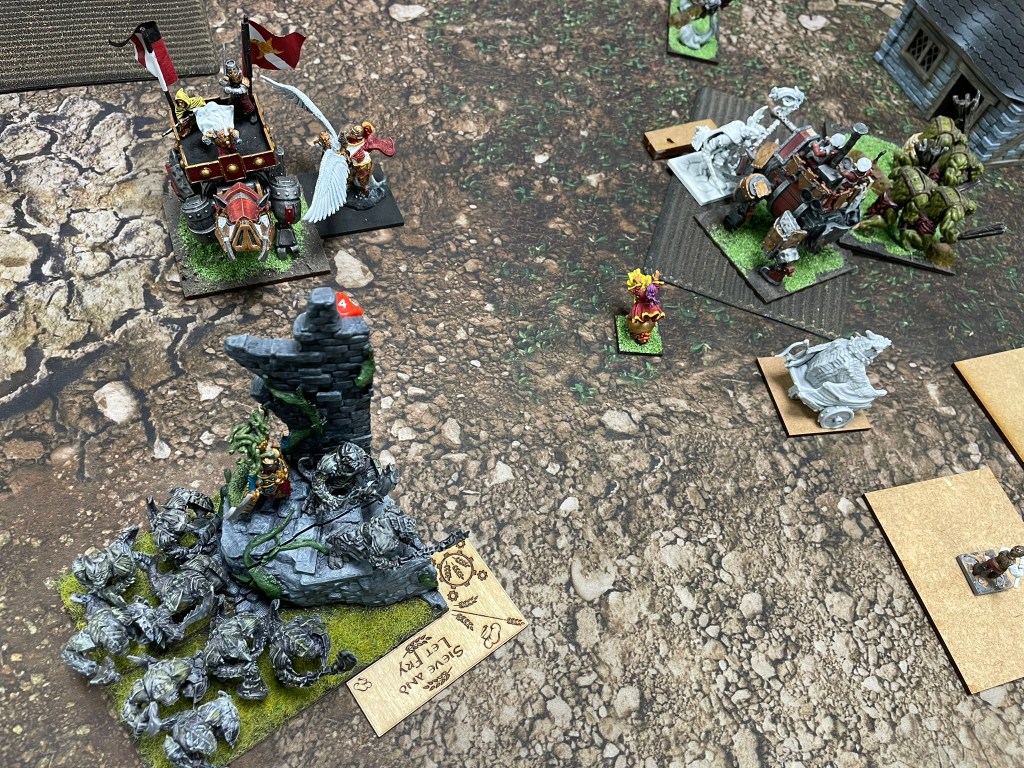
I’ve provided some pictures from the game, but none from the army, as I intend to refresh the entire thing, possible with a view to taking it to Clash of Kings in September, so there’ll be plenty of time to share progress in later posts.

To keep up with what’s going on you can follow @wizards_bookshelf on Instagram and Threads or drop you’re email below to subscribe.
The Last Moon: a Kings of War tournament report

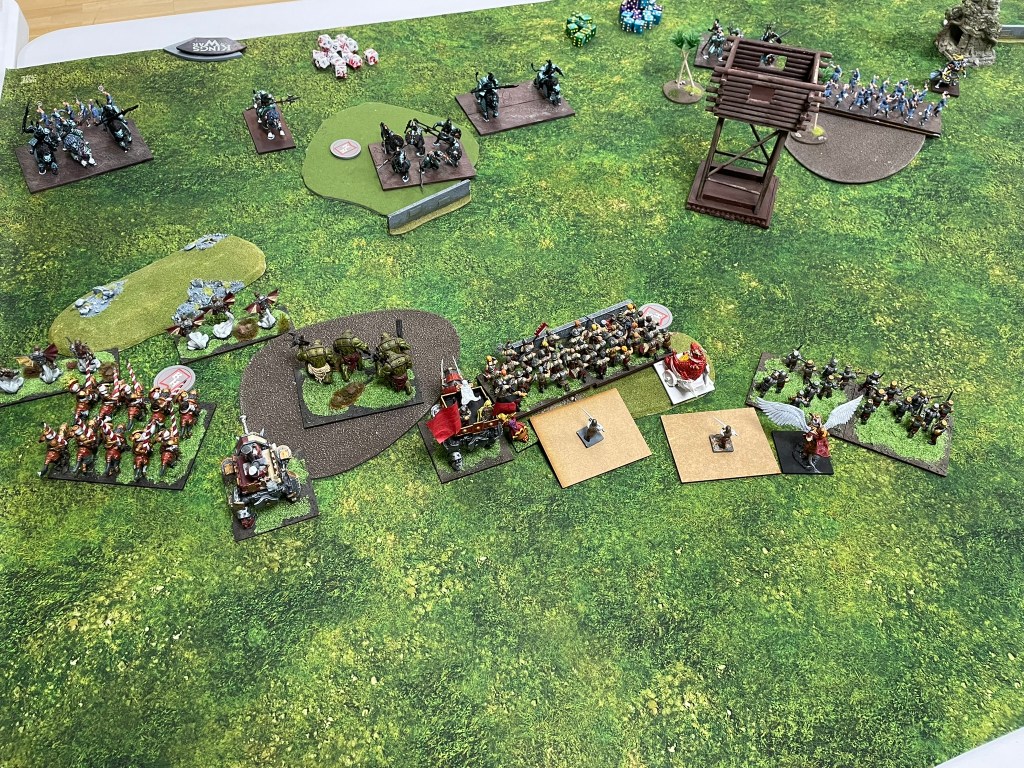
Last Saturday the final third edition tournament for Kings of War took place in Bristol. It’s been an absolutely fantastic few years and now the rules and army lists for fourth edition are out in the world it was great to give the edition a final send off. Having started to work through the new army lists I decided my rats would get the honour of playing the final games. There’s quite a lot changing, mechanics-wise, for rats in fourth edition so I wanted to savour the joys of plague pots and multiple sources of rally before it all disappears.

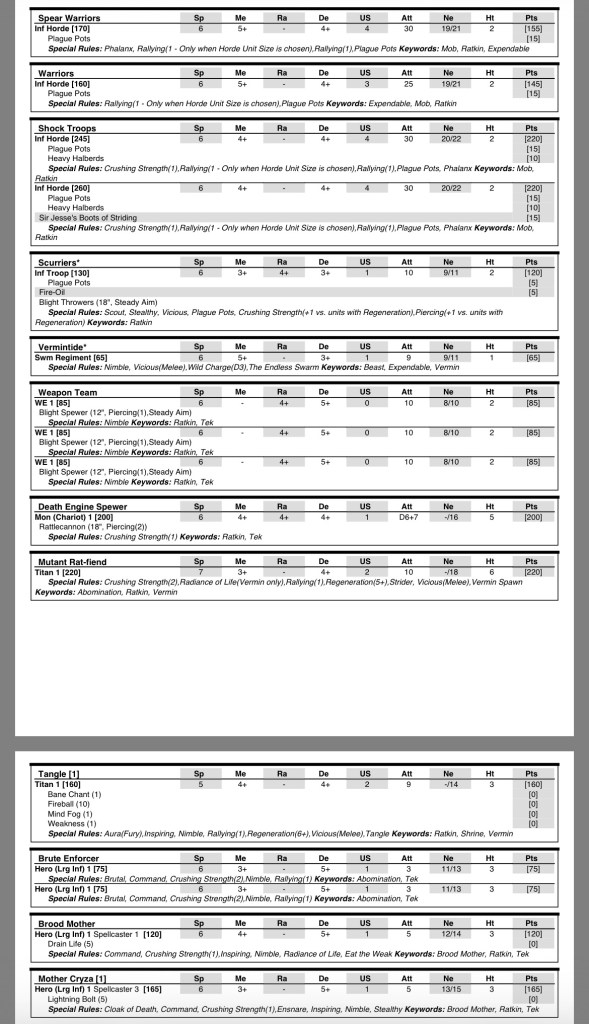
I took the same list I’ve used for most of this year it’s been that enjoyable. The one thing I did notice this time around was that it still included a white command dice, completely irrelevant now. There wasn’t much to be done with twenty points, so I added Sir Jesse’s Boots to one of my Shock Troop hordes (which I failed to use in the first two games as my elites were in the wrong places) and Fire Oil to my Scurriers (that actually managed to do one wound on a regenerating unit that I may have been far too excited about).

Screenshot

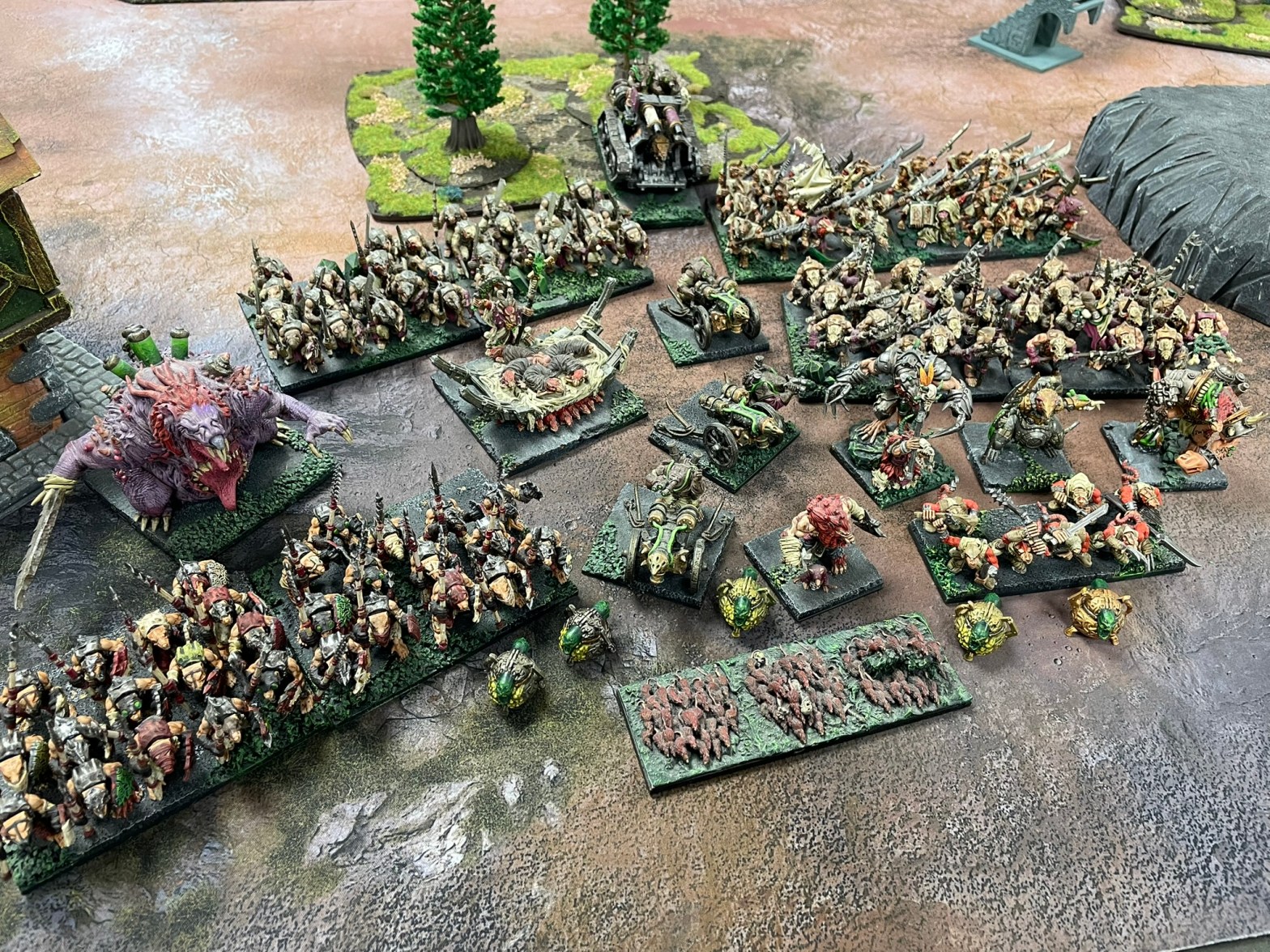
Playing this list has been really fun and through it I think I’ve found the sort of play style that works best for me. Having a mass of rats that push forward to claim objectives whilst around them nimble characters and war engine teams cause chaos has become the order of the day. I’m hoping it’s an approach I don’t have to change too much in the coming days.

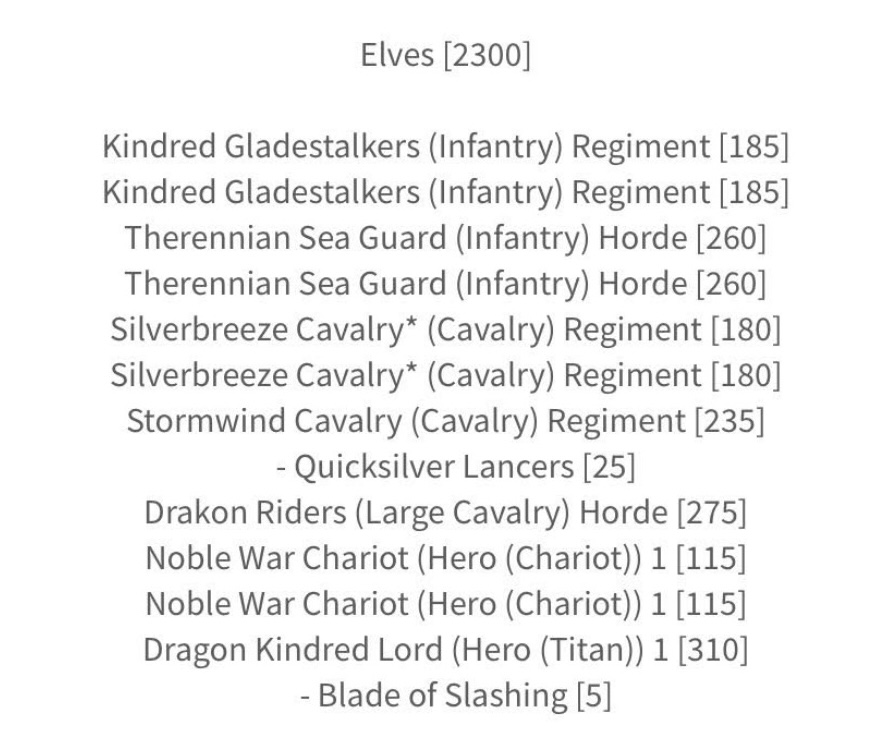
The first game was against a classic third edition Elven shooting list. Shooting is changing quite a bit in fourth edition, and I get why. I haven’t played against loads of these types of lists, by when I do there’s always a feeling of trepidation. The match up feels a little one-sided, loads of mobile shooting against quite slow-moving infantry with short ranged guns. The scenario went in my favour though, we were playing Invade, which meant my opponent needed to move units forward, so couldn’t keep moving his archers backwards to keep my troops at arm’s length for as long as possible.

The game started predictably enough with the elves shooting off my warrior horde in the first turn! Not a great experience. I would go on to lose the Vermintide and a Brute Enforcer before I could get stuck into the Elves properly. I’d deployed all of my troops on my left flank, whilst the bulk of the Elves ranged from the centre to my right. Only the dragon and a regiment of Gladestalkers challenged me for the left. In the second turn the dragon charged my Mutant Rat Fiend, which resulted in the dragon getting flank charged and routed by Shock Troops, whilst my spear horde dealt with the Gladestalkers. It was a great moment to have a couple of units over the centre line and some safe space for them away from the main battle, but the bulk of the enemy still needed to be dealt with.

As my battleline crept forward towards the centre the surviving Brute Enforcer managed to stop one of the Sea Guard hordes shooting. As the Elves were also trying to get units across into my half of the table to score, their ranged attacks were watered down, allowing me to get more units into charge range. An attempt to slow my advance by the Drakon Riders was firmly rebuffed and combat started to be joined in earnest. One of the Sea Guard hordes went down, the two charioteers were both lost, and the Stormwind Cavalry were pulled apart by Shock Troops. Despite them retaining three of their units, Silverbreeze, Gladestalkers and Seaguard, the Elves weren’t able to do enough damage to the remaining blocks of rats or their Brood Mother resulting in a win for the rats.

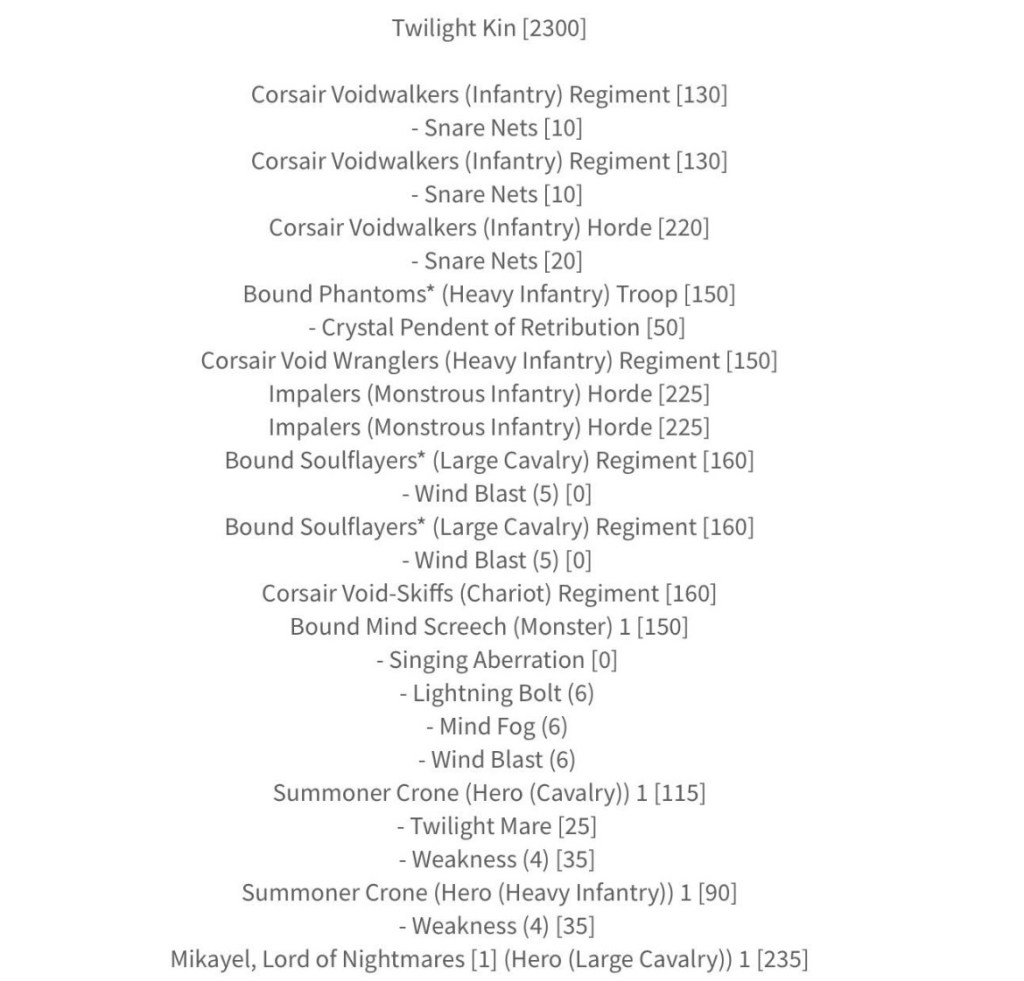
Game two was against the Twilight Kin and the scenario was Fool’s Gold. This is quite a familiar match up for me and pretty much sums up 2024 where I was regularly playing against these fiends and found myself facing off against them no less than three times at Clash of Kings.

These Elves were the defensive sort, with a lot of ensnare and defence six. With a meagre defence of four and low melee stats rats really don’t like grinding with the kin. That meant having to be a bit cagey. Although I wouldn’t say I have a lot of shooting, what I have can be pretty reliably game changing, and since my opponent’s shooting was significantly less than mine, I decided to lead with the guns. Over the course of the first three turns the Scurriers and War Engine Teams wore down the enemy on my right flank, allowing me to secure four points worth of objectives and take a lead. However, the Impalers had formed a solid line across the centre, blocking access the objective that would make the game either a win or a draw for the rats.

Knowing how tough they can be I wasn’t keen on the idea of rushing into a straight fight with them, highly unratlike. The turns kept going though and eventually I knew I would have to face them. Fortunately, by then a cunning plan had been formulated and an opportunity was opening. Shooting had knocked a few wounds off one unit, whilst the other remained undamaged. Cunning manoeuvring managed to allow me to get a Shock Troop horde into the damaged unit and the War Engine Teams in a place where they could shoot into the side of the undamaged unit, avoiding their big shields. A bunch of dice rolls later and neither unit remained. My Shock Troops then ran forward to claim the objective the Impalers had been holding.

Now it was the Twilight Kin’s turn to unleash their own shenanigans. Pre-empting the carnage in the centre the remaining Soulflayers had made their way back in from my left flank and now unleashed a windblast to push my Shock Troops away from their scoring position. The sneaky tactic worked, but in their delight in their underhand strategy, the sort of thing that noble Ratkin would never stoop to, they overlooked an opportunity to move the Soulflayers onto the objective to claim it, denying them a chance at a draw and letting my Rats steal the win. Karma.

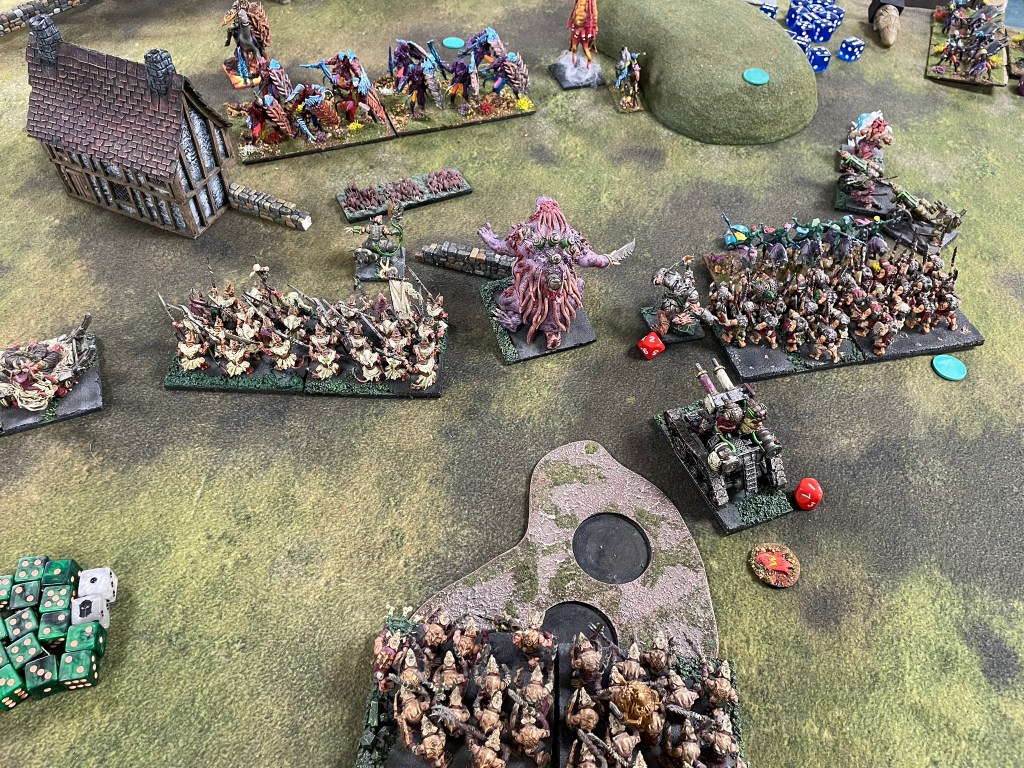
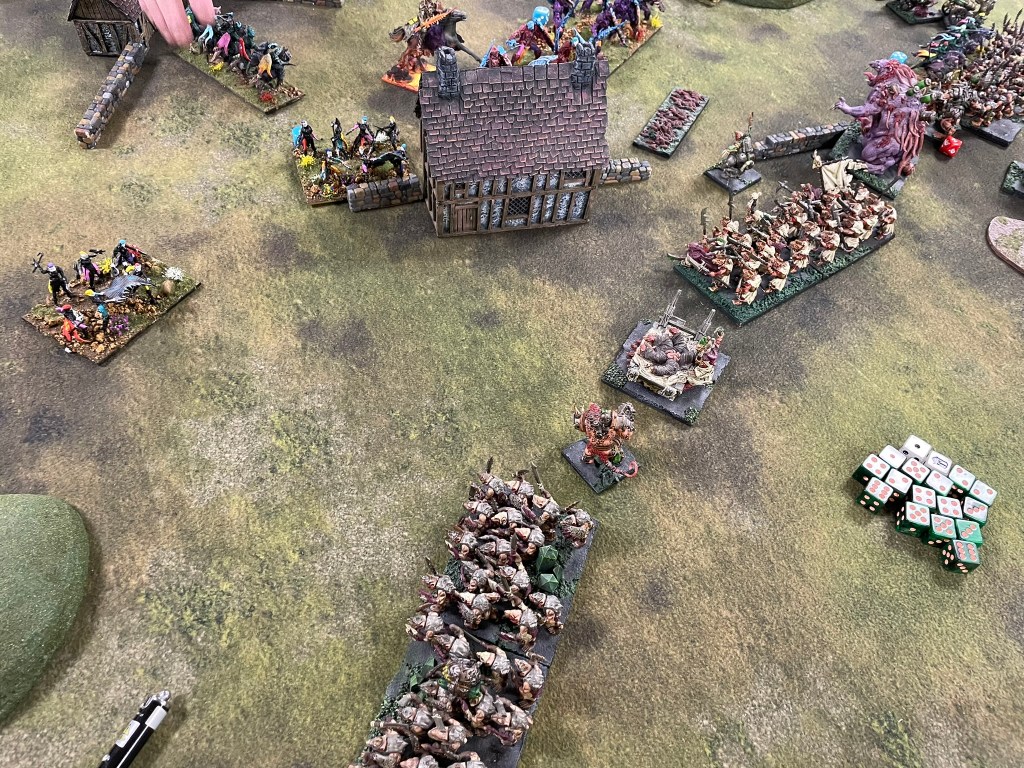
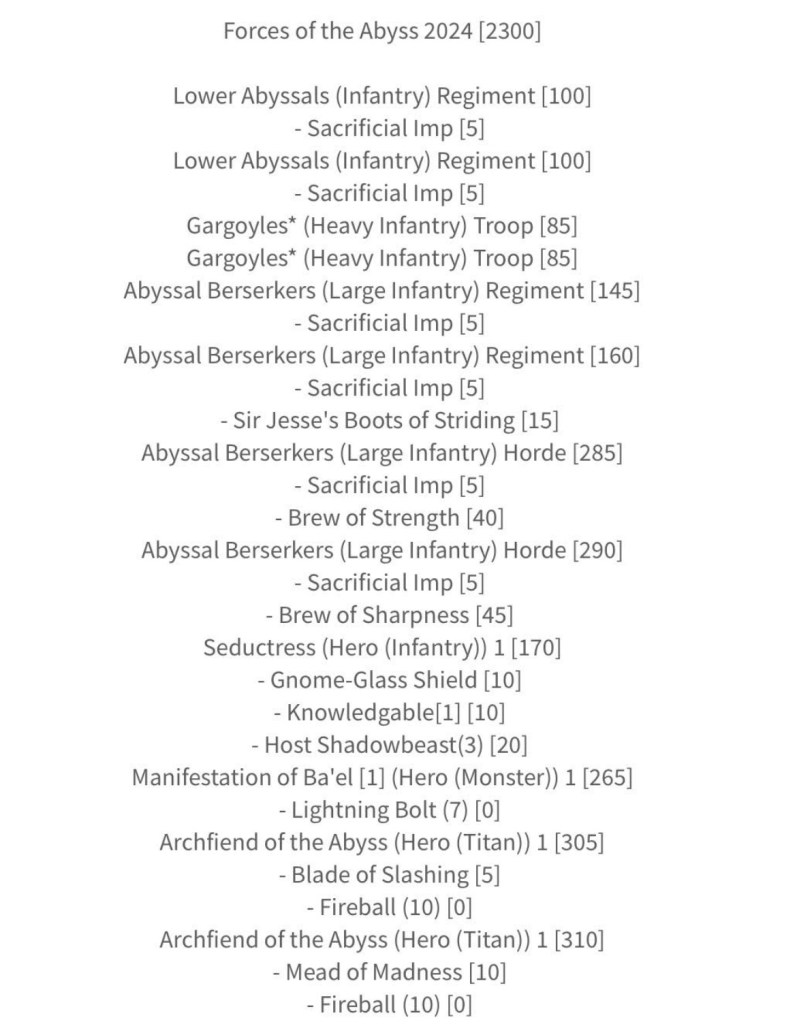
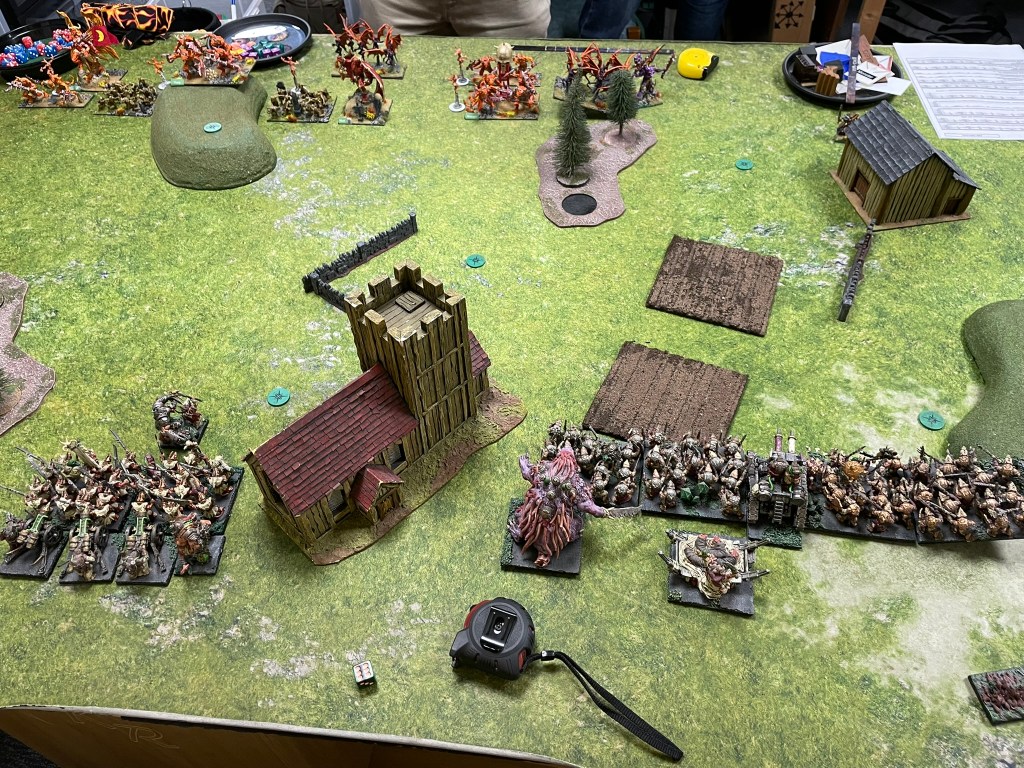
My final game of the day, and the edition, was against the cunning Jon Gunns and his menagerie of aberrations from the Abyss. I’ve played a couple of versions of this list (although not piloted by Jon) and know exactly how hard it can hit. It can clear out hordes of rats far too quickly, especially if the demons don’t get taken off quickly. Fortunately, the side of the table I ended up on had a reasonable amount of rough terrain, which is probably my best defence against this sort of army.

Unfortunately, the large piece of blocking terrain in the middle of my deployment zone created an immediate issue. My army likes to function as a single blob, making the most of its synergies and superior number of drops to swarm around opponents, wear them down and pick up cheeky flanks. Deployment forced me to split my troops, and it became apparent early on that I hadn’t got the split right.

In the centre Cryza, Shock Troops and the War Engine Teams stood with their backs against the terrain as demented entities encircled them, before tearing them apart. The battle group did manage to pull some of the creatures down with them, in particular the War Engine Teams that made a mess of any Bezerkers that got close to them. On my right things were a little more tentative, with the Succubus attempting to test my Scurriers and the spear warriors. They should up to her temptations and the Brood Mother drove her off with a nasty shot of Drain Life.

With so many speedy units aligned against me I didn’t quite know the best way to capture the loot counters despite starting out with some reasonable opportunities. Indecisiveness struck and rather than using one of my Brute Enforcers on the right to grab counters he wondered around aimlessly before getting rear charged by Ba’el. This lack of focus synergised perfectly with Jon’s careful play to craft a more than palatable win for The Forces of The Abyss. The rats certainly weren’t slouches and did manage to hold on to a couple of loot counters, but it was too little too late, and a brilliant game to end the day on.

Mulling over what worked and what didn’t seems a little redundant, although I will say now that I wouldn’t change my list for the world. It’s been an absolute blast playing Rats over the last few years, and the time feels right to move on to pastures new. Perhaps the most exciting part of the whole weekend was seeing my son’s finished Nightstalkers in action, this was his second event and he’s now contemplating life without Bloodworms and really isn’t sure which way to turn… Twilight Kin anyone?

Goodnight sweet bloodworms… until we meet again.

That just leaves space for a massive thank you to Andy for organising the event and the great people I got to play against.

To keep up with what’s going on you can follow @wizards_bookshelf on Instagram and Threads or drop you’re email below to subscribe.
Happy new year: it’s 2026

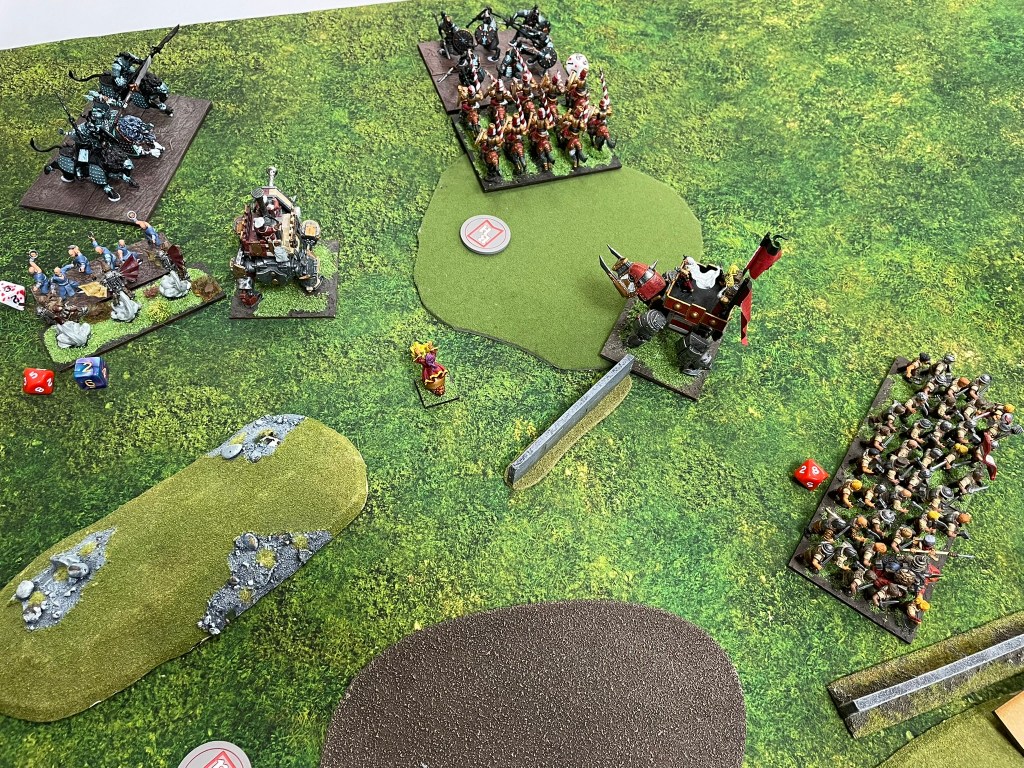
After an action packed 2025, it’s time to lay out the route map for 2026 that I suspect I will instantaneously deviate from. But for the next few minutes please indulge me.
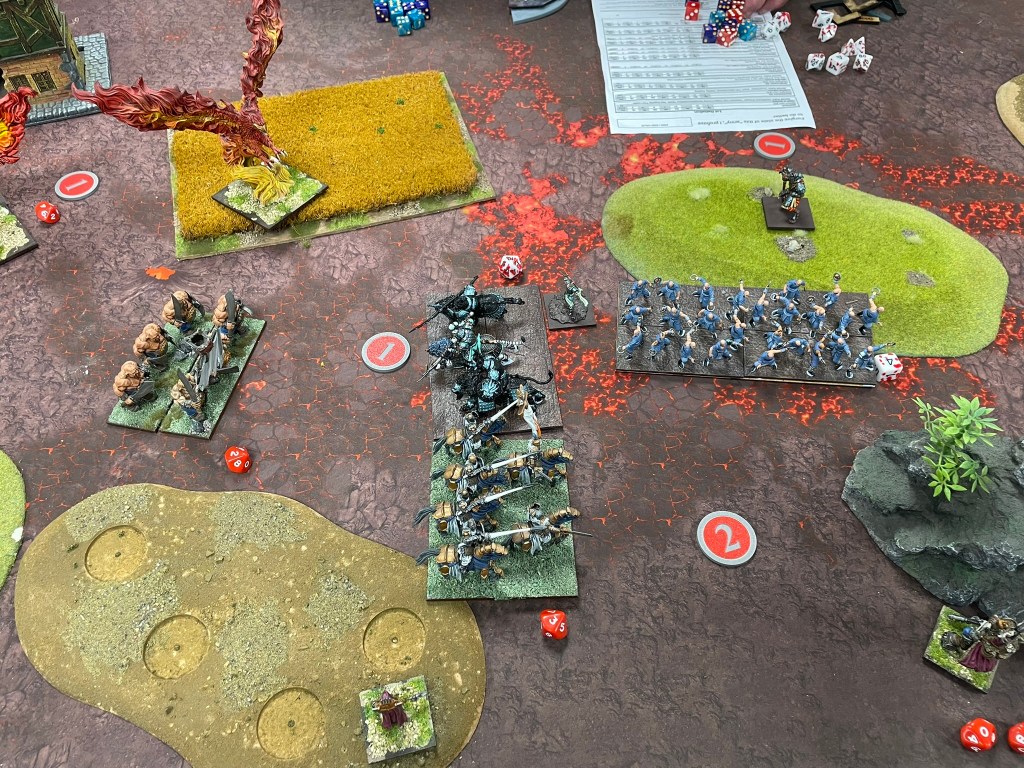
Kings of War has been my main gaming system for a number of years, and I don’t see that changing. Having now read through the new fourth edition books I’m really looking forward to getting my first games in. Many people have already played it by now, and there seems to be a consensus that it’s change for the better, although I get the impression there are some murmurs of discontent around the revised army lists.
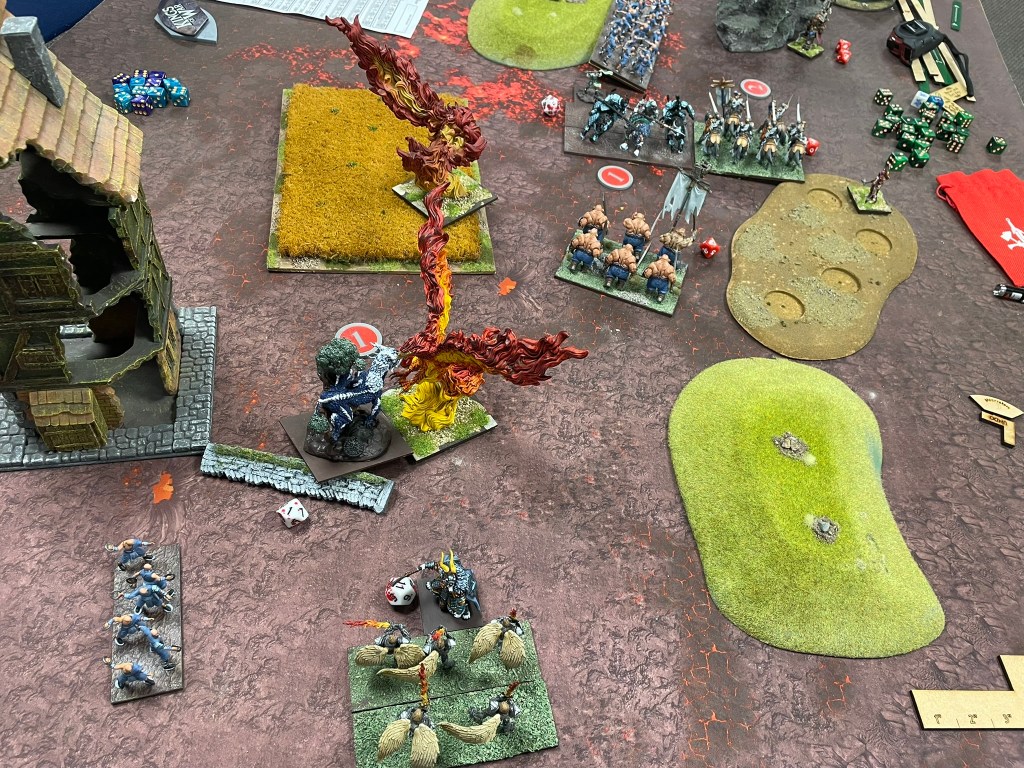
Will this crew make it back to the table?

Personally, I don’t have any, at least none that would make me walk away from the game. My collections feel transferable, and change is always a great opportunity to try something a bit different. I really want to dive into Basileans, but the call of the rat is proving too much, and I’m currently playing around with a 2,000 point list for my first tournament of the new rules in February.
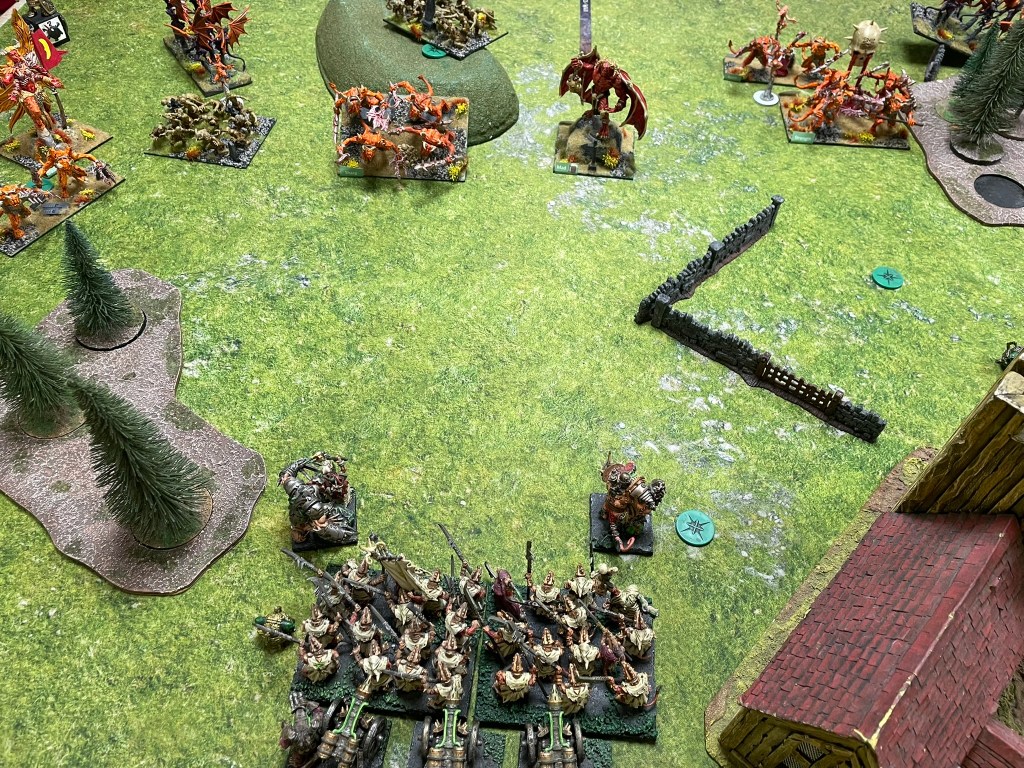
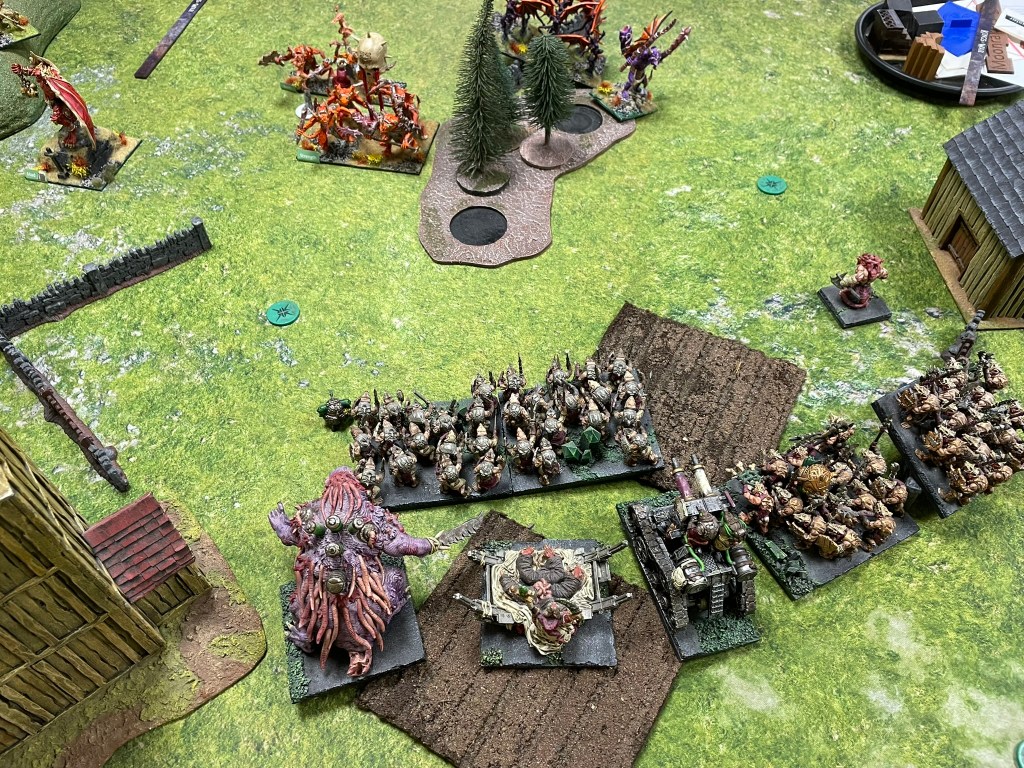
The call of the rat is strong, but not harmonious.

The one consistency around the changes is that my beloved Scurriers (rat skirmishing infantry) have taken something of a kicking on their stat line. This seems to be a thing that happens at edition changes now. Playing them for the last eight months has been massively fun, now they’ve changed I’ve got to get used to them again (and remember that they’re no way near as good in a fight).

Ratkin have had a lot of mechanics changes, although I think their core value remains very similar, so I’m not expecting the feeling of playing them to change. That’s not a discussion for now though. I’ll be doing something a bit more detailed in the coming weeks. Yesterday we saw third edition off with a final hurrah tournament in Bristol, and it was absolutely brilliant, a great start to the year and a great way to round off the edition – also more on that later.

Something I do want to address this year is my growing discontent with the handful (!!?) of models I don’t really use. Over the past year in particular I feel I’ve matured a bit into my hobby and know exactly the sort of games I want to play, and so what I need. I have a habit of being a bit of a hoarder and this is something I really want to change. I might do a couple of posts on this if I can make a success of it, and if I can find a decent angle to consider it from.

There will always be room for more beasts.

Finally, I’ll be playing more Burrows and Badgers, Silver Bayonet, and hopefully getting around to painting a few more models up. I also want to get back into doing occasional book reviews. I’m hoping to run another narrative Kings of War day later in the year, although that feels a long way off at the moment. It’s just a quick one today because the start of the year has been considerably more hectic than I’d hoped!

Happy new year people.

To keep up with what’s going on you can follow @wizards_bookshelf on Instagram and Threads or drop you’re email below to subscribe.