Quick game review: The Quacks of Quedlinburg

Quick game reviews aren’t just quick reviews of board, or card, games. They’re also intended to give an overview of games that are quick, both to get to grips with and play, for those who love a good game but are short on time. Over the last month or so we’ve been playing The Quacks of Quedlinburg, designed by Wolfgang Warsch. We’ve been playing the English version released by North Star Games.

Because these reviews are intended to look at games for people with limited time, and equally limited desire or capacity to spend pouring over rulesets they need to be:

Quick to learn – understand the game mechanics within a couple of attempts.

Quick to set up – out the box and ready to play by the time you’ve made a cup of tea.

Quick to play – possible to go from deciding to play to back in the box on the shelf in around an hour.

There is also one more vital ingredient – depth. The game needs to have something that will get the brain working and make you want to revisit it again and again.

What it’s all about

The concept of the game is really simple: players purchase ingredients to make potions to sell, but you have to be careful your potion doesn’t explode as you prepare it.

I love a good back story and fun artwork. The Quacks of Quedlinburg have both of these in spades, and that definitely drew me in. Add to that the playing time is given as 45 minutes, it sounded like the perfect combination.

When I opened the box, I started to have some reservations. There are a lot of counters, rubies, cards and bags. Then I read the rules which didn’t seem to be as clear as other rulesets I’ve read, maybe I was already getting preoccupied with set up and packing away times? I had a quick cup of tea and reached for the internet. Fortunately, how to play videos are pretty easy to come by, so after a couple of viewings and some time spent popping out counters (which in itself is pretty calming) I gathered the team for a first play through.
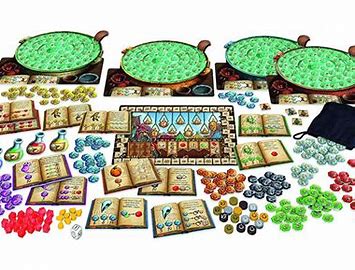
This is undoubtedly one of the most involved games I’ve reviewed for this site, and whilst the play time is under the hour mark the number of bits add some extra minutes to the “from shelf to set up, play and back to shelf” time. The number of different bits also adds an element of complexity, so if your gaming group like things to be really straight forward they may need a bit of gentle encouragement, but it’s worth it. The actual rules are fairly straight forward. The complexity comes from the different effects of the ingredients, which offer loads of different ways to make potions and allows players a variety of strategies to explore. This, in turn, makes it really replayable, and so worth the extra time spent getting to grips with the game.

The verdict

Quick to learn – How to play video first, followed by a couple of play throughs – not the end of the world.

Quick to set up – The tea will probably be made before you’re set up, unless you like a strong brew, but it will still be hot.

Quick to play – No more than an hour.

Depth – The ingredient mechanic creates loads of different ways to build potions and there are two game variants in the box, so plenty of reasons to get it off the shelf again and again.

Book Review: Carmilla

What is it?

A gothic vampire tale.

Who’s the writer?

Joseph Thomas Sheridan Le Fanu, born in Dublin 1814, was a leading horror and mystery writer of his time.

What’s it about?

A carriage accident results in a mysterious stranger being offered hospitality at an Austrian castle. The stranger, a young woman, strikes up an intimate friendship with the daughter of the castle’s owner, Laura. Outside the castle walls a sickness ravages the countryside, but it is not long until the same sickness strikes at Laura.

 Said to be the vampire story that inspired Dracula some 20 years later, Carmilla is a beautifully twisted gothic tale. Its easy to see the elements of the story that Bram Stoker drew on to develop his own vampire masterpiece, however this is a very different tale. Much shorter in word count, but every bit as engaging, bloody and beautiful.

Is it any good?

If you love vampire stories, especially Dracula, this book should absolutely be on your reading list.

The Fyrefur Clan goes Mantic: part 2 – Synergy and Stone Soup

It was great to see the Ratkin Vanguard orders go live last week. The stand-outs for me were the Vermintide and Hackpaw rider. Both feature regularly in my lists, so seeing Mantic representation so early is fantastic.

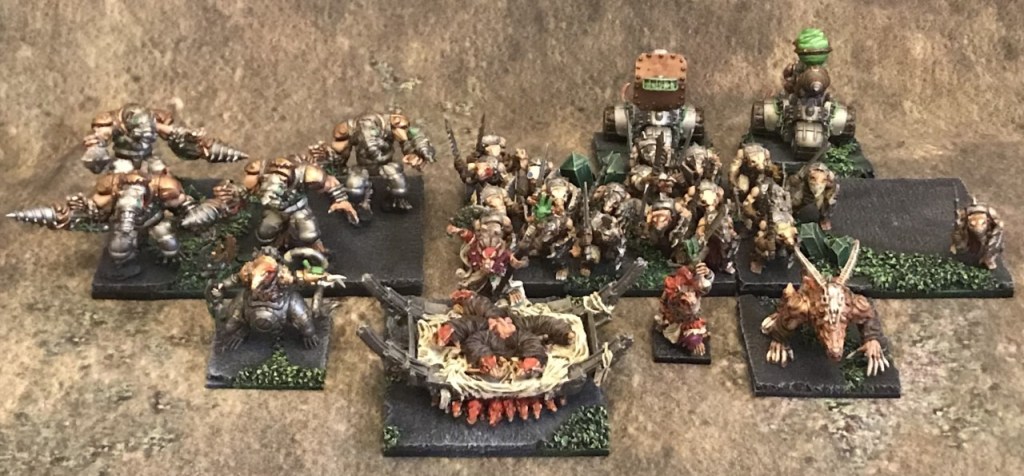
Whilst I’m waiting for the pre-order to become an order, before making its way down south from Nottingham I’ve made a start on rebasing some of the Mantic elements of my current collection. I was going to share them with you today in the pretty picture, unit overview type format. But, I got a bit stumped on Nightmares because they are generally described as “not as good as Ogre Boomers” and I think there is a bit more to them. The Boomer comparison has its merits, but having been tabled by a Ratkin list that featured two hordes and went on to come second in the tournament, and seeing them dish out the damage in my Abyssal Dwarf slave army I think there is more to explore.

This led me to mull over the comparison with Boomers, which kicked off a very unproductive evening of pondering just how important synergy is to Ratkin in third edition. The upshot of all this is a bit of a thought experiment on whether it’s possible to make Nightmares into actual nightmares, as opposed to slightly awkward dreams involving public nudity.

I will apply the usual content warning: these are not the words of a seasoned tournament ace, just the musings of a rat fan (in the voice of Roland Rat).

Rats are probably more dependent on synergy than any other force in Kings of War because of Rally. Being able to up your nerve points by 2 is pretty impactful. Add to that the various different auras and support rules, such as Eat the Weak, you have a set of army mechanics that really breathes life into a race that is brave with the weight of numbers on its side, but quickly loses interest if the fight doesn’t immediately go their way.

Let’s kick off with that comparison

Nightmare and Boomer hordes both have speed 6, melee 4, range 4, attacks 18, Crushing Strength 1, Steady Aim and range 12”. Where Nightmares dip out is on nerve (14/16 vs 15/17), Piercing 1 (a massive advantage on a shooting unit) and to a lesser extent Brutal (Nightmares’ Vicious (melee) goes some way to making up for it).

Nightmares do have a higher defence, but if we are talking about a straight up, side by side comparison Boomers take the win every time because of the Piercing (and Boomer hordes are also 5 points cheaper). However, it’s been a while since I last played a 235 point game, and this is where the thought experiment takes over and we pick through some of the synergies in the rat list, starting with Rally.

Rally

Generally, when I see Boomers on the table there are two hordes stood next to each other, not surprising really (one does not simply walk into 36 piercing 1 shots). Having Nightmares stood next to each other brings Rally into play. This brings the Nightmare and Boomer nerve into line so when it comes to a 570 point game the two units are hitting and wounding (each other at least) on the same score. Beyond 570 points, adding another source of Rally takes the Nightmare’s nerve to a very respectable 16/18 which lifts the Nightmare survivability above that of the Boomers. It’s also just the beginning.

The Tangle

This really is one of the stand-out units in the Ratkin list. It brings so much synergy-based goodness to the table. The Tangle not only brings that additional source of Rally, but also a dollop of inspiring and an Aura of Fury, meaning the Nightmares are now that much more reliable in combat. The Tangle’s enviable list of spells, Weakness, Banechant and Fireball, can all be used to wring those extra dribbles of performance from one of the hordes in any given turn.

Brood Mothers

With Radiance of Life and Drain Life Brood Mothers are all about the healing. The value of healing is very much dependent on how survivable the recipient is. A unit can’t be healed unless it survives damage. With defence 5 and nerve 16/18 our Nightmares are pretty damn survivable. The radiance guarantees a wound will be restored each turn, with Eat the Weak allowing up to 10 wounds to be recovered each turn. In addition, the Brood Mother’s staff can lend some extra weight to shooting when patching up is not required.

Greater than the sum

All those lovely synergies suddenly makes our Nightmares far more, well, nightmarish. Of course, at this point the horde of Nightmares that started this thought process has become two hordes, a Tangle and Brood Mother (stone soup anyone?). Full disclosure – to really make the most of this you’ll need some additional units like Vermintide to bolster Eat the Weak, up the spell casting power of the Tangle and carry out general chaff duties, but what else would you be spending points on in a Ratkin list?

Full full disclosure

Synergies are a real double-edged sword. Whilst they can increase the effectiveness of units the need for presence and proximity of supporting units means the enhanced units you can create can be weakened without the enemy having to attack them directly. In addition, you have to be really careful that units stay within the ranges of auras and effects which can lead to some difficult priority calls as games progress. So, whilst I ponder over the merits of synergy and stone soup I will leave you with an ancient Ratkin proverb:

The Nightmare horde 7” away from the rest of the army is just a slightly over-priced, under performing Boomer horde.

The rebasing continues as I wait for new Mantic rats to scurry down from Nottingham

Book Review: Wonderland

What is it?

The front cover sums it up best – An anthology of works inspired by Alice’s Adventures in Wonderland.

Who’s the writer?

It’s edited by Marie O’Regan and Paul Kane. Contributing authors include M.R. Carey, Lilith Saintcrow, Juliet Marillier, Jane Yolen.

What’s it about?

Its fair to say Alice’s Adventure in Wonderland inspires a mix of reactions. From the sheer joy of the nonsense and word play, to more reserved reactions to the violence and uncertainty of Wonderland.

It is a book that has inspired all manner of retellings and spin offs. From a Disney cartoon, to the twisted, murderous Old City of Christina Henry’s Alice universe and even Batman villains.

This anthology brings together a wide variety of short stories that demonstrate just how much Alice has been welcomed into the creative psyche of so many authors. With so many fascinating and engaging stories its hard to pick any favourites, so I’m not going to.

Is it any good?

If you embrace all things Alice; the nonsense, the wonderment and the dark this is a great read. With sci-fi, horror and fantasy rooted takes on Lewis Carroll’s leading lady there is something that is bound to intrigue those who look for any opportunity to jump back down the rabbit hole.

The Fyrefur Clan goes Mantic: Part 1

Rats. They’re great. Rats were the first army I really wanted to collect when I got into fantasy wargaming 30 odd years ago. Since then, I’ve collected a couple of armies, the most recent being my Fyrefur Clan, which I started when I got into Kings of War in 2019.

Over the last couple of years things have really changed for Ratkin with more lore, a revised list for third edition and now their very own Mantic range.

Whilst I’m a big fan of Kings of War as a game, and the community, my relationship with Mantic’s models is an evolving one. I’m a gamer first, enjoyer of fluff second and in a very distance last place comes painting, basing and prepping models.

Mantic’s older plastics (gargoyles, Basilean mounted paladins, etc.) made me think twice about building a full Mantic force, but the new plastic kits and resin have won me over. As the new Ratkin range will largely consist of these its game on.

The plan is simple, although somewhat dependent on Covid. I’ve come up with a list I quite like the idea of. Over the next 12 months I’m going to get it built and blog about it. So, if you’re planning on starting a Ratkin army it might give some insights into how the rats work (I’ll leave you to decide how interesting and/or helpful they are) and if you already have a Ratkin army it might make you shake your head and mutter, “No, that’s just wrong”.

I should probably add that I don’t have any crazy aims, like winning best painted trophies, tournaments or even games. This is just about having fun with Ratkin.

The (starting) List

As I’m hoping there will be some tournaments in 2021 I’m going for 1,995 points. I have no doubt this list will change over the course of the year, after all theory and the reality don’t always make for perfect partners. The list should also keep me focused so I don’t suddenly find myself working on that Salamander army I definitely have no interest in.

Warrior Horde with Plague Pot

Shock Troop Horde with Plague Pot and Brew of Sharpness

Vermintide Regiment

3 Hackpaw Regiments, 1 with Boots of Striding

2 Mutant Rat Fiends

War Chief on Fleabag

Scudku-z’luk

Twitch Keenear

It’s fair to say this is quite an elite list. Traditionally, rats are a grindy swarm army, but I’m not one for tradition. I am, however, one for big beasties and hard-hitting stuff hard, which the rat list has some great options for. I’ll talk more about units and list choices in future instalments.

Get Building

The first couple of weeks have been pretty productive, with a basing design decided on and the first models making their way to said bases. Fair to say, I’m pretty happy with the results.

Bases

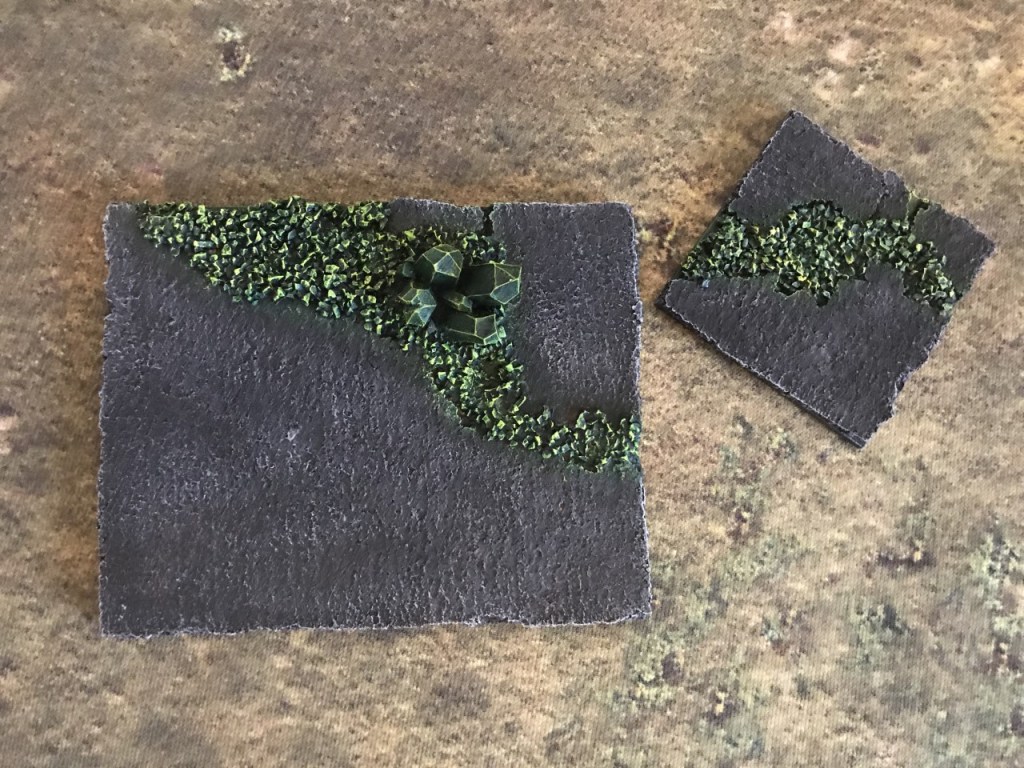
I love scenic bases, but I’m new to building them and there’s so much to explore in terms of materials, concepts and my own limitations of both capability and patience. After more than a few failed experiments I’ve created something I’m happy with.

Warriors

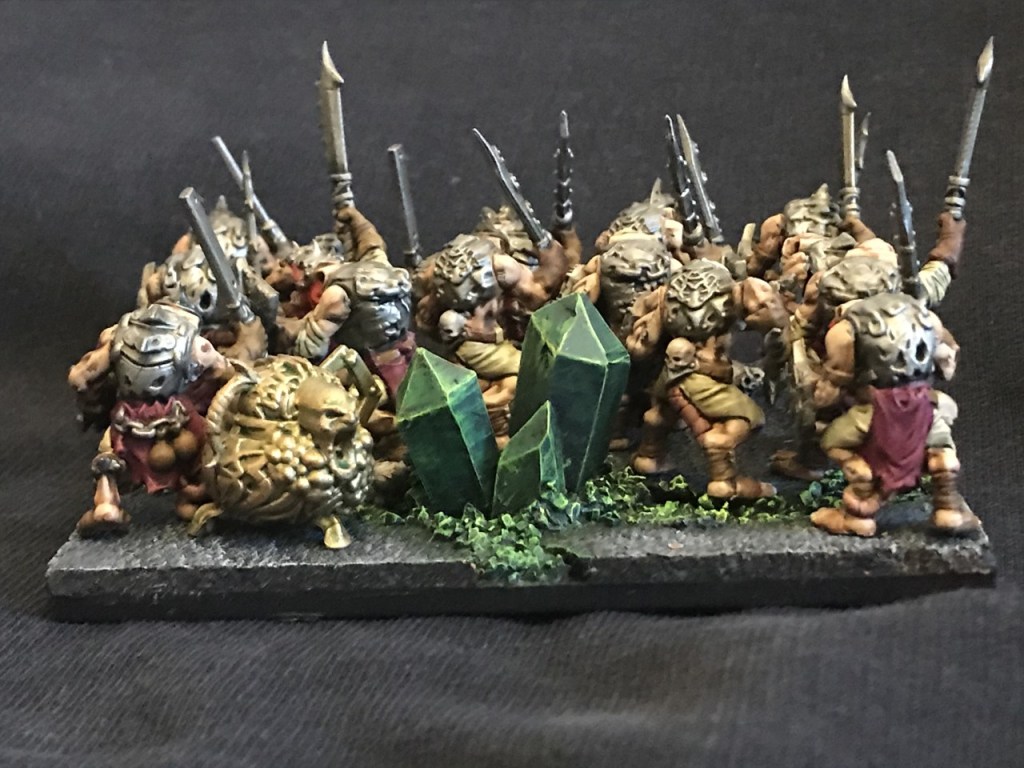
My first regiment/half a horde is one rat away from completion. Preferred model count is definitely the order of the day, leaving space for a cheeky Plague Pot. Warriors are one of my favourite blocking units in the army. Whilst they don’t dish out a lot of damage, I quite often think people underestimate just how hard they are to shift, especially with a well-timed plague pot and a bit of rally to up the nerve score. They are also the cheapest unlock. Yes, the unit strength isn’t as good as the spear warriors, but I’m not expecting them to make it to the end of the battle, so it doesn’t really matter. Finally, having rally themselves means they provide really useful support for more fragile units in the early turns.

Twitch Keenear

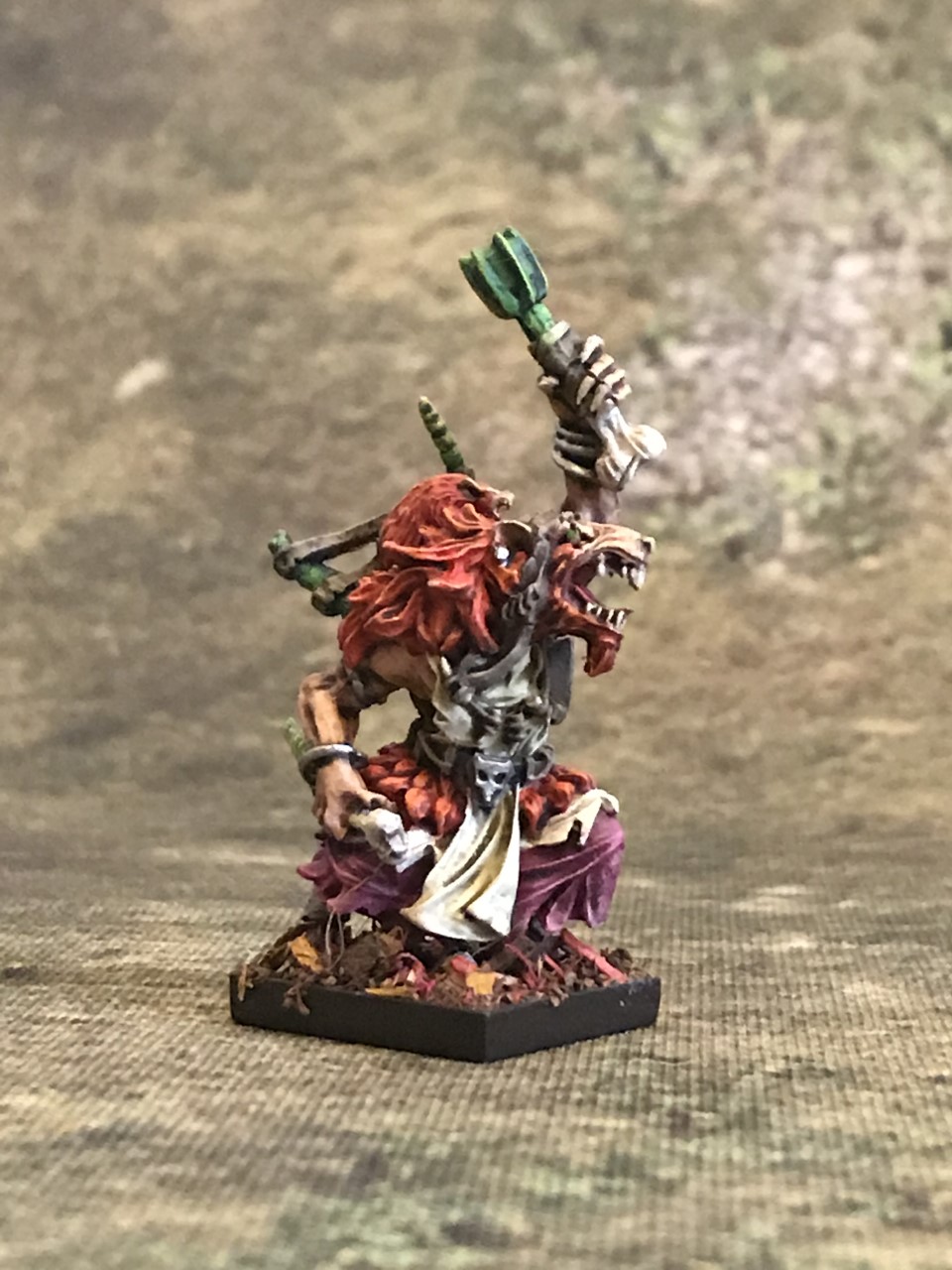
Twitch would have been a perfect fit for my second edition army, so it will be interesting to see how he performs when we finally return to the tables. Whilst Hex isn’t the most exciting spell, I think Banechant and Eye of the Abyss special rule (allowing a Banechanted unit to re-roll their to hit and to wound dice) is a great fit for this list. For me elite builds are all about certainty of outcome, so whilst Banechant (3) means its highly likely extra strength will be available Eye of the Abyss gives you that second chance when you really need to take an enemy unit off the table, ground a flyer or knock thunderous off some knights. Yes, it’s not going to get used every turn, or even every game, but think it will impact the way I use Banechant.

That’s it for the first instalment. Back with more in a couple of weeks.

Book Review: The Left-Handed Booksellers of London

What is it?

A modern fantasy adventure set in London in 1983.

Who’s the writer?

Garth Nix is an Australian fantasy writer specialising in novels for children and young adults.

What’s it about?

Susan Arkshaw’s search to find her father leads her to the home of crime boss Frank Thringley. A late-night attack on Frank’s home results in Susan fleeing mythical monsters with a mysterious young man called Merlin.

Merlin is one of the Left-Handed Book Sellers of London. The book sellers are an ancient family of investigators and enforcers dedicated to protecting the mundane from the mythical. Susan very quickly finds herself embroiled in a mystery far greater and much older than she could have ever imagined.

Is it any good?

More of an adventure than a thriller, it is a beautifully written book. Nix is clearly a skilled story-teller, who has created a beautiful and intriguing other-world where the creatures of myth and legend live in parallel with, and occasionally in, our own. It’s a feel-good fantasy that goes perfectly with a mug of tea and a chocolate biscuit.

2020 – A miniature review

I’m not an enthusiastic painter. Never have been, don’t really ever see me being so. Despite that, I believe a painted mini is always better than an unpainted one, and a completed warband, or army, is always greater than the sum of its individual parts.

2020 was a bit of a weird year (anyone else get that vibe??). The apocalypse meant my main engagement with the hobby was painting. To begin with I worked on completing armies, but that was only ever going to last so long. Eventually, I found myself starting to think about painting things just because I quite liked them, exploring new techniques and even doing the odd bit of scenery.

Some things didn’t work out quite as planned, but a few things exceeded expectations. I have an army I really hadn’t planned to build, and I bought from some great companies I wouldn’t have tried under more normal circumstances. I also have a couple of new skills I wouldn’t have bothered learning had a I spent more time playing games. So, I thought I’d share some of my favourite models from 2020.

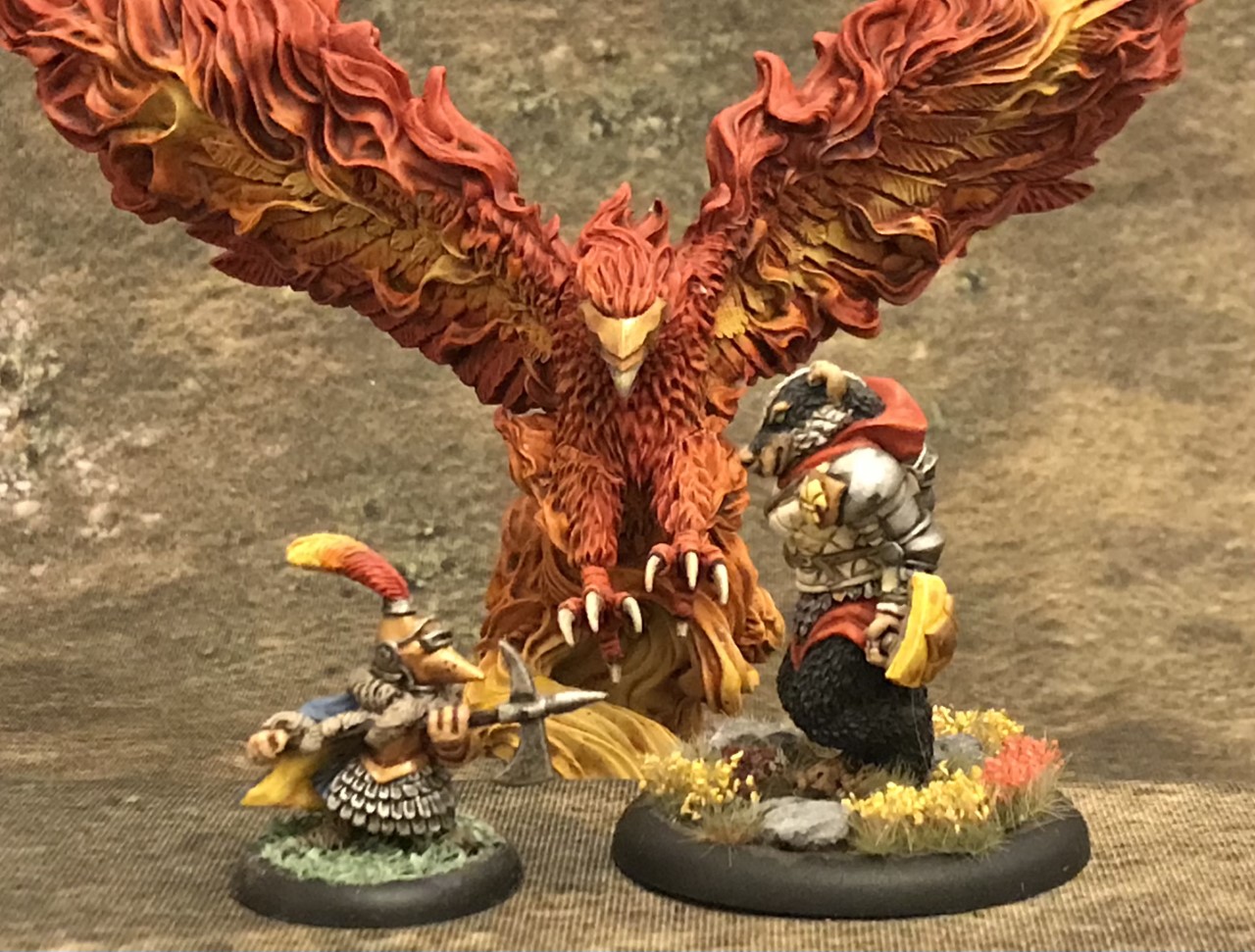
Phoenix and Helfane by Mantic

Comfort zones are made to be moved out of, apparently, but only if you really have nothing better to do. The Phoenix definitely pushed me out of mine. I’ve never been happy with the results of any fire I’ve painted, so contemplating the flaming chicken of death (or life?) was more than a little unnerving. After doing a bit of research (asking Twitter) I found a technique I was happy with (slapping Contrast on it). I couldn’t be happier with the results and it’s because I completed it, I felt comfortable taking on the Helfane at the end of the year as big models aren’t something I generally have the patience for.

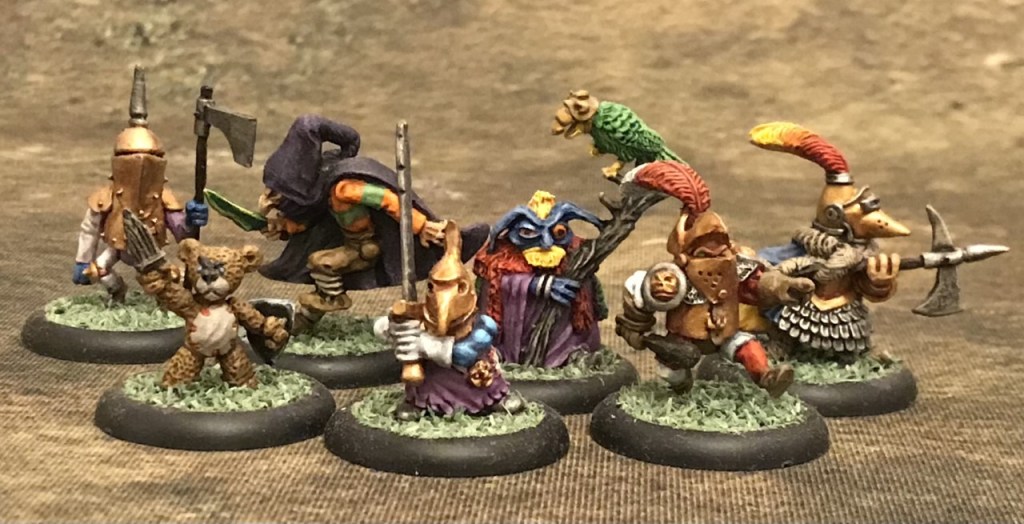
Anything Burrows and Badgers by Oathsworn

There has been quite a bit of anthropomorphic animal awesomeness painted this year. Mono-pose metal has become a welcome respite from multi-part kits that look fantastic having been in the hands of pro-painters (the really good ones, not the ones that believe dipping things in orange before putting them on e-bay increases their price exponentially), but generally cause me concerns when I start painting them and realise the bits left on the sprue were actually needed.

Night Folk by Northumbrian Tin Soldier

I’ve always been attracted to the quirkier side of fantasy aesthetics and these models have it in spade loads. Mono-pose metal, fab. Weirdly, for me, I bought these guys without a game in mind. But as the collection is growing, and I’ve just signed up for the recent kick starter, that’s something that will have to change pretty sharpish.

Dwarfs and scenery by Bad Squiddo

Yes, technically dwarf, but I don’t care – love her and have a few more I’m hoping to get on the paint table in 2021. I’ve also done a fair amount of scatter terrain this year which has been easy to work with and produced some really enjoyable results.

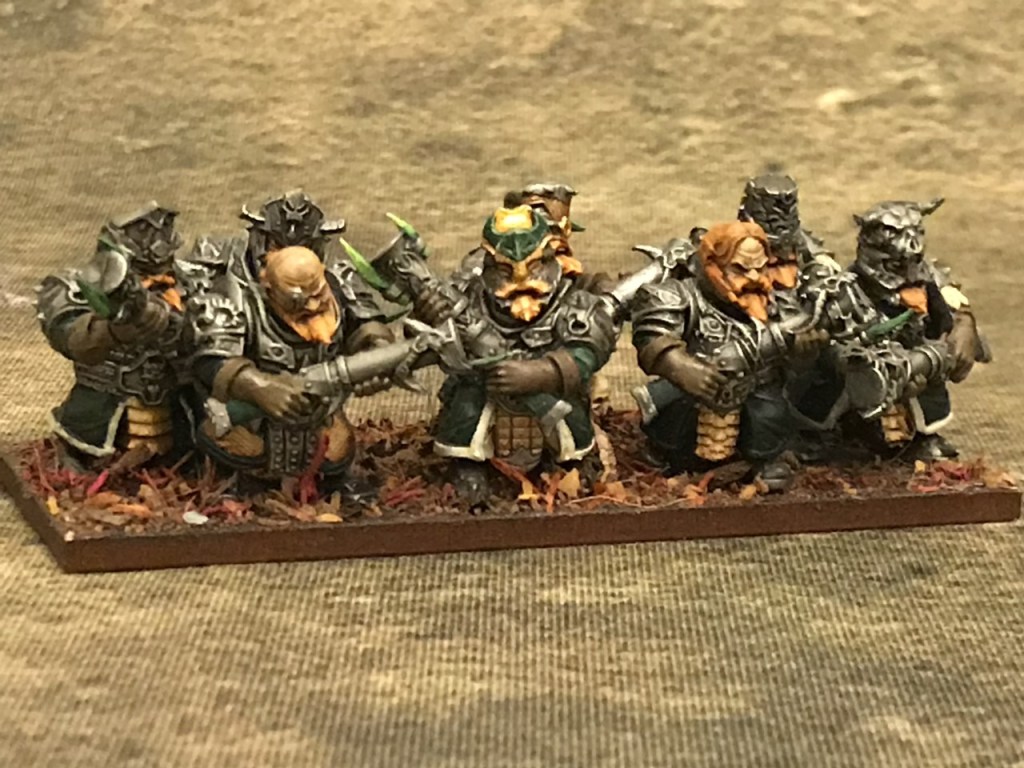
Plastic Abyssal Dwarfs by Mantic

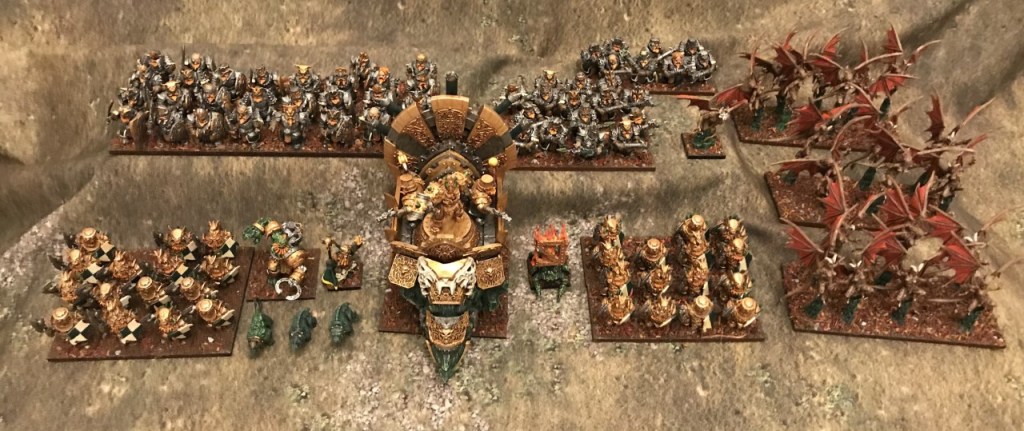
Having been thoroughly unexcited by Mantic’s oldest plastics I wasn’t expecting to be blown away by this kit. I was wrong. It’s a great example of Mantic’s new plastic line infantry kits (I’ve previously painted Basilean Men at Arms and now working on their rat sprues). Detailed, durable kits that lend themselves to batch painting. I was so happy with the results it made deciding to do an army a really easy choice, even though it meant painting another 40 of them.

Inferox by Mantic

Saving the snowflake that started the avalanche for last. Mantic’s resin is just lovely. Their new sculpts are so characterful and bring their universe to life so well. Infernox is one of those models I just fell in love with, but would have avoided buying under normal circumstances because I don’t have an army to field him in. Completing him as a one-off project, combined with how much I enjoyed working with the line infantry, really meant a full army was the only logical next step.

So in summary – 2020 didn’t quite turn out the way I had expected. It was the year I almost got excited about painting. It was the year I found a way to paint fire that I’m happy with. And because of all of the above it makes finding a positive about 2020 a lot easier than I had originally thought. Happy new year.

The army I really hadn’t planned on

Book Review: Night Watch

What is it?

A thoughtful, fantasy, comedy about policing and time travel.

Who’s the writer?

The late, great Sir Terry Pratchett.

What’s it about?

Commander Vimes is the boss of Ankh-Morpork’s city watch. On the 25th May, the anniversary of a Glorious Revolution, he is caught up in a magical storm whilst chasing one of the city’s most psychotic criminals. He wakes up naked, in the back streets of the city, a mere 30 years from where he started, and its all about to kick off.

Terry Pratchett had an amazing talent for using his fantasy world to tell a story, whilst holding a mirror up to our own. Night Watch is no exception. A fantastically funny story about time travel, policing, oppressive regimes and revolution where the Discworld setting serves up its own brand of reflection and light relief. This story was made all the more poignant given the events of 2020.

Whilst it is a comedy, the story inevitably wonders into the darker aspects of human behaviour, which Pratchett does not shy away from or try to play down. He handles them exceptionally well, creating sombre, emotionally charged passages which reinforce his brilliance as a writer.

Is it any good?

I sometimes wonder if there is much point reviewing books that were written almost 20 years ago. Especially when they were so popular and widely read at the time of their launch. But rereading Night Watch has convinced me its as valid as reviewing any new publication. Once a book is out there its fixed. The story and sentiments will never change. Yes, they may be retold by others, in a range of different formats, but the book that started the story will stay the same. The world, however, moves on. Views and values iterate and evolve, we hope for the better. Rereading older books is a great way of checking in with our favourites and seeing how they, and to an extent we, are holding up.

I’ll always have a special love for the Ankh-Morpork Watch, it was this collection of individuals that really cemented my interest in, and enjoyment of, the Discworld. How much has changed since I last picked this book up? Turns out very little. Its easy to remember the Discworld novels as funny and thoughtful. Night Watch showcases Terry Pratchett’s range as a writer; equally able to tackle the dark and sombre as well observed witticisms. Night Watch is as good, if not in some ways better, today as it was when it first made its way to my bookshelf. What’s more it’s rekindled my love of the Discworld, and I have a feeling it won’t be long before I revisit the streets of Ankh-Morpork with my favourite local constabulary.

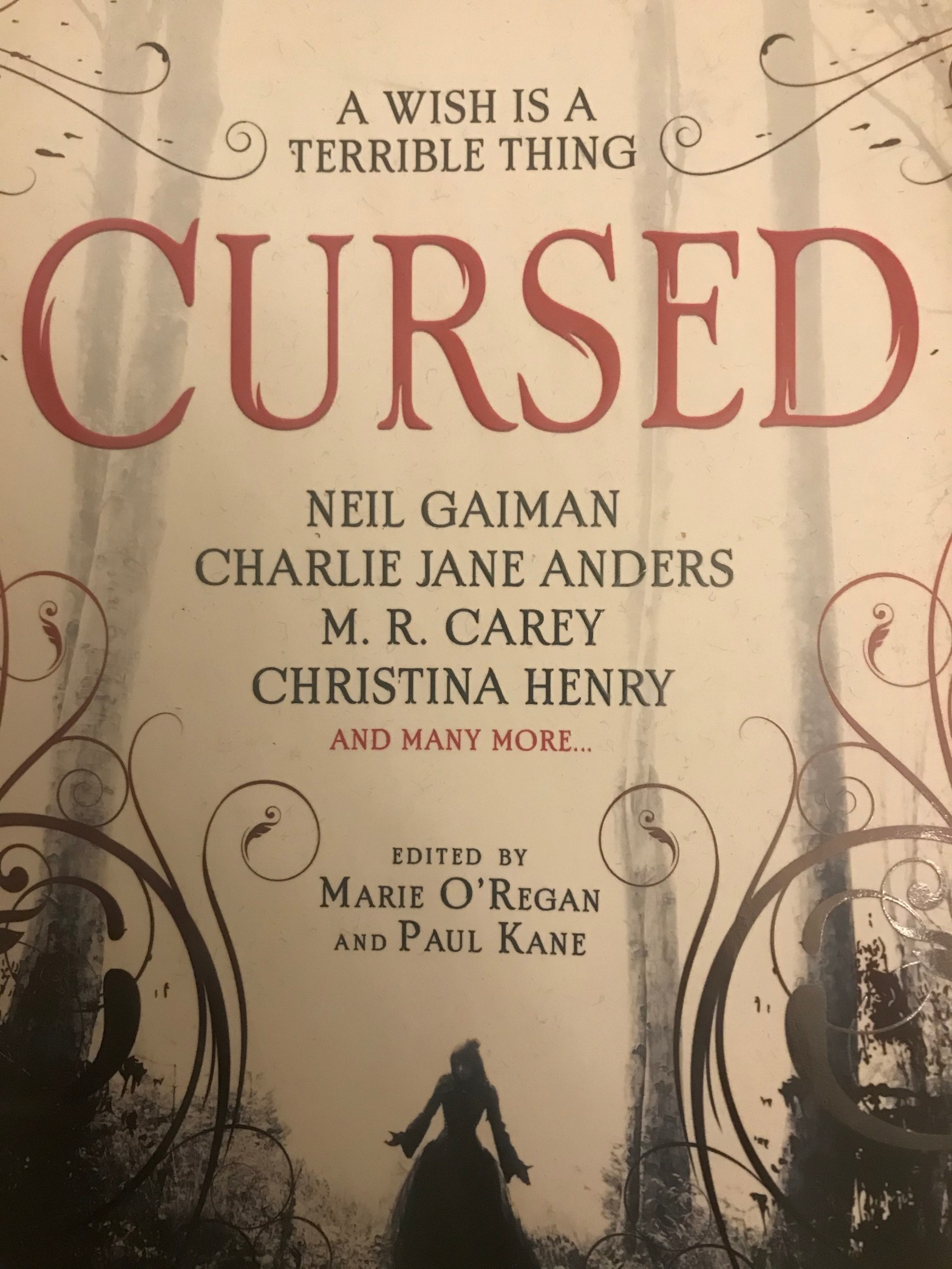
Book Review: Cursed

What is it?

A collection of short horror stories.

Who’s the writer?

Loads of great wordsmiths. This a collection of 20 short stories (with a couple of poems) from a wide range of successful authors including Neil Gaiman, Charlie Jane Anders, M.R.Carey and Christina Henry.

What’s it about?

This is a fantastic collection of scary shorts covering a broad range of subject matter. Zombies, ghosts, curses and trolls. There really is a scare for everyone. The writers draw on a wide range of inspirations. Twisted traditional tales, inspired by Sleeping Beauty and Red Riding Hood, sit comfortably alongside more modern takes on terror.

For me, the two stand out stories are Wendy, Darling by Christopher Golden and The Merrie Dancers by Alison Littlewood. Golden’s take on Peter Pan offers a darkly novel and disturbing interpretation of an instantly recognisable classic. By contrast Littlewood’s tale draws on much older legends, planting them in a modern setting with no less a terrifying twist.

Is it any good?

As with any short story collect there’s likely to be some you’ll love, some you’ll hate and a couple that you’ll just be very meh about. Fortunately, this is a really well curated anthology, so I found way more of the loves than the mehs and maybe one than verged on an exceptionally mild dislike.

Book Review: Looking Glass by Christina Henry

What is it?

A collection of short horror stories.

Who’s the writer?

Christina Henry is predominantly a horror writer who creates gruesome and chilling worlds from stories we are likely to know from our childhoods. The Mermaid is an exception, as a beautiful historical fiction set in P.T. Barnum’s museum. Her book Alice, which this short story collection links to, was one of Amazon’s best Science Fiction and Fantasy books in 2015 and came second in the Goodreads Choice awards for Best Horror. In short, her books are well worth investing some time in if you like a scary read.

What’s it about?

In 2015 Christina Henry released the first book of her Alice duology, which was followed by Red Queen. These books created a dark, new interpretation of Lewis Carroll’s Alice in Wonderland. In Alice, Christina Henry distilled all the quintessential elements of Alice in Wonderland and turned them into a horrifically dystopian world that is the everyday reality for the citizens of the Old City. She found new homes and new careers for the White Rabbit, the Caterpillar and the Cheshire Cat placing them at the heart of a rotten city utterly corrupted and without mercy. Red Queen then moves the story on, exploring the no less lethal world outside the city.

Looking Glass is a collection of short stories that gives further insight into Alice’s terrifying and brutal reality. Each story introduces new characters and moves on the timeline, and our understanding of the main characters. Each story is a self-contained episode, but readers will get so much more out of this book if they have already read Alice and Red Queen.

The book shows off Christina Henry’s capabilities as a horror writer and adds to our understanding of Alice’s disturbing and violent world. Most interestingly for me, we get our first real insight into the New City, which until now we have had only the briefest of glimpses, and Alice’s family.

For fans of Alice this book is a fantastic expansion of a world that you are unlikely to love, but will be hypnotised, horrified and intrigued by. I’m also very hopeful that the new characters we meet will be seen again soon in their own stories. Alice’s world has been painted so vividly it draws you in and I hope it won’t be too long before there is another opportunity to visit.

Is it any good?

Yes. Creepy, twisted and, at times, just flat out bloody. Whilst readers would benefit from reading Alice and Red Queen, this is a perfect Halloween read.