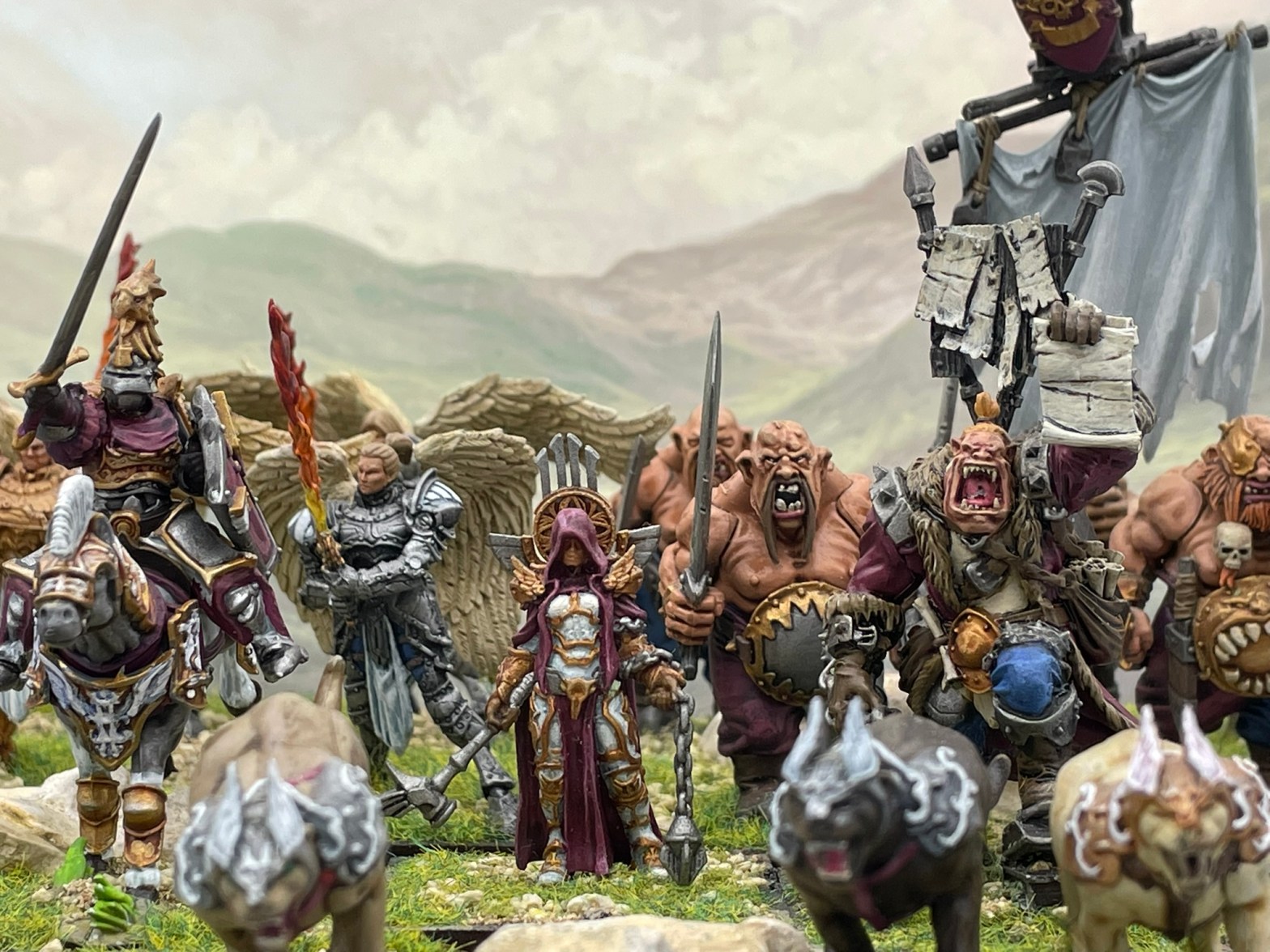
I started my Basileans back at the beginning of third edition when I was just getting back into the hobby. During my twenty-year absence from toy soldiers it felt like a lot of things had changed and I definitely hadn’t kept up. Something that really attracted me to the game was the multibasing concept.
There were three reasons for that. The first was that I didn’t have to fiddle around with hundreds of individual models during games. The second was that because the unit’s footprint was more important for play than what was on it, I could start testing out army lists really quickly, and the third and final reason was that rules around minimum and preferred model counts meant I didn’t have to paint up anywhere near as many models as I once had. These things were all great for a gamer who sees painting as a bit of a necessary evil.
As with most things that seem simple in life, if you willingly choose not to ask too many questions or don’t know what questions you should be asking, I engaged with it all in good faith. To the credit of both local players and tournament organisers I was genuinely impressed that everyone else did as well. It’s one of the enduring features that I really love about the tournament scene in the UK in particular is that most players turn up to most events with fully painted armies, which is great. What’s even better is that some of those armies will grow further over the course of the year as more models get painted and added to bases, which is great to see.
I’m definitely in that particular bracket in the moment. Working up a minimal viable army, that I’ll then top up with models and scenery as Clash of Kings approaches. I don’t need to do that, but as I’ve improved my hobbying skills I’ve increasingly wanted to field fully based, full model count armies, with a display board. Add to that a pragmatically driven desire to magnetise my bases to make them easier to transport and I’m starting to get to the unnecessary “all in” approach to Kings of War army building, which does leave me strangely satisfied. So, I thought I’d share a few updates on progress with some thoughts on how it’s going and the direction I’m headed in.
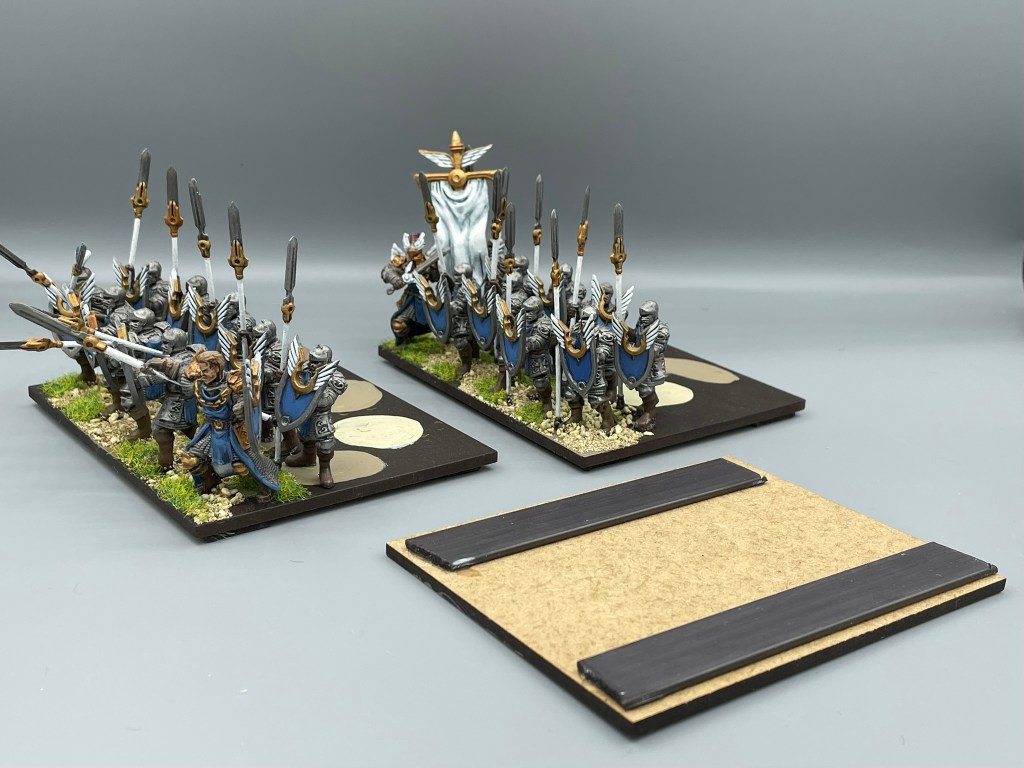
As I travel quite a lot with my armies I started dabbling with magnetic tape on bases and magnetic box bases to reduce movement of units whilst on the road. The process could not be simpler. Get magnetic tape (this is 3mm) cut strips off and stick it on the underside of the base. I like to super glue the ends and place the base on a metal surface to get everything straightened out. I’m enjoying worrying less about how my army will look after a long car journey now.
Simple basing can look really good. My original basing for this army was simple, but not great. One reason for doing this refresh is because I believe I can do better, the benefit of experience right there. I’m using three basing materials across these units. Some desert rocks and sand (with little bits of flock in it) both from Hobbycraft, and some static grass from Army Painter. Because I’m looking to do full model counts for all my units I’m generally basing them quite sparingly to ensure models can be laid out in a fairly even way.
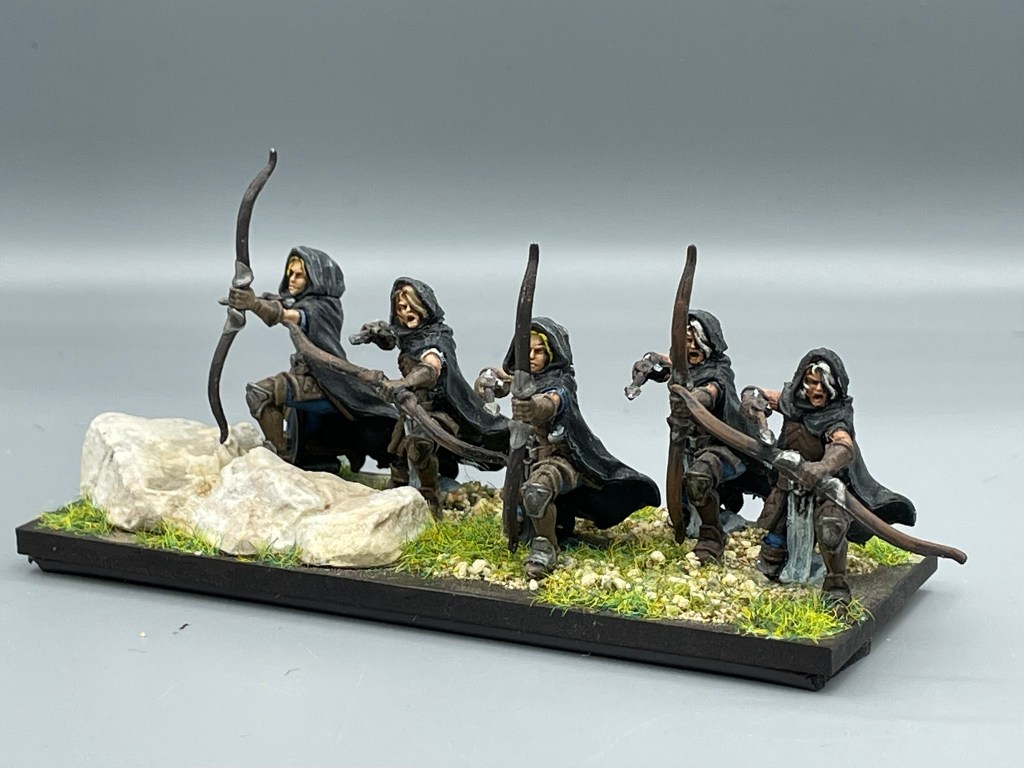
The general requirement for model counts in the UK at tournaments tends to be a busy looking base. This doesn’t mean full model count, it doesn’t even have to mean half model count, if you want to go overboard on the scenery it’s down to you. A great example of this is the troop of Sisterhood Scouts. Full model count would suggest 10 models, but given they’re intended to be skirmishers that guideline doesn’t work for me, and I know this won’t cause anyone else sleepless nights.
Growing units can be a time-consuming process, especially if you have a suitable proxy and motivation easily escapes you. However, proxies can play a number of different roles within a Kings of War army from “temporary gap filler” to “integral component of the force that there is no intention of ever changing”.
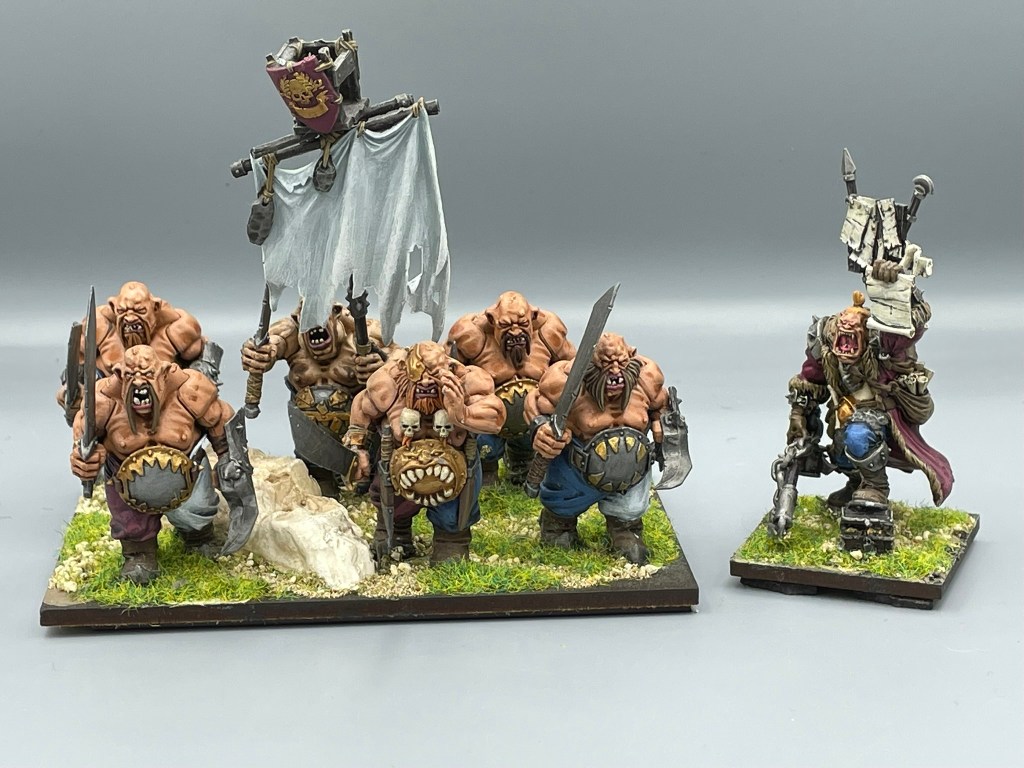
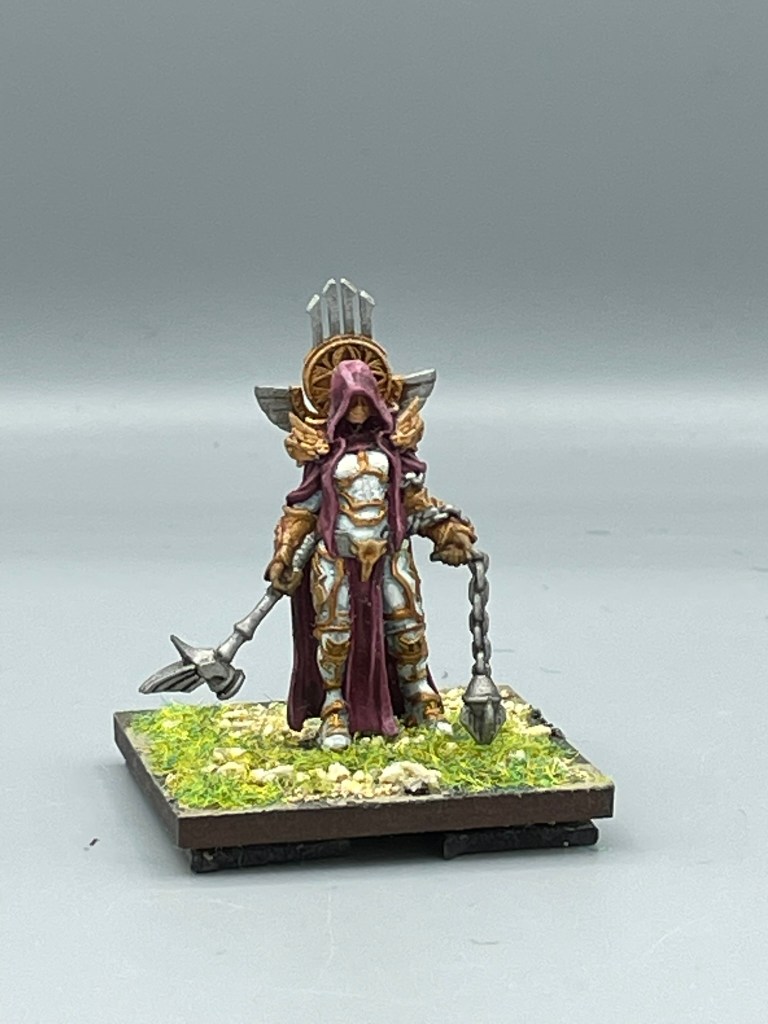
I currently have proxies in several different roles that are both Mantic and third-party models. The Basilean Abbess model is possibly my favourite Mantic model, she has a lot of sass and fills the role of a priest equally perfectly. The model has also shaped the narrative of the army and brings Sha’leis to life, so she won’t be changing ever. Similarly, the Ogre Paymaster who plays the role of the Ogre Palace Guard Captain. As well as being a cool model, there’s also a bit of a narrative decision here since the ogres that follow my priestess are members of the ships crew who rescued her as their vessel was split apart on a coral reef. The Paymaster model fits the bill perfectly, and it brings me on nicely to the ogre regiment. Rules wise these are my Palace Guard, but the GW models work better for their nautical theme. I may change them in the future if I can find a better option, but the Mantic choices don’t quite work.
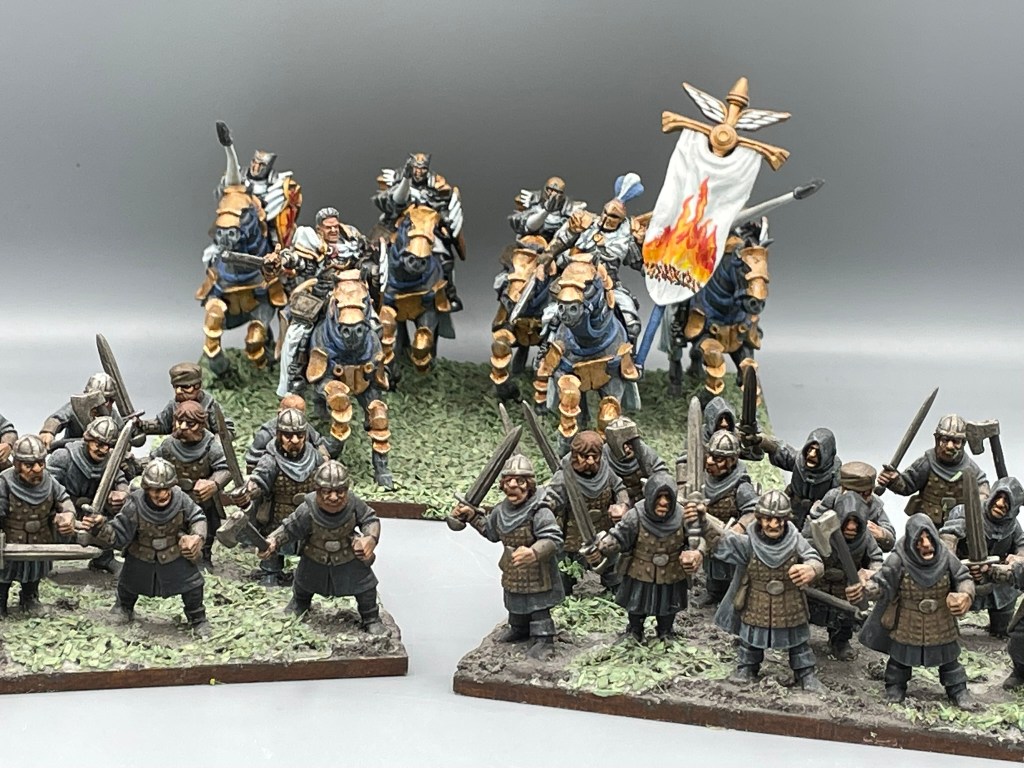
The final proxies are ones that will be going the moment I have enough of the remaining pile of potential finished. These represent my swordsmen and mounted paladins. The eagle eyed will recognise the paladins as the old Mantic ones. As the remaining empty bases start to grow, they will make it into the army, and once they’re full, I’ll then start thinking about display boards.
To keep up with what’s going on you can follow @wizards_bookshelf on Instagram and Threads or drop you’re email below to subscribe.
 The Wizard's Bookshelf